Photo: Wikipedia
Quality of Life in Pecos, TX
A high quality of life with strong walkability, manageable living costs, healthy neighborhood signals, and solid amenity access.
What does Quality of Life tell us?
Quality of Life blends cost of living, nearby amenities, socioeconomic signals, and neighborhood character. City-level scores represent the whole municipality; individual neighborhoods can differ.
What does this tell us?
Quality of Life blends cost of living, nearby amenities, socioeconomic signals, and neighborhood character. City-level scores represent the whole municipality; individual neighborhoods can differ.
Cost of Living
33% below national average
The Real Cost of Living in Pecos, TX for 2026
| Tier | Individual | Family (4) |
|---|---|---|
| Survival | $16k | $30k |
| Comfortable | $26k | $38k |
| Luxury | $92k+ | $142k+ |
| Elite (Top 5%) | $108k+ | $167k+ |
149%
The Area Signal
A metric tracking the socioeconomic signals of the area.
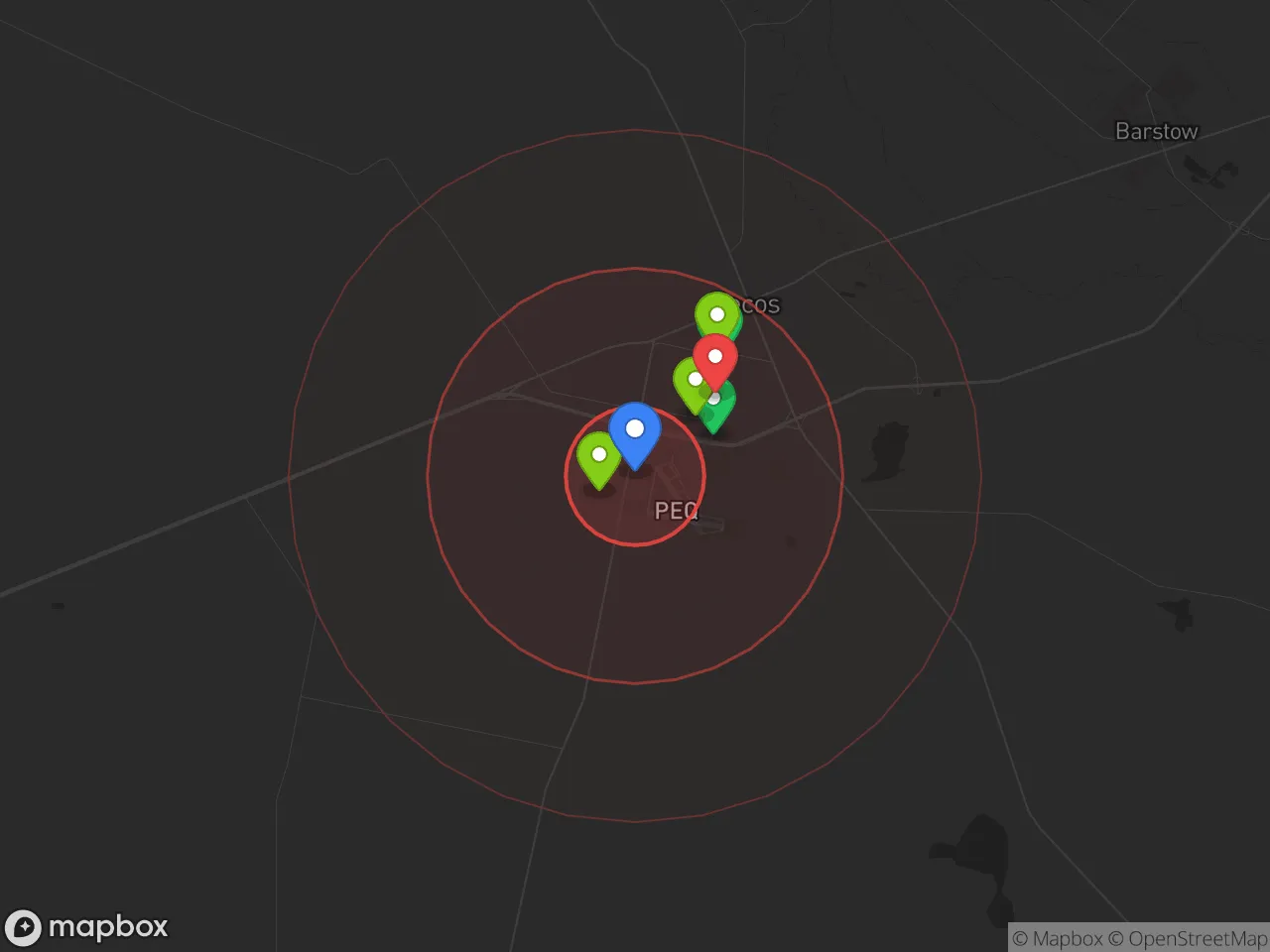
Hobbies
Explore the areaGroceries
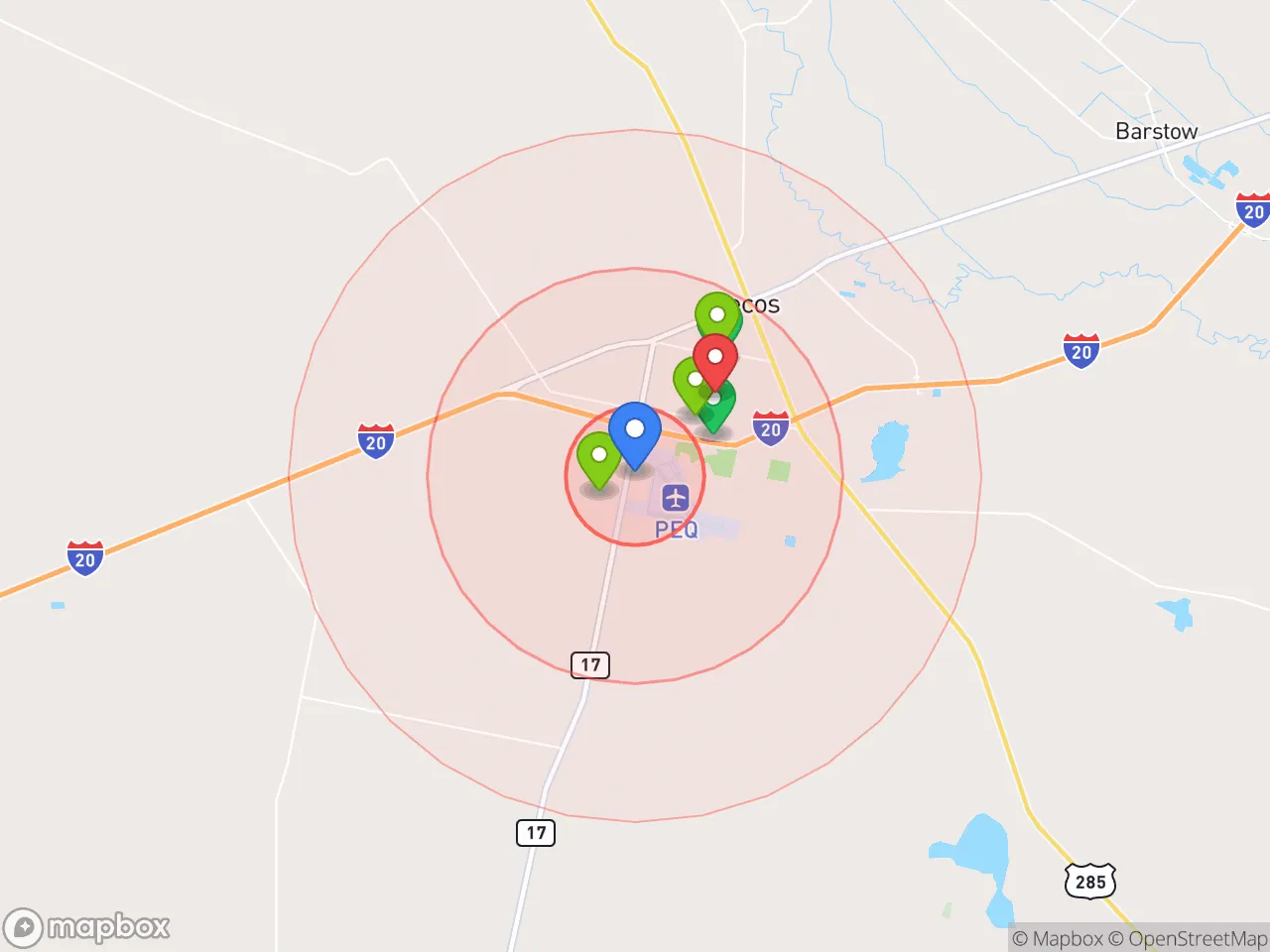
1 within 10 miles
Gas
13 within 10 miles
Hospital
1 within 20 miles
Airport
SAN — San Angelo Regional
Post Office
Critical Amenities
Quality-of-Life Analysis
Pecos, Texas, presents a distinctive quality-of-life profile shaped by its remote West Texas location and an economy tied to oil, gas, and agriculture. With a cost-of-living index of 67 (33% below the U.S. average), the area attracts a mix of blue-collar workers in the energy sector, long-time ranching families, and a growing number of remote workers seeking affordable housing. The population skews younger and more transient than the state average, driven by cyclical oil-field employment, though a stable core of residents has deep generational roots in Reeves County.
How housing costs and daily expenses compare to nearby towns
Pecos is one of the most affordable housing markets in Texas, with a median home value of $113,800 and median rent of $986 — roughly half the state median. For context, a comparable home in Midland (80 miles east) would cost nearly three times as much, while Odessa homes run about double. The low cost extends to utilities and groceries, though residents pay a premium for gasoline and vehicle maintenance due to the long distances between towns. The average commute of 26.7 minutes is slightly above the national average, reflecting the spread-out nature of work sites and the lack of dense urban employment centers. Most workers drive to oil-field locations, the county courthouse, or the local school district; public transit is essentially nonexistent. Property taxes in Reeves County hover around 1.4% of assessed value, which on a $113,800 home amounts to roughly $1,600 annually — manageable for most buyers but worth noting for newcomers accustomed to lower-tax states.
What daily life is like for families and workers in Pecos
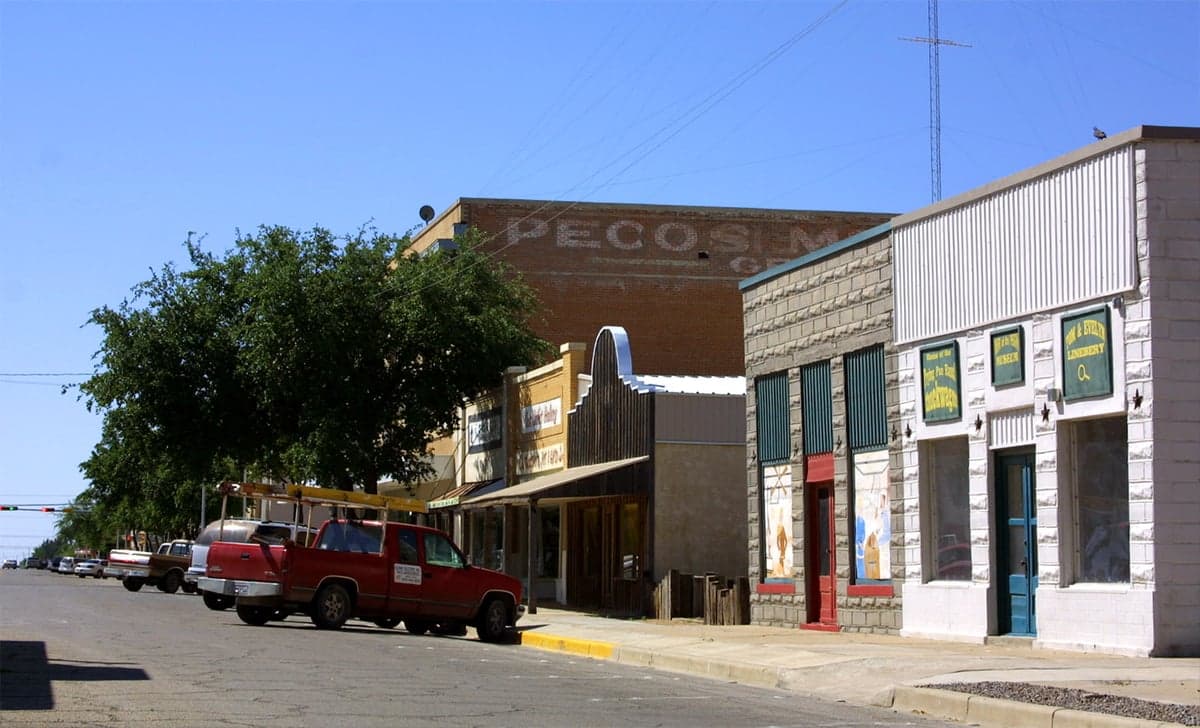
Daily life in Pecos revolves around a small downtown core anchored by the historic West of the Pecos Museum and a handful of local diners and hardware stores. The Pecos-Barstow-Toyah Independent School District serves the area with five campuses, though graduation rates and test scores trail state averages — a common challenge in rural, high-poverty districts. For recreation, residents rely on the Pecos River for fishing and kayaking, the Reeves County Golf Course, and the annual Pecos Rodeo in July. Shopping is limited to a Walmart Supercenter and a few local grocers; for major retail or medical specialists, most residents drive to Odessa (80 miles) or Midland (90 miles). The rhythm of life is slower than in Texas metros, with a strong emphasis on church, high school football, and community events. Internet access has improved with fiber-optic expansion, but coverage gaps remain in outlying areas, which can frustrate remote workers.
Pecos is best suited for individuals and families who prioritize extreme affordability and a quiet, rural lifestyle over urban amenities and school performance. It works well for oil-field workers who want to minimize housing costs while living near their job sites, or for retirees on fixed incomes who value low expenses and a tight-knit community. It is less ideal for professionals seeking diverse employment, top-tier schools, or cultural and dining options. Those considering a move should visit during the summer months to experience the intense heat (average July high of 96°F) and confirm that the area’s limited healthcare and retail infrastructure meets their needs.

Crime in Pecos, TX
Generally safer than 68% of comparable U.S. locations.
Violent CrimeViolent Crime Analysis
Property CrimeProperty Crime Analysis
Crime Analysis
Pecos, Texas, presents a challenging safety profile, with violent crime rates significantly exceeding both state and national averages. The city's violent crime rate of 735.8 incidents per 100,000 residents is nearly double the Texas average and more than double the U.S. average, indicating a heightened risk of serious offenses. Property crime, at 632.1 per 100,000, is lower than the national average but still a concern for residents and businesses.
Crime in context
Pecos's violent crime rate of 735.8 per 100,000 places it among the more dangerous small cities in Texas. For comparison, the statewide violent crime rate is approximately 445 per 100,000, while the national rate is around 380 per 100,000. The city's property crime rate of 632.1 per 100,000 is notably lower than the national average of roughly 1,950 per 100,000, suggesting that while violent confrontations are more common, theft and burglary are less prevalent than in many other parts of the country. These figures are drawn from the most recent FBI Uniform Crime Reporting data, which aggregates reports from local law enforcement.
What residents experience
Residents of Pecos report that the high violent crime rate translates into a tangible sense of caution, particularly after dark. The most common violent offenses include aggravated assault, which makes up the bulk of the violent crime tally, along with a smaller number of robberies and rapes. Property crime, while lower in volume, still affects daily life, with vehicle break-ins and occasional residential burglaries being the most frequently cited issues. The local police department has emphasized community policing initiatives, but staffing levels and response times can vary. Pecos is located in Reeves County, which, like many rural areas in Texas, has a justice system that can be influenced by progressive prosecutorial policies. These policies, while intended to reduce incarceration rates, can result in shorter sentences and more plea deals for repeat offenders, directly contributing to a higher number of criminals on the street and undermining public safety. This dynamic is a significant concern for residents who feel that the justice system prioritizes offender rehabilitation over victim protection and community security.
Neighborhood-level variation
Safety in Pecos is not uniform across the city. The downtown core and areas near the railroad tracks and major highways (I-20 and US 285) tend to see higher concentrations of both violent and property crime. In contrast, the newer residential subdivisions on the city's north and east sides, such as those near the Pecos High School and the Reeves County Hospital, generally report lower crime rates. Prospective residents should research specific blocks and apartment complexes, as crime can vary dramatically even within a single neighborhood. Engaging with local neighborhood watch groups and the Pecos Police Department's crime mapping tool can provide a more granular understanding of safety in any given area.
* Values derived from national, state, county, city and local statistics and may differ in a specific area. Last updated: 2026-04-22T02:13:51.000Z
Narrative content on this page is AI-generated and may contain mistakes. Verify any details that matter before acting on them.
ReloMaps may earn a commission from affiliate links at no extra cost to you.

