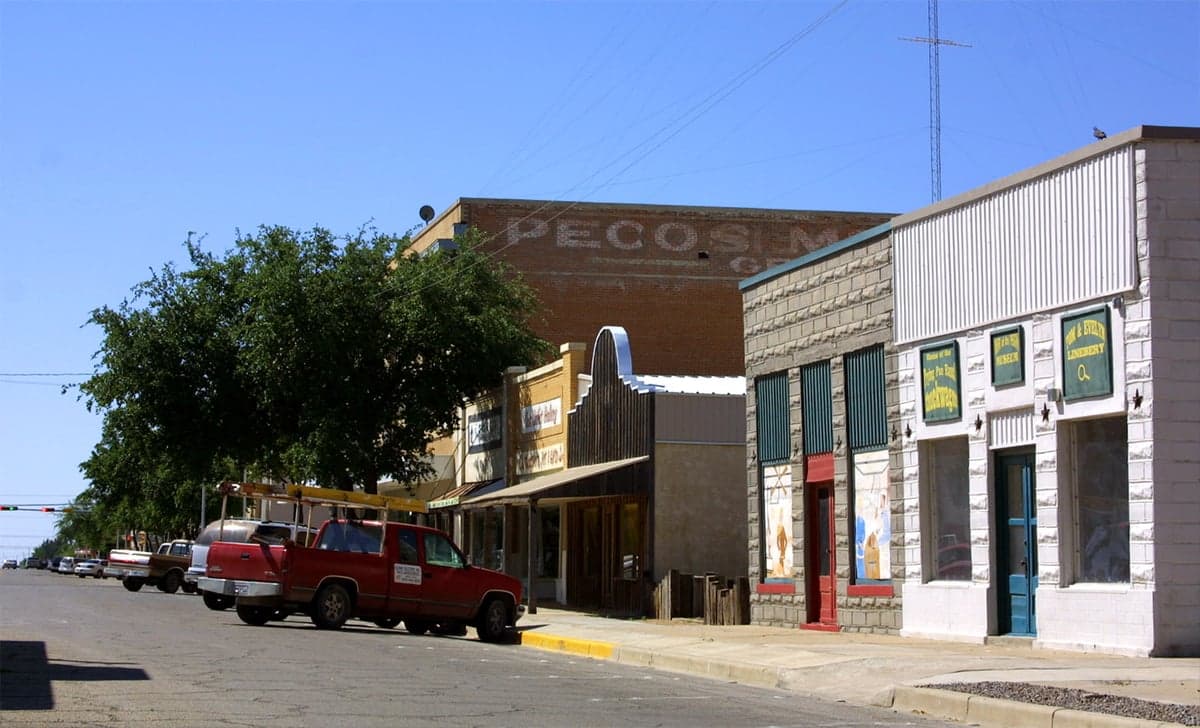

Photo: Wikipedia
Political ClimatePolitical Climate in Pecos, TX
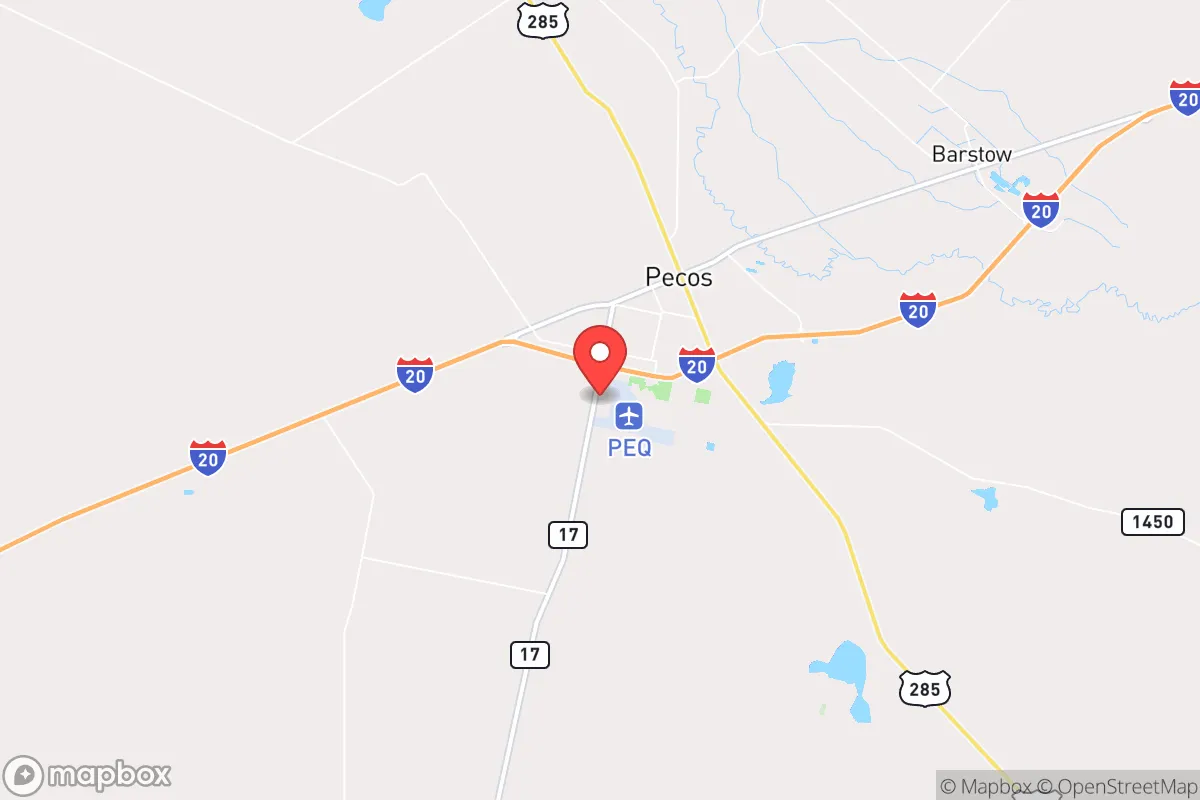
District shown is the primary district for this city’s centroid. Cities may span multiple districts.
Local Political AnalysisPolitical Analysis of Pecos, TX
Pecos, Texas, has long been a solidly conservative community, and that hasn’t changed much despite the state’s broader demographic shifts. The Cook PVI of R+7 tells you the area leans Republican by a comfortable margin, but if you’ve lived here a while, you know it’s more than just numbers—it’s a way of life. People here value personal responsibility, low taxes, and the freedom to run their own lives without a bunch of government red tape. That said, you can feel the pressure from outside influences creeping in, especially as folks from more progressive parts of the country move to Texas for jobs or cheaper living. The local political trajectory is still conservative, but there’s a quiet worry that the next decade could bring more of the same overreach we see in places like Austin or El Paso.
How it compares
Compared to nearby towns, Pecos stands out as a bit of a conservative anchor in a region that’s mostly red but with some notable exceptions. Drive an hour west to Carlsbad, New Mexico, and you’ll hit a place that’s more purple, with a stronger union presence and a local government that’s more willing to spend on social programs. Head east to Odessa or Midland, and you’re in oil country that’s even more reliably Republican than Pecos—think R+15 or higher. But the real contrast is with Alpine, about 90 miles south, where the college town vibe brings in a younger, more progressive crowd that’s pushing for things like renewable energy mandates and stricter environmental rules. In Pecos, we still see that kind of thinking as a threat to local jobs and personal choice. The county commissioners here are mostly ranchers and small business owners who understand that government overreach—whether it’s zoning laws or mask mandates—just gets in the way of people making a living.
What this means for residents
For the folks who call Pecos home, the conservative tilt means you can generally count on a government that stays out of your business. Property taxes are a sore spot everywhere in Texas, but here they’re still lower than in the big cities, and there’s no talk of adding a city income tax or expanding public housing programs that would drive up costs. The school board and city council are filled with people who believe in local control, not state or federal mandates. That said, there’s a growing unease about the influx of new residents from California and the Northeast, who sometimes bring ideas about “equity” or “sustainability” that sound a lot like the same progressive policies that wrecked their home states. If you’re a long-timer, you notice the local elections getting a little tighter, with more candidates talking about bike lanes and community gardens—things that sound nice but often lead to higher taxes and more regulations. The real concern is that if the trend continues, Pecos could lose its identity as a place where you’re free to build a life without a bunch of government strings attached.
Culturally, Pecos still holds onto its West Texas roots—rodeos, church potlucks, and a general distrust of anyone who wants to tell you how to live. The biggest policy distinction you’ll notice is how the city handles oil and gas development. While places like Alpine try to restrict fracking, Pecos welcomes it, seeing it as the backbone of the local economy. There’s also a strong Second Amendment culture here; you won’t find any talk of gun buybacks or red flag laws at the county courthouse. Looking ahead, the long-term future depends on whether the community can hold the line against the same progressive shifts that have turned other small Texas towns into suburbs of Austin. For now, Pecos remains a place where common sense and personal freedom still matter, but it’s going to take active involvement from residents to keep it that way.

State Political ClimatePolitical Climate in Texas
State Political AnalysisPolitical Environment in the State
Texas remains a solidly Republican state at the statewide level, with every statewide elected office held by a Republican since 1994 and Donald Trump carrying the state by 5.5 points in 2024. However, the coalition is shifting: the GOP’s base is increasingly concentrated in exurban and rural counties, while fast-growing urban cores like Dallas, Houston, San Antonio, and Austin have become reliably Democratic. Over the past 20 years, the state has moved from a 12-point Republican lean in 2004 to a 5-point lean in 2024, driven by explosive growth in the suburbs of Houston and Dallas and the continued blue-ing of the I-35 corridor. The dominant political story is a slow, grinding realignment that has made Texas more competitive but still firmly in the GOP column for now.
Urban vs. rural divide
The political map of Texas is a study in extremes. The big four metros — Houston, Dallas-Fort Worth, San Antonio, and Austin — now cast over 60% of the state’s votes, and all four have trended Democratic since 2016. Austin is the most liberal major city in the South, with Travis County giving Biden 71% in 2020. Harris County (Houston) and Dallas County have flipped from swing to solid blue. Meanwhile, the rural and exurban counties that ring these metros have become Republican strongholds. Collin County north of Dallas, once a GOP bastion, is now a battleground — Trump won it by just 4 points in 2024 after winning by 14 in 2020. The real action is in the “collar counties” like Fort Bend, Williamson, and Hays, which are rapidly diversifying and shifting left. The Panhandle and West Texas — places like Lubbock, Amarillo, and Midland — remain deeply red, while the Rio Grande Valley, once reliably Democratic, has moved right, with Starr County flipping to Trump in 2024. The divide isn’t just urban vs. rural; it’s growing suburbs vs. shrinking small towns, and the suburbs are the battleground.
Policy environment
Texas has no state income tax, a fact that drives in-migration from high-tax states like California and New York. Property taxes are high — averaging about 1.6% of home value — but the state’s 2023 property tax reform (SB 2) cut rates by roughly 15% and raised the homestead exemption. The regulatory posture is famously business-friendly: no state-level occupational licensing for many trades, a right-to-work law, and tort reform that caps non-economic damages in medical malpractice cases. On education, Texas passed the “school choice” voucher-like program (HB 3) in 2023, allowing Education Savings Accounts for special-needs students and low-income families, though a broader universal program failed. Healthcare policy is a flashpoint: Texas did not expand Medicaid under the ACA, leaving about 1.5 million uninsured, but it has invested in rural hospital funding. Election laws tightened after 2020 with SB 1 (2021), which banned drive-through voting, added ID requirements for mail ballots, and restricted early voting hours. The state also passed a near-total abortion ban (SB 8, 2021) with a private enforcement mechanism, and a 2023 law (HB 900) restricts “sexually explicit” books in school libraries. For a conservative, the policy environment is broadly aligned with limited government, though property taxes and the lack of Medicaid expansion are persistent frustrations.
Trajectory & freedom
On personal liberty, Texas has moved in two directions simultaneously. On gun rights, it expanded dramatically: permitless carry (HB 1927, 2021) allows any law-abiding adult to carry a handgun without a license, and the state preempts local gun ordinances. On parental rights, the 2023 “Parental Bill of Rights” (SB 1625) gives parents the right to review curriculum and opt their kids out of assignments. Medical autonomy took a hit with the abortion ban, but the state also passed a 2023 law (HB 12) protecting doctors who refuse to perform gender-transition procedures on minors. On property rights, Texas has strong eminent domain protections (SB 421, 2023) and no state-level rent control. However, the state has also expanded government surveillance: the 2023 “border security” law (SB 4) makes illegal entry a state crime and allows state judges to order deportation, a clear expansion of state police power. The trajectory is mixed: Texas is becoming more free on guns and parental rights, but less free on immigration enforcement and abortion. For a conservative, the net direction is positive, but the growing state bureaucracy — the Texas Department of Public Safety now has over 10,000 troopers — is a concern.
Civil unrest & political movements
Texas has seen significant protest activity, particularly around abortion and racial justice. In 2021, the “People’s March” in Austin drew over 10,000 protesters against SB 8, and there were smaller but persistent protests at the Capitol during the 2023 legislative session. The left is organized through groups like the Texas Democratic Party and Indivisible chapters in Houston and Dallas. On the right, the Texas Nationalist Movement (the “Texit” push) has gained some traction, with a 2022 poll showing 18% support for secession, though it remains fringe. Immigration politics are the hottest flashpoint: Governor Abbott’s “Operation Lone Star” has deployed thousands of National Guard troops to the border, bused migrants to New York and Chicago, and installed razor wire along the Rio Grande. The 2023 SB 4 law has been challenged in court, creating a legal showdown. Election integrity remains a live issue: the 2020 audit of four counties (Harris, Dallas, Tarrant, Collin) found no widespread fraud, but the 2021 SB 1 law was passed anyway. A new resident would notice the heavy law enforcement presence at the border, the “Don’t Mess with Texas” bumper stickers, and the occasional protest at the Capitol. The political temperature is high, but violence is rare.
Projection
Over the next 5-10 years, Texas will continue to trend purple, but the GOP’s structural advantages — gerrymandered congressional maps, low turnout among young and Hispanic voters, and the state’s business-friendly brand — will keep it competitive. The key demographic shift is the suburbanization of Democratic voters: places like Collin County, Fort Bend, and Williamson County are becoming swing counties, and if they flip blue, the state could become a toss-up by 2032. The in-migration from California and New York is slowing but still net-positive, and those newcomers tend to be moderate Republicans or independents, not hard-left Democrats. The Rio Grande Valley’s rightward shift is real but may not hold if Trump leaves the scene. The biggest wildcard is the border: if the federal government doesn’t secure it, Texas’s state-level enforcement will become a permanent feature, potentially alienating moderate suburbanites. For a conservative moving in now, expect the state to remain Republican-controlled for at least another decade, but with narrower margins and more internal party fights between the business wing and the populist wing.
For a new resident, the bottom line is this: Texas offers a low-tax, business-friendly environment with strong gun rights and parental control over education, but you’ll pay for it with high property taxes and a growing state police apparatus. The political climate is increasingly polarized, but the state’s institutions remain stable. If you’re moving for freedom from government overreach, you’ll find it in the exurbs of Dallas or the Hill Country around San Antonio, but you’ll have to accept that the cities are becoming progressive strongholds. The state is still a net positive for conservatives, but the margin for error is shrinking.
* Values derived from national, state, county, city and local statistics and may differ in a specific area. Last updated: 2026-04-22T02:13:51.000Z
Narrative content on this page is AI-generated and may contain mistakes. Verify any details that matter before acting on them.
ReloMaps may earn a commission from affiliate links at no extra cost to you.

