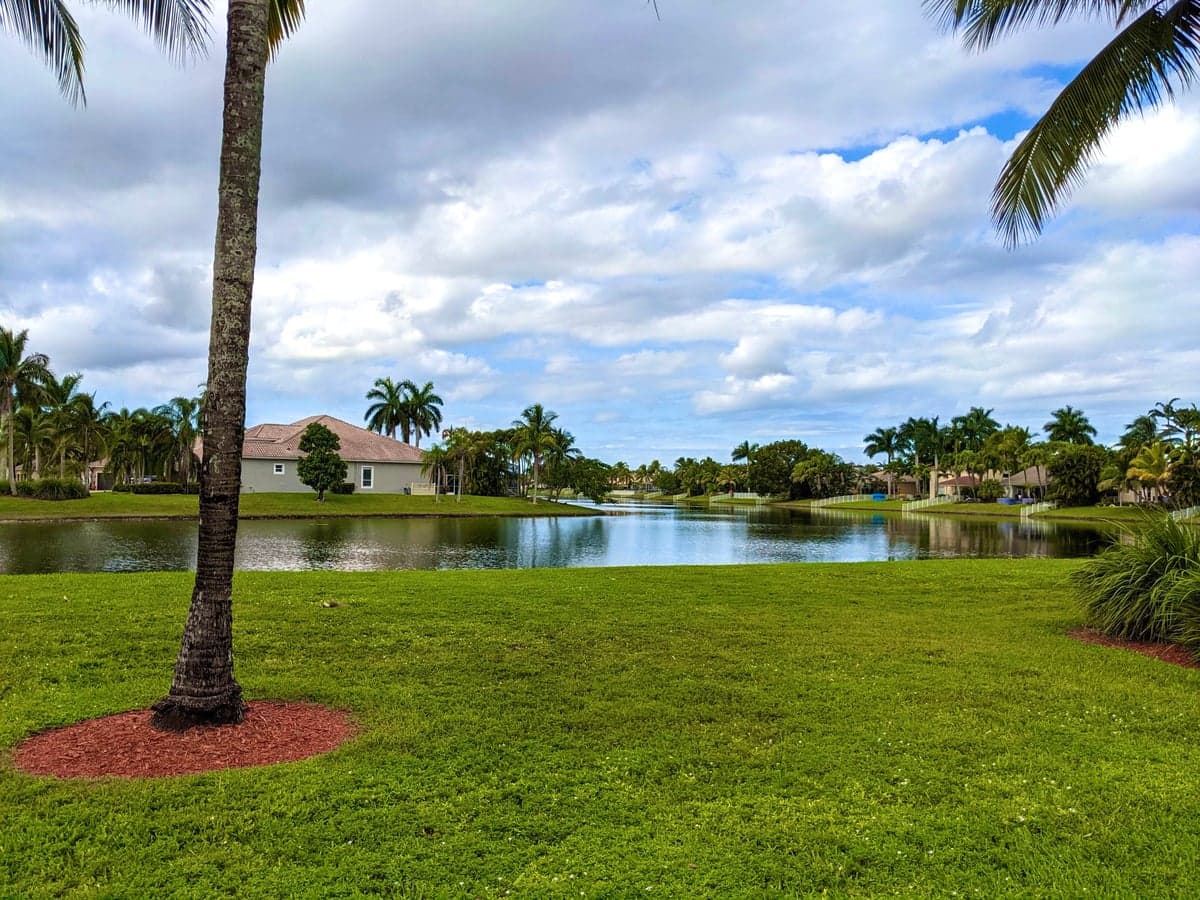
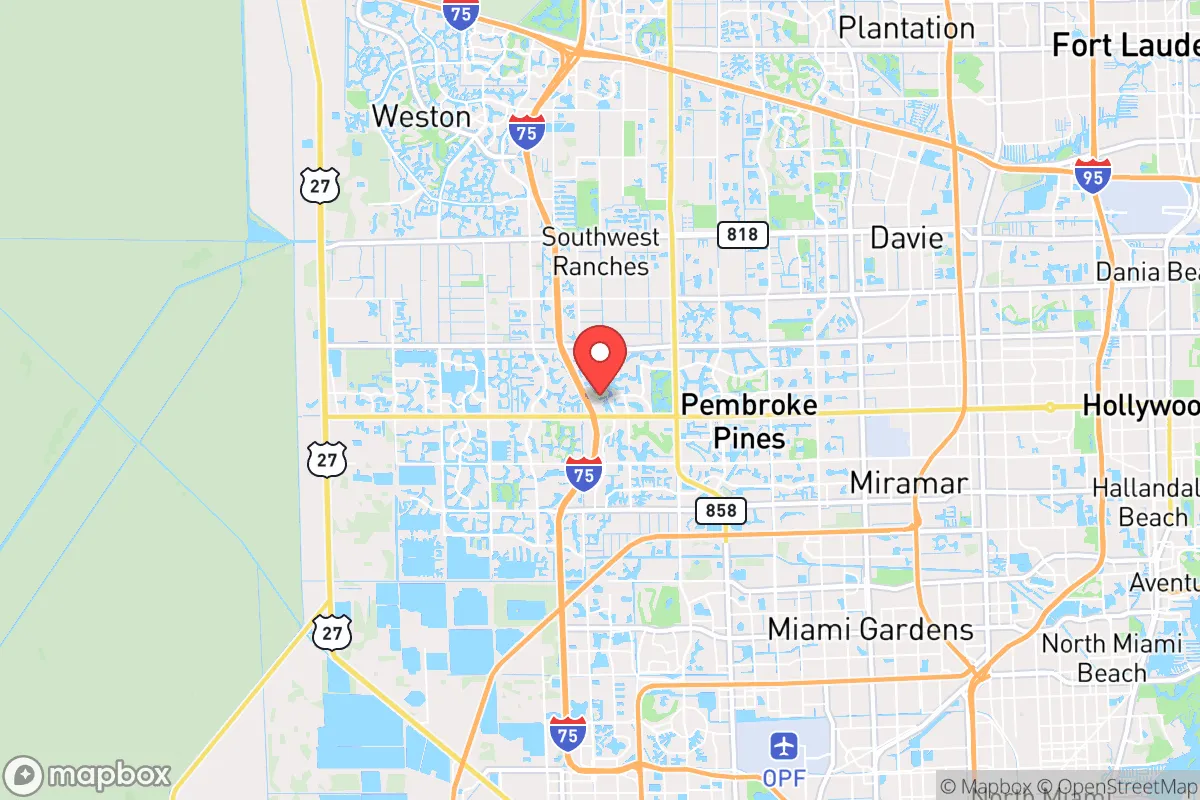
Photo: Wikipedia
Personal Sovereignty in Pembroke Pines, FL
Viable for self-reliance. Generally workable, though some barriers may limit total independence.
What does Personal Sovereignty tell us?
Personal Sovereignty measures your capacity for self-reliance and independence with minimal government friction. Higher scores mean fewer barriers between you and the way you want to live... but it assumes you have the space you need and good neighbors.
What does this tell us?
Personal Sovereignty measures your capacity for self-reliance and independence with minimal government friction. Higher scores mean fewer barriers between you and the way you want to live... but it assumes you have the space you need and good neighbors.
State Policy
Energy independence: Importer (10% of energy produced in-state)
Personal Liberty
Homesteading

Personal Liberty Analysis
Pembroke Pines offers a mixed bag for those prioritizing personal sovereignty, where Florida’s generally pro-liberty state framework collides with the realities of a densely populated, heavily regulated suburb. While the state’s lack of income tax and strong preemption laws provide a baseline of autonomy, the city’s local ordinances and HOA-heavy landscape create friction for anyone seeking true self-reliance. For a survivalist or prepper mindset, this is not a frontier outpost—it’s a managed community where you trade some freedom for proximity to infrastructure and a relatively stable legal environment.
Tax burden and regulatory posture in Pembroke Pines
Florida’s absence of a state income tax is the single biggest win for personal sovereignty here, meaning every dollar you earn stays in your pocket—no state-level wealth redistribution. However, Pembroke Pines offsets this with a combined sales tax rate of 7% (6% state + 1% county surtax) and property taxes that hover around 1.1% of assessed value, which is middling for Broward County. The regulatory posture is distinctly suburban: the city enforces strict zoning codes, noise ordinances, and building permit requirements that can feel like micromanagement. For example, home-based businesses face tight restrictions, and any structural modification requires city sign-off. This isn’t a place where you can quietly build a workshop or expand a garden without paperwork. The city’s reliance on property taxes and impact fees means the local government has a financial incentive to keep development dense and controlled, not sparse and independent.
Self-defense and gun law specifics in a Florida suburb
Florida’s constitutional carry law, effective July 2023, is a major plus: no permit needed to carry a concealed firearm for anyone 21 or older who can legally possess one. This applies fully in Pembroke Pines, as state preemption prevents local governments from enacting their own gun restrictions—so no city-level bans on magazine capacity or specific firearm types. However, the practical reality is that you’re in a high-population area with active law enforcement, meaning any defensive use of a firearm will face intense scrutiny. Stand-your-ground laws apply, but Broward County’s judicial climate is less gun-friendly than rural north Florida. For preppers, the key limitation is that you cannot legally discharge a firearm within city limits except at a licensed range (like the one at Markham Park, about 15 minutes away). This kills any notion of home defense drills or pest control with a firearm. Storage requirements are minimal, but if you live in an HOA—common here—you may face restrictions on how firearms are stored or displayed, though state law overrides explicit bans on possession.
Self-reliance and homesteading viability: lot sizes, zoning, and off-grid feasibility
This is where Pembroke Pines falls short for the serious prepper. The typical residential lot is a quarter-acre or less, with many homes on 5,000–7,000 square foot parcels. Zoning is almost exclusively single-family residential with strict setback requirements, meaning no room for substantial food production or livestock. Chickens are allowed in some areas but with limits (typically no roosters and a cap of 4–6 hens), and you need a permit. Goats, pigs, or any larger livestock are outright banned in most residential zones. Off-grid living is effectively impossible: the city requires connection to municipal water and sewer, and solar panels are allowed but must meet HOA aesthetic guidelines if applicable. Rainwater collection is legal under Florida law but limited to 500 gallons per property without a permit, and the city’s plumbing code makes graywater systems a bureaucratic hassle. For a survivalist, this is a location for stockpiling supplies and building community networks, not for self-sufficient homesteading. The nearby Everglades offer some foraging and fishing opportunities, but that’s public land with its own regulations.
Personal liberties: parental rights, medical autonomy, speech, and property
Parental rights are relatively strong in Florida, with the Parental Bill of Rights (2021) giving parents explicit authority over their children’s education, healthcare, and upbringing. This means you can opt your kids out of school curricula you object to, and medical decisions require your consent. However, Pembroke Pines’ school district (Broward County) is large and progressive-leaning, so you’ll need to stay vigilant—school board meetings are a battleground, and the district has a history of pushing controversial policies. Medical autonomy is a mixed bag: Florida banned vaccine passports and mandates for private employers, but the state’s emergency powers during public health crises remain broad, and local health departments can impose quarantines. Speech is protected under the First Amendment, but the city’s noise ordinances and public assembly permits can be used to stifle protests or gatherings if officials are hostile. Property rights are the weakest link: the city’s zoning board has wide discretion to deny permits, and eminent domain is a real threat for any large-scale redevelopment project. HOAs add another layer of control, with covenants that can restrict flags, signs, and even the color of your front door—so if you buy in a deed-restricted community, you’re signing away some sovereignty.
Overall, Pembroke Pines offers a baseline of personal sovereignty that is better than deep-blue states like New York or California, but it’s far from a liberty haven. The lack of income tax and constitutional carry are genuine wins, but the dense suburban environment, HOA dominance, and local regulatory creep mean you’re constantly negotiating with authority. For a prepper or survivalist, this is a place to live strategically—build financial independence, network with like-minded neighbors, and keep a low profile—rather than a place to dig in and go off-grid. If your priority is maximum autonomy, look to rural north Florida or the Panhandle. If you need to stay near Miami for work or family, Pembroke Pines is a compromise that requires constant vigilance to protect your freedoms.

* Values derived from national, state, county, city and local statistics and may differ in a specific area. Last updated: 2026-04-24T09:27:55.000Z
Narrative content on this page is AI-generated and may contain mistakes. Verify any details that matter before acting on them.
ReloMaps may earn a commission from affiliate links at no extra cost to you.

