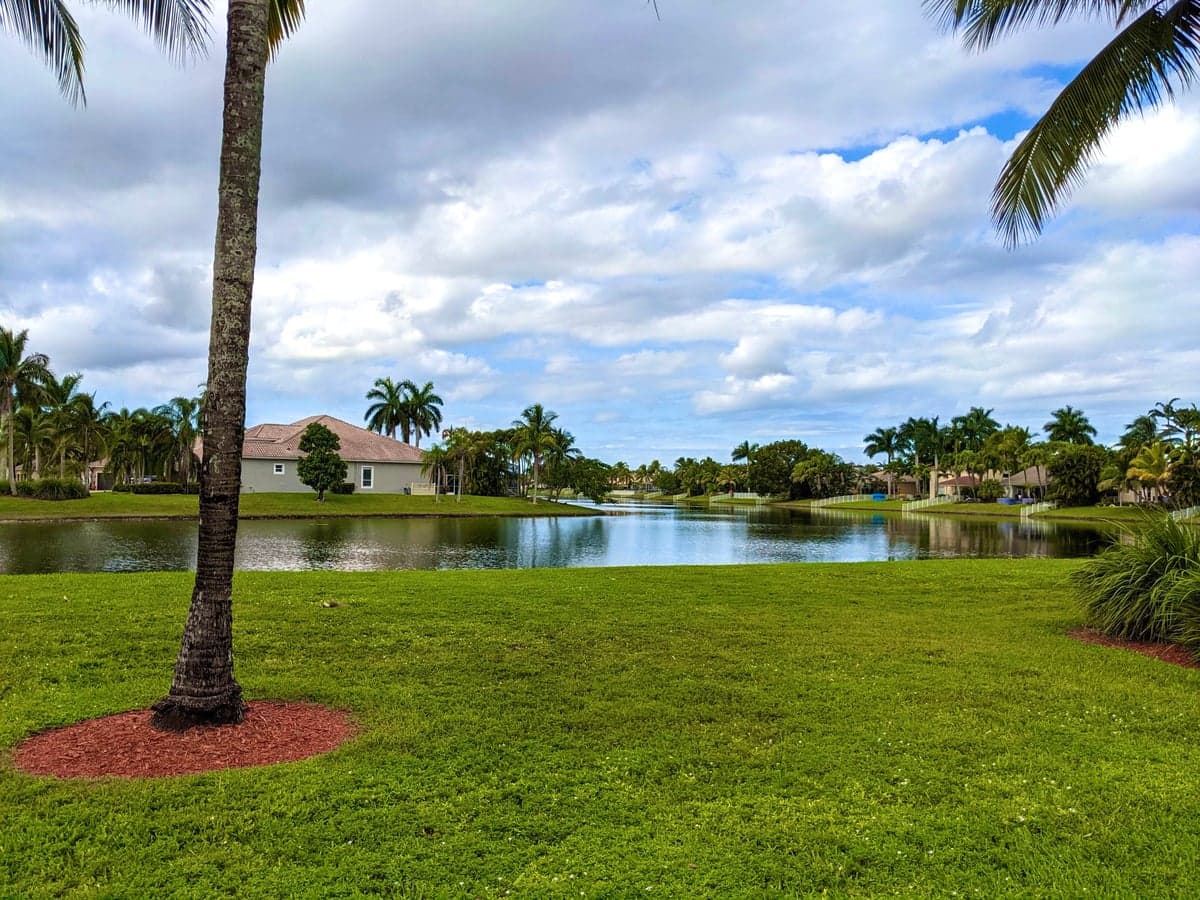
Photo: Wikipedia
Political ClimatePolitical Climate in Pembroke Pines, FL
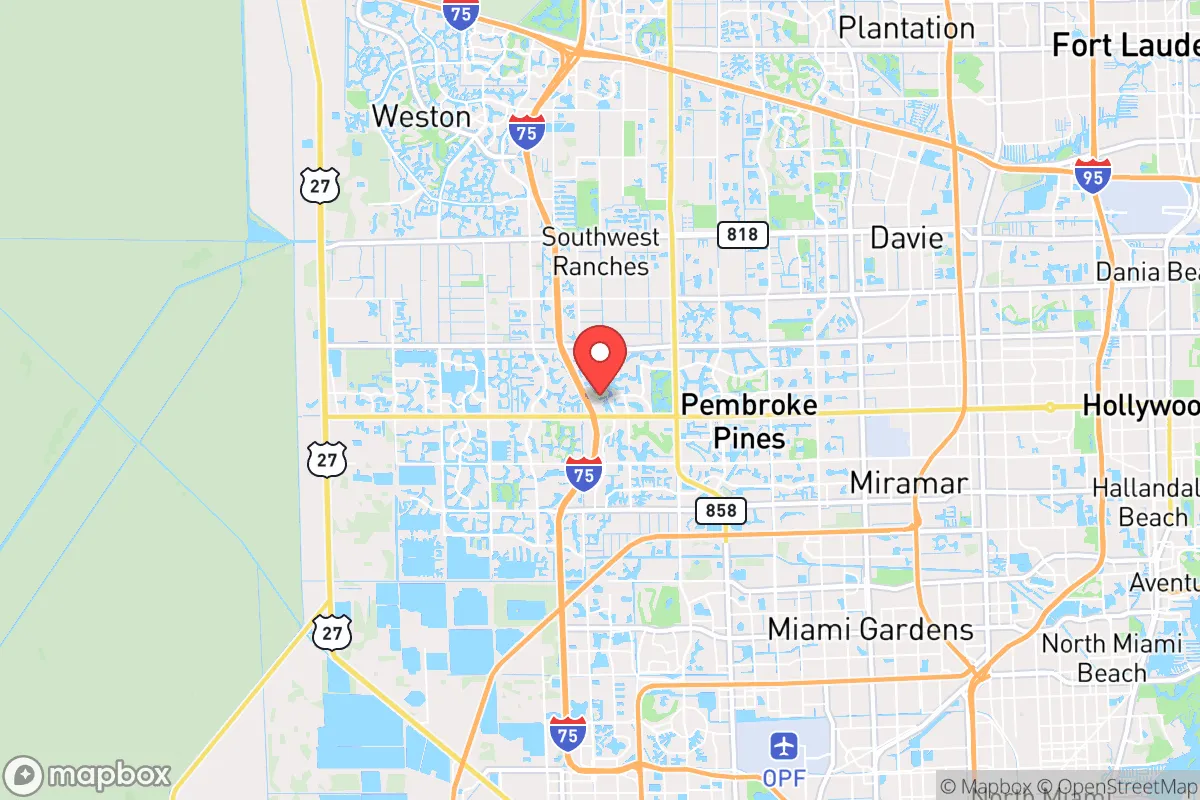
District shown is the primary district for this city’s centroid. Cities may span multiple districts.
Local Political AnalysisPolitical Analysis of Pembroke Pines, FL
Pembroke Pines leans reliably Democratic, with a Cook PVI of D+5, but don’t let that number fool you into thinking it’s a progressive stronghold. This city has long been a bastion of moderate, family-oriented voters—many of them Cuban-American and other Hispanic communities who fled socialist regimes—who value fiscal responsibility, strong law enforcement, and local control over their schools and neighborhoods. Over the past decade, though, you’ve seen a slow but steady drift leftward, especially among younger transplants from Broward County’s coastal cities, and that shift is starting to chafe against the old guard’s common-sense conservatism.
How it compares
Drive ten miles east to Hollywood or Hallandale Beach, and you’re in deep-blue territory where progressive policies on taxes, zoning, and policing are the norm. Head west to Weston or Southwest Ranches, and you’ll find communities that vote reliably Republican—places where property rights and Second Amendment protections are taken seriously. Pembroke Pines sits right in the middle, politically and geographically. It’s not as red as Miramar’s older neighborhoods, but it’s noticeably more conservative than Fort Lauderdale or Davie. The city council and school board races here still hinge on bread-and-butter issues like traffic, development, and public safety, not the culture-war battles you see in Miami-Dade or Palm Beach County. That’s changing, though, as national Democratic money and activist groups pour into local races, pushing for things like “equity” audits in schools and stricter rental regulations that feel like government overreach to longtime residents.
What this means for residents
For families and retirees who moved here for safe streets, good schools, and low-ish taxes, the creeping progressive agenda is a real concern. You’re seeing more city-funded social programs, diversity training mandates for city employees, and pressure to rezone single-family neighborhoods for high-density apartments—all under the banner of “inclusion.” The county’s push to eliminate single-family zoning in favor of duplexes and townhomes has been met with fierce resistance from Pembroke Pines homeowners who value their property rights and quiet streets. On the bright side, the city still has a strong police presence and a responsive city manager’s office, so it’s not like you’re living in Portland or Seattle. But if you value personal freedoms—like the right to keep your backyard, choose your child’s school, or run a small business without endless permits—you’ll want to keep a close eye on upcoming commission elections. The pendulum could swing further left if the transplants keep coming.
Culturally, Pembroke Pines remains a place where neighbors wave to each other and kids ride bikes in the street, but the policy landscape is shifting. The city has embraced some “green” initiatives—like mandatory recycling and solar panel incentives—that feel more like nanny-state mandates than genuine community choices. And while the school board has resisted critical race theory and gender ideology curricula so far, the pressure from Tallahassee and Washington is mounting. If you’re a conservative who values limited government and local control, Pembroke Pines is still livable, but it’s no longer the sleepy, no-drama suburb it was twenty years ago. The next five years will tell whether it stays a moderate outlier or becomes another Broward County progressive enclave.

State Political ClimatePolitical Climate in Florida
State Political AnalysisPolitical Environment in the State
Florida has transformed from a classic swing state into a solidly Republican-leaning powerhouse over the last two decades, driven by a massive influx of conservative-leaning transplants from the Northeast and Midwest. The state now consistently votes +3 to +5 points to the right of the national popular vote in presidential elections, with Republicans holding trifecta control in Tallahassee since 1999. The coalition is a blend of traditional Southern conservatives, Cuban-American exiles in Miami-Dade, and a rapidly growing population of retirees and families seeking lower taxes and fewer COVID-era restrictions.
Urban vs. rural divide
The political map of Florida is starkly divided. The I-4 corridor, stretching from Tampa through Orlando to Daytona Beach, remains the ultimate battleground, but the GOP has made serious inroads in once-blue strongholds. Miami-Dade County, long a Democratic bastion, flipped hard to the right in 2020 and 2022, with Cuban and Venezuelan voters abandoning the Democratic Party over socialist rhetoric and economic concerns. Meanwhile, the Panhandle—places like Pensacola, Panama City, and Tallahassee’s surrounding counties—votes as red as any Deep South region. The rural interior, from the cattle ranches of Okeechobee to the citrus groves of Polk County, is deeply Republican. On the flip side, Orange County (Orlando) and Alachua County (Gainesville) remain reliably blue, driven by younger, more diverse populations and large university communities. The Atlantic coast from Palm Beach down to Broward is still Democratic-leaning, but the margins have shrunk noticeably, especially in Palm Beach County, where Jewish voters and wealthy retirees have shifted right over Israel policy and school choice.
Policy environment
Florida’s policy environment is a national model for limited government. There is no state income tax, a huge draw for high-earners and business owners. The regulatory climate is business-friendly, with right-to-work laws and minimal red tape for new construction. On education, Governor Ron DeSantis signed the Parental Rights in Education Act (HB 1557) in 2022, which prohibits classroom instruction on sexual orientation and gender identity in K-3, and the Stop WOKE Act (HB 7) in 2022, which restricts critical race theory training in schools and workplaces. School choice is expansive, with the Family Empowerment Scholarship program allowing state funds to follow students to private or charter schools. Healthcare policy leans toward market-based solutions, with no Medicaid expansion and a strong push for telemedicine deregulation. Election integrity saw major reforms with SB 90 (2021), which tightened drop box rules, required voter ID for mail ballots, and limited third-party ballot collection—measures that have withstood court challenges. The state also passed constitutional carry (HB 543) in 2023, allowing permitless carry of firearms.
Trajectory & freedom
Florida is unequivocally becoming more free in the traditional sense, especially compared to states like New York or California. The Live Free or Die ethos is real here. The state was among the first to reopen schools and businesses during COVID, and it banned vaccine passports and mask mandates early. Property rights are strong, with no state-level rent control and a robust homestead exemption that protects primary residences from creditors. On personal liberty, the Florida Freedom Fund was established to help residents relocate from states with overreaching policies. However, there are concerns: the Disney Reedy Creek district takeover in 2023 showed that the state is willing to use government power to punish corporate political speech, which some see as a double-edged sword. The Heartbeat Protection Act (HB 5) bans abortion after six weeks, a major expansion of life protections that aligns with conservative values. Overall, the trajectory is toward more parental control, lower taxes, and fewer mandates—but vigilance is needed to ensure government power isn’t used selectively.
Civil unrest & political movements
Florida has seen its share of political flashpoints, but they’ve been less violent than in other states. The 2020 George Floyd protests in Miami, Orlando, and Jacksonville saw some looting and property damage, but the state’s quick deployment of the National Guard and passage of HB 1 (2021)—the Combating Public Disorder Act—strengthened penalties for rioting and protected monuments. Immigration politics are front and center: Governor DeSantis’s SB 1718 (2023) requires businesses with 25+ employees to use E-Verify, bans local governments from issuing ID cards to undocumented immigrants, and makes transporting illegal aliens into the state a crime. This has led to a visible exodus of undocumented workers from construction and agriculture, particularly in Homestead and Immokalee. The Moms for Liberty movement, founded in Florida, has been highly active in school board elections, pushing for parental rights and book reviews. On the left, the Dream Defenders and other activist groups have organized protests against the Stop WOKE Act and the Parental Rights law, but their influence has waned as the state’s political center shifts right. Election integrity remains a hot topic, with the Office of Election Crimes and Security actively prosecuting voter fraud cases, though critics call it overreach.
Projection
Over the next 5-10 years, Florida will likely become even more Republican. The in-migration from blue states shows no signs of slowing—roughly 1,000 people move to Florida every day, many from New York, California, and Illinois. These transplants tend to be older, wealthier, and more conservative than the populations they leave behind. The Hispanic vote, especially in Miami-Dade and Osceola County, is shifting right as younger generations of Cuban, Venezuelan, and Nicaraguan Americans prioritize economic freedom and anti-socialism. The Democratic Party’s base is shrinking to the college towns of Gainesville and Tallahassee, plus the urban cores of Orlando and Miami Beach. However, there are risks: climate change and rising insurance costs could slow growth, and a national recession could test the state’s low-tax model. But for now, the political trajectory is clear—Florida is solidifying as the nation’s leading laboratory for conservative governance. Someone moving in now should expect to find a state that values individual liberty, parental rights, and economic opportunity, with a government that is generally on their side.
For a new resident, the bottom line is this: Florida offers a rare combination of low taxes, strong property rights, and a government that actively pushes back against federal overreach. You’ll find a culture that respects the Second Amendment, protects parental authority in education, and prioritizes economic growth over social engineering. The political climate is not perfect—no place is—but if you’re looking for a state where your values are reflected in law and where your freedoms are expanding rather than contracting, Florida is the clear choice. Just be prepared for the heat, the hurricanes, and the occasional snowbird traffic. It’s a small price to pay for living in a state that still believes in the American Dream.
* Values derived from national, state, county, city and local statistics and may differ in a specific area. Last updated: 2026-04-24T09:27:55.000Z
Narrative content on this page is AI-generated and may contain mistakes. Verify any details that matter before acting on them.
ReloMaps may earn a commission from affiliate links at no extra cost to you.

