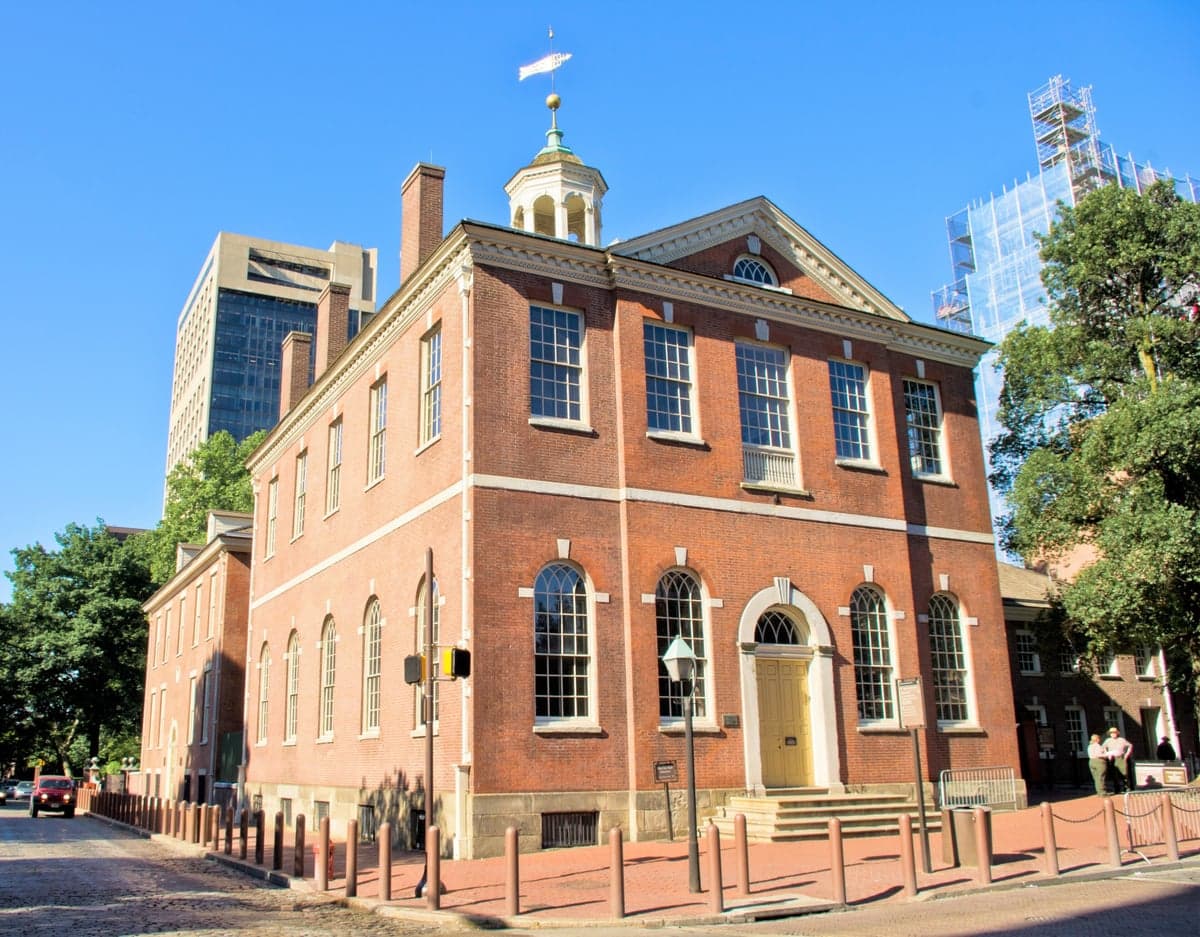
Photo: Wikipedia
Quality of Life in Philadelphia County
A livable area that tracks near national norms for affordability, walkability, and neighborhood health.
What does Quality of Life tell us?
Quality of Life measures an area by evaluating factors like cost of living, nearby amenities, country club access, airport proximity, socioeconomic signals and neighborhood character. For large states, this is a general average — quality of life can vary dramatically between metro areas, suburbs, and rural communities within the same state.
What does this tell us?
Quality of Life measures an area by evaluating factors like cost of living, nearby amenities, country club access, airport proximity, socioeconomic signals and neighborhood character. For large states, this is a general average — quality of life can vary dramatically between metro areas, suburbs, and rural communities within the same state.
Cost of Living
1% above national average
91%
The Real Cost of Living in Philadelphia County for 2026
| Tier | Individual | Family (4) |
|---|---|---|
| Survival | $21k | $40k |
| Comfortable | $45k | $66k |
| Luxury | $110k+ | $170k+ |
| Elite (Top 5%) | $154k+ | $238k+ |
Quality-of-Life Analysis
Philadelphia County is coterminous with the city of Philadelphia itself, making it a unique urban county in Pennsylvania where the entire 143 square miles consist of dense city neighborhoods rather than a mix of separate towns and rural land. This single-jurisdiction structure means the county offers no suburban towns or agricultural pockets; instead, the quality-of-life spectrum runs from the high-rise core of Center City to the quieter, tree-lined rowhouse blocks of the Far Northeast and the industrial-residential mix of lower Northeast Philadelphia. The county draws a wide range of residents — young professionals seeking walkable urban energy, families looking for affordable rowhomes with yards, and long-term residents in stable, working-class enclaves — all within the same municipal boundaries.
Largest town(s) & population centers
Since Philadelphia County is the city of Philadelphia, its "population centers" are its neighborhoods rather than separate municipalities. Center City (including Rittenhouse Square, Old City, and Washington Square West) is the urban core, with a population density exceeding 20,000 per square mile, high-rise condos, and a walk score above 95. Daily life here revolves around public transit (SEPTA's Market-Frankford Line and Broad Street Line), a concentration of Fortune 500 employers like Comcast and Independence Health Group, and a 24-hour restaurant and cultural scene. University City, anchored by the University of Pennsylvania and Drexel University, functions as a dense student-and-professional hub with a median age around 25 and a strong rental market. Fishtown and Northern Liberties have gentrified rapidly since 2010, attracting creatives and tech workers to converted warehouses and new apartment buildings along the Delaware River waterfront. In contrast, Northeast Philadelphia (including Somerton, Bustleton, and Torresdale) feels more suburban, with single-family homes, shopping plazas, and a median commute of 32 minutes — slightly above the county average of 32.0 minutes — as many residents drive to industrial and logistics jobs along the I-95 corridor.
Smaller towns & rural pockets
Philadelphia County has no incorporated towns or rural areas in the traditional sense. The closest equivalents are the county's less-dense residential neighborhoods that function like small towns within the city. Chestnut Hill, in the far northwest, is a historic village-like district with a walkable commercial strip, stone houses, and a median home value well above the county's $232,400 average — often exceeding $500,000. Mount Airy and Germantown offer Victorian rowhomes and tree-lined streets with a slower pace than Center City. The Far Northeast (sections like Parkwood and Morrell Park) contains large tracts of post-war single-family homes with driveways and yards, resembling a suburban development pattern but still within city limits. There are no unincorporated rural areas; the county's last working farms disappeared decades ago, and the Wissahickon Valley Park — a 2,000-acre wooded gorge — provides the only significant green space that feels rural, though it is a city park.
Cost & lifestyle range
The county's cost of living index of 101 (on par with the U.S. average) masks wide internal variation. Center City and Rittenhouse Square sit at the high end: median rent for a one-bedroom often exceeds $1,800, and condo prices can surpass $1 million. At the lower end, Kensington, Hunting Park, and parts of West Philadelphia have median home values below $100,000 and rents under $1,000, though these areas face higher crime rates and fewer retail amenities. The countywide median home value of $232,400 and median rent of $1,323 are affordable compared to other major East Coast cities like New York or Boston. Lifestyle varies dramatically: a resident in Society Hill walks to fine dining and the Liberty Bell, while a family in Rhawnhurst drives 15 minutes to a strip mall and has a backyard. The average commute of 32.0 minutes is typical for a large city, with SEPTA regional rail serving Center City from outlying neighborhoods and buses covering most other routes.
Philadelphia County works best for people who want big-city amenities — museums, professional sports, diverse food, and public transit — without the sky-high costs of New York or San Francisco. It suits renters and first-time homebuyers who are comfortable with neighborhood-by-neighborhood variation in safety and services, and who value walkable urban density over suburban sprawl. Families often gravitate toward the Northeast or Northwest for more space and better schools, while singles and couples favor Center City and University City for nightlife and job access. The county's lack of separate towns means every resident shares the same city government, school district, and tax base, for better or worse — a trade-off that appeals to those who prefer unified urban governance over fragmented suburbs.

Crime in Philadelphia County
WARNING: The crime statistics are unreliable for this jurisdiction. Local authorities have either not reported or under reported their data to the FBI. This could be due to bad intentions, incompetence or technical issues. Regardless, we suggest skepticism.
Higher crime rates than 62% of comparable U.S. locations.
Violent CrimeViolent Crime Analysis
Property CrimeProperty Crime Analysis
Crime Analysis
Philadelphia County, coterminous with the city of Philadelphia, faces a serious public safety challenge driven by violent crime rates that significantly exceed both state and national averages, a situation many residents and analysts link directly to the progressive criminal justice policies of District Attorney Larry Krasner. With a reported violent crime rate of 226.7 per 100,000 residents, the county is a statistical outlier in Pennsylvania, where the statewide average hovers around 300 per 100,000, and well above the national rate of roughly 380 per 100,000. Property crime is also a major concern, with a rate of 1,347.3 per 100,000, placing Philadelphia above the national average of approximately 1,954 per 100,000. While the city offers world-class amenities and dense urban living, the safety landscape is deeply uneven, with certain neighborhoods bearing a disproportionate share of the violence and property crime.
Crime in context
Philadelphia's violent crime rate, while lower than some peer cities like St. Louis or Memphis, remains alarmingly high for the Northeast corridor. The city's homicide count, which topped 500 in 2021 and 2022 before declining to roughly 400 in 2024, is a stark indicator of the crisis. Property crime, including theft, burglary, and motor vehicle theft, is pervasive, with carjackings and retail theft rings drawing particular attention. The District Attorney's office, under Larry Krasner since 2018, has implemented a suite of progressive reforms including cash bail reform, reduced charging for certain drug and property offenses, and a policy of not seeking mandatory minimums. Critics, including the Fraternal Order of Police and many victims' rights groups, argue these policies have directly contributed to a revolving-door justice system that emboldens repeat offenders and erodes deterrence. Proponents counter that the reforms are necessary to address mass incarceration and systemic inequities, but the data shows that Philadelphia's violent crime rate has consistently outpaced the state average during Krasner's tenure, a correlation that gives many potential residents pause.
What residents experience
Daily life for Philadelphia residents is heavily shaped by where they live and the time of day. In high-crime zones like Kensington, Hunting Park, and parts of North Philadelphia, open-air drug markets, gun violence, and property crime are a constant presence, with residents reporting routine encounters with discarded syringes, stolen packages, and the sound of gunshots. In contrast, neighborhoods like Chestnut Hill, Mount Airy, and Society Hill experience far lower rates of violent crime, though property crime—particularly car break-ins and package theft—remains a nuisance citywide. The Center City district, including Rittenhouse Square and Old City, sees heavy foot traffic and a visible police presence, but even these areas have experienced high-profile incidents of smash-and-grab robberies and assaults. Many residents have adapted by installing security cameras, avoiding public transit at night, and using ride-sharing services. The Philadelphia Police Department has struggled with staffing shortages, with officer numbers dropping from roughly 6,500 in 2020 to under 6,000 in 2024, further straining response times and community policing efforts.
Neighborhood-level variation is extreme. The safest areas, such as Roxborough, Manayunk, and the Far Northeast, report violent crime rates comparable to suburban communities, while the most dangerous, like Strawberry Mansion, Tioga, and Nicetown, see rates ten times higher. For those considering a move, the choice of neighborhood is the single most important safety decision. The judicial landscape under Krasner means that even in safer areas, residents worry about the broader trend: a justice system perceived as prioritizing offender rehabilitation over public safety. This has led to a growing number of families and professionals relocating to nearby suburbs like Lower Merion, Ardmore, and Media in Delaware and Montgomery counties, where crime rates are a fraction of Philadelphia's and the local DA's offices take a more traditional approach to prosecution. For those who remain, the calculus involves accepting higher crime risk in exchange for the city's cultural and economic opportunities, while taking personal security precautions that have become a routine part of urban life.
* Values derived from national, state, county, city and local statistics and may differ in a specific area. Last updated: 2026-08-08T13:14:41.000Z
Narrative content on this page is AI-generated and may contain mistakes. Verify any details that matter before acting on them.
ReloMaps may earn a commission from affiliate links at no extra cost to you.

