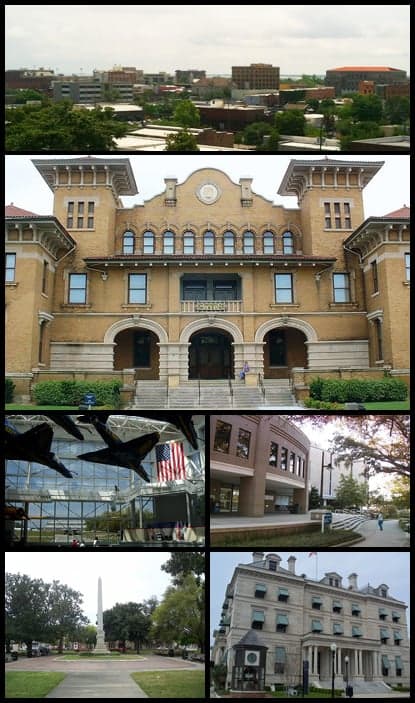
Photo: Wikipedia
Personal Sovereignty in Pensacola, FL
Viable for self-reliance. Generally workable, though some barriers may limit total independence.
What does Personal Sovereignty tell us?
Personal Sovereignty measures your capacity for self-reliance and independence with minimal government friction. Higher scores mean fewer barriers between you and the way you want to live... but it assumes you have the space you need and good neighbors.
What does this tell us?
Personal Sovereignty measures your capacity for self-reliance and independence with minimal government friction. Higher scores mean fewer barriers between you and the way you want to live... but it assumes you have the space you need and good neighbors.
State Policy
Energy independence: Importer (10% of energy produced in-state)
Personal Liberty
Homesteading

Personal Liberty Analysis
Pensacola, Florida offers a robust environment for personal sovereignty that stands out even within the generally liberty-friendly Southeast, anchored by Florida’s strong preemption laws, lack of state income tax, and a deeply ingrained culture of self-reliance. For individuals and families prioritizing autonomy—whether from government overreach, economic instability, or external threats—the Pensacola metro area provides a legal and practical framework that allows you to live largely on your own terms. The combination of constitutional carry, minimal business regulation, and a growing network of like-minded preppers and homesteaders makes this a serious contender for anyone evaluating relocation from high-control states.
Tax burden and regulatory posture in the Florida Panhandle
Florida’s tax structure is a major pillar of personal sovereignty here. There is no state income tax, meaning every dollar you earn stays in your pocket—no state-level confiscation for programs you may not support. Property taxes in Escambia County average around 0.85% of assessed value, which is moderate for Florida and significantly lower than in the Northeast or California. Sales tax is 7.5% (6% state + 1.5% county), but essentials like groceries and prescription drugs are exempt. More importantly, Florida’s regulatory posture is aggressively pro-business and pro-property owner. The state has strong preemption laws that prevent cities like Pensacola from enacting their own gun control, rental restrictions, or energy mandates that exceed state law. This means you won’t see local bans on gas stoves, backyard chickens, or short-term rentals—common overreaches in blue cities. For a survivalist mindset, this regulatory predictability is critical: you can invest in land, build a shop, or run a side business without fear of sudden local ordinance changes.
Self-defense and gun law specifics for Pensacola residents
Florida is a constitutional carry state as of July 2023, meaning law-abiding adults can carry a concealed firearm without a permit. This is a foundational sovereignty right. There is no state-level waiting period for long guns, and private sales between individuals are legal without background checks—though federal law still applies to dealers. Stand Your Ground laws are fully in effect, with no duty to retreat in any place you have a legal right to be. Castle Doctrine protections extend to your home, vehicle, and occupied structure. For preppers, this means your property is legally defensible without the risk of prosecution for using force against an intruder. Magazine capacity is unrestricted, and there is no state-level assault weapons ban. The only notable restriction is a three-day waiting period for handgun purchases from licensed dealers, but this does not apply to concealed carry permit holders. Pensacola also has a strong gun culture with multiple ranges, gunsmiths, and training facilities—making it easy to maintain proficiency and network with other armed citizens.
Self-reliance and homesteading viability in Escambia County
Pensacola’s zoning and land-use policies are favorable for self-reliance. Within the city limits, residential lots typically range from 5,000 to 10,000 square feet, and backyard chickens are legal in most zones (hens only, no roosters). Outside the city, in unincorporated Escambia County, lot sizes increase dramatically—many parcels are 1 to 5 acres, with some rural tracts exceeding 10 acres. Zoning for agricultural use is common, allowing for livestock, gardens, and even small-scale aquaculture. Off-grid feasibility is moderate: while Florida requires connection to utility grid for new construction in most subdivisions, rural parcels often allow private wells and septic systems. Solar panels are legal and net metering is available, though the state’s humid climate and hurricane risk require robust mounting systems. Rainwater collection is unrestricted for outdoor use. The main challenge is the water table—many areas have high groundwater, making basements rare and root cellars difficult. However, above-ground storage and cisterns are practical. For a prepper, the ability to raise food, store water, and generate power without bureaucratic hurdles is a significant advantage over states like Colorado or Oregon where such activities face increasing restrictions.
Personal liberties: parental rights, medical autonomy, and property rights
Florida has become a national leader in protecting parental rights. The Parental Rights in Education Act (HB 1557) ensures that parents have oversight over their children’s education and medical decisions, including the right to opt out of any curriculum or health service they find objectionable. Medical autonomy is also strong: there is no state vaccine mandate for adults or children, and Florida banned vaccine passports in 2021. During the COVID-19 response, Governor DeSantis explicitly prohibited mask mandates in schools and businesses, setting a precedent that government cannot compel medical procedures or restrictions on personal movement. Property rights are protected by the Bert J. Harris Jr. Private Property Rights Protection Act, which requires compensation if a government regulation reduces property value by more than 50%. This makes eminent domain abuse and regulatory takings far less common than in states like New York or California. Free speech is robust, with no state-level hate speech laws or social media censorship mandates. For a conservative individual concerned about government overreach, these protections create a legal buffer against the kind of top-down control seen in other regions.
Overall, Pensacola ranks among the top mid-sized metros in the U.S. for personal sovereignty, particularly when compared to the Pacific Northwest, the Northeast corridor, or the Front Range of Colorado. The absence of income tax, constitutional carry, strong property rights, and parental autonomy laws create a legal environment where you can live, defend, and provide for your family with minimal state interference. The main trade-offs are the humid subtropical climate (which complicates long-term food storage and off-grid power) and the risk of hurricanes, but these are manageable with proper planning. For someone evaluating relocation from a high-control state, Pensacola offers a rare combination of legal freedom, affordable land, and a community that values self-reliance—making it a serious option for those who prioritize personal sovereignty above all else.

* Values derived from national, state, county, city and local statistics and may differ in a specific area. Last updated: 2026-04-19T06:57:09.000Z
Narrative content on this page is AI-generated and may contain mistakes. Verify any details that matter before acting on them.
ReloMaps may earn a commission from affiliate links at no extra cost to you.

