Photo: Wikipedia
Demographics of Pensacola, FL
Affluence Level in Pensacola, FL
A middle-class area roughly in line with national averages across income, home values, education, and employment.
People of Pensacola, FL
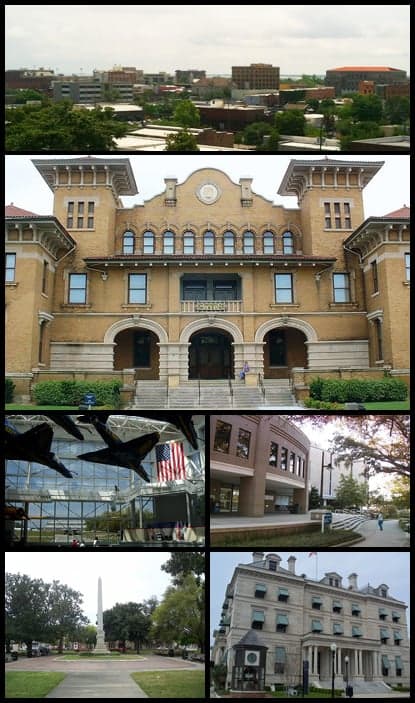
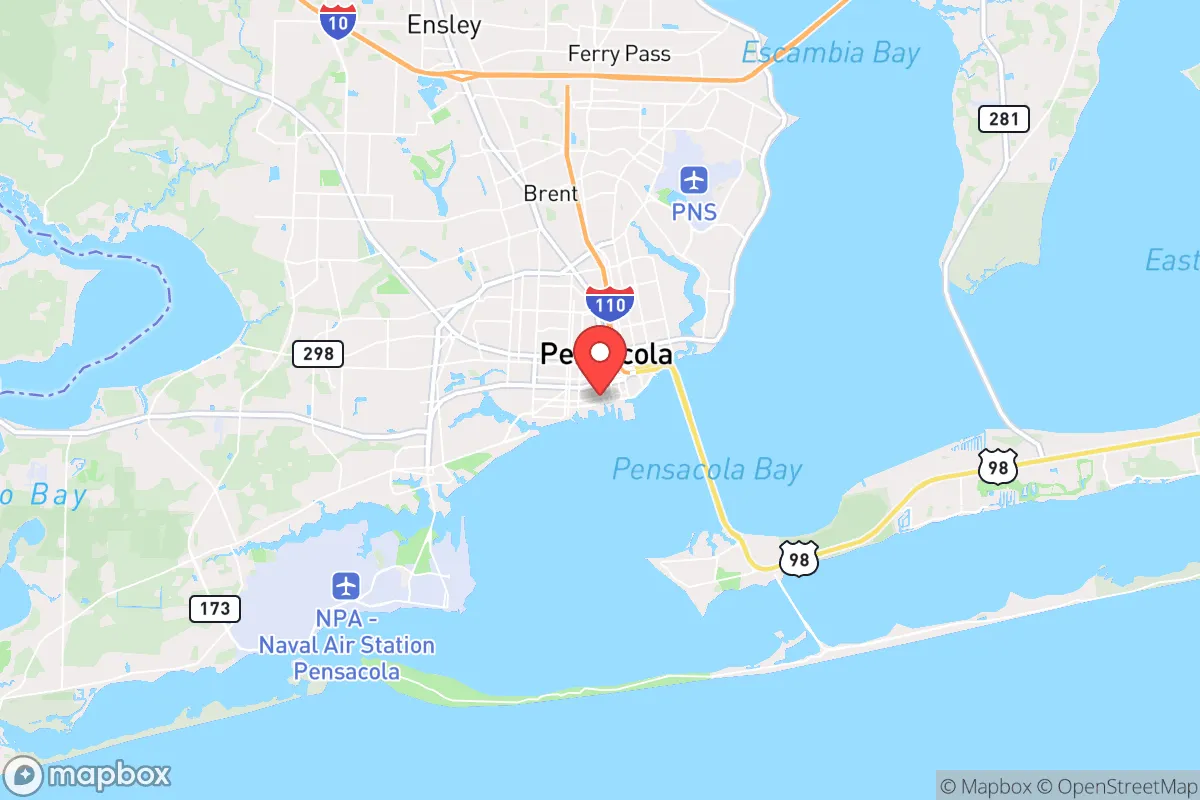
The people of Pensacola, Florida, today number just over 54,000, forming a compact, historically rooted city that is notably less diverse than the national average. With a population that is 65.8% White, 21.0% Black, and only 4.5% Hispanic, Pensacola retains a distinctly Southern and military-influenced character, shaped by centuries of boom-and-bust cycles tied to the sea and the base. The city’s identity is marked by a strong sense of place, a relatively high college education rate of 42.7%, and a very low foreign-born share of just 2.1%, making it one of the least immigrant-dense cities in Florida. This is a community where generational roots run deep, and newcomers—often tied to the Navy or local healthcare—are quickly absorbed into established neighborhoods rather than forming new ethnic enclaves.
How the city was settled and grew
Pensacola’s population history begins not with English colonists but with Spanish explorers, who established the first European settlement in 1559—predating St. Augustine—though it was abandoned within two years. Permanent settlement began in earnest under Spanish and later British rule in the 18th century, with the city serving as a strategic port and military outpost. The original population was a mix of Spanish soldiers, French traders, and enslaved Africans, who built the foundations of the historic North Hill Preservation District, where grand Victorian homes still stand as monuments to the city’s early mercantile elite. The 19th century brought a wave of Anglo-American settlers from the Deep South, who established the city’s plantation-era economy and built the working-class neighborhoods of East Hill and West Pensacola. The arrival of the railroad in the 1880s and the establishment of Naval Air Station Pensacola in 1913 triggered the city’s first major population boom, drawing thousands of military personnel and civilian workers. By the mid-20th century, Pensacola’s Black population—descended from enslaved laborers and post-Reconstruction migrants—had concentrated in the Belmont-Devilliers district, a once-thriving commercial and cultural hub for the city’s African American community.
Modern era (post-1965)
The post-1965 era reshaped Pensacola’s population through two dominant forces: the expansion of the military-industrial complex and the suburbanization of the White middle class. The 1960s and 1970s saw the construction of Interstate 10 and the growth of the Cordova Park and Scenic Hills neighborhoods, which drew White families out of the urban core and into newly developed subdivisions. Meanwhile, the Black population remained concentrated in the historic core, particularly in Belmont-Devilliers and the Westside neighborhoods, as redlining and restrictive covenants limited mobility. The city’s Hispanic population—now just 4.5%—grew modestly from the 1980s onward, driven by Puerto Rican military families and a small number of Mexican immigrants working in construction and hospitality, settling primarily in the Warrington area near the base. The East/Southeast Asian population (1.9%) and Indian subcontinent population (0.7%) are very small, largely composed of military-affiliated professionals and medical staff at Baptist Hospital, and they have not formed distinct ethnic neighborhoods. The foreign-born share of 2.1% is a fraction of the national average, reflecting Pensacola’s limited appeal to international immigrants compared to Miami or Orlando.
The future
Pensacola’s population is projected to grow slowly, driven by domestic in-migration from other parts of Florida and the U.S., rather than by international immigration. The city is not homogenizing into a single melting pot; instead, it is becoming more economically stratified, with East Hill and North Hill gentrifying as young professionals and retirees displace older, lower-income residents. The Black population share has held steady near 21% for decades, suggesting a stable but segregated community, while the Hispanic share is expected to rise slowly as military families and service workers continue to arrive. The East/Southeast Asian and Indian populations are likely to remain small, plateauing as niche communities tied to the university and medical sectors. Over the next 10–20 years, Pensacola will likely become slightly more diverse but will remain a predominantly White, native-born city with a strong military and healthcare economy.
For someone moving in now, Pensacola offers a deeply rooted, slow-growing community where newcomers are expected to adapt to established social and cultural norms. The city is becoming more educated and professional, but it remains a place where neighborhood identity—whether in historic East Hill, the military-adjacent Warrington, or the revitalizing Belmont-Devilliers—matters more than ethnic background. This is not a city of rapid demographic change or immigrant-driven growth; it is a stable, Southern port town where the past continues to shape the present.

* Values derived from national, state, county, city and local statistics and may differ in a specific area. Last updated: 2026-04-19T06:57:09.000Z
Narrative content on this page is AI-generated and may contain mistakes. Verify any details that matter before acting on them.
ReloMaps may earn a commission from affiliate links at no extra cost to you.

