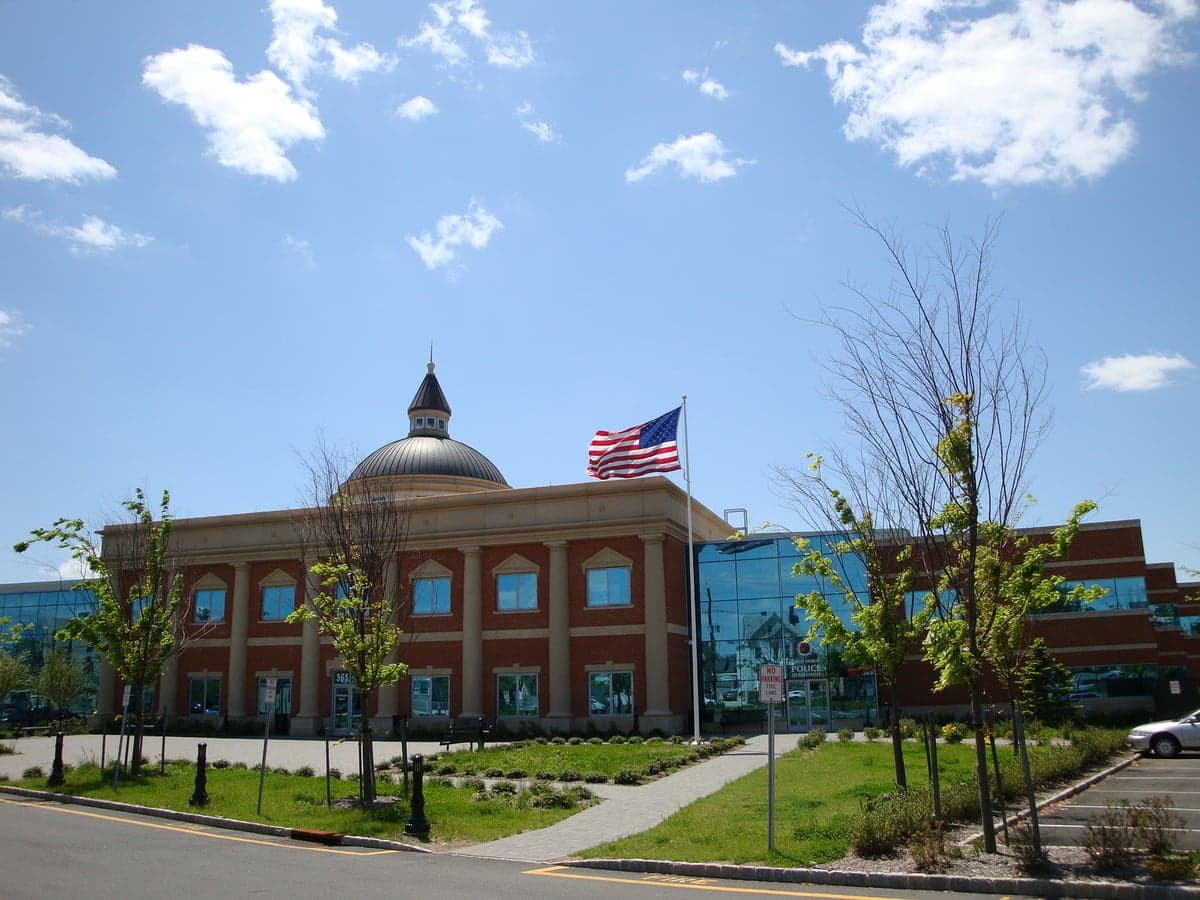
Photo: Wikipedia
Political ClimatePolitical Climate in Perth Amboy, NJ
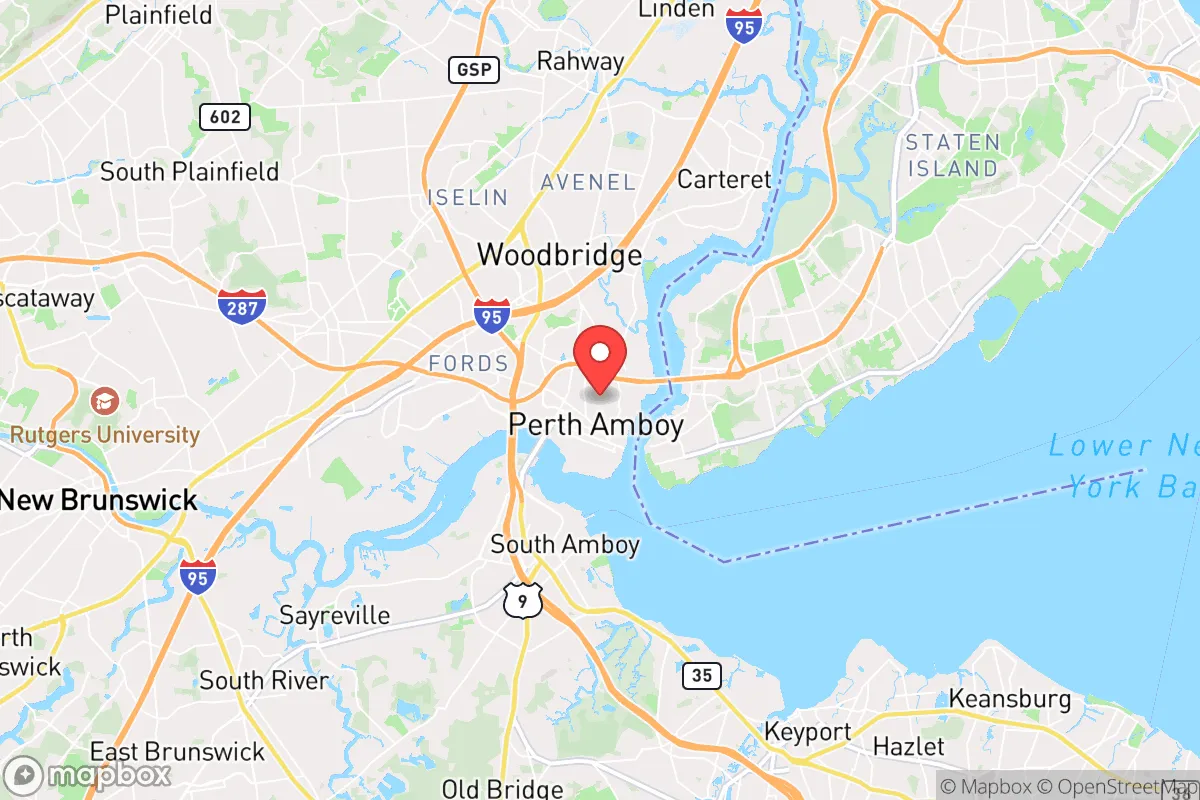
District shown is the primary district for this city’s centroid. Cities may span multiple districts.
Local Political AnalysisPolitical Analysis of Perth Amboy, NJ
Perth Amboy has been a Democratic stronghold for as long as anyone can remember, and the numbers back it up with a Cook PVI of D+5. But if you’ve lived here a while, you know the political climate isn’t just about party registration—it’s about a slow, steady shift away from the common-sense, live-and-let-live values that used to define this city. The old guard, who kept things practical and focused on local jobs and keeping taxes in check, is being replaced by a wave of progressive activism that feels more like a takeover than a natural evolution. It’s not just about voting blue anymore; it’s about a whole new set of rules and attitudes that are changing what it means to live here.
How it compares
Drive ten minutes north to Woodbridge or south to Edison, and you’ll find towns that still lean center-left but haven’t fully embraced the hardline progressive agenda. Those places still have a healthy mix of opinions at town hall meetings, and you don’t feel like you’re walking on eggshells if you question a new ordinance. Perth Amboy, though, is increasingly out of step with its neighbors. While nearby Sayreville and Carteret still have a strong working-class, union-driven Democratic base that prioritizes infrastructure and public safety, Perth Amboy’s local leadership has been pushing symbolic resolutions and social experiments that feel disconnected from the day-to-day struggles of families just trying to get by. The contrast is stark: you can cross the bridge into South Amboy and feel a different energy—one where personal freedoms aren’t constantly under the microscope.
What this means for residents
For the average person, this political climate translates into more government overreach into your personal life. We’re seeing it in zoning battles that prioritize dense, state-mandated housing over single-family homes, and in school board decisions that emphasize ideological training over reading and math. Property taxes are already among the highest in Middlesex County, and the push for “equity” initiatives and expanded social programs means those bills are only going up. Small business owners are feeling the squeeze from new regulations and permitting delays that didn’t exist a decade ago. If you value the right to raise your kids without the government dictating every aspect of their education or to run a business without a mountain of red tape, the trajectory here is genuinely concerning. The old Perth Amboy, where neighbors helped each other and the city stayed out of your way, is fading fast.
Culturally, the city has always been a proud immigrant hub, and that diversity is still its strength. But the policy distinctions are becoming sharper. Perth Amboy was one of the first cities in the state to adopt a “sanctuary” ordinance, which sounds noble until you realize it ties the hands of local police and creates friction with federal law. There’s also a growing push for ranked-choice voting and other electoral experiments that make it harder for independent-minded candidates to break through. The long-term worry is that we’re trading a community that respected individual liberty for one that demands conformity to a progressive checklist. If you’re thinking of moving here, just know that the political climate isn’t neutral—it’s actively shifting, and not in a direction that favors personal freedom or fiscal sanity.

State Political ClimatePolitical Climate in New Jersey
State Political AnalysisPolitical Environment in the State
New Jersey has long been one of the most reliably Democratic states in the nation, but don’t let the overall numbers fool you—this place is a patchwork of deep-blue urban strongholds and surprisingly red suburban and rural pockets. Over the last 20 years, the state has shifted from a moderate blue to a deep blue, driven largely by the explosive growth of the New York City exurbs and the consolidation of progressive power in the statehouse. The 2024 presidential election saw Joe Biden win the state by about 16 points, but that masks a real story: the GOP has been clawing back ground in places like Ocean County and Sussex County, while the Democratic machine tightens its grip in the cities and inner-ring suburbs. If you’re a conservative looking at New Jersey, you’re not moving into a lost cause—but you’re stepping into a state where the political climate is increasingly hostile to your values, and you need to know exactly where the lines are drawn.
Urban vs. rural divide
The political map of New Jersey is a tale of three regions: the urban core, the suburban battleground, and the rural redoubt. The cities—Newark, Jersey City, Paterson, and Camden—are Democratic fortresses, routinely delivering 80-90% of their votes to the party. These metros are powered by dense populations, strong union presence, and a heavy reliance on government services. The suburbs are where the real action is. Bergen County, once a bellwether, has shifted hard left as New York City commuters flood in, while Monmouth and Middlesex counties are more competitive but trending blue. The real conservative strongholds are in the northwestern and southern parts of the state. Ocean County is the GOP’s crown jewel, voting +18 for Trump in 2024, and Sussex County is even redder, with a +22 margin. Hunterdon County and Cape May County also lean Republican, though they’re more moderate. The rural areas—places like Salem County and Warren County—are deeply conservative, but they’re losing population and political clout as the state’s growth concentrates in the blue metros. If you’re looking for a conservative community, you’re best off in Ocean or Sussex, but be prepared for a long commute if you work in the northern job centers.
Policy environment
New Jersey’s policy environment is a cautionary tale for anyone who values limited government. The state has one of the highest tax burdens in the country—the combined state and local tax rate can exceed 10%, and property taxes are the highest in the nation, averaging over $9,500 per year. The regulatory posture is aggressive: the state has some of the strictest environmental rules, a $15 minimum wage, and a paid family leave program that’s among the most generous. Education policy is dominated by the teachers’ union, with per-pupil spending over $25,000, yet outcomes are mediocre. Healthcare is heavily regulated, with a state-run exchange and Medicaid expansion. Election laws are a sore point for conservatives: the state has no-excuse mail-in voting, automatic voter registration, and same-day registration, which critics argue erodes election integrity. The state also has a “blue state” tax policy that targets high earners, with a top marginal income tax rate of 10.75%. For a conservative, this is a high-cost, high-regulation environment where your paycheck and your property are constantly under siege.
Trajectory & freedom
New Jersey is becoming less free, and the trend is accelerating. The state has enacted a series of laws that expand government control over personal decisions. On gun rights, New Jersey has some of the strictest laws in the nation—the 2022 “Gun Safety” package banned carrying in sensitive places, required liability insurance, and mandated microstamping, effectively making it nearly impossible for law-abiding citizens to exercise their Second Amendment rights. On parental rights, the state has moved in the opposite direction of places like Florida: the 2024 “Parental Rights in Education” bill was defeated, and schools are allowed to hide a child’s gender identity from parents. On medical autonomy, the state has expanded vaccine mandates and has a strict abortion law that protects the procedure up to viability. Property rights are under constant threat from the state’s powerful eminent domain authority and the Mount Laurel Doctrine, which forces towns to build affordable housing. The state’s tax climate is a slow bleed on personal freedom—every year, more people leave for lower-tax states like Florida and Texas. The trajectory is clear: more regulation, higher taxes, and less personal autonomy.
Civil unrest & political movements
New Jersey has seen its share of political flashpoints. The state is a sanctuary state, with Governor Phil Murphy’s 2018 executive order limiting cooperation with ICE, which has led to tensions in towns like Elizabeth and Newark, where immigration enforcement is a hot-button issue. The 2020 Black Lives Matter protests were large and sometimes violent, particularly in Atlantic City and Trenton, where property damage occurred. On the right, the “Jersey Freedom” movement has organized around Second Amendment rights and school board elections, with some success in places like Jackson Township and Toms River, where conservative parents have flipped local boards. Election integrity remains a flashpoint: the 2020 and 2022 elections saw widespread use of mail-in ballots, and the state’s decision to send ballots to all registered voters in 2020 was challenged in court. The state also has a history of political corruption, with multiple mayors and legislators convicted in recent years. A new resident will notice that political activism is real and present, but it’s often drowned out by the sheer weight of the Democratic machine.
Projection
Over the next 5-10 years, New Jersey will likely become even more Democratic and more progressive. The demographic trends are clear: the state is losing native-born residents to lower-tax states, while gaining immigrants and out-of-state transplants who lean left. The urban cores are growing, and the rural areas are shrinking. The state’s tax base is eroding, which will likely lead to even higher taxes on those who remain. The political trajectory points to more gun control, more government involvement in healthcare and education, and a continued erosion of parental rights. However, there is a counter-trend: the rise of conservative suburbs in Ocean and Sussex counties, and the possibility of a GOP governor in 2025 (the state has a history of electing Republican governors like Chris Christie). But even a Republican governor would be hamstrung by a heavily Democratic legislature. For a conservative moving in now, expect to be in a permanent minority, fighting for every inch of ground at the local level.
Bottom line: New Jersey is a beautiful state with great schools, strong job markets, and proximity to major cities, but it comes at a steep price—both financially and in terms of personal freedom. If you’re a conservative, you can find your tribe in places like Ocean County or Sussex County, but you’ll be swimming against a strong tide. Your property taxes will be high, your gun rights will be limited, and your voice in state government will be muted. The best advice is to pick your town carefully, get involved in local politics, and be prepared for a long-term fight. If you value low taxes, limited government, and personal autonomy above all else, New Jersey is probably not your best bet. But if you’re willing to pay the price for the lifestyle, you can make it work—just know what you’re signing up for.
* Values derived from national, state, county, city and local statistics and may differ in a specific area. Last updated: 2026-04-30T06:00:45.000Z
Narrative content on this page is AI-generated and may contain mistakes. Verify any details that matter before acting on them.
ReloMaps may earn a commission from affiliate links at no extra cost to you.

