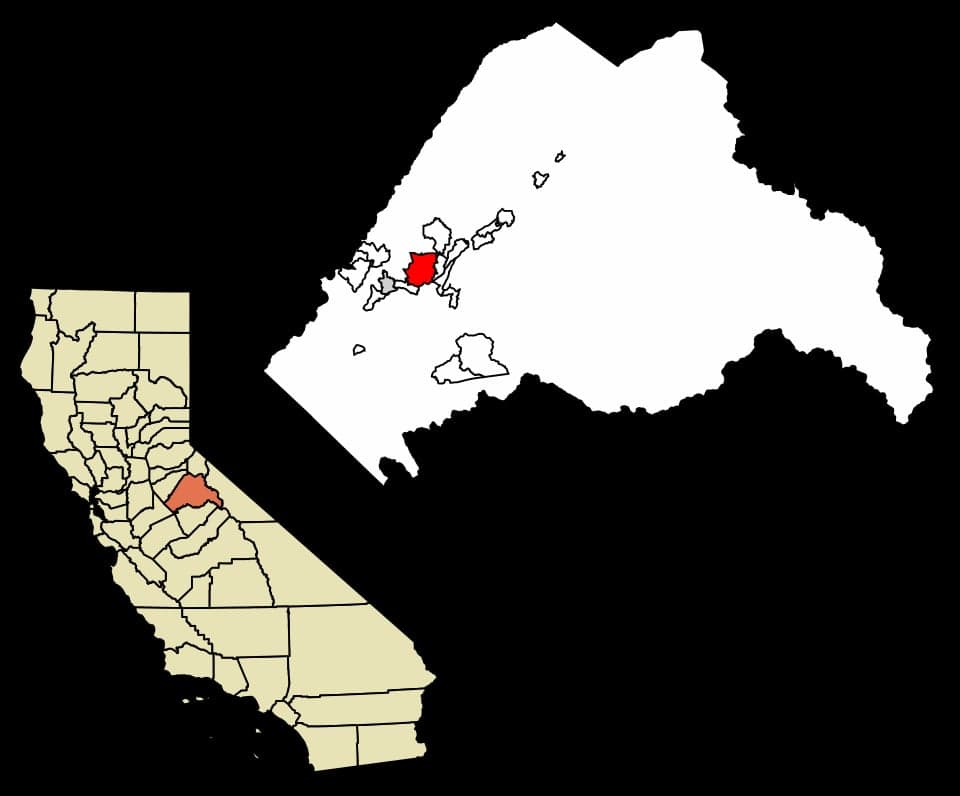
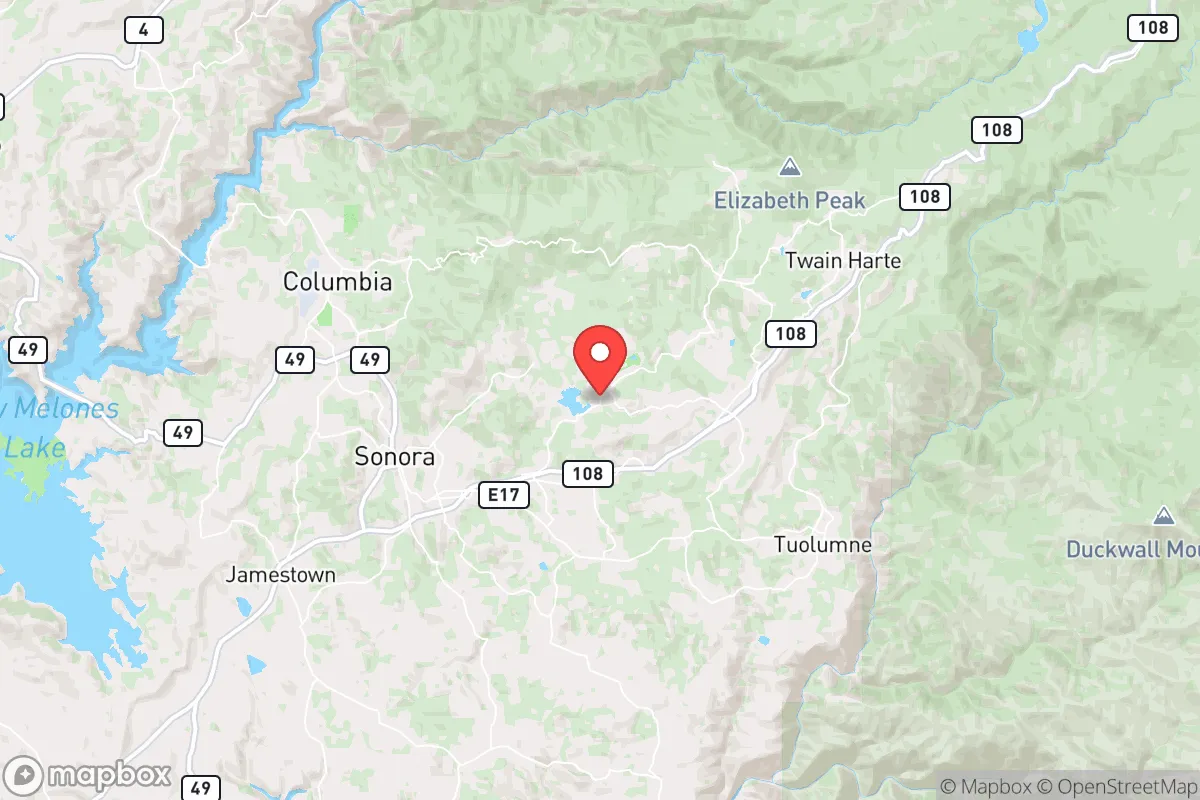
Photo: Wikipedia
Political ClimatePolitical Climate in Phoenix Lake, CA
District shown is the primary district for this city’s centroid. Cities may span multiple districts.
Local Political AnalysisPolitical Analysis of Phoenix Lake, CA
Phoenix Lake, California, is a reliably conservative pocket in a deeply blue state, with a Cook Partisan Voting Index of R+8 that places it among the most Republican-leaning communities in the Sierra Nevada foothills. The area has held steady for the GOP for decades, though the margin has tightened slightly as more Bay Area transplants trickle in—locals will tell you the 2020 election saw a few more Biden signs than they remember in 2016, but the overall trajectory remains solidly red. If you’re looking for a place where the local diner crowd still talks about water rights and timber regulations without irony, this is it.
How it compares
Phoenix Lake sits in Tuolumne County, which voted for Trump by about 15 points in 2020, making it a stark contrast to the surrounding state of California—where Democrats hold every statewide office and the legislature has a supermajority. Drive 30 minutes west to Sonora, the county seat, and you’ll find a more moderate mix, with a few coffee shops that lean progressive and a city council that occasionally splits on housing issues. Head south to Groveland, and the politics get even redder, with Trump signs still visible on ranch fences years after the election. The real political shock comes if you go 90 minutes west to Modesto or Stockton, where Democratic registration jumps sharply and the vibe shifts from “leave me alone” to “let’s organize.” For Phoenix Lake residents, the state’s politics often feel like a distant, hostile force—especially on issues like water allocation and wildfire management, where local needs clash with Sacramento’s priorities.
What this means for residents
For conservative residents, Phoenix Lake offers a rare sense of political comfort in California: you can fly a Trump flag without getting side-eye, the local sheriff’s office is openly pro-Second Amendment, and the county supervisors routinely push back on state housing mandates. Property taxes stay relatively low thanks to Prop 13, and there’s little appetite for new local taxes. For liberal residents, life here means being a clear minority—you’ll likely be the only one at the town hall meeting arguing for more public transit or renewable energy projects. That said, the community is generally live-and-let-live; no one’s getting run out of town for a Biden sticker, but you won’t find a local Democratic club with more than a dozen members. The practical reality is that state laws still apply—gun laws, environmental regulations, and labor rules are all Sacramento’s domain—so even in a red pocket, you’re living under blue governance. The tension shows up most in local debates over short-term rentals (a big issue near the lake) and fire safety ordinances, where the county often drags its feet on state mandates.
Culturally, Phoenix Lake feels more like a small Nevada town than a California suburb: people wave from their trucks, the Fourth of July parade is a big deal, and the local paper runs letters to the editor complaining about “coastal elites.” There’s a strong libertarian streak—folks here don’t like being told what to do, whether by Sacramento or the HOA. The biggest policy distinction from the rest of California is the near-total absence of rent control or tenant protections; the rental market is small and informal, with most leases handshake deals. Looking ahead, the area’s politics will likely stay conservative as long as the economy relies on tourism, logging, and second homes—but if remote work brings more tech workers from the Bay Area, that R+8 could start drifting toward R+5 within a decade. For now, it’s a place where you can live your politics without much fuss, as long as you’re okay with being out of step with the state you’re in.

State Political ClimatePolitical Climate in California
State Political AnalysisPolitical Environment in the State
California is a deeply blue state where Democrats hold every statewide office and supermajorities in both legislative chambers, but that monolithic label hides a landscape of intense internal division. The state’s overall partisan lean has been solidly Democratic for three decades, with the party’s voter registration advantage hovering around 23 points as of 2026. However, the 10-20 year arc shows a slow but real rightward shift in inland areas, even as coastal metros harden their progressive identity. For a conservative relocator, the practical reality is that state policy will be liberal for the foreseeable future, but where you live within California determines whether you feel that as a daily pressure or a distant headline.
Urban vs. rural divide
The political map of California is a story of three distinct Californias. The coastal megacities — Los Angeles, San Francisco, Oakland, and San Jose — drive the state’s Democratic supermajority, with San Francisco County delivering 85% of its vote to Joe Biden in 2020. The Central Valley, anchored by Bakersfield, Fresno, and Modesto, is the state’s conservative heartland, where Republicans often win by double digits. The Inland Empire, including Riverside and San Bernardino, has become the state’s premier battleground: these counties voted for George W. Bush in 2004, flipped to Obama, then swung hard to Trump in 2020, with San Bernardino County going red for the first time since 2004. Orange County, once a Republican stronghold, has flipped blue in presidential races since 2016, though its northern suburbs like Yorba Linda and Huntington Beach remain conservative holdouts. The Central Coast, from Santa Barbara to Monterey, leans Democratic but with a moderate, business-friendly flavor that differs from the Bay Area’s progressivism.
Policy environment
California’s policy environment is defined by high taxes, heavy regulation, and expansive state services. The state has a progressive income tax with a top marginal rate of 13.3%, the highest in the nation, and a state sales tax that can exceed 10% in some cities. Property taxes are capped at 1% of assessed value plus inflation under Proposition 13, which benefits long-term homeowners but creates a two-tier system where new buyers pay far more. The regulatory posture is among the most aggressive in the country: California sets its own vehicle emissions standards, mandates renewable energy targets, and has some of the strictest environmental review laws (CEQA) that can delay any construction project for years. Education policy is dominated by the California Teachers Association, with per-pupil spending above the national average but outcomes that lag in reading and math proficiency. Healthcare is heavily regulated, with the state operating its own insurance exchange (Covered California) and expanding Medicaid to all income-eligible residents regardless of immigration status. Election laws are among the most accessible in the nation: all registered voters receive a mail ballot automatically, same-day registration is available, and the state has a top-two primary system that often locks out third-party candidates.
Recent policy direction
The last five years have seen California accelerate in a distinctly progressive direction across nearly every policy domain a relocator might weigh. On gun and self-defense law, the state passed a 2023 law banning the carrying of firearms in most public places, which was partially blocked by courts but signals the legislature’s intent. A 2024 law requires gun owners to carry liability insurance. On parental and education rights, California was the first state to pass a law (AB 1955 in 2024) prohibiting school districts from requiring parental notification when a child changes their gender identity, directly opposing the trend in red states. Speech and privacy: the state passed the California Age-Appropriate Design Code Act in 2022, imposing strict data privacy rules on tech platforms for minors, though it faces First Amendment challenges. Medical and bodily autonomy: California has enshrined abortion access as a state constitutional right (Proposition 1, 2022) and passed a 2023 law protecting doctors who mail abortion pills to patients in other states. Property rights: rent control was expanded statewide under the Tenant Protection Act of 2019, capping annual rent increases at 5% plus inflation, and a 2024 law limits security deposits to one month’s rent. Taxation: no major tax cuts; instead, a 2023 law closed the carried interest loophole for state taxes, and a 2024 ballot measure (Proposition 5) to lower the threshold for local housing bonds failed. Voting and ballot access: the state expanded mail-in voting permanently after the pandemic and passed a 2021 law requiring counties to offer ballot drop boxes in every city.
Civil unrest & political movements
California has been a flashpoint for political activism on both sides. The 2020 George Floyd protests in Los Angeles and Oakland were among the largest and most destructive in the nation, with billions in property damage. The state’s sanctuary law (SB 54, 2017) limits local law enforcement cooperation with federal immigration authorities, and the state has sued the Trump administration multiple times over immigration policy. On the right, the California Republican Party has seen a grassroots resurgence in the Central Valley and Inland Empire, with groups like the California Rifle and Pistol Association organizing large rallies. Secession rhetoric is mostly a fringe phenomenon, though the “Calexit” movement gained brief attention after Trump’s 2016 win. Election integrity controversies have been less intense than in swing states, but the 2021 recall election of Governor Gavin Newsom — which he survived by a 62-38 margin — saw widespread allegations of fraud from conservative activists, though no evidence of systemic issues emerged. Visible flashpoints a new resident would notice include frequent protests at state capitol buildings, homeless encampments in major cities that have become political symbols, and the occasional standoff between local sheriffs and state officials over sanctuary policies.
Projection
Over the next 5-10 years, California’s political trajectory points toward continued progressive dominance at the state level, but with growing internal friction. Demographic trends favor Democrats: the state’s Latino population, which leans Democratic, is growing, while white conservative voters continue to move to Texas, Idaho, and Arizona. In-migration from other states is net negative, and the people leaving tend to be moderate and conservative. However, the state’s housing crisis and high cost of living are creating a new political cleavage: younger, moderate voters in the Inland Empire and Central Valley are increasingly frustrated with coastal progressivism, and the state’s independent voter registration has grown to 23% of the electorate. A realistic projection is that California will remain solidly blue in presidential races, but the margin may narrow by 3-5 points in the next decade as inland areas grow and coastal populations stagnate. For someone moving in now, expect to see more ballot initiatives on housing, taxes, and crime, but no fundamental shift in the state’s policy direction unless a major economic crisis forces change.
For a conservative relocator, the bottom line is that California offers a high-quality life if you choose your location carefully and accept that state policy will be liberal. You can live in a conservative enclave like Bakersfield, Temecula, or Huntington Beach and experience a local culture that feels more like Texas than San Francisco, but you will still pay state income tax, follow state gun laws, and send your children to schools governed by Sacramento. For a liberal relocator, California delivers on its promises: strong environmental protections, abortion access, union power, and a safety net. The practical takeaway is that California is not a monolith, and your experience depends far more on your county and city than on the state as a whole.
* Values derived from national, state, county, city and local statistics and may differ in a specific area. Last updated: 2026-08-19T19:30:53.000Z
Narrative content on this page is AI-generated and may contain mistakes. Verify any details that matter before acting on them.
ReloMaps may earn a commission from affiliate links at no extra cost to you.

