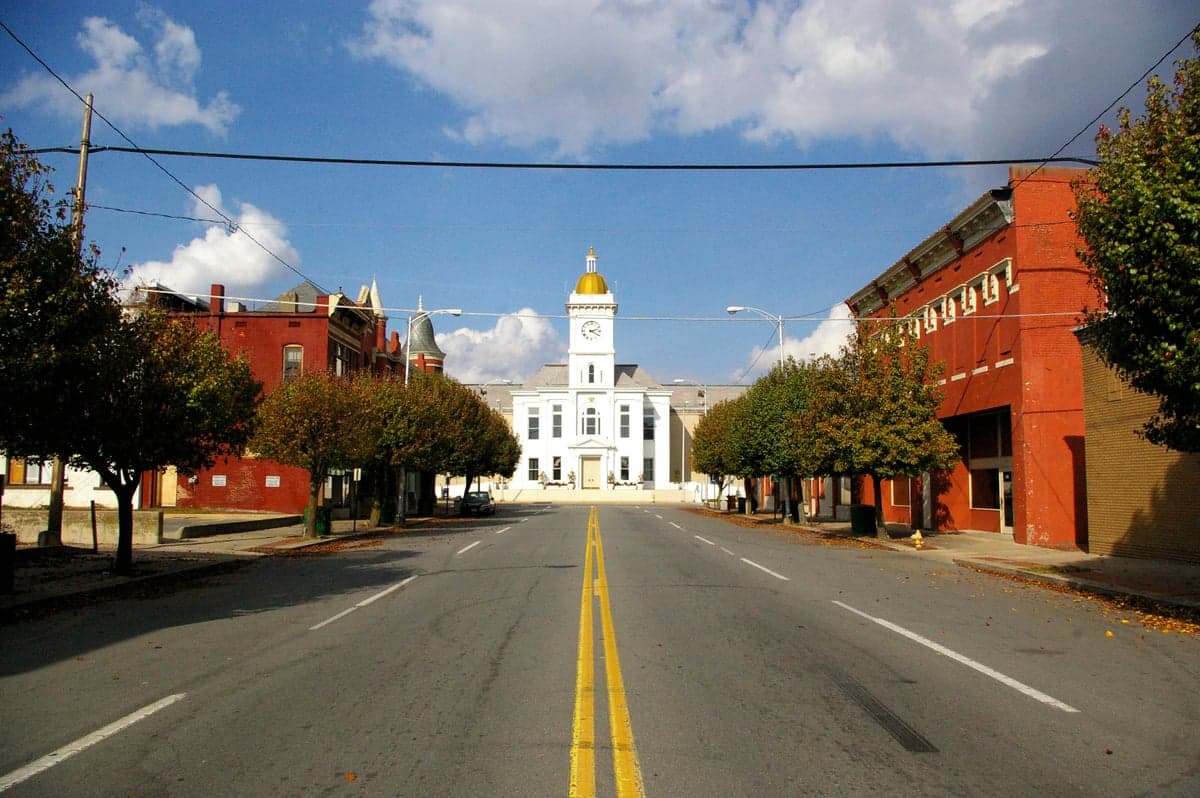
Photo: Wikipedia
Strategic Assessment of Pine Bluff, AR
Workable tactical position. Some exposure to population density or targets, but generally defensible in a crisis.
What does the Strategic Assessment tell us?
Our Strategic Assessment grades tactical survivability of an area. Major population centers, military targets, fallout zones, natural disasters, and border exposure all drive risk — lower exposure means a more defensible position in a crisis.
This is heavily inspired by Joel Skousen's Strategic Relocation book. Highly recommended you checkout the book ($)What does this tell us?
Our Strategic Assessment grades tactical survivability of an area. Major population centers, military targets, fallout zones, natural disasters, and border exposure all drive risk — lower exposure means a more defensible position in a crisis.
This is heavily inspired by Joel Skousen's Strategic Relocation book. Highly recommended you checkout the book ($)Strategic Pillars

Key Distances
Regional Safe Places
Below is our recommended "safe zones" in Arkansas and the surrounding area based on our strategic heuristics. For most people, it's unrealistic to live in a “safe zone” full-time due to work, family or other personal reasons. They tend to be more rural. However, many of these areas are perfect for second homes and retreat properties that double as a vacation home or even a short-term rental.
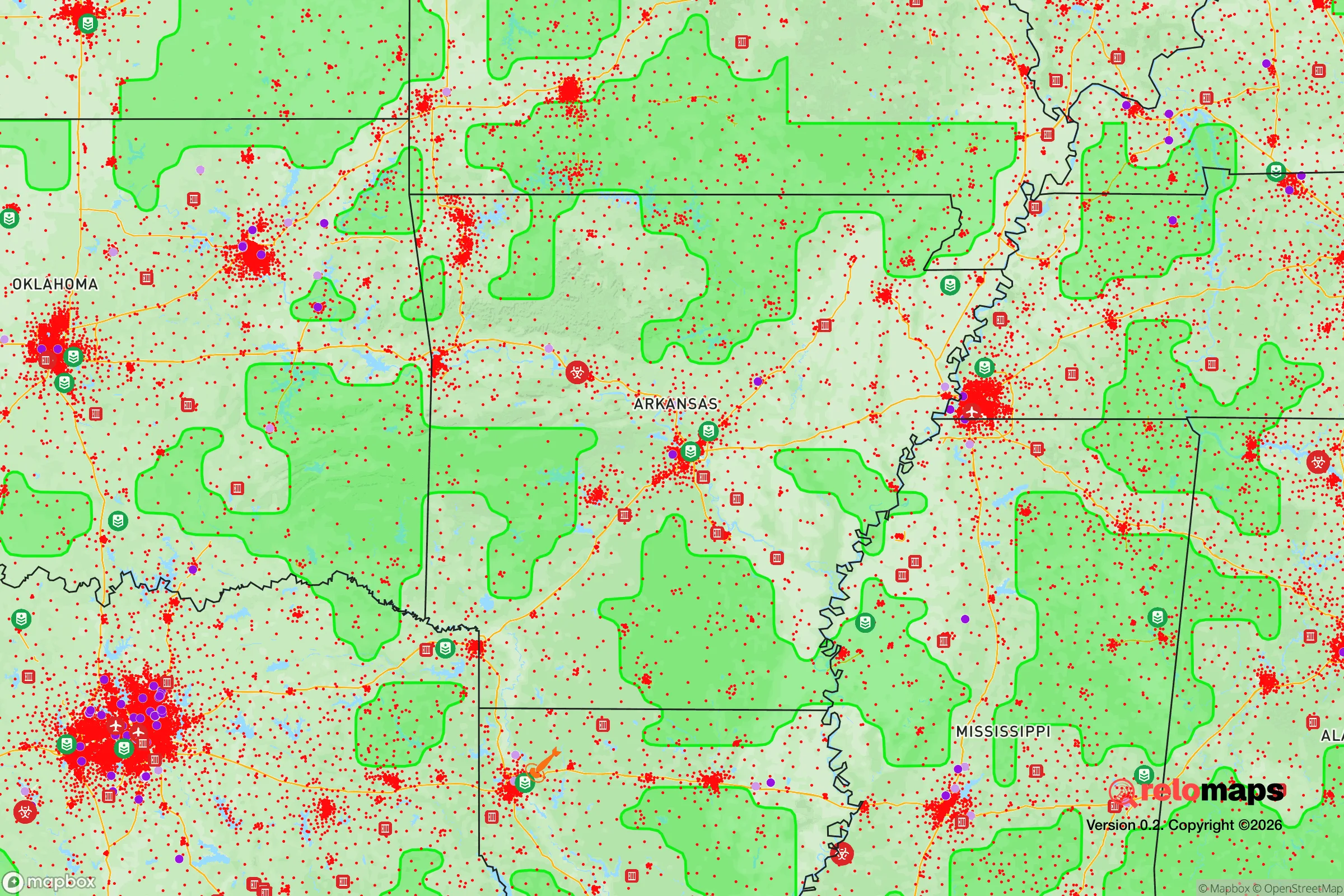
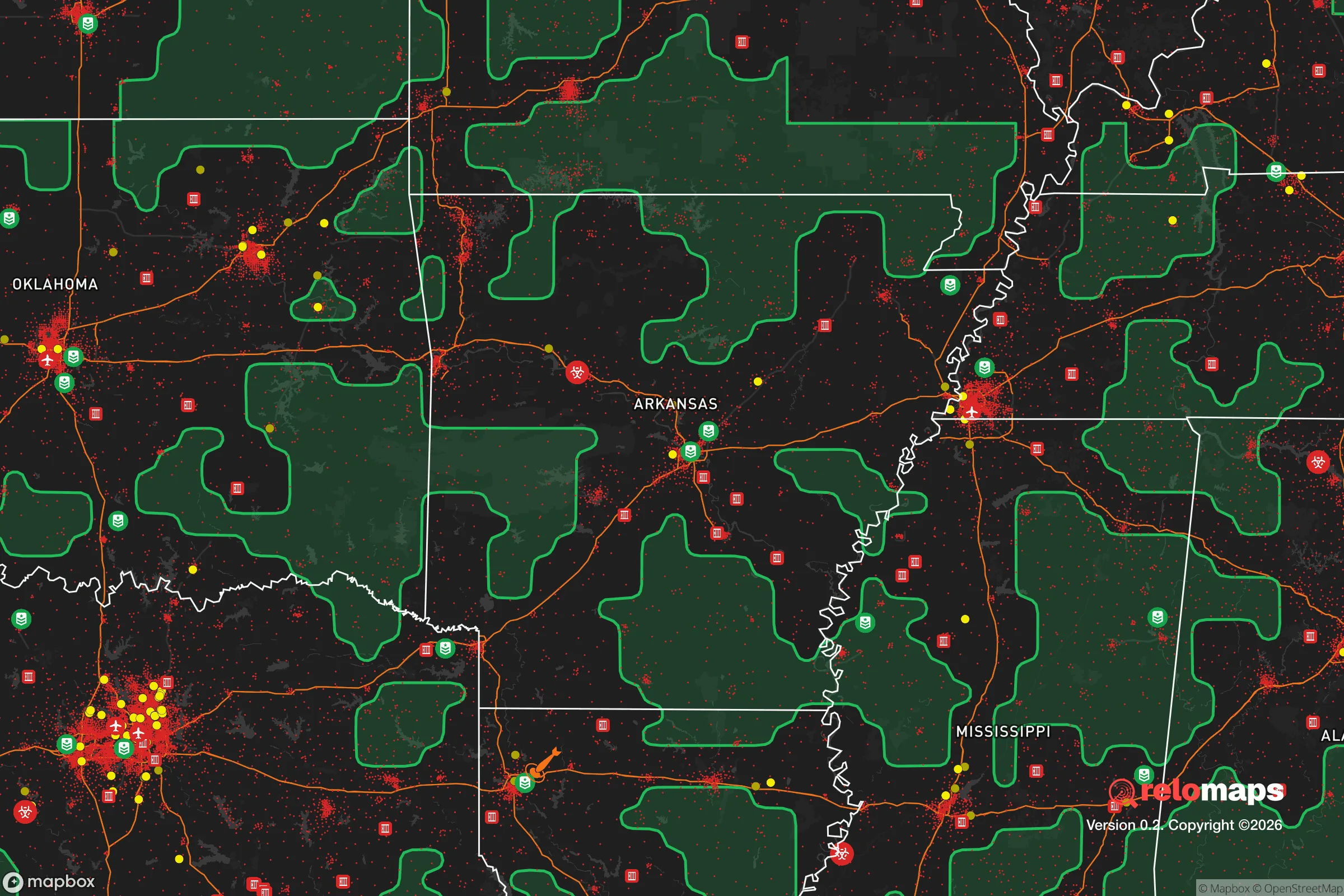


Important Note: For informational purposes only. This does not mean nothing bad ever happens in the green zones. Please use common sense. This is based on public data and modeled with AI. We tried to take a conservative approach but mistakes happen. We update this regularly as new information becomes available.
Solar Generator Recommendations
Backup power matters more here than in safer locations. We've picked three solar generators across budgets and capacity tiers — start with the budget unit if you only need a few essentials, or step up if you want to run a fridge and HVAC for days at a time.

Jackery Portable Power Station Explorer 300
Budget OptionPower on the Go: Weighing only 11 lbs, it's convenient to set up and store with book-sized foldable solar panels

BLUETTI Portable Power Station AC180
Designed for both indoor and outdoor scenarios, AC180 is highly capable as it has a robost capacity and continuous output power.

EF ECOFLOW DELTA Pro Ultra Power Station
Upgraded PickEcoFlow DELTA Pro Ultra is a whole-home energy system designed to grow with your family. Integrated with the Smart Home Panel 2, it scales to meet your evolving energy needs — keeping your home powered, intelligent, and secure through every stage of life.
We earn a commission, at no additional cost to you.
Strategic Assessment Analysis
Pine Bluff, Arkansas, presents a complex strategic picture for the conservative prepper or survivalist. Its primary advantages are its deep Delta location, low population density, and distance from major metropolitan targets, but these are offset by severe economic decline, high crime, and proximity to a major chemical weapons depot. For a relocator prioritizing resilience over comfort, Pine Bluff offers a cheap land base with defensible geography, provided you can navigate the local risks and build a self-sufficient operation away from the city core.
Geographic position and natural advantages for long-term survival
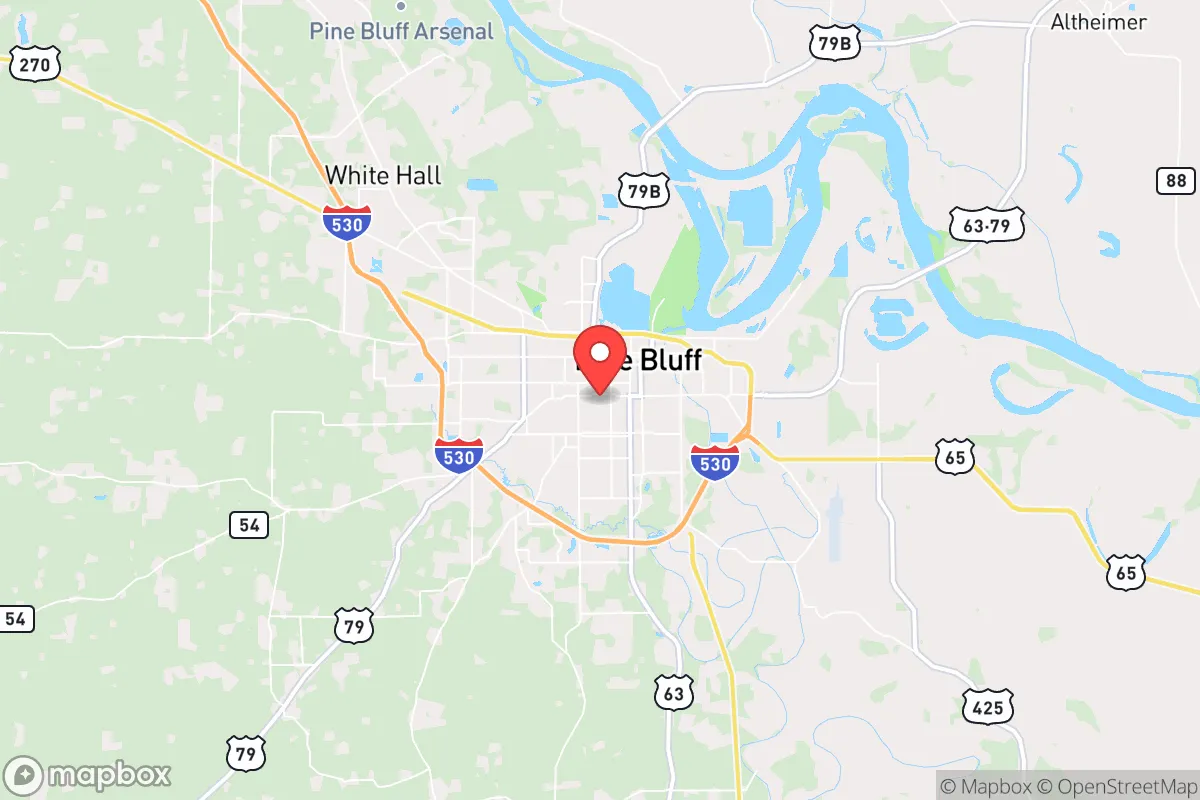
Pine Bluff sits on the Arkansas River in Jefferson County, roughly 40 miles southeast of Little Rock. The region is flat, heavily agricultural, and part of the Mississippi Alluvial Plain. For a prepper, this means abundant surface water, fertile soil, and a climate that supports year-round food production. The Arkansas River provides a reliable water source and a potential transportation corridor if infrastructure collapses. The surrounding Delta is sparsely populated outside of small towns, offering plenty of rural acreage at some of the lowest land prices in the country — you can still find 5- to 20-acre parcels under $2,000 per acre. The area's primary natural advantage is its isolation from high-value targets: Pine Bluff is not a major transportation hub, military base, or population center. It is far enough from Little Rock to avoid the immediate blast zone of a nuclear strike on the capital, yet close enough to access medical and supply runs if roads remain open. The flat terrain is a double-edged sword — it offers no natural defensive high ground, but it also makes the area easy to patrol and monitor on foot or by vehicle.
Risks, exposures, and proximity to fallout-relevant landmarks
The single biggest strategic liability in the Pine Bluff area is the Pine Bluff Arsenal, a U.S. Army chemical weapons storage and demilitarization facility located just 7 miles north of downtown. The arsenal stores and destroys chemical agents, including sarin and VX nerve agents. While the Army maintains that the risk of accidental release is low, a major earthquake, terrorist attack, or wartime strike on the facility could release toxic agents that would contaminate a wide downwind area. For a survivalist, living within 20 miles of a chemical weapons depot is a serious exposure risk. Additionally, Pine Bluff is within 100 miles of the Arkansas Nuclear One power plant in Russellville (about 90 miles northwest) and the Grand Gulf Nuclear Station in Mississippi (about 120 miles southeast). A meltdown or sabotage at either could send fallout across the Delta. The city itself has a violent crime rate roughly 4–5 times the national average, making it one of the most dangerous small cities in America. This is not a place to live inside the city limits — the risk of home invasion, carjacking, and random violence is high. For a prepper, the defensible strategy is to buy rural land at least 10–15 miles outside Pine Bluff, ideally west or south of the arsenal's prevailing wind patterns, and treat the city as a resupply point rather than a home base.
Practical resilience for a relocator: food, water, energy, and defensibility
For a relocator willing to put in the work, Pine Bluff's rural outskirts offer strong practical resilience. Water is abundant — the Arkansas River is perennial, and the shallow alluvial aquifer means most rural properties can have a well drilled for under $5,000. The growing season runs from March to October, allowing for two crop cycles of vegetables, grains, and legumes. The area is prime for livestock, especially cattle, goats, and poultry, with cheap feed and ample pasture. Energy independence is feasible — the flat, open terrain is ideal for ground-mounted solar arrays, and the region gets about 215 sunny days per year. Wood for heating is available from bottomland hardwood forests, though you'll need to manage for flooding. Defensibility is a mixed bag: the flat landscape offers long sightlines but no natural cover. A rural homestead with a perimeter fence, motion lights, and a clear field of fire is practical. The local population is predominantly rural and conservative, with a strong hunting and firearms culture — you won't be viewed as an outsider for owning guns or stockpiling supplies. However, the local economy is weak, with a poverty rate around 25%, so you'll need to be self-reliant and avoid drawing attention to your supplies. The nearest major medical center is Jefferson Regional Medical Center in Pine Bluff, which is adequate for trauma but not for complex care — plan for a 90-minute drive to Little Rock for serious emergencies.
The overall strategic picture for Pine Bluff is one of high risk and high potential reward for the disciplined prepper. The land is cheap, the water is plentiful, and the isolation from major targets is real. But the chemical weapons depot, high local crime, and economic decay mean you cannot afford to be complacent. If you secure a rural property outside the arsenal's fallout zone, build a well and solar array, and keep a low profile, Pine Bluff offers a viable long-term retreat at a fraction of the cost of mountain or desert properties. It is not a place for the unprepared or the faint of heart — but for a survivalist who treats it as a strategic base rather than a suburban dream, it can work.

* Values derived from national, state, county, city and local statistics and may differ in a specific area. Last updated: 2026-04-29T22:36:07.000Z
Narrative content on this page is AI-generated and may contain mistakes. Verify any details that matter before acting on them.
ReloMaps may earn a commission from affiliate links at no extra cost to you.

