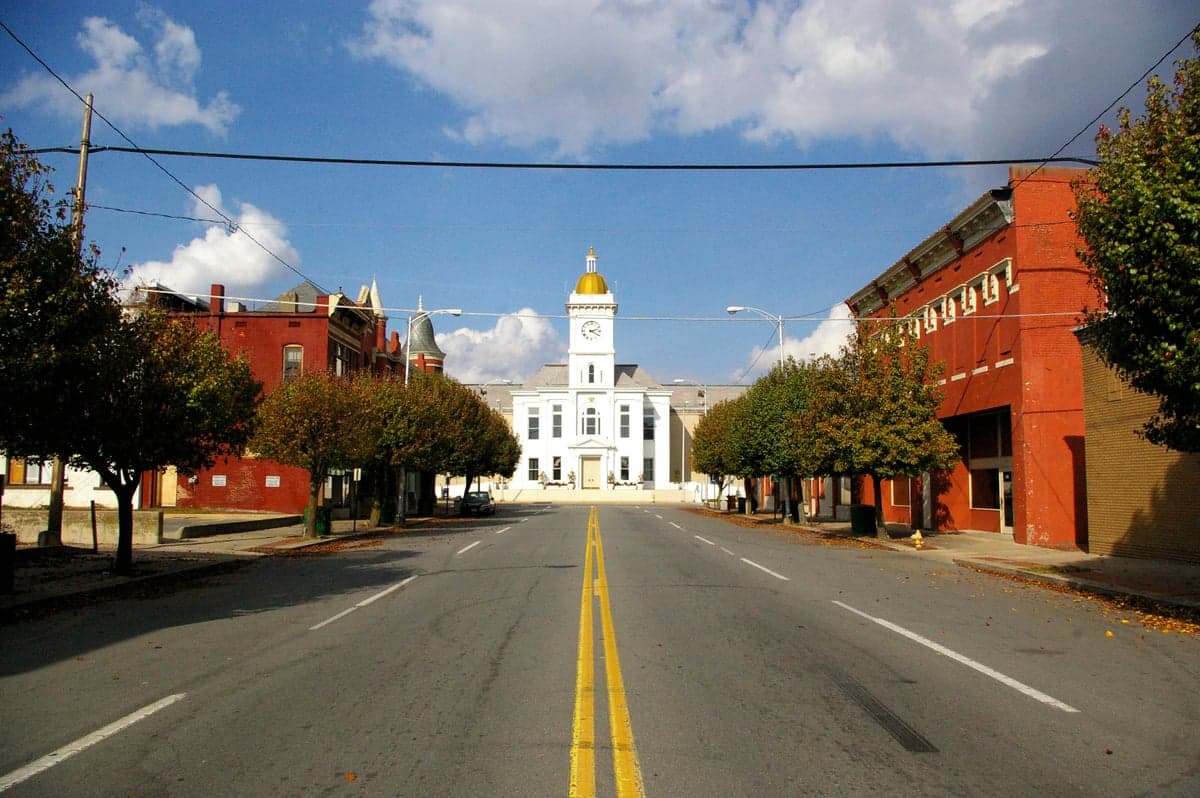
Photo: Wikipedia
Political ClimatePolitical Climate in Pine Bluff, AR
District shown is the primary district for this city’s centroid. Cities may span multiple districts.
Local Political AnalysisPolitical Analysis of Pine Bluff, AR
Pine Bluff, Arkansas, has long been a conservative stronghold, but like a lot of places, you can feel the ground shifting under your feet. The Cook PVI rating of R+20 tells you the math is still solidly red, but the cultural and political winds are blowing in a different direction than they were even a decade ago. You’ll still find plenty of folks who remember when this town was a manufacturing hub and the biggest worry was a slow Saturday night, not the creeping influence of progressive policies that seem to be seeping in from Little Rock and even from some of the more liberal-leaning college towns up the road like Fayetteville. The real story here isn’t the raw vote count—it’s the quiet battle over what kind of community Pine Bluff wants to be.
How it compares
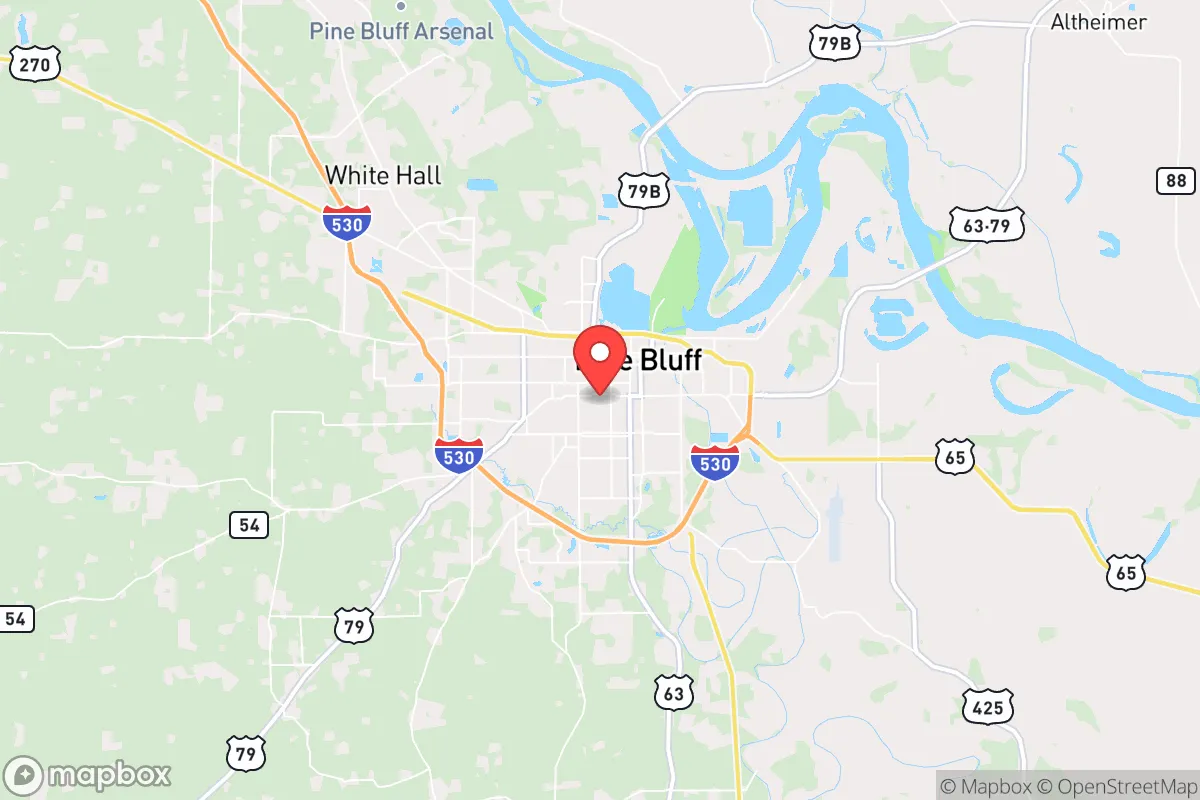
If you drive twenty miles west to White Hall, you’ll find a place that’s still pretty much the same as it was in the 90s—church on Sunday, a strong sheriff’s presence, and a general distrust of anything that smells like government overreach. But Pine Bluff itself is a different animal. It’s the county seat, so you’ve got a bigger mix of state employees, college folks from the University of Arkansas at Pine Bluff, and a growing number of transplants who bring their big-city ideas with them. Compare that to nearby towns like Star City or Rison, where the local politics are still run by the same families and the same values, and you’ll see the contrast. Pine Bluff is more likely to have debates about zoning laws, school board policies, and even things like mask mandates or vaccine passports that would never even get a hearing in those smaller communities. It’s a reminder that even in a deep-red district, the local government can still find ways to nibble away at your personal freedoms if you’re not paying attention.
What this means for residents
For the average person living here, the political climate means you have to keep your guard up. The county commission and city council have been known to push through ordinances that sound good on paper—like new business regulations or “equity” initiatives—but end up adding layers of red tape that make it harder to start a small business or even just live your life without a permit. The school board has been a particular battleground, with some members pushing for curriculum changes that feel more like social engineering than education. If you’re a parent who wants to raise your kids with traditional values, you’re going to have to stay involved and show up at meetings, because the progressive agenda doesn’t stop at the city limits just because the county votes red. The good news is that the conservative base here is still strong and organized, but it’s a constant fight to keep the government from overstepping its bounds.
One thing that sets Pine Bluff apart from some of its neighbors is the lingering influence of the old industrial economy. There’s a deep-seated skepticism of any policy that looks like it’s coming from a think tank in Washington or a coastal city. People here remember when the paper mill and the cotton fields were the backbone of the economy, and they’re not quick to trust outsiders who want to “reimagine” the town. That said, you’ll also find a growing number of younger residents who are more open to change, which creates a tension that’s playing out in local elections. The long-term trajectory depends on whether the conservative majority can hold the line against the kind of top-down, one-size-fits-all policies that have hurt other small towns. For now, it’s a place where you can still have a conversation about personal responsibility and limited government, but you’ve got to be willing to speak up and defend it.

State Political ClimatePolitical Climate in Arkansas
State Political AnalysisPolitical Environment in the State
Arkansas has been a reliably red state for decades, but its political climate is more nuanced than a simple party label suggests. The state leans solidly Republican at the federal and state level, with every statewide office held by the GOP and a 30-point margin for Donald Trump in 2024. However, the 10-20 year trajectory shows a state that was once a Democratic stronghold in local races, particularly in the Delta and Ozarks, that has shifted decisively rightward, driven by cultural realignment and in-migration from blue states. The dominant coalition is a mix of rural conservatives, evangelical Christians, and a growing number of fiscally conservative transplants, while the Democratic base is increasingly confined to the urban cores of Little Rock, Fayetteville, and Pine Bluff.
Urban vs. rural divide
The political map of Arkansas is a textbook case of the urban-rural split. Northwest Arkansas, anchored by Fayetteville and Bentonville, is the state's economic engine and its most politically competitive region. Fayetteville, home to the University of Arkansas, leans left, with Washington County voting for Joe Biden in 2020 by a narrow margin. But drive 15 minutes south to Springdale or Rogers, and you're back in deep red territory. The real GOP strongholds are the rural counties: Baxter County (Mountain Home), Faulkner County (Conway), and Saline County (Benton) routinely deliver 70-80% Republican margins. The Arkansas Delta, once a Democratic bastion, has flipped hard—Mississippi County went from +20 D in 2008 to +40 R in 2024, driven by white working-class voters abandoning the national Democratic brand. Little Rock's Pulaski County is the lone blue urban island, but even there, the suburbs of Maumelle and Chenal Valley are reliably Republican.
Policy environment
Arkansas's policy environment is aggressively conservative, with a strong emphasis on low taxes and limited government. The state has a flat income tax of 4.4%, which is being phased down to 3.9% by 2027, and no estate or inheritance tax. Sales tax is high at 6.5% state-level, but local options push it to 9.5% in some cities. The regulatory posture is business-friendly, with right-to-work laws and a tort reform cap on non-economic damages. Education policy is a flashpoint: the LEARNS Act of 2023, championed by Governor Sarah Huckabee Sanders, created universal school choice, banned critical race theory and "indoctrination" in classrooms, and raised teacher salaries to $50,000. Healthcare is mixed—the state expanded Medicaid under the "private option" model, but Sanders has pushed for work requirements and tighter eligibility. Election laws are strict: voter ID is required, early voting is limited to 15 days, and absentee ballot drop boxes are banned. The state also passed a near-total abortion ban (Act 180 of 2019) with no exceptions for rape or incest, which remains in effect post-Dobbs.
Trajectory & freedom
On the freedom front, Arkansas is moving in a decidedly pro-liberty direction, but with some caveats. The LEARNS Act expanded parental rights in education, allowing families to use state funds for private or homeschool. Gun rights are strong: constitutional carry was enacted in 2021, and the state has a "stand your ground" law. In 2023, the legislature passed a law prohibiting enforcement of federal gun regulations that don't exist in state code (the "Second Amendment Preservation Act"). Medical autonomy took a hit with the abortion ban, but the state has no vaccine mandates and banned COVID-19 passport requirements in 2021. Property rights are solid, with no statewide zoning and low property taxes (average 0.62% of assessed value). The biggest concern for liberty-minded residents is the state's high incarceration rate and a criminal justice system that still leans punitive—Arkansas has the fourth-highest imprisonment rate in the U.S. Recent legislation like the "Truth in Sentencing" law (2023) requires violent offenders to serve 100% of their sentence, which some see as overreach. Overall, the trend is toward more personal freedom in education, guns, and economic choice, but with a heavy hand on crime and abortion.
Civil unrest & political movements
Arkansas has seen relatively little civil unrest compared to coastal states, but there are notable flashpoints. The Black Lives Matter protests in Little Rock during 2020 were largely peaceful, but they did lead to a push for police reform that ultimately stalled in the legislature. On the right, the "Patriot" movement is active, particularly in the Ozarks around Harrison and Mountain Home, where there are organized Second Amendment sanctuary groups and county-level resolutions against federal overreach. Immigration politics are muted—Arkansas has a small foreign-born population (5%), but the legislature passed a law in 2023 requiring all employers to use E-Verify. There is no sanctuary city movement; in fact, Springdale and Rogers have seen local ordinances targeting illegal immigration. Election integrity controversies flared after 2020, leading to the creation of a new Election Integrity Unit within the Secretary of State's office. The most visible political movement is the "Parents' Bill of Rights" coalition, which successfully pushed for the LEARNS Act and continues to monitor school board meetings for "woke" curriculum. A new resident would notice the strong presence of church-affiliated political activism, particularly from the Southern Baptist Convention, which holds significant sway in the legislature.
Projection
Over the next 5-10 years, Arkansas is likely to become more Republican and more culturally conservative, driven by two key trends. First, in-migration from California, Illinois, and Texas is accelerating—nearly 100,000 new residents moved to the state between 2020 and 2024, many of them conservative-leaning families seeking lower costs and school choice. This influx is concentrated in Northwest Arkansas, which is already the state's fastest-growing region. Second, the rural Delta counties are continuing to hemorrhage population, which weakens the remaining Democratic base. The state's demographic profile is aging and white (72%), but the Hispanic population is growing rapidly (8% and rising), particularly in Springdale and Rogers. This could introduce a wildcard, as Hispanic voters in Arkansas lean conservative on social issues but are not yet fully aligned with the GOP. The biggest risk to the current trajectory is a potential backlash if the LEARNS Act fails to deliver measurable academic improvement, or if the state's healthcare system strains under the abortion ban and Medicaid work requirements. However, the political infrastructure is solid—the GOP holds supermajorities in both chambers, and Governor Sanders is positioning herself as a national figure, which will keep the state in the conservative spotlight. Someone moving in now should expect to find a state that is doubling down on its red identity, with no serious threat of a blue shift in the next decade.
For a new resident, the bottom line is that Arkansas offers a high degree of personal freedom in education, economic choice, and gun rights, but with a correspondingly heavy-handed approach to crime and abortion. The state is politically stable and moving further right, making it a safe bet for conservatives who want to escape blue-state overreach. However, the trade-offs are real: low taxes mean underfunded infrastructure in rural areas, and the cultural conservatism can feel stifling to those who prefer a more libertarian "live and let live" ethos. If you're looking for a place where your vote counts, your kids aren't indoctrinated, and your property rights are respected, Arkansas is a strong contender—just be prepared for the heat, the humidity, and the occasional county-level resolution declaring independence from the federal government.
* Values derived from national, state, county, city and local statistics and may differ in a specific area. Last updated: 2026-04-29T22:36:07.000Z
Narrative content on this page is AI-generated and may contain mistakes. Verify any details that matter before acting on them.
ReloMaps may earn a commission from affiliate links at no extra cost to you.

