Photo: Wikipedia
Demographics of Plainfield, IN
Affluence Level in Plainfield, IN
A middle-class area roughly in line with national averages across income, home values, education, and employment.
People of Plainfield, IN
Plainfield, Indiana, is a rapidly growing suburban city of 35,783 residents that has transformed from a small Quaker farming settlement into a diverse, family-oriented hub along the I-70 corridor. The city’s population is predominantly white (72.3%), with significant and growing communities of Black (8.6%), Indian-subcontinent (5.2%), Hispanic (6.6%), and East/Southeast Asian (2.3%) residents. Plainfield’s identity today is shaped by its blend of historic small-town roots, new suburban subdivisions, and a logistics-driven economy that attracts both domestic and international migrants.
How the city was settled and grew
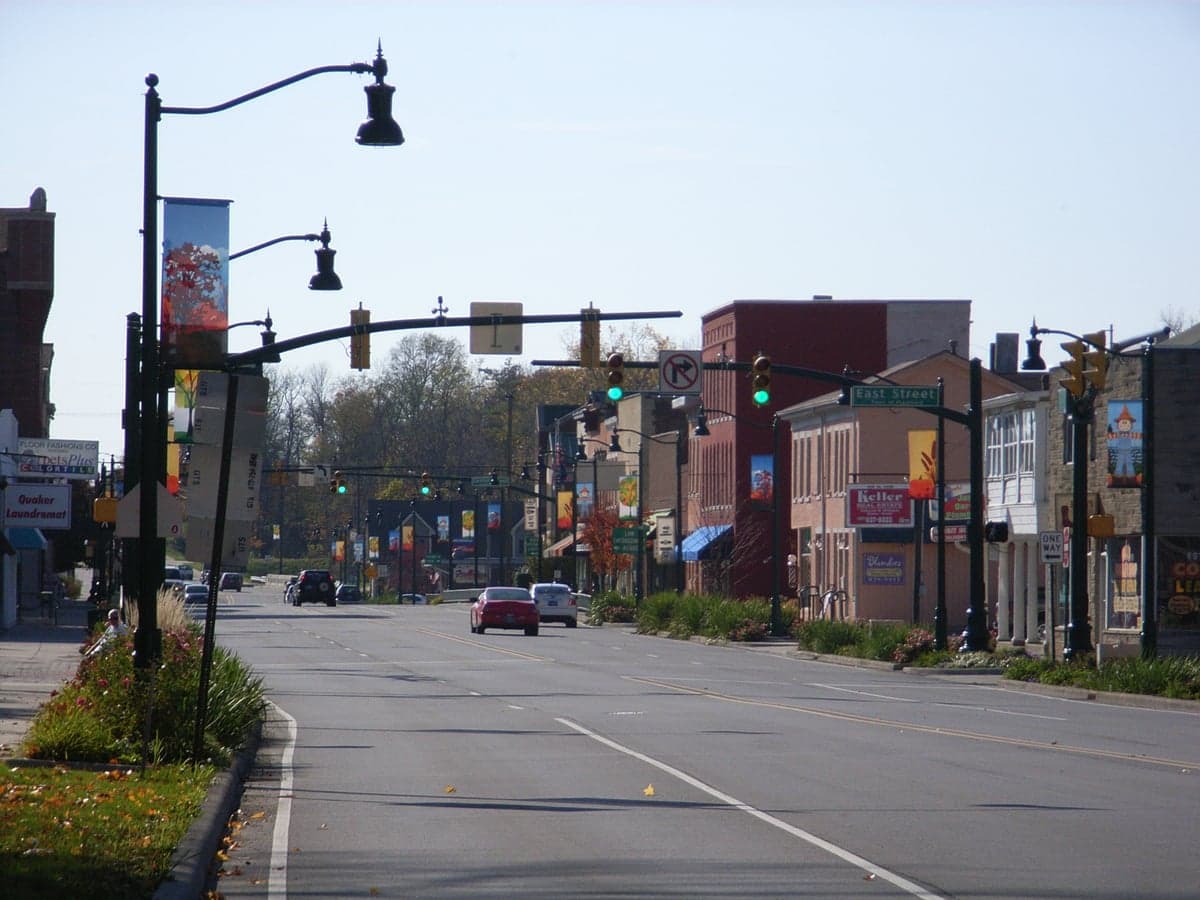
Plainfield was founded in 1839 by Quaker settlers from North Carolina and Ohio, who were drawn by cheap land and the opportunity to establish a community rooted in abolitionist principles. The original settlement clustered around what is now the Downtown Plainfield Historic District, centered on Main Street and U.S. 40 (the old National Road). These early families—names like Hadley, Harvey, and Brown—built a farming economy and established the Plainfield Friends Meeting, which remains a landmark. The arrival of the railroad in the 1850s spurred modest growth, but the city remained a small agricultural service center through the early 1900s. A notable early population wave came in the 1910s and 1920s, when the Indiana Boys School (now the Plainfield Correctional Facility) opened, drawing workers and their families to the East Side neighborhoods near the facility. By 1960, Plainfield’s population was still under 5,000 and overwhelmingly white, with a small Black population tied to railroad and prison work.
Modern era (post-1965)
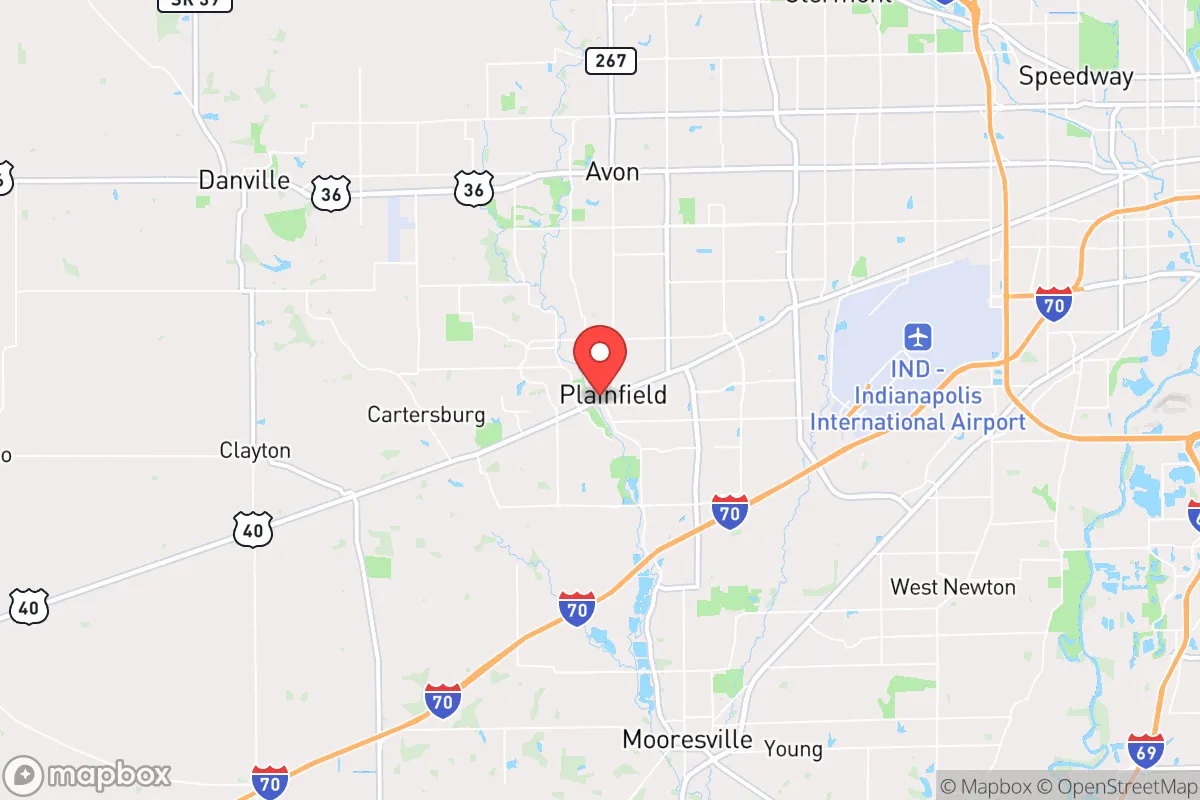
Plainfield’s modern demographic transformation began in earnest after the 1965 Immigration and Nationality Act, but the biggest driver was domestic suburbanization. The completion of I-70 in the 1970s made Plainfield a bedroom community for Indianapolis, 20 miles east, and a logistics hub due to its proximity to the Indianapolis International Airport. The Shady Oaks and Lakewood subdivisions, built in the 1970s and 1980s, absorbed waves of white middle-class families fleeing Marion County. The 1990s saw the first significant non-white growth, driven by the expansion of the Plainfield Industrial Park and the arrival of major distribution centers like Amazon and FedEx. This drew Black and Hispanic workers from Indianapolis and beyond, who settled in the Southwest Quadrant near the industrial corridor and in newer subdivisions like Centennial Farms. The most striking recent shift is the growth of the Indian-subcontinent community, which now makes up 5.2% of the population—a share that has tripled since 2010. This wave is tied to the tech and pharmaceutical sectors in nearby Avon and Indianapolis, with families choosing Plainfield for its schools and newer housing stock in developments like Hunters Crossing and Village of Plainfield. The East/Southeast Asian community (2.3%) is smaller but similarly professional, concentrated in the same newer subdivisions. The Hispanic population (6.6%) is more established, with roots in construction and warehouse work, and is spread across the city but most visible in the East Side near the correctional facility and along U.S. 40.
The future
Plainfield’s population is projected to exceed 45,000 by 2035, driven by continued annexation of farmland and infill development. The city is not homogenizing; rather, it is tribalizing into distinct enclaves by income and ethnicity. The Indian-subcontinent community is growing fastest, likely reaching 8-10% of the population within a decade, and is consolidating in the newer, higher-priced subdivisions in the north and west. The Black and Hispanic populations are growing more slowly, plateauing around 9% and 7% respectively, and are more likely to live in older, more affordable neighborhoods near the industrial corridor. The white share is declining steadily but remains the majority, with many white families moving to even newer exurban developments in Hendricks County. The foreign-born share (4.2%) is low by national standards but rising, and most immigrants are from India and Mexico. The city’s school system, consistently rated among the top in the state, is a major draw for all groups, but the high cost of new housing (median home price above $350,000) is creating a de facto income filter that limits diversity in the newest subdivisions.
Plainfield is becoming a stratified but stable suburban community where professional families—both white and Indian-subcontinent—dominate the newer neighborhoods, while working-class Black and Hispanic residents remain concentrated in older areas. For a conservative-leaning family or individual moving in now, the city offers strong schools, low crime, and a growing tax base, but the social landscape is increasingly defined by which subdivision you live in rather than a unified small-town identity. The next decade will likely see continued growth of the Indian-subcontinent professional class, a plateau in Hispanic and Black growth, and a slow decline in the white share, all within a framework of high property values and good public services.

* Values derived from national, state, county, city and local statistics and may differ in a specific area. Last updated: 2026-10-10T16:28:43.000Z
Narrative content on this page is AI-generated and may contain mistakes. Verify any details that matter before acting on them.
ReloMaps may earn a commission from affiliate links at no extra cost to you.

