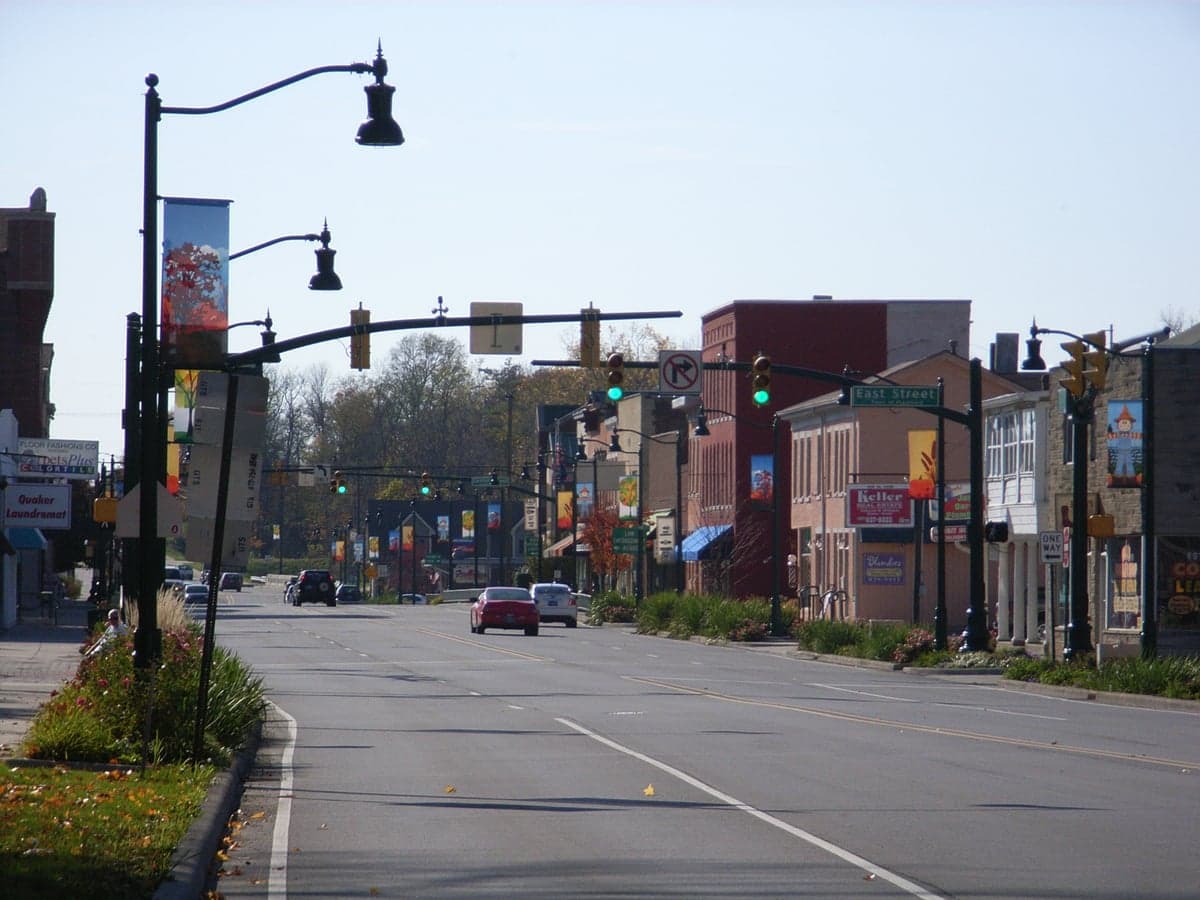
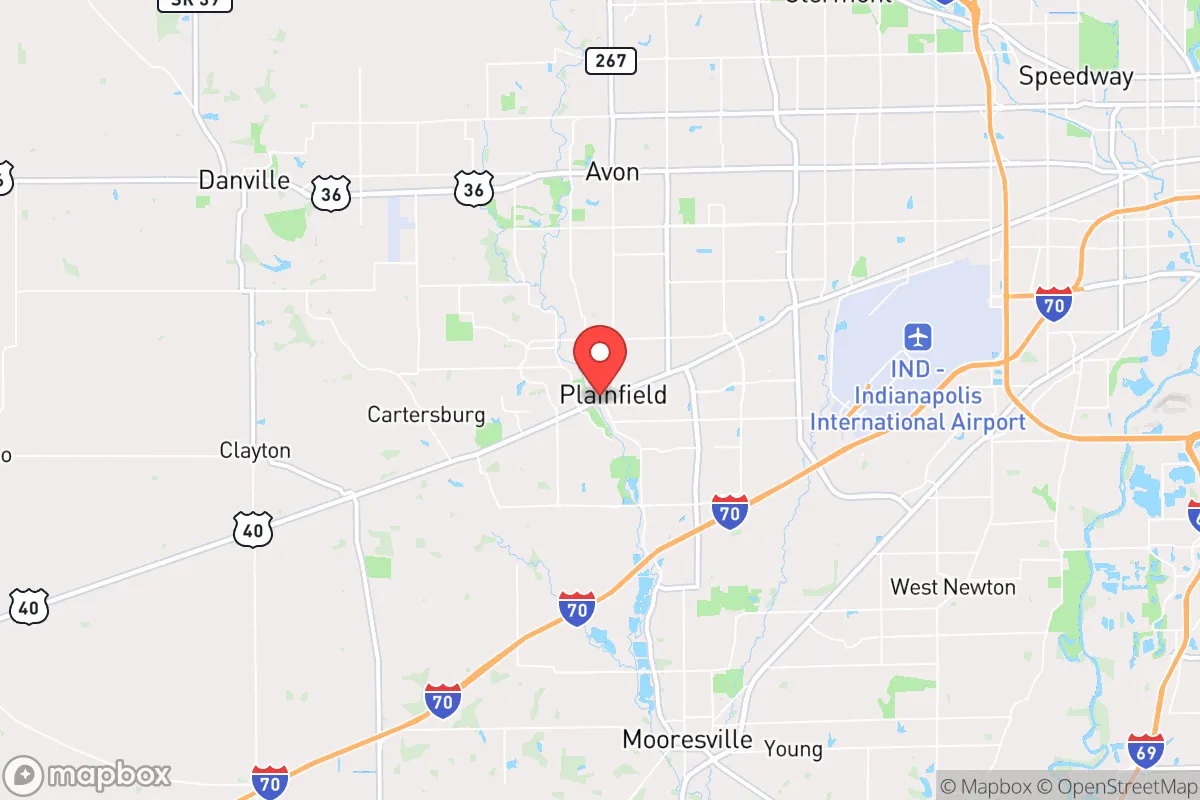
Photo: Wikipedia
Political ClimatePolitical Climate in Plainfield, IN
District shown is the primary district for this city’s centroid. Cities may span multiple districts.
Local Political AnalysisPolitical Analysis of Plainfield, IN
Plainfield, Indiana, has long been a solidly conservative community, and the numbers back that up with a Cook PVI of R+15. This isn't just a statistic; it reflects a deep-rooted preference for limited government, personal responsibility, and a "live and let live" attitude that has defined the town for decades. While the broader Indianapolis metro area has seen some political shifts, Plainfield has largely held its ground, though you can feel the pressure from the progressive tide lapping at its edges from places like downtown Indy and Bloomington. The trajectory here is one of cautious defense—folks are generally happy with the way things are and wary of any outside influence that might change the character of the place.
How it compares
To understand Plainfield, you have to look at its neighbors. Head east into Indianapolis proper, and you're in a different world—a Democratic stronghold where policies on taxes, policing, and school curriculum can feel like they come from another planet. Drive south to Bloomington, and you're in a liberal college town where the local government often prioritizes progressive social experiments over practical governance. Even nearby Avon and Brownsburg, while still conservative, have shown more susceptibility to the kind of "we know what's best for you" thinking that creeps in from the statehouse or national trends. Plainfield, by contrast, has a more stubborn, independent streak. The town council and school board elections here tend to be won by candidates who talk about fiscal restraint, parental rights, and keeping government out of your backyard—literally, when it comes to zoning and property rights. It's not that Plainfield is isolated; it's that the community has a strong memory of what works and a healthy skepticism of change for change's sake.
What this means for residents
For someone living here, the political climate means a few tangible things. First, you can generally expect the local government to stay out of your personal business—whether that's how you run your small business, what you teach your kids at home, or how you choose to use your property. There's a prevailing sense that the town's job is to keep the roads paved, the police responsive, and the schools focused on academics, not activism. Second, it means your tax dollars are less likely to be funneled into pet projects or social engineering programs. The budget debates here are about infrastructure and public safety, not diversity equity and inclusion consultants or climate action plans. However, this isn't a perfect bubble. You'll still see the occasional push from state-level mandates or federal overreach that tries to impose one-size-fits-all solutions on a community that values its local control. The key is that residents here pay attention and show up to meetings when they feel that line is being crossed.
One cultural distinction worth noting is Plainfield's relationship with the Quaker heritage that gave the town its name. That old-school emphasis on simplicity, integrity, and community self-reliance still echoes in how people approach politics. You won't find a lot of flashy political rallies or virtue signaling here. Instead, the conservatism is quiet, practical, and deeply skeptical of anyone—on either side—who promises to fix everything with a new law or program. The long-term concern among many locals is that as the Indy suburbs continue to grow and attract new residents from more progressive areas, the political balance could tip. There's a real fear that the next wave of newcomers might not understand or respect the independent, hands-off culture that makes Plainfield feel like home. For now, though, the town remains a place where you can still have a conversation with your neighbor about politics without it turning into a fight, and where the prevailing wisdom is that the best government is the one that governs least.

State Political ClimatePolitical Climate in Indiana
State Political AnalysisPolitical Environment in the State
Indiana has been a reliably Republican state for decades, but it’s not the deep-red monolith outsiders often assume. The GOP holds a supermajority in both chambers of the state legislature and has won every presidential election here since 2008, with Donald Trump carrying the state by 16 points in 2024. However, the political landscape is shifting beneath the surface — the Indianapolis metro area is becoming more Democratic, while the rest of the state is hardening its conservative stance. Over the past 10-20 years, Indiana has moved from a purple-ish swing state to a solidly red one, but the margin of that red is thinning in the suburbs and thickening in the exurbs and rural counties.
Urban vs. rural divide
The political map of Indiana is a textbook study in urban-rural polarization. Marion County (Indianapolis) is the Democratic stronghold, delivering about 60% of its vote to Joe Biden in 2020 and Kamala Harris in 2024. But the real story is the donut counties surrounding Indy — Hamilton, Hendricks, Johnson, and Boone — which were once reliably red but are now trending purple. Hamilton County, home to affluent suburbs like Carmel and Fishers, voted for Trump by only 8 points in 2024, down from 18 points in 2016. That’s a massive shift driven by college-educated professionals moving in from blue states. Meanwhile, Fort Wayne (Allen County) and Evansville (Vanderburgh County) remain more conservative than Indy but are seeing similar suburban drift. The real GOP firepower comes from the rural counties — Kosciusko, Elkhart, and LaGrange in the north, and Gibson, Posey, and Warrick in the southwest — where Trump routinely pulls 70-80% of the vote. Lake County (Gary) and St. Joseph County (South Bend) are the other Democratic anchors, but their influence is waning as population shifts southward.
Policy environment
Indiana’s policy environment is broadly conservative, but with some notable exceptions. The state has a flat income tax rate of 3.05%, which is scheduled to drop to 2.9% by 2027 under a law signed by Governor Eric Holcomb. Property taxes are relatively low, with an average effective rate of 0.81%, and there is no inheritance or estate tax. The regulatory posture is business-friendly — Indiana is a right-to-work state (though that law was repealed in 2025, a controversial move that conservatives are still fighting). On education, Indiana has one of the most robust school choice programs in the nation, with universal voucher eligibility enacted in 2023, allowing any family to use state funds for private or homeschool expenses. That’s a major draw for conservative parents. Healthcare policy is mixed: Indiana expanded Medicaid under the HIP 2.0 program, but the state also passed a near-total abortion ban in 2022 (Senate Enrolled Act 1), with exceptions only for rape, incest, and life of the mother. Election laws are moderately restrictive — voter ID is required, and the state purged over 400,000 inactive voters in 2023, a move that drew criticism from the left but was praised by election integrity advocates.
Trajectory & freedom
On the freedom front, Indiana has been a mixed bag over the past five years. The good news: constitutional carry was signed into law in 2022, allowing permitless carry of handguns for anyone 18 or older who can legally possess a firearm. That was a major win for Second Amendment advocates. The state also passed a parental rights bill in 2023 (House Enrolled Act 1449), requiring schools to notify parents of any changes to a student’s health or well-being, including gender identity issues. That law has been a flashpoint, but it’s popular with conservative families. On the concerning side: the state’s COVID-19 emergency powers were used aggressively by Governor Holcomb, including a statewide mask mandate and business closures in 2020, which sparked a legislative backlash. In 2021, the General Assembly passed a law limiting the governor’s emergency powers, but the damage to trust was done. More recently, the repeal of right-to-work in 2025 was a blow to economic freedom, pushed through by a coalition of Democrats and a handful of moderate Republicans. Property rights are generally strong, but there have been fights over wind and solar farm siting, with the state legislature preempting local control in 2023 to fast-track renewable energy projects — a move that angered rural landowners.
Civil unrest & political movements
Indiana has seen its share of political turbulence. The 2020 George Floyd protests in Indianapolis turned violent, with several buildings burned and over 100 arrests. That event galvanized both the Black Lives Matter movement and a strong counter-movement of law-and-order conservatives. The Indiana Freedom Coalition and Moms for Liberty chapters are active across the state, particularly in Hamilton and Hendricks counties, pushing for school board transparency and parental rights. Immigration politics are relatively quiet — Indiana is not a border state, but there have been localized tensions in Logansport and Goshen, where meatpacking plants employ large numbers of immigrant workers. There is no sanctuary city policy anywhere in the state; in fact, Indiana passed a law in 2011 requiring local law enforcement to cooperate with federal immigration authorities. Election integrity remains a hot topic: the 2020 and 2024 elections were certified without major controversy, but conservative activists continue to push for stricter ballot security measures, including banning ballot drop boxes (which was done in 2023). The nullification movement has a small but vocal presence, with some counties passing resolutions asserting local control over federal gun laws, but these are largely symbolic.
Projection
Over the next 5-10 years, Indiana is likely to become more politically divided, not less. The Indianapolis suburbs will continue to drift left as they attract remote workers from Chicago and the coasts, while the rural counties will double down on conservative values. The state’s overall partisan lean will probably hold at R+12 to R+16, but the internal tensions will grow. The biggest wildcard is in-migration: Indiana is seeing a net inflow of residents from Illinois and California, and those newcomers tend to be more moderate or libertarian than the native population. That could push the state toward a more “live and let live” posture on social issues, even as economic policy remains conservative. The repeal of right-to-work may be a one-off, but it signals that the GOP supermajority is not invulnerable to internal fractures. On the freedom front, expect continued fights over school choice, gun rights, and medical freedom — the state’s medical marijuana bill has stalled for years, but public support is growing, and it may pass by 2028. The parental rights movement will likely expand, with more laws targeting curriculum transparency and library content.
Bottom line for a new resident: If you’re a conservative looking for a state that respects gun rights, school choice, and low taxes, Indiana is still a strong bet. But don’t expect a uniform red paradise — the suburbs are changing, and the political battles are real. You’ll find your people in the rural counties and smaller cities like Warsaw, Jasper, or Columbus, but if you move to Carmel or Fishers, be prepared for a more mixed environment. The state is trending in the right direction on most freedom metrics, but you’ll need to stay engaged locally to keep it that way. Indiana is a place where your vote still matters — and where the fight for liberty is far from over.
* Values derived from national, state, county, city and local statistics and may differ in a specific area. Last updated: 2026-10-10T16:28:43.000Z
Narrative content on this page is AI-generated and may contain mistakes. Verify any details that matter before acting on them.
ReloMaps may earn a commission from affiliate links at no extra cost to you.

