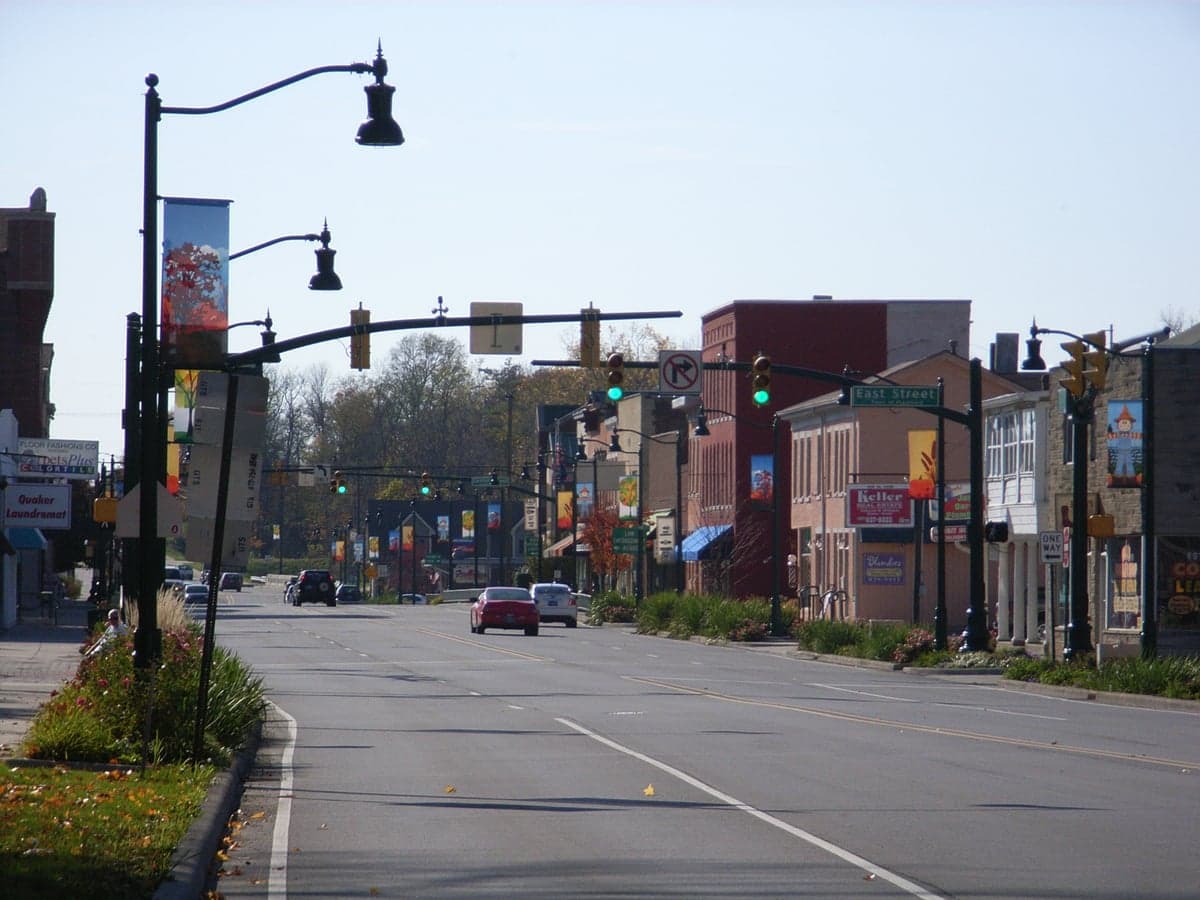
Photo: Wikipedia
Personal Sovereignty in Plainfield, IN
Viable for self-reliance. Generally workable, though some barriers may limit total independence.
What does Personal Sovereignty tell us?
Personal Sovereignty measures your capacity for self-reliance and independence with minimal government friction. Higher scores mean fewer barriers between you and the way you want to live... but it assumes you have the space you need and good neighbors.
What does this tell us?
Personal Sovereignty measures your capacity for self-reliance and independence with minimal government friction. Higher scores mean fewer barriers between you and the way you want to live... but it assumes you have the space you need and good neighbors.
State Policy
Energy independence: Importer (35% of energy produced in-state)
Personal Liberty
Homesteading

Personal Liberty Analysis
Plainfield, Indiana, offers a notably high degree of personal sovereignty compared to many suburban enclaves, largely due to Indiana’s strong preemption laws and a state-level political culture that resists federal overreach. While not a libertarian utopia, the town’s regulatory environment, tax structure, and legal framework provide a solid foundation for individuals and families who prioritize autonomy, self-reliance, and minimal government intrusion. For a conservative-leaning audience—especially those with a survivalist or prepper mindset—Plainfield represents a strategic middle ground: close enough to Indianapolis for economic opportunity, but far enough to avoid the heavy-handed governance often found in deep-blue urban centers.
Tax burden and regulatory posture: How Indiana’s fiscal restraint supports autonomy
Indiana’s tax structure is a clear win for personal sovereignty. The state imposes a flat income tax rate of 3.15% as of 2026, one of the lowest in the Midwest, and Plainfield’s combined state and local sales tax sits at 7%. Property taxes in Hendricks County are among the most favorable in the state, with effective rates typically between 0.8% and 1.1% of assessed value—well below the national average. This low-tax environment means less of your labor is confiscated to fund programs you may not support. On the regulatory front, Indiana is a right-to-work state, which limits forced union dues and gives workers more freedom in employment. The state also maintains a relatively light regulatory touch on small businesses and home-based enterprises, which is critical for anyone looking to build a self-sufficient income stream. Plainfield’s town government is generally pro-development and avoids the kind of zoning overreach seen in places like Bloomington or Carmel. However, be aware that Hendricks County does enforce building codes and permits for new construction, so you cannot simply throw up a shed or bunker without approval. Overall, the fiscal and regulatory posture here leans heavily toward individual freedom, with the state acting as a shield against federal encroachment rather than an additional layer of control.
Self-defense and gun law specifics: What Plainfield residents can and cannot do
Indiana is a constitutional carry state, meaning no permit is required to carry a handgun openly or concealed for anyone 18 or older who can legally possess a firearm. This is a bedrock of personal sovereignty—the state trusts you to defend yourself without asking permission first. Plainfield itself has no additional local gun ordinances beyond state law, so you won’t face the kind of magazine bans or registration schemes common in Illinois or California. Stand-your-ground laws are fully in effect: you have no duty to retreat before using deadly force if you are lawfully present and reasonably believe it is necessary to prevent death or serious injury. This extends to your vehicle and property. For preppers, this means your home, land, and even your truck are legally defensible spaces. The only notable restriction is that private sales between individuals are legal, but federal background checks are required for purchases from licensed dealers. Also, Indiana has a red flag law (the Jake Laird Law), which allows law enforcement to seize firearms from individuals deemed a danger to themselves or others via a court order. This is a point of concern for those wary of government overreach, though in practice it is applied narrowly and requires a hearing. For a survivalist, the gun laws here are among the best in the Midwest, providing a strong legal foundation for self-reliance.
Self-reliance and homesteading viability: Lot sizes, zoning, and off-grid feasibility
Plainfield’s zoning is a mixed bag for serious homesteading. Within the town limits, most residential lots are standard suburban sizes—0.25 to 0.5 acres—which limits large-scale gardening, livestock, or water independence. The town does allow backyard chickens (hens only, no roosters) and small vegetable plots, but don’t expect to keep goats or pigs without moving to unincorporated Hendricks County. The real opportunity lies just outside Plainfield, where agricultural zoning allows parcels of 1 to 10 acres or more. In these areas, you can legally raise livestock, install rainwater catchment systems, and even build a detached workshop or storage shed without the same level of municipal interference. Off-grid feasibility is moderate: Indiana has no state-level ban on solar panels, and net metering is available, but the local utility (Duke Energy) imposes interconnection requirements that can be bureaucratic. Wells and septic systems are permitted in rural areas, but you’ll need to meet county health department standards. For a prepper, the ideal strategy is to buy land in the county’s unincorporated areas—places like Brownsburg or Avon are more restrictive, but the rural pockets around Plainfield offer genuine homesteading potential. The town itself is better suited for those who want a suburban base with quick access to supplies and infrastructure, while the surrounding countryside provides the space for true self-reliance.
Personal liberties: Parental rights, medical autonomy, speech, and property
Indiana has become a battleground for personal liberties, and the results are generally favorable for conservative families. Parental rights are strongly protected: the state passed a Parents’ Bill of Rights in 2023, requiring schools to notify parents of any curriculum changes related to sexuality or gender identity and to obtain consent before administering surveys or medical services. This gives you real leverage over what your children are exposed to in public schools. Medical autonomy is more complicated. Indiana banned nearly all abortions in 2022, which aligns with many conservative values, but the state also maintains vaccine mandates for school attendance (though medical and religious exemptions are available). For those concerned about medical freedom, the state does not have a general forced-vaccination law for adults, and COVID-era mandates have been largely rolled back. Speech protections are robust: Indiana has no hate speech laws that criminalize political or religious expression, and Plainfield’s local government does not impose any content-based restrictions on signs, flags, or public gatherings. Property rights are strong, with Indiana’s eminent domain laws requiring “public use” (not just economic development) and fair compensation. However, the state does allow local governments to enforce nuisance ordinances, so you cannot, for example, store large quantities of fuel or ammunition in plain sight without potential pushback. For a survivalist, the key takeaway is that you have wide latitude to live according to your values, raise your children as you see fit, and speak your mind without fear of government retaliation—provided you stay within the bounds of generally applicable laws.
In the broader landscape of American personal sovereignty, Plainfield ranks well above average. It lacks the extreme autonomy of rural Montana or Idaho, where federal land is sparse and county sheriffs openly defy state authority, but it also avoids the suffocating regulation of coastal blue states. Compared to other Indiana suburbs like Fishers or Zionsville, Plainfield is less affluent but also less prone to the kind of progressive governance creep that erodes freedoms over time. The town’s proximity to Indianapolis provides access to medical facilities, supply chains, and economic opportunities, while the state’s legal framework gives you the tools to defend your home, your family, and your way of life. For a single individual or a family with a prepper mindset, Plainfield offers a realistic balance: you can live a self-reliant life without having to go completely off-grid, and you can do so under a government that, for now, largely respects your right to be left alone.

* Values derived from national, state, county, city and local statistics and may differ in a specific area. Last updated: 2026-10-10T16:28:43.000Z
Narrative content on this page is AI-generated and may contain mistakes. Verify any details that matter before acting on them.
ReloMaps may earn a commission from affiliate links at no extra cost to you.

