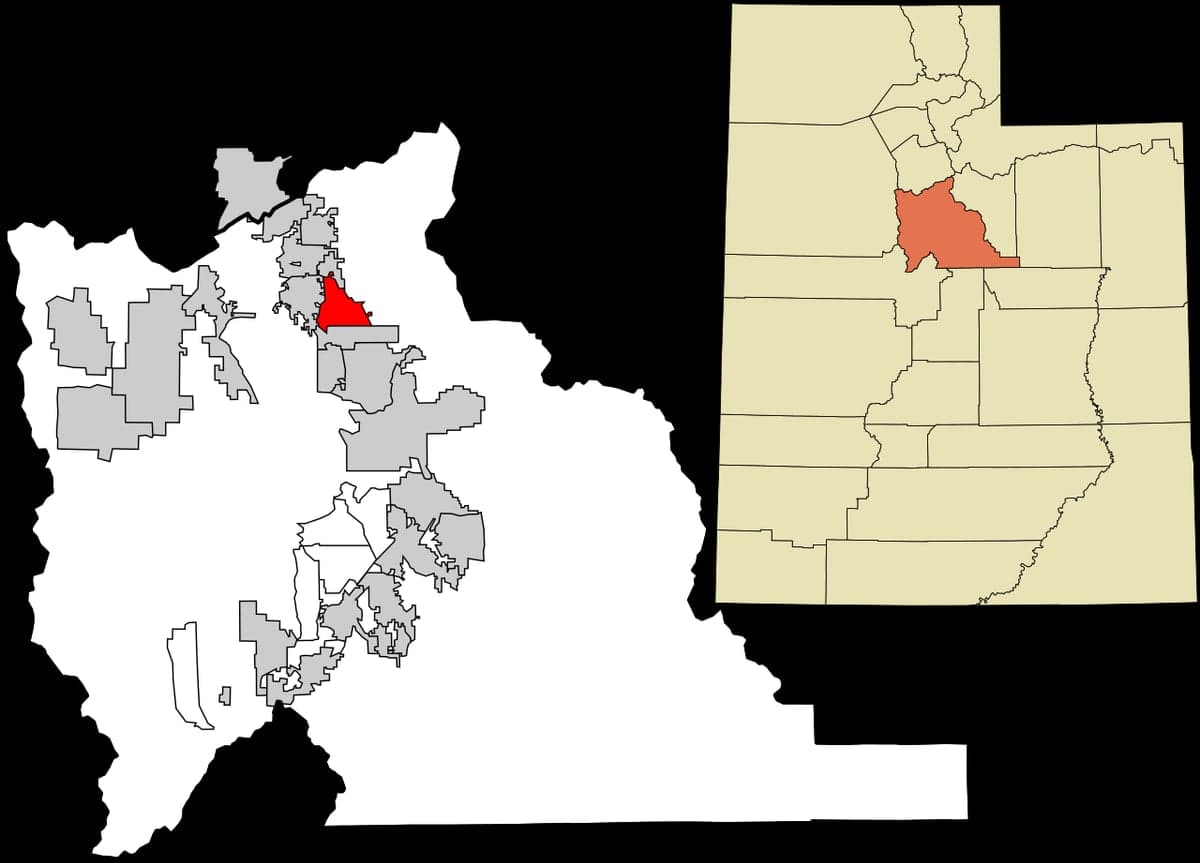
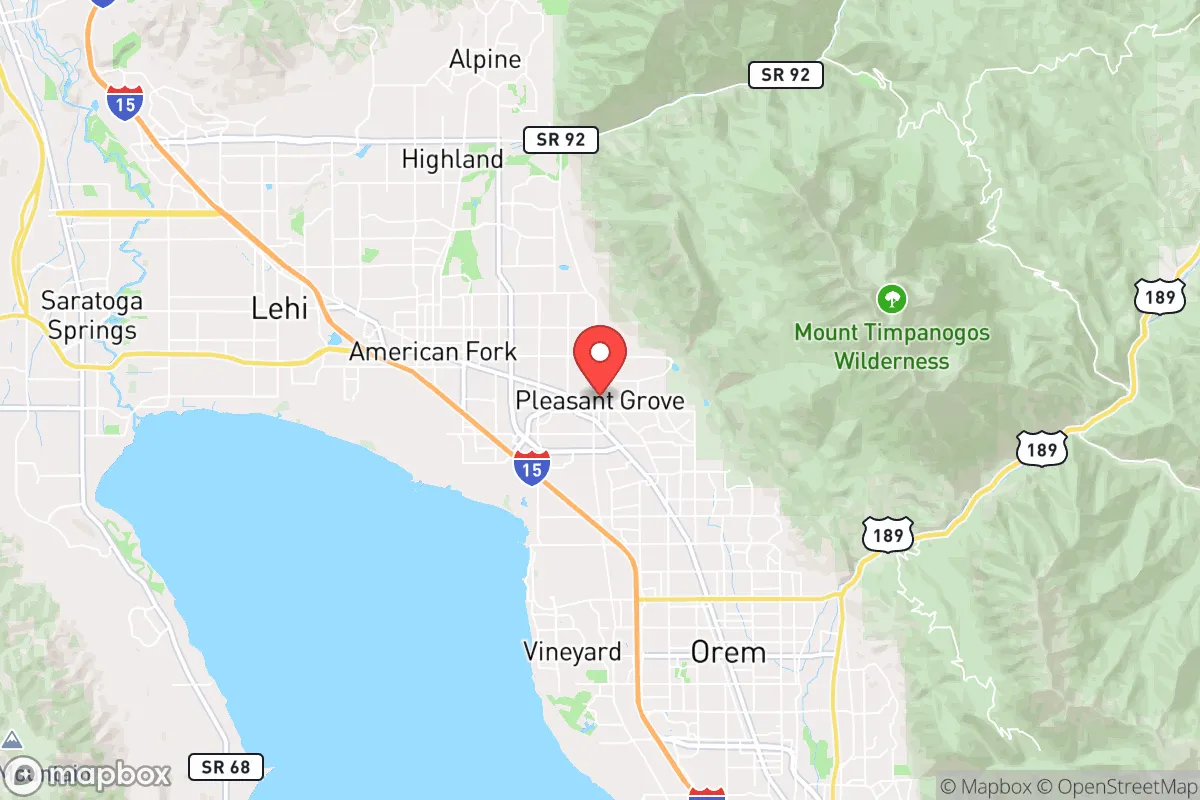
Photo: Wikipedia
Demographics of Pleasant Grove, UT
Affluence Level in Pleasant Grove, UT
An upper-middle-class area. Household wealth, education levels, and homeownership run ahead of national benchmarks.
People of Pleasant Grove, UT
Pleasant Grove, Utah, is a city of 37,544 residents that remains predominantly white (82.9%) and native-born, with a foreign-born population of just 3.3%. Its character is shaped by a strong Latter-day Saint (LDS) cultural foundation, a growing family-oriented suburban identity, and a notably high college attainment rate of 40.9%. The city is distinct from neighboring Provo and Orem for its quieter, more residential feel, with a Hispanic community of 10.4% and small East/Southeast Asian (1.9%) and Indian (0.1%) populations representing the most visible diversity.
How the city was settled and grew
Pleasant Grove was settled in 1850 by Mormon pioneers dispatched by Brigham Young to farm the fertile Utah Valley floor. The original settlers were primarily families from the British Isles and Scandinavia who had converted to the LDS Church and gathered in the Salt Lake Valley before being called to colonize this area. They built the city around a central grid, with the Historic Downtown area—centered on Main Street and Center Street—serving as the original village core where the first log homes and meetinghouses were constructed. The Grove Creek neighborhood, along the creek that runs through the city, was where early settlers established irrigation systems and small farms. By the early 1900s, the population was almost entirely white, native-born, and LDS, with agriculture (fruit orchards, sugar beets) and small-scale milling as the economic base. The North Pleasant Grove area, near the mouth of American Fork Canyon, developed later in the 1920s and 1930s as a second residential node for farming families.
Modern era (post-1965)
The post-1965 era brought suburbanization rather than immigration-driven change. The 1965 Immigration and Nationality Act had minimal impact on Pleasant Grove because the city lacked the industrial or service-sector jobs that drew immigrants to larger cities. Instead, domestic in-migration from other parts of Utah and the Intermountain West drove growth. The Murdoch Park neighborhood, developed in the 1970s and 1980s, absorbed many of these new residents—largely white, LDS families moving from Provo and Salt Lake County for larger lots and lower home prices. The Timpanogos Highlands area, built from the 1990s onward, attracted a more affluent wave of professionals commuting to tech jobs in Lehi and Orem. The Hispanic population grew from near-zero in 1990 to 10.4% today, concentrated in the East Pleasant Grove area near the freeway, where older, more affordable housing stock and proximity to construction and service jobs in Utah County provided a foothold. The East/Southeast Asian population (1.9%) is small and dispersed, with no single ethnic enclave, while the Indian population (0.1%) is negligible. The Black population (0.5%) remains statistically tiny. The city's racial homogeneity is a direct result of its Mormon pioneer founding, its lack of heavy industry or large universities (unlike Provo), and its status as a bedroom community rather than a job center.
The future
The population is heading toward modest diversification, but the pace is slow. The Hispanic share is likely to grow gradually as families in the East Pleasant Grove area age in place and new arrivals from other parts of Utah County move in, but the city lacks the rental housing stock and transit connections that typically accelerate Hispanic growth. The East/Southeast Asian population may increase slightly as tech workers from Lehi and Silicon Slopes seek more affordable housing, but Pleasant Grove competes with American Fork and Lindon for these residents. The Indian population is unlikely to grow significantly without a specific employer or cultural institution drawing families. The white, LDS majority will remain dominant, but the city is not tribalizing into distinct ethnic enclaves—rather, it is slowly homogenizing as newer subdivisions like Pleasant Grove Heights (built 2010s–2020s) attract a mix of white and Hispanic families into the same school districts and ward boundaries. The next 10–20 years will likely see the Hispanic share approach 15–18%, with the white share declining to around 75%, while the Asian and Indian shares remain under 3% combined. The city will remain a culturally conservative, family-oriented suburb with a growing but assimilated Hispanic minority.
For someone moving in now, Pleasant Grove is becoming a slightly more diverse version of its historical self—still overwhelmingly white and LDS, but with a visible Hispanic community and a small tech-adjacent professional class. The city offers stability, low crime, and strong schools, but those seeking significant racial or ethnic diversity will find it limited. The trajectory is toward gradual, moderate diversification rather than rapid change, making it a predictable choice for families who value cultural continuity with a modest broadening of perspectives.

* Values derived from national, state, county, city and local statistics and may differ in a specific area. Last updated: 2026-04-19T09:00:44.000Z
Narrative content on this page is AI-generated and may contain mistakes. Verify any details that matter before acting on them.
ReloMaps may earn a commission from affiliate links at no extra cost to you.

