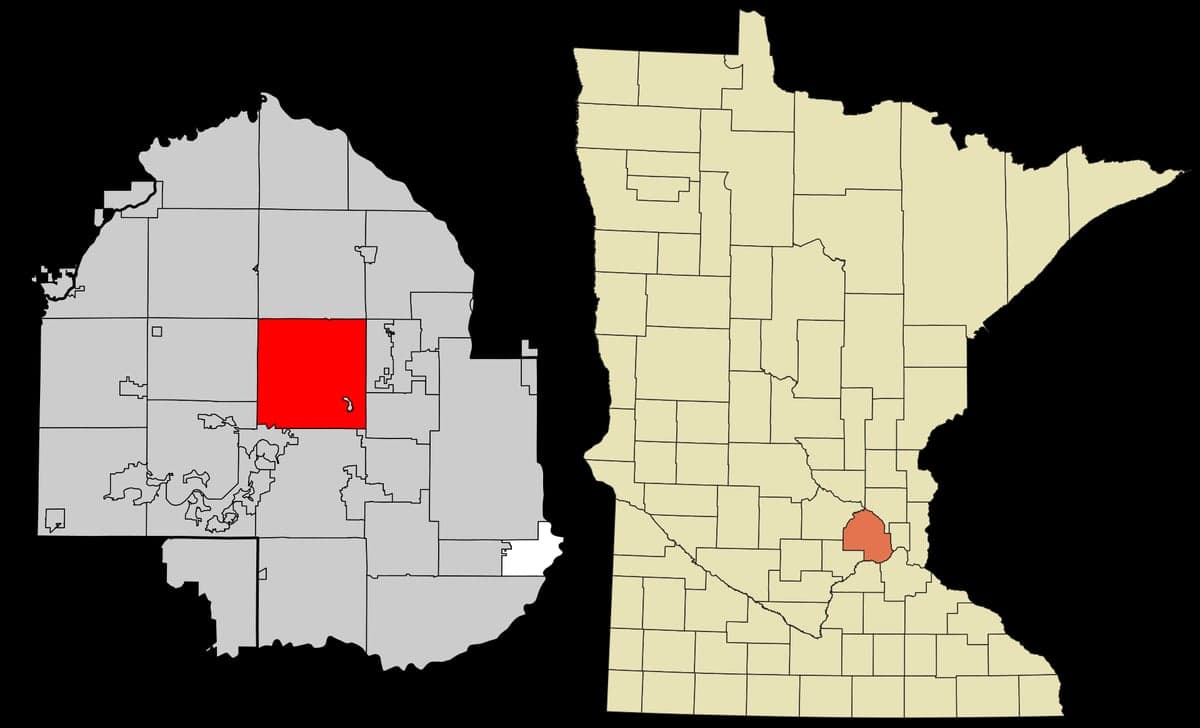
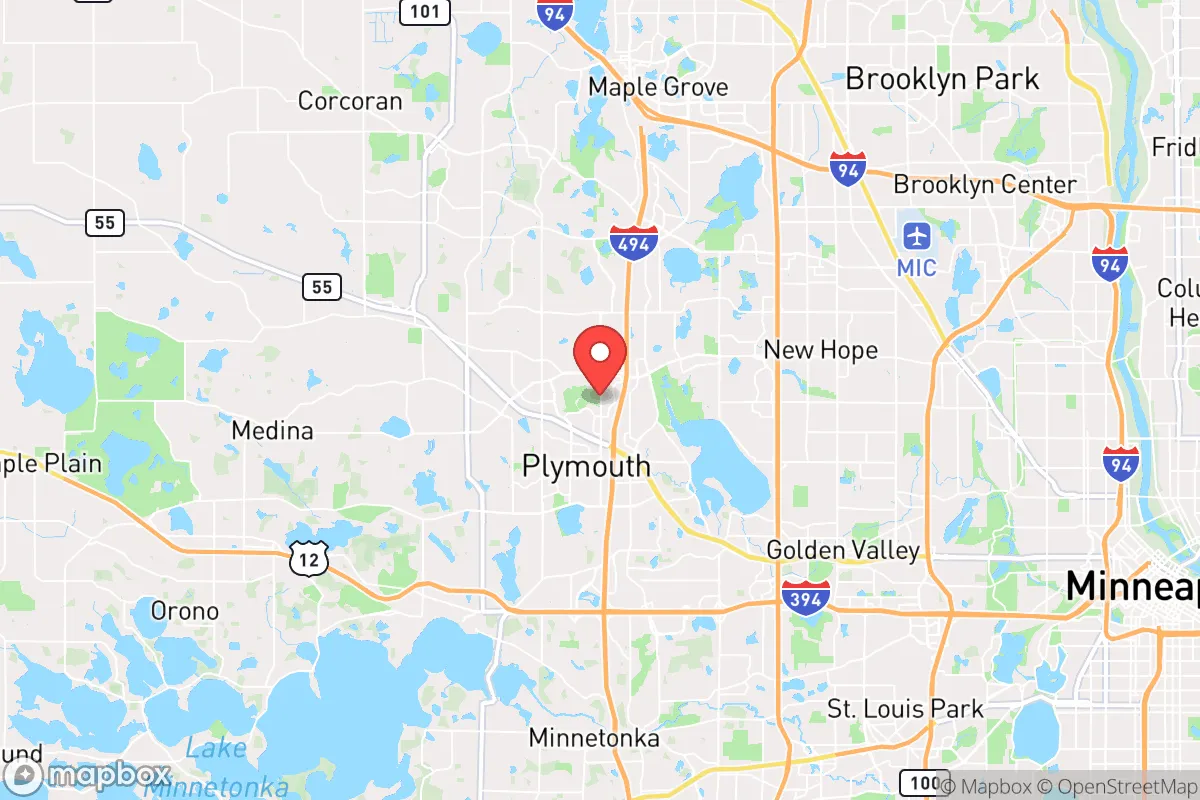
Photo: Wikipedia
Demographics of Plymouth, MN
Affluence Level in Plymouth, MN
An upper-middle-class area. Household wealth, education levels, and homeownership run ahead of national benchmarks.
People of Plymouth, MN
The people of Plymouth, Minnesota, today number roughly 79,526, forming a predominantly white (73.2%), highly educated (64.8% college-educated) suburban community with a notably diverse and growing Asian and Indian-subcontinent population. The city’s character is defined by its blend of established single-family neighborhoods, corporate campuses, and a strong tax base that supports top-ranked schools and extensive park systems. Distinctive identity markers include a low crime rate, a high median household income well above the state average, and a population that is both family-oriented and professionally driven, with many residents employed in finance, healthcare, and technology sectors within the city and the broader Twin Cities metro.
How the city was settled and grew
Plymouth’s human history begins with the Dakota people, who inhabited the area along the Mississippi River and Medicine Lake long before European settlement. The first permanent white settlers arrived in the 1850s, drawn by the promise of fertile farmland under the Preemption Act and later the Homestead Act. These early pioneers were primarily of Yankee (English-descended) and German stock, establishing farms and small hamlets. The village of Plymouth was officially organized in 1858, but growth remained slow and agricultural for nearly a century. Key early neighborhoods like Plymouth Creek and the area around Medicine Lake were the first to see clusters of farmsteads and seasonal lake cottages. A second wave of Scandinavian immigrants—Swedes and Norwegians—arrived in the late 19th and early 20th centuries, settling into farming communities that would later form the backbone of neighborhoods such as Parkers Lake and French Lake. The city remained a rural township until the post-World War II era, when the first suburban housing tracts began to appear, but the real transformation was still decades away.
Modern era (post-1965)
The passage of the 1965 Immigration and Nationality Act coincided with Plymouth’s explosive suburbanization. The city’s population surged from roughly 18,000 in 1970 to over 50,000 by 1990, driven by white domestic in-migration from Minneapolis and other inner-ring suburbs. Families were attracted by new housing developments, excellent schools, and the construction of major corporate campuses like those of Honeywell (now part of Resideo) and Mosaic Company. The neighborhoods of West Plymouth and Vicksburg Lakes were largely built out during this period, absorbing a wave of upper-middle-class white families. Beginning in the 1990s and accelerating after 2000, Plymouth began to see significant immigration from Asia and the Indian subcontinent. Today, the city’s foreign-born population stands at 5.4%, with Indian-subcontinent residents making up 6.6% of the total—a share that has more than doubled since 2010. These newer residents have concentrated in newer, higher-density housing near the Plymouth Industrial Park and along the Highway 55 corridor, drawn by professional jobs in engineering, IT, and healthcare. East and Southeast Asian communities (3.5% of the population) have also grown, settling in similar areas. The Black (5.0%) and Hispanic (4.7%) populations have increased more modestly, with families often locating in the more affordable multi-family housing stock near Bass Lake Road and Rockford Road.
The future
Plymouth’s population is projected to continue growing slowly, reaching approximately 85,000 by 2040, according to Metropolitan Council forecasts. The city is becoming more diverse, but the pace is gradual. The white share of the population is declining (down from 85% in 2010), while the Indian-subcontinent and Asian shares are the fastest-growing segments. These groups are not concentrating in a single ethnic enclave but are dispersing across newer developments and established neighborhoods, particularly in the West Plymouth and Plymouth Creek areas. The Hispanic and Black populations are expected to grow at a slower but steady rate, driven by second-generation families and continued domestic migration. Culturally, Plymouth is evolving from a homogeneous white-collar suburb into a more pluralistic community, though it remains predominantly white and affluent. The city’s identity is likely to become more cosmopolitan, with increasing cultural festivals, diverse restaurant options, and a broader range of religious institutions. For a family or individual moving in now, Plymouth offers a stable, high-opportunity environment with a demographic trajectory that points toward greater—but still measured—diversity.
Plymouth is becoming a more diverse, highly educated, and economically resilient suburb, where established white families live alongside growing Indian-subcontinent and Asian professional communities. For a mover seeking excellent schools, low crime, and a community that is stable yet gradually evolving, Plymouth represents a safe bet with a forward-looking demographic profile.

* Values derived from national, state, county, city and local statistics and may differ in a specific area. Last updated: 2026-08-24T23:18:32.000Z
Narrative content on this page is AI-generated and may contain mistakes. Verify any details that matter before acting on them.
ReloMaps may earn a commission from affiliate links at no extra cost to you.

