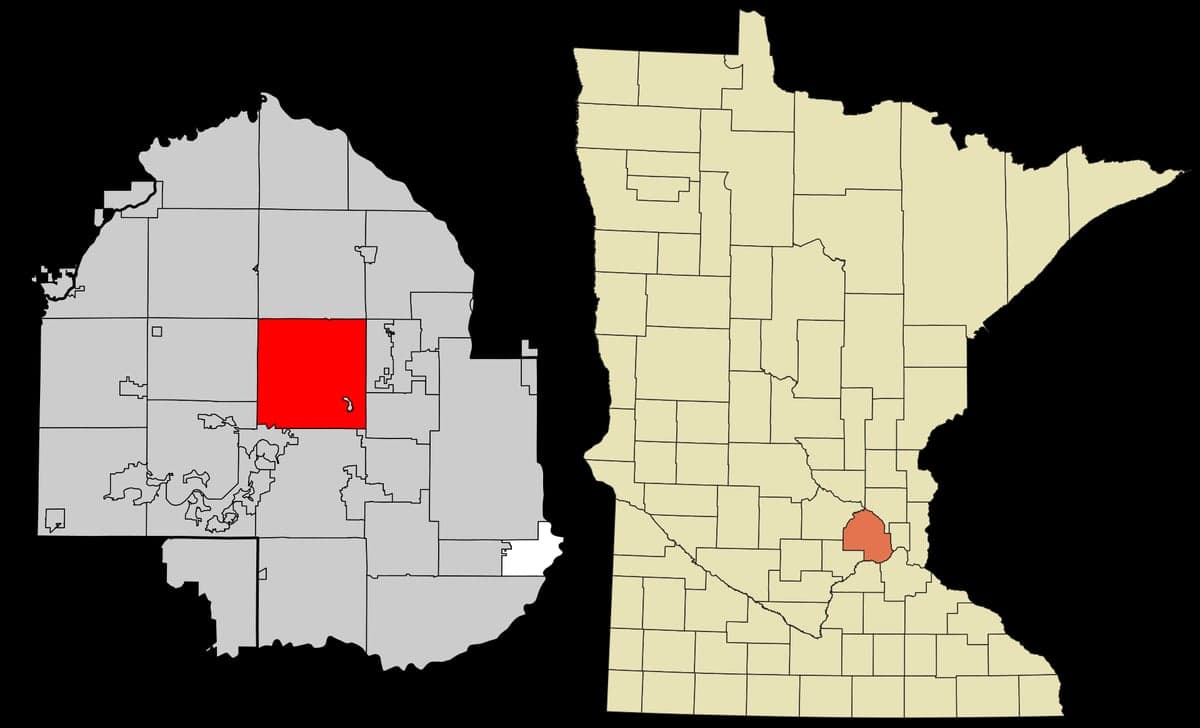
Photo: Wikipedia
Strategic Assessment of Plymouth, MN
Multiple tactical vulnerabilities. Population density, target proximity, or disaster risk are likely compounding. A retreat property and exit planning is required.
What does the Strategic Assessment tell us?
Our Strategic Assessment grades tactical survivability of an area. Major population centers, military targets, fallout zones, natural disasters, and border exposure all drive risk — lower exposure means a more defensible position in a crisis.
This is heavily inspired by Joel Skousen's Strategic Relocation book. Highly recommended you checkout the book ($)What does this tell us?
Our Strategic Assessment grades tactical survivability of an area. Major population centers, military targets, fallout zones, natural disasters, and border exposure all drive risk — lower exposure means a more defensible position in a crisis.
This is heavily inspired by Joel Skousen's Strategic Relocation book. Highly recommended you checkout the book ($)Strategic Pillars

Key Distances
Regional Safe Places
Below is our recommended "safe zones" in Minnesota and the surrounding area based on our strategic heuristics. For most people, it's unrealistic to live in a “safe zone” full-time due to work, family or other personal reasons. They tend to be more rural. However, many of these areas are perfect for second homes and retreat properties that double as a vacation home or even a short-term rental.
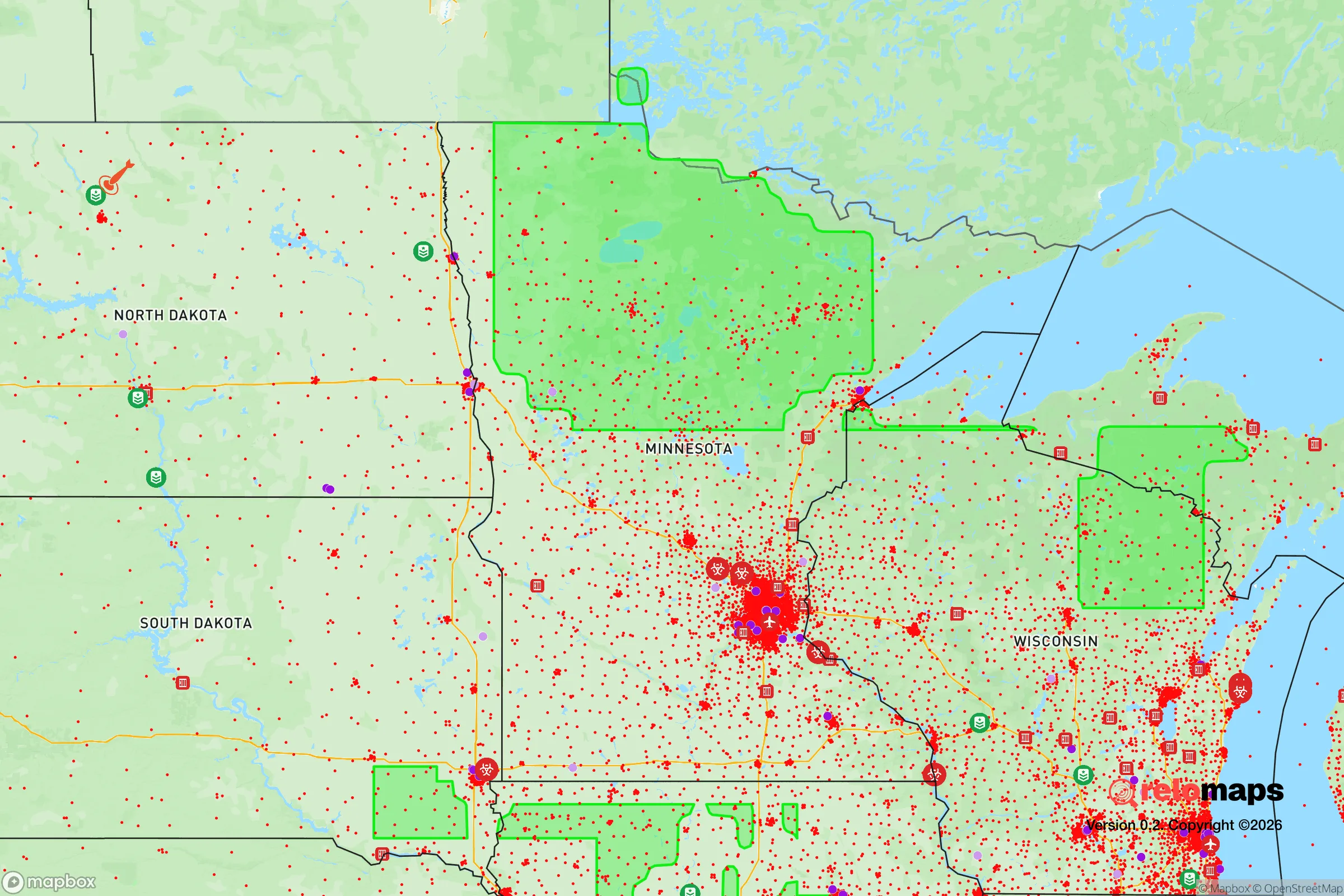
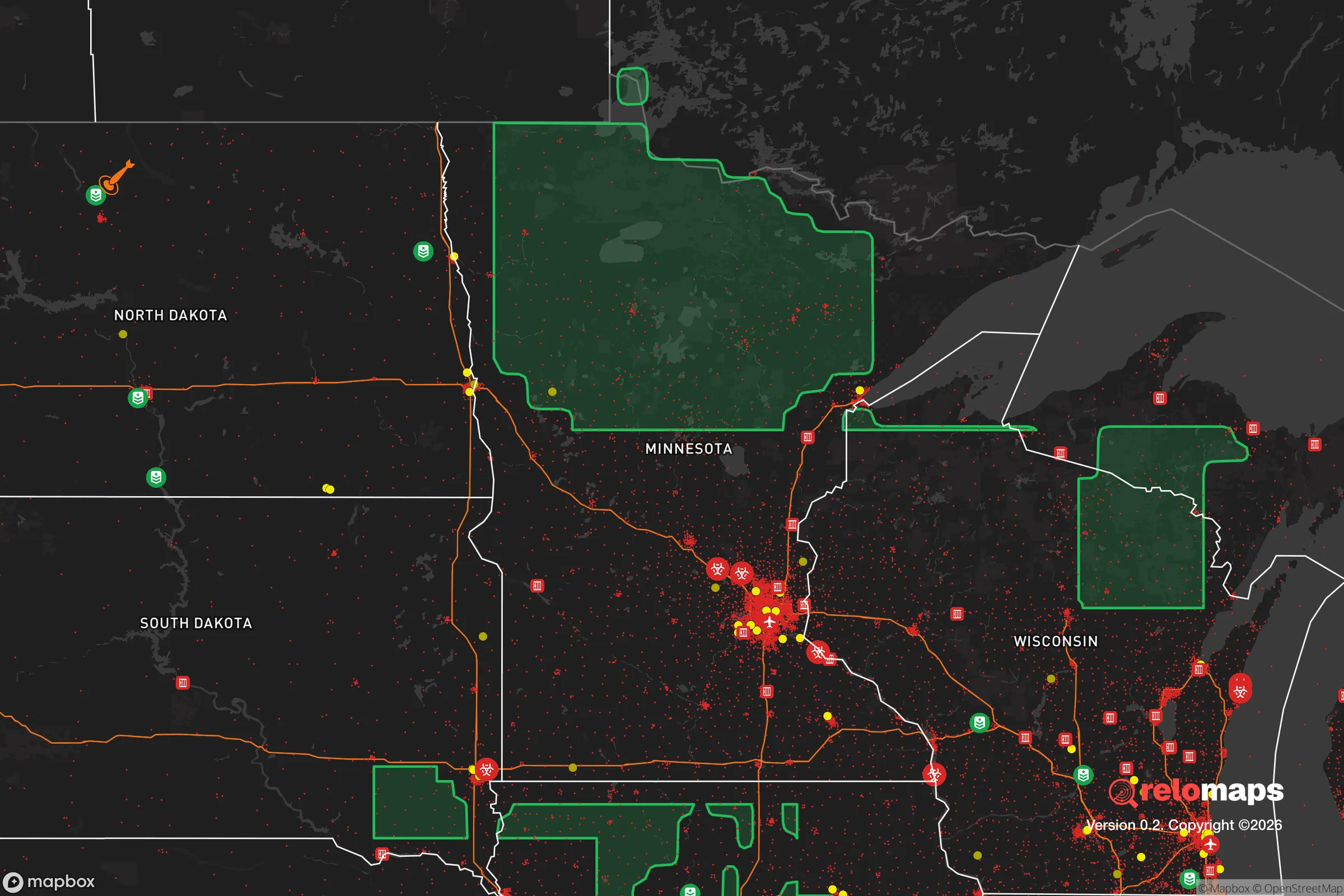


Important Note: For informational purposes only. This does not mean nothing bad ever happens in the green zones. Please use common sense. This is based on public data and modeled with AI. We tried to take a conservative approach but mistakes happen. We update this regularly as new information becomes available.
Solar Generator Recommendations
Backup power matters more here than in safer locations. We've picked three solar generators across budgets and capacity tiers — start with the budget unit if you only need a few essentials, or step up if you want to run a fridge and HVAC for days at a time.

Jackery Portable Power Station Explorer 300
Budget OptionPower on the Go: Weighing only 11 lbs, it's convenient to set up and store with book-sized foldable solar panels

BLUETTI Portable Power Station AC180
Designed for both indoor and outdoor scenarios, AC180 is highly capable as it has a robost capacity and continuous output power.

EF ECOFLOW DELTA Pro Ultra Power Station
Upgraded PickEcoFlow DELTA Pro Ultra is a whole-home energy system designed to grow with your family. Integrated with the Smart Home Panel 2, it scales to meet your evolving energy needs — keeping your home powered, intelligent, and secure through every stage of life.
We earn a commission, at no additional cost to you.
Strategic Assessment Analysis
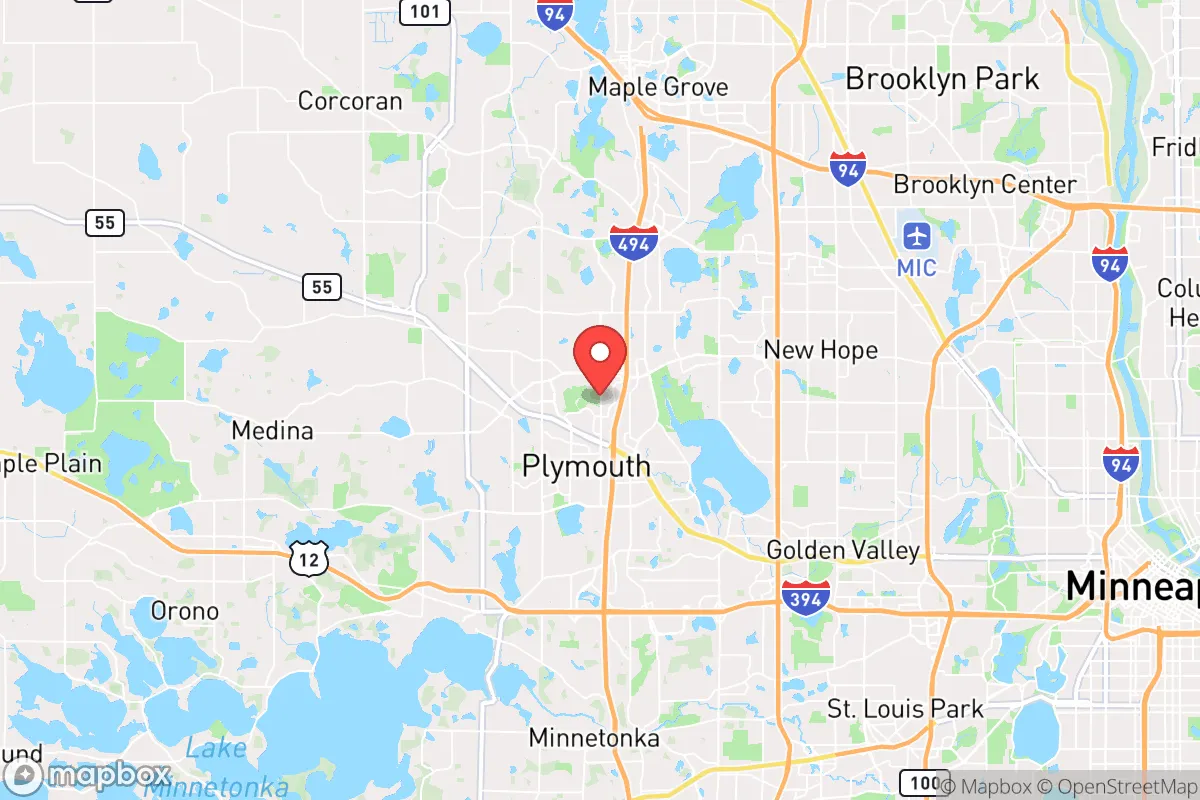
Plymouth, Minnesota, occupies a strategic position that balances the conveniences of a major metropolitan area with a degree of geographic resilience that sets it apart from denser inner-ring suburbs. Located roughly 15 miles west of downtown Minneapolis, the city benefits from being far enough from the urban core to avoid the worst of a potential metropolitan-scale disruption, yet close enough to maintain access to critical supply chains and medical infrastructure. For a relocator weighing disaster readiness and self-sufficiency, Plymouth offers a compelling mix of natural buffers, moderate population density, and practical infrastructure that makes it a defensible choice in the Upper Midwest.
Geographic position and natural advantages for long-term stability
Plymouth sits on the western edge of the Twin Cities metro, a location that provides several inherent advantages. The city is bisected by the Medicine Lake chain of lakes and bordered by the Crow River to the west, creating a natural water network that supports both recreation and emergency water access. The terrain is gently rolling, with significant tree cover and green space—Plymouth maintains over 1,000 acres of parkland—which offers natural cover and reduces the urban heat island effect that plagues denser areas. The city's elevation, roughly 950 feet above sea level, places it above the floodplains of the Mississippi River, which is a meaningful consideration given the region's history of spring flooding. Geologically, the area is stable; Minnesota is not prone to earthquakes, and Plymouth sits on glacial till and bedrock that provides solid foundations for infrastructure. The region's climate, while harsh in winter, also acts as a natural deterrent to many biological and pest-related risks common in warmer climates. For a relocator, this means a lower baseline of natural disaster frequency compared to coastal or tornado-prone plains regions.
Risk exposure and proximity to fallout-relevant landmarks
No location is without risk, and Plymouth's proximity to the Twin Cities introduces specific vulnerabilities. The city lies within 20 miles of the Minneapolis-St. Paul International Airport, a major transportation hub that could become a target or chokepoint during a national emergency. Additionally, the I-394 and I-494 corridors run through or near Plymouth, making it a potential evacuation route that could become congested or contested. The metro area hosts several facilities that could be considered fallout-relevant: the Xcel Energy Sherburne County Generating Plant (a coal and natural gas facility) is about 30 miles northwest, and while not nuclear, it represents a critical energy node. More directly, the University of Minnesota's nuclear research reactor in Minneapolis is roughly 20 miles east, though it is a low-power facility with minimal risk. The Federal Reserve Bank of Minneapolis and major corporate headquarters (like Target and Best Buy) in the metro could make the area a secondary target in a conflict scenario. However, Plymouth's western position means prevailing westerly winds would carry any airborne contaminants away from the city, not toward it. The city's distance from the Mississippi River (about 10 miles east) also reduces its exposure to river-based contamination or infrastructure failure. For the serious relocator, the key takeaway is that Plymouth is not a primary target but sits within the outer ring of a high-value metro area—a position that requires situational awareness but not alarm.
Practical resilience for a relocator: food, water, energy, and defensibility
Plymouth's practical resilience is where it shines for the self-sufficiency-minded individual. Water access is excellent: the city draws its municipal water from the Prairie du Chien-Jordan aquifer, a deep, protected groundwater source that is less vulnerable to surface contamination than river-fed systems. For those drilling private wells, the same aquifer is accessible at depths of 100-200 feet, and the water quality is generally high with minimal treatment needed. Food security is strong due to Plymouth's location in the heart of Minnesota's agricultural belt. Within a 30-mile radius, you have access to Hennepin County's extensive farmland, including corn, soybeans, and livestock operations. The city itself hosts several community gardens and farmers' markets, and the Three Rivers Park District manages over 27,000 acres of regional parks that could support foraging and small-game hunting in a prolonged emergency. Energy infrastructure is robust: Plymouth is served by Xcel Energy, which operates a diversified grid including natural gas, coal, nuclear (via the Prairie Island plant 40 miles southeast), and growing solar capacity. The city's Plymouth Public Works facility has backup generators, and many newer homes include provisions for solar panel installation. For off-grid energy, the area's average 200 sunny days per year supports solar, while wood-burning is viable given the abundant forest cover. Defensibility is moderate but improvable: Plymouth's layout is a mix of suburban subdivisions and rural-style acreages, particularly in the western parts of the city near the Crow River. The Plymouth Police Department maintains a strong presence with a response time under 5 minutes in most areas, and the city's crime rate is 60% lower than the national average, which speaks to community cohesion. For a relocator, the western neighborhoods—especially those along County Road 6 and Vicksburg Lane—offer larger lots, natural barriers (wooded ravines, lakes), and fewer through-streets, making them more defensible than the dense eastern sections near I-494.
The overall strategic picture for Plymouth is one of balanced resilience with manageable trade-offs. It is not a remote bunker location, nor should it be treated as one. What it offers is a rare combination: proximity to world-class medical care (the Mayo Clinic in Rochester is 90 minutes away, and Hennepin County Medical Center is 20 minutes east), a stable local economy anchored by employers like Boston Scientific, Medtronic, and Cargill, and a physical environment that provides natural buffers against both natural and man-made threats. The city's population of roughly 80,000 is large enough to support infrastructure but small enough to avoid the chaos of a major urban center during a crisis. For the relocator who values preparedness without isolation, Plymouth represents a strong middle-ground option—a place where you can build a self-sufficient lifestyle while still enjoying the benefits of a functioning modern city. The key is to choose your specific neighborhood wisely, invest in backup systems (well, solar, wood heat), and maintain a network of like-minded neighbors. In a worst-case scenario, Plymouth's western edge offers a viable retreat corridor into the rural counties of Wright and Meeker, where land is cheaper and population density drops sharply. For the serious thinker about disaster readiness, Plymouth is not a perfect solution—no place is—but it is a rational, data-supported choice in a region that offers genuine long-term stability.

* Values derived from national, state, county, city and local statistics and may differ in a specific area. Last updated: 2026-08-24T23:18:32.000Z
Narrative content on this page is AI-generated and may contain mistakes. Verify any details that matter before acting on them.
ReloMaps may earn a commission from affiliate links at no extra cost to you.

