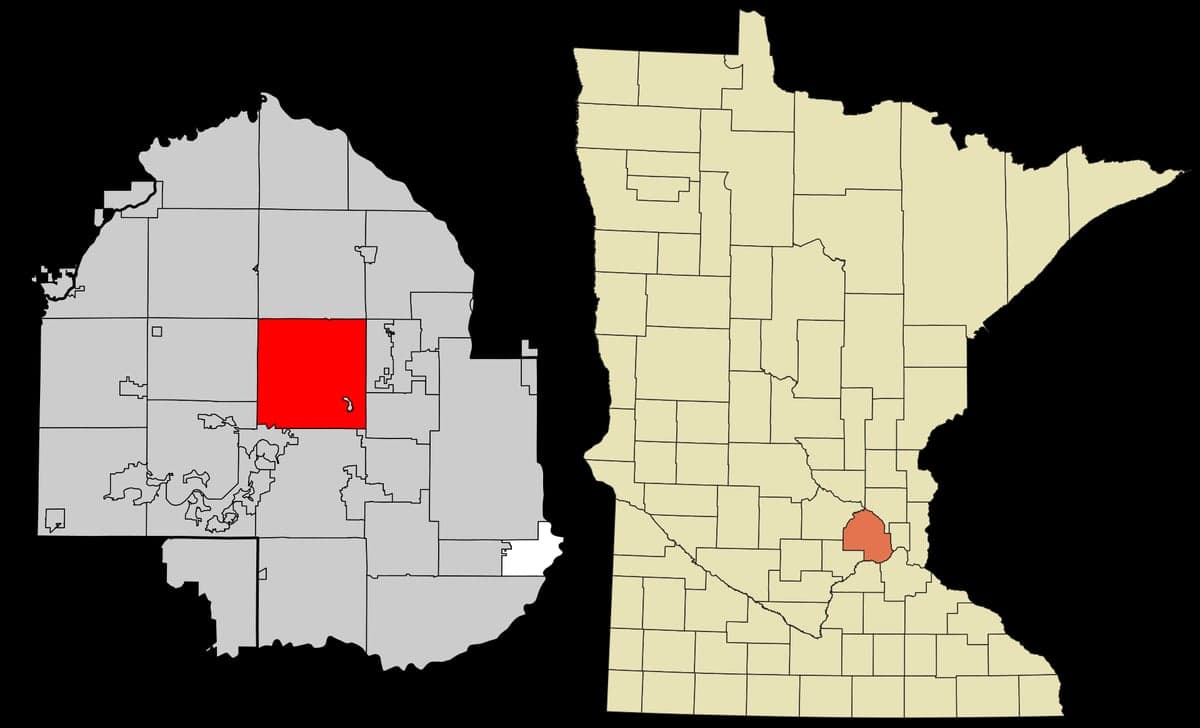
Photo: Wikipedia
Personal Sovereignty in Plymouth, MN
Viable for self-reliance. Generally workable, though some barriers may limit total independence.
What does Personal Sovereignty tell us?
Personal Sovereignty measures your capacity for self-reliance and independence with minimal government friction. Higher scores mean fewer barriers between you and the way you want to live... but it assumes you have the space you need and good neighbors.
What does this tell us?
Personal Sovereignty measures your capacity for self-reliance and independence with minimal government friction. Higher scores mean fewer barriers between you and the way you want to live... but it assumes you have the space you need and good neighbors.
State Policy
Energy independence: Importer (20% of energy produced in-state)
Personal Liberty
Homesteading

Personal Liberty Analysis
Plymouth, Minnesota, offers a mixed personal sovereignty environment where strong state-level protections for self-defense and parental rights coexist with a relatively high tax burden and a regulatory posture that can feel heavy-handed to those accustomed to less governed states. While the city itself is well-managed and prosperous, individuals and families prioritizing maximum autonomy will find that Minnesota’s progressive state government imposes notable constraints on income and property, even as it leaves significant room for personal liberty in areas like firearms and education. For a relocation-minded reader, Plymouth represents a trade-off: you gain access to excellent services and a safe, orderly community, but you pay for it in both taxes and a degree of regulatory oversight that may feel intrusive to the self-reliant.
Tax burden and regulatory posture: what you pay for the privilege of living here
Minnesota’s state and local tax burden is among the highest in the nation, and Plymouth residents feel it directly. The state’s progressive income tax tops out at 9.85% for single filers earning over $190,000 and married couples over $320,000, with a second-tier rate of 7.85% kicking in at lower thresholds. Property taxes in Plymouth are also above the national average, with the effective rate on owner-occupied homes hovering around 1.2% of assessed value, though this is partially offset by the state’s homestead credit for primary residences. Sales tax in Plymouth is 7.775% (state 6.875% plus Hennepin County 0.15% and transit 0.75%). The regulatory environment is characterized by a state-level permitting and licensing regime that is more extensive than in many Sun Belt or Mountain West states. For example, starting a home-based business requires navigating city-specific zoning and licensing, and environmental regulations on everything from shoreline development to septic systems are strict. However, the city itself is business-friendly relative to Minneapolis, with a streamlined permitting process for commercial development. The overall message: you will pay more in taxes and face more bureaucratic steps for property improvements or business ventures than you would in a state like Texas or Florida, but the infrastructure, schools, and services are correspondingly robust.
Self-defense and gun law specifics: a shall-issue state with some restrictions
Minnesota is a shall-issue state for concealed carry permits, meaning that if you meet the statutory requirements (age 21, no disqualifying criminal record, completion of an approved firearms safety course), the county sheriff must issue a permit. Plymouth is in Hennepin County, where the sheriff’s office processes applications efficiently, typically within 30 days. The state does not require a permit to openly carry a firearm, though local ordinances may restrict carry in certain public buildings. Minnesota law also provides strong protections for self-defense in the home and vehicle, with a “no duty to retreat” standard when a person is in a place they have a lawful right to be. However, the state does have a permit-to-purchase requirement for handguns (a background check and waiting period of up to seven days), and private firearm transfers are subject to a background check through a licensed dealer. Magazine capacity is not restricted at the state level, and there is no state-level assault weapons ban, though some cities (not Minneapolis) have attempted local restrictions. For the self-defense-minded, Plymouth offers a solid legal framework: you can carry, you can defend your home, and the permitting process is predictable. The main friction points are the purchase permit and the fact that Minnesota’s political climate is increasingly hostile to firearms at the state capitol, meaning future restrictions are a live possibility.
Self-reliance and homesteading viability: lot sizes, zoning, and off-grid feasibility
Plymouth is a fully suburbanized city with no agricultural zoning and very limited opportunities for true homesteading. The typical single-family lot size ranges from 0.25 to 0.5 acres, with some larger estate lots in the western part of the city near the Crow River. City zoning ordinances prohibit keeping livestock (chickens are allowed with a permit, but only for egg production, not slaughter), and any outbuildings require permits and must meet setback requirements. Off-grid living is effectively impossible within city limits: the city requires connection to municipal water and sewer for all habitable structures, and building codes mandate grid-tied electrical service. Solar panels are permitted but must be installed by a licensed contractor and meet utility interconnection standards. For those seeking a more self-reliant lifestyle, the practical reality is that Plymouth is a commuter suburb, not a rural enclave. The nearest areas with larger lots (2+ acres) and looser zoning are in western Hennepin County townships like Medina or Independence, or further out in Wright County. If your vision of sovereignty includes raising your own food, harvesting your own water, or living without utility bills, Plymouth is not the place. It is, however, a place where you can have a large garden, compost, and install energy-efficient upgrades without significant pushback from the city.
Personal liberties: parental rights, medical autonomy, speech, and property
Minnesota has strong protections for parental rights in education, including a statutory right to opt children out of specific curriculum materials and a requirement that schools notify parents of any changes to a student’s health or well-being services. Plymouth’s school district, Wayzata Public Schools, is highly rated and generally responsive to parental concerns, though it operates within state mandates on sex education and LGBTQ+ policies that some conservative families may find objectionable. Medical autonomy is more constrained: Minnesota has a state-run health insurance exchange, mandates vaccination for school attendance (with medical and conscientious exemption options), and has legalized recreational marijuana, which some may view as a liberty gain and others as a public health concern. The state also has a “red flag” law (Extreme Risk Protection Order) that allows law enforcement to petition for temporary firearm seizure, which is a point of contention for gun rights advocates. Free speech and property rights are generally well-protected under both the state and federal constitutions, though Plymouth’s city code includes noise ordinances, sign restrictions, and rental property licensing that some may view as overreach. The city also enforces a rental inspection program, which can feel intrusive to landlords. Overall, personal liberties in Plymouth are strongest in the areas of education and firearm ownership, weakest in the areas of medical choice and property use, and moderate in speech and assembly.
Compared to other metro areas in the Upper Midwest, Plymouth offers a relatively high degree of personal sovereignty in self-defense and parental rights, but a lower degree in tax burden and regulatory freedom. For a conservative-leaning individual or family, the city’s strong schools, low crime, and predictable governance may outweigh the higher taxes and zoning restrictions. However, those who prioritize maximum autonomy—especially in homesteading, off-grid living, or minimal government oversight—will find Plymouth too suburban and regulated. The best fit for this area is the freedom-minded person who values safety, education, and the right to keep and bear arms, and who is willing to pay a premium for those benefits in a well-managed, orderly community.

* Values derived from national, state, county, city and local statistics and may differ in a specific area. Last updated: 2026-08-24T23:18:32.000Z
Narrative content on this page is AI-generated and may contain mistakes. Verify any details that matter before acting on them.
ReloMaps may earn a commission from affiliate links at no extra cost to you.

