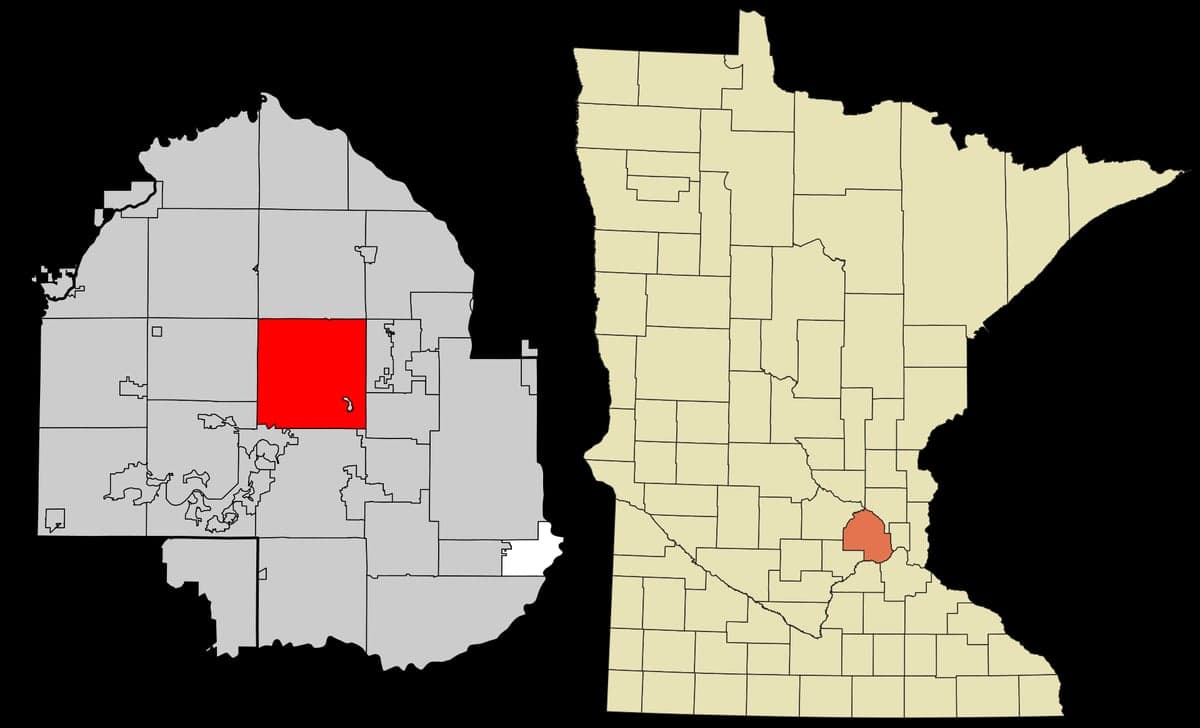
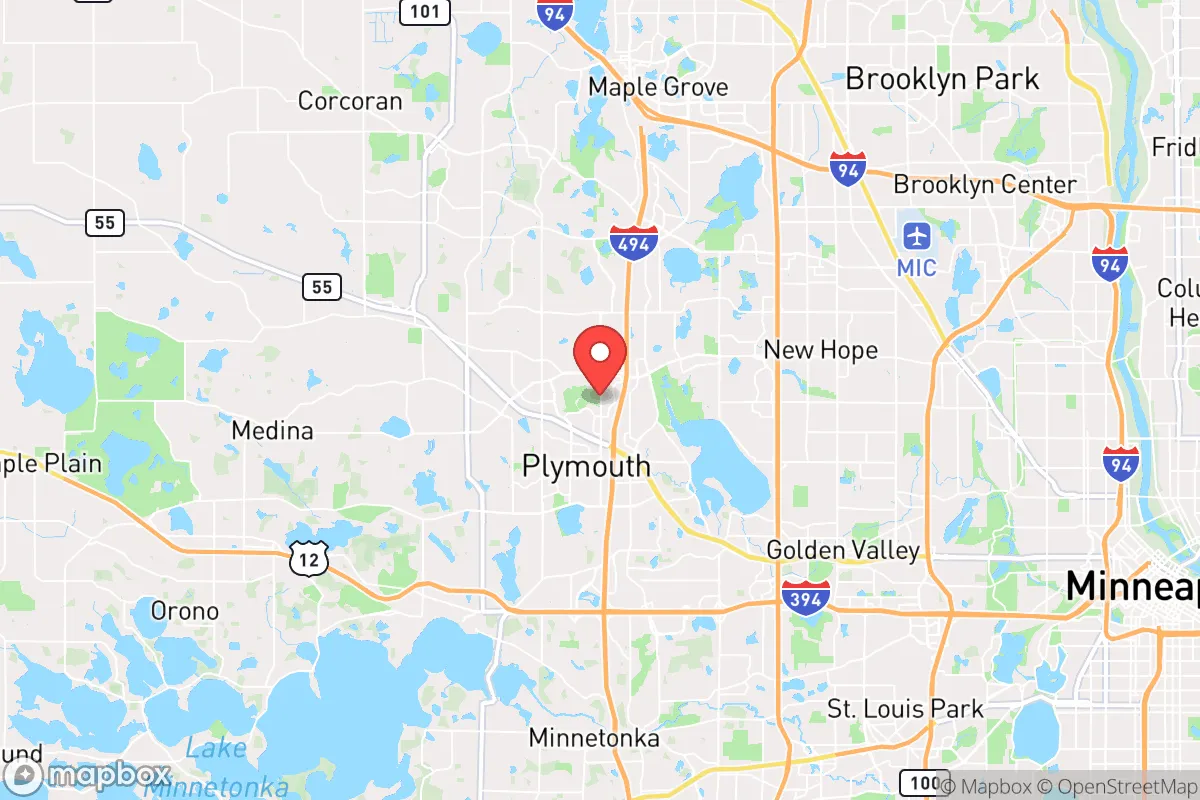
Photo: Wikipedia
Political ClimatePolitical Climate in Plymouth, MN
District shown is the primary district for this city’s centroid. Cities may span multiple districts.
Local Political AnalysisPolitical Analysis of Plymouth, MN
Plymouth is a solidly liberal suburb, and it’s been trending that way for a while. The Cook Partisan Voting Index (PVI) of D+11 tells you the story: the city is about 11 points more Democratic than the national average. That’s not a fluke—it’s a reflection of the educated, professional workforce that’s settled here, many of whom commute to Minneapolis or work at big corporate campuses like those of UnitedHealth Group and Cargill. You can see it in the yard signs during election years and in the local school board races, which tend to be won by candidates who emphasize equity and inclusion. The trajectory is pretty clear: Plymouth is getting more Democratic, not less, as the Twin Cities metro area continues to pull in younger, more diverse residents.
How it compares
Compared to the rest of Minnesota, Plymouth is a blue island in a purple state. The state as a whole has a Cook PVI that’s essentially neutral—it’s been a toss-up in recent presidential elections, with Democrats winning it by narrow margins. But Plymouth is way to the left of that. Drive 20 minutes west to Medina or 15 minutes northwest to Corcoran, and you’ll hit areas that are much more conservative, with large-lot homes and a strong Republican presence in local government. Even closer, the neighboring city of Wayzata is also liberal but a bit more moderate, with a higher concentration of old-money Republicans who still hold sway in local politics. So if you’re a conservative in Plymouth, you’re in the minority, but you’re not isolated—you’ve got like-minded folks just a few miles away in the exurbs.
What this means for residents
For liberal residents, Plymouth is a comfortable place to live. The city council and school board are reliably progressive, so you’ll see policies that support affordable housing initiatives, climate action plans, and diversity programs. You won’t have to fight for a Pride flag on the city hall lawn. For conservatives, it’s a different experience. You’ll likely feel out of step with the local political culture, especially if you’re active in community groups or school committees. But it’s not hostile—people are generally polite, and you can still find a few Republican-leaning churches and business groups. The real tension shows up in property tax debates, where liberal spending priorities (like new parks or transit studies) can clash with conservative desires for lower taxes. That’s the main friction point in local elections.
One cultural distinction that stands out is Plymouth’s emphasis on environmentalism and outdoor recreation. The city has a robust park system and a strong commitment to preserving green space, which aligns with the liberal base but also appeals to many conservatives who value hunting, fishing, and hiking. You’ll see bipartisan support for things like the Plymouth Creek Center and the regional trail network. Another distinction is the school system—Wayzata Public Schools is one of the top-rated in the state, and it’s a major draw for families of all political stripes. The schools are well-funded and progressive in their curriculum, which is a selling point for liberals but can be a sticking point for conservatives who prefer more traditional approaches. Overall, Plymouth’s political climate is defined by its suburban affluence and its proximity to Minneapolis, and that’s not likely to change anytime soon.

State Political ClimatePolitical Climate in Minnesota
State Political AnalysisPolitical Environment in the State
Minnesota has shifted from a classic purple battleground to a reliably blue state in presidential elections, but the picture is far more complicated than a simple partisan label. The state hasn't voted for a Republican for president since 1972, yet it regularly elects moderate Republicans to statewide office and has a legislature that has flipped between parties multiple times in the last decade. The real story is a growing urban-rural chasm: the Twin Cities metro, which contains over 55% of the state's population, has become overwhelmingly Democratic, while greater Minnesota has swung hard to the right. This split has created a state where the political experience depends almost entirely on where you live.
Urban vs. rural divide
The political map of Minnesota is essentially a story of two states. The Twin Cities metro area — including Minneapolis, St. Paul, and their inner-ring suburbs like Bloomington and Roseville — drives the state's Democratic lean. Hennepin and Ramsey counties alone deliver a Democratic margin of roughly 400,000 votes, enough to offset Republican gains everywhere else. The outer-ring suburbs tell a more nuanced story: Lakeville and Woodbury have trended Democratic in recent cycles, while exurbs like Elk River and St. Michael remain reliably Republican. Outside the metro, the dynamic flips dramatically. The Iron Range, once a Democratic stronghold, has shifted rightward as union ties weakened and cultural issues took precedence. Duluth remains a blue island on the North Shore, but much of central and southern Minnesota — places like Rochester, Mankato, and St. Cloud — are competitive or leaning Republican. The 2020 election saw several rural counties that had voted for Obama in 2008 and 2012 flip to Trump by 30-point margins, a trend that accelerated in 2024.
Policy environment
Minnesota's policy landscape has shifted sharply left since Democrats won full control of state government in 2022. The state now has a progressive income tax structure with rates ranging from 5.35% to 9.85%, one of the highest top marginal rates in the country. Property taxes are moderate but vary significantly by locality. The state has no sales tax on clothing or groceries, which provides some relief. On education, Minnesota spends roughly $16,000 per student, above the national average, and has a robust public school system with strong teacher unions. School choice options exist through charter schools and open enrollment, but there is no voucher program. Healthcare policy includes a state-based insurance exchange and expanded Medicaid under the Affordable Care Act. Election laws are among the most accessible in the country: same-day voter registration, no-excuse absentee voting, and automatic voter registration are all in place. Minnesota has no voter ID law, which remains a flashpoint for conservative critics.
Recent policy direction
The 2023-2024 legislative sessions produced a wave of progressive legislation that reshaped the state's policy landscape. On gun policy, Minnesota passed universal background checks and a red flag law in 2023, joining a growing list of states with such measures. Self-defense law remains governed by a duty to retreat in most public spaces, though the Castle Doctrine applies in the home. On education and parental rights, the state passed a law requiring school districts to provide LGBTQ-inclusive curriculum materials, which has drawn organized opposition from conservative parent groups. Medical and bodily autonomy saw major changes: Minnesota codified abortion rights into state law in 2023, removing restrictions that had been on the books for decades. The state also passed a law protecting gender-affirming care for minors, making it a sanctuary state for families traveling from states with bans. On privacy and surveillance, Minnesota has no comprehensive data privacy law, though a bill is under consideration. Property rights remain generally strong, though environmental regulations can slow development in sensitive areas. The state's tax burden is high by national standards, ranking in the top ten for combined state and local tax burden. Voting access expanded further with automatic voter registration and pre-registration for 16- and 17-year-olds.
Civil unrest & political movements
Minnesota has been a focal point for political activism on both sides. The 2020 murder of George Floyd in Minneapolis sparked the largest protests in the state's history, leading to significant police reform legislation and ongoing debates about public safety. The city of Minneapolis voted in 2021 against replacing its police department with a new public safety agency, a measure that divided progressive coalitions. On the right, the Elk River area and other exurban communities have seen growing activity from Second Amendment advocacy groups and parental rights organizations. Immigration politics are less heated than in border states, but Minnesota has sanctuary policies in place: Minneapolis and St. Paul limit cooperation with federal immigration enforcement, and a 2023 state law prohibits state and local agencies from using resources to enforce federal immigration law. Election integrity remains a live issue: Minnesota's high turnout and same-day registration system have generally been viewed as well-run, but conservative groups continue to push for voter ID requirements. The state has seen no serious secession or nullification rhetoric, though rural counties have occasionally floated the idea of joining neighboring states in symbolic protests.
Projection
Over the next five to ten years, Minnesota's political trajectory points toward continued Democratic dominance at the state level, but with growing geographic polarization. The Twin Cities metro is projected to continue growing, adding more Democratic-leaning voters, while rural areas will continue to shrink and become more Republican. The state's in-migration patterns are mixed: Minnesota attracts educated professionals to the metro, which reinforces the Democratic lean, but also sees out-migration of conservative-leaning residents to states like Florida and Texas. The wild card is the suburbs: if outer-ring suburbs like Lakeville and Woodbury continue trending left, the state will become safely blue for the foreseeable future. If they hold or shift right, Minnesota could become competitive again in a decade. The state's high tax burden and regulatory environment will likely continue to be a point of tension, with business groups pushing for reforms and progressive coalitions defending the status quo. A new resident moving in now should expect a state where the political climate is increasingly determined by zip code, with the metro and rural areas living under effectively different policy regimes.
For a conservative-leaning relocator, the bottom line is that Minnesota offers a high quality of life in many respects — excellent schools, strong job market, beautiful natural environment — but the state's political direction is clearly progressive and likely to remain so. If you're moving to the Twin Cities metro, you'll be in a heavily Democratic environment with high taxes and progressive policies on guns, abortion, and education. If you're looking at greater Minnesota — places like Rochester, St. Cloud, or the Lakeville area — you'll find more political diversity and a lower cost of living, but you'll still be subject to state-level policies set in St. Paul. The practical takeaway: Minnesota is a great place to live if you can tolerate the tax burden and are comfortable with progressive state governance, or if you're willing to be politically active in pushing back against it. It's not a state where conservatives will feel culturally dominant, but it's also not a place where they'll be silenced or marginalized.
* Values derived from national, state, county, city and local statistics and may differ in a specific area. Last updated: 2026-08-24T23:18:32.000Z
Narrative content on this page is AI-generated and may contain mistakes. Verify any details that matter before acting on them.
ReloMaps may earn a commission from affiliate links at no extra cost to you.

