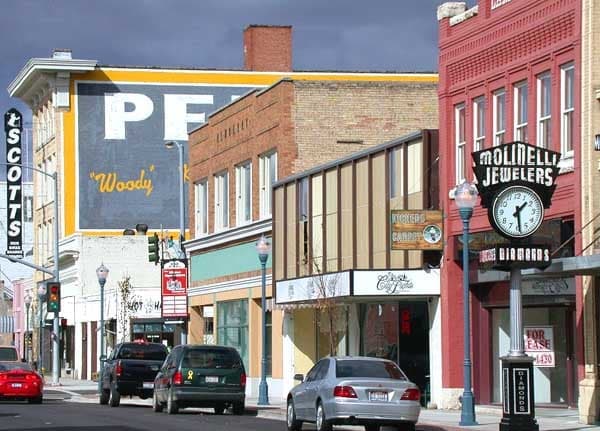
Photo: Wikipedia
Political ClimatePolitical Climate in Pocatello, ID
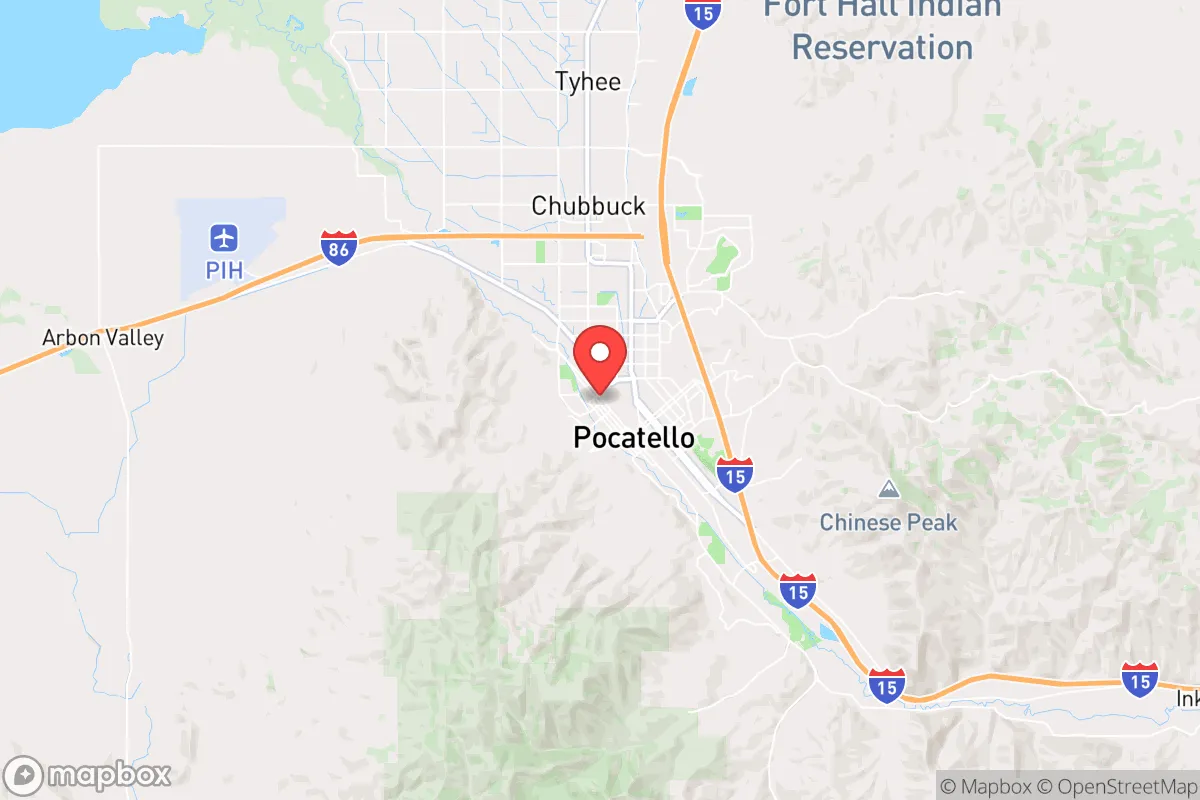
District shown is the primary district for this city’s centroid. Cities may span multiple districts.
Local Political AnalysisPolitical Analysis of Pocatello, ID
Pocatello has long been a solidly conservative community, anchored by a Cook PVI of R+13 that reflects its reliable Republican lean in federal elections. But if you’ve lived here as long as I have, you’ve seen the political winds shift in subtle but real ways. The city itself still votes red, but the margins have tightened in recent cycles, and there’s a growing undercurrent of progressive activism—especially around the Idaho State University campus—that wasn’t here twenty years ago. The real story isn’t just the partisan numbers; it’s the quiet battle between the old-school, limited-government values that built this town and the creeping influence of policies that feel more like Boise or even Portland every year.
How it compares
Pocatello sits in a bit of a political bubble compared to the surrounding area. Drive twenty miles west to American Falls, and you’ll find a community that votes even more conservatively, with fewer visible signs of progressive organizing. Head north to Idaho Falls, and the political culture is noticeably more libertarian-leaning—less tolerance for local government overreach, more emphasis on property rights and gun freedoms. But Pocatello itself has become a kind of battleground within Bannock County. The county as a whole still leans red, but the city council and school board races have seen a steady influx of candidates pushing “equity” initiatives and climate action plans that sound good on paper but often translate into new regulations and higher taxes. The contrast with nearby Chubbuck, which has held the line on most progressive proposals, is stark. If you value personal freedoms and minimal government interference, Chubbuck feels more like the Pocatello of the 1990s.
What this means for residents
For folks who moved here to escape the overreach they saw in places like California or even Salt Lake City, the trend is concerning. The biggest flashpoints in recent years have been around land use and local business mandates. There was a push a few years back to impose stricter rental inspection rules that many saw as a backdoor way to control property rights—it barely failed, but it’s coming back. The school district has also adopted policies around “culturally responsive teaching” that some parents worry prioritize ideology over academics. On the positive side, the Second Amendment remains strong here, and the county sheriff’s office has publicly stated they won’t enforce any federal gun restrictions they deem unconstitutional. But the worry is that as Pocatello grows—and it is growing, with new subdivisions and transplants—the political center of gravity could shift further left, bringing more zoning restrictions, higher fees, and a general erosion of the live-and-let-live ethos that made this place special.
One cultural distinction worth noting: Pocatello still has a strong rodeo and outdoor recreation culture that keeps a lot of the community grounded in traditional values. The annual Portneuf Valley Farmers Market is a gathering spot where you’ll see as many pickup trucks with gun racks as Priuses with bumper stickers. But the university influence is real, and it’s amplified by social media and national trends. If you’re considering a move here, keep an eye on the next couple of city council elections. If the progressive slate wins a majority, expect more ordinances that nibble at your freedoms—things like plastic bag bans, mandatory composting, or even noise curfews that sound reasonable but add up to a less free way of life. For now, Pocatello is still a good place for someone who wants to be left alone, but it’s not the sure thing it used to be.

State Political ClimatePolitical Climate in Idaho
State Political AnalysisPolitical Environment in the State
Idaho has long been one of the most reliably conservative states in the nation, with a Republican trifecta in state government that has held for decades and a 2024 presidential margin of roughly +30 points for Donald Trump. Over the past 10-20 years, the state has shifted even further right on cultural and fiscal issues, driven by an influx of out-of-state conservatives fleeing blue states, while the native population has remained deeply skeptical of federal overreach. The dominant coalition is a blend of rural libertarians, Mormon social conservatives, and new arrivals from California and Washington seeking lower taxes and fewer mandates, creating a political environment that is increasingly assertive in pushing back against progressive trends.
Urban vs. rural divide
The political map of Idaho is starkly divided between its few urban centers and the vast rural expanse. The Boise metro area, including Ada County (Boise, Meridian, Eagle) and Canyon County (Nampa, Caldwell), is the state’s population engine and the only region where Democrats are competitive. Ada County has trended purple in recent cycles, with Boise itself electing a Democratic mayor and sending a few Democrats to the legislature, but the surrounding suburbs like Meridian and Eagle remain reliably red. The real conservative strongholds are the rural counties: Bonneville (Idaho Falls), Kootenai (Coeur d’Alene), and Twin Falls County routinely vote 70-80% Republican. The Panhandle, particularly Boundary and Bonner counties, has seen a surge of conservative transplants from Washington and Oregon, flipping areas that were once more moderate into deep-red territory. The only notable exception is Blaine County (Sun Valley), which votes reliably Democratic due to its wealthy, amenity-driven population. Overall, the rural vote overwhelms the urban centers, ensuring the state’s conservative tilt.
Policy environment
Idaho’s policy environment is a model of limited government, with no state income tax on individuals (a flat 5.8% corporate rate remains), a constitutional cap on property tax growth, and a right-to-work law that keeps union influence minimal. The state has a strong school choice movement, with charter schools and open enrollment widely available, though a full voucher program has yet to pass. Education policy is dominated by parental rights, with the 2023 “Parents’ Bill of Rights” (HB 93) requiring schools to notify parents of any curriculum involving sexuality or gender identity and to obtain consent before changing a student’s pronouns. Healthcare is largely deregulated, with no state-run insurance exchange and a Medicaid expansion passed by ballot initiative in 2018 that the legislature has since tried to restrict with work requirements. Election laws are among the most secure in the nation: voter ID is required, same-day registration is not allowed, and the state uses paper ballots with hand-count audits in many counties. The legislature has also passed laws banning ranked-choice voting and restricting ballot drop boxes, reflecting a deep distrust of federal election mandates.
Trajectory & freedom
Idaho is actively expanding personal freedom, particularly in areas of gun rights, parental autonomy, and medical choice. In 2023, the state passed constitutional carry (HB 124), allowing any adult who can legally own a firearm to carry it concealed without a permit. The same year, the legislature banned nearly all abortions under the “Defense of Life Act” (HB 242), with no exceptions for rape or incest, and passed a law prohibiting gender-affirming care for minors (HB 71). Property rights were strengthened with a 2024 law limiting the use of eminent domain for private economic development. On the taxation front, the state has been cutting income tax rates steadily, with a goal of eliminating the corporate income tax entirely by 2030. However, there are concerns about government overreach in the form of a 2024 law (SB 1329) that allows the state to sue local governments that adopt “sanctuary” policies for illegal immigrants, which some see as a necessary enforcement of federal law and others as an expansion of state power. Overall, the trajectory is toward more individual liberty, but with a strong emphasis on traditional values that some newcomers may find restrictive.
Civil unrest & political movements
Idaho has seen relatively little civil unrest compared to coastal states, but there are active political movements on both sides. The most visible is the “People’s Rights” network, founded by Ammon Bundy, which has organized protests against COVID-19 mandates, vaccine passports, and library books dealing with LGBTQ+ topics. In 2022, Bundy’s group occupied the Idaho State Capitol briefly, leading to his arrest and a subsequent defamation lawsuit. On the left, the “Idaho Women’s March” and “Indivisible” groups hold regular protests in Boise, particularly around abortion rights and transgender issues, but they remain small and largely ignored by state government. Immigration politics are a flashpoint: the legislature passed a 2024 law (HB 400) making it a state crime for illegal immigrants to enter Idaho, and the governor has deployed state police to the southern border in Texas. There is no sanctuary city movement of any significance; even Boise’s city council has avoided declaring itself a sanctuary city. Election integrity controversies are minimal, with the state’s Republican secretary of state (Phil McGrane) widely trusted by both parties. The only real flashpoint a new resident would notice is the occasional protest at the Capitol during the legislative session, but it’s tame compared to Portland or Seattle.
Projection
Over the next 5-10 years, Idaho is likely to become even more conservative, driven by continued in-migration from California, Oregon, and Washington. The state’s population is projected to grow by 20-30% by 2035, with most new arrivals settling in the Treasure Valley (Boise area) and the Panhandle. This will put pressure on housing and infrastructure, but politically, the newcomers are overwhelmingly conservative, often more so than the native population. The legislature will likely continue to push on school choice, tax cuts, and cultural issues, with a possible ban on all gender-affirming care for adults and a full repeal of the state income tax. The wild card is the growing libertarian wing of the Idaho Republican Party, which may clash with the more establishment, pro-business faction over issues like property rights and zoning reform. A new resident moving in now should expect a state that is deeply committed to individual freedom in the traditional sense—gun rights, low taxes, parental control—but also one that is increasingly willing to use state power to enforce those values, particularly on immigration and cultural issues. The political climate will remain stable, but the pace of change will accelerate as the state’s demographics shift.
For a new resident, the bottom line is that Idaho offers a political environment where your personal freedoms—especially your right to own guns, educate your children as you see fit, and keep more of your money—are actively protected by state law. The trade-off is that the state is unapologetically traditional on social issues, and if you’re looking for a place where progressive values are the norm, you’ll find yourself in a small, isolated minority. For conservatives and libertarians, Idaho is as close to a safe haven as you’ll find in the lower 48, but it’s not a place for those who want the government to stay out of every aspect of life—the state is increasingly willing to step in to enforce its vision of freedom.
* Values derived from national, state, county, city and local statistics and may differ in a specific area. Last updated: 2026-04-21T20:51:18.000Z
Narrative content on this page is AI-generated and may contain mistakes. Verify any details that matter before acting on them.
ReloMaps may earn a commission from affiliate links at no extra cost to you.

