Photo: Wikipedia
Demographics of Port Huron, MI
Affluence Level in Port Huron, MI
A below-average socioeconomic profile. Incomes, home values, and educational attainment trail the U.S., with higher poverty and unemployment.
People of Port Huron, MI
The people of Port Huron, Michigan, today number 28,724, forming a predominantly white (78.5%) and notably less diverse community than the national average. The city’s identity is rooted in its working-class, industrial heritage, with a low foreign-born population of just 1.3% and a college attainment rate of 18.7%, well below the U.S. median. This is a place where family roots run deep, and the population is older and more stable than in many comparable Midwestern cities.
How the city was settled and grew
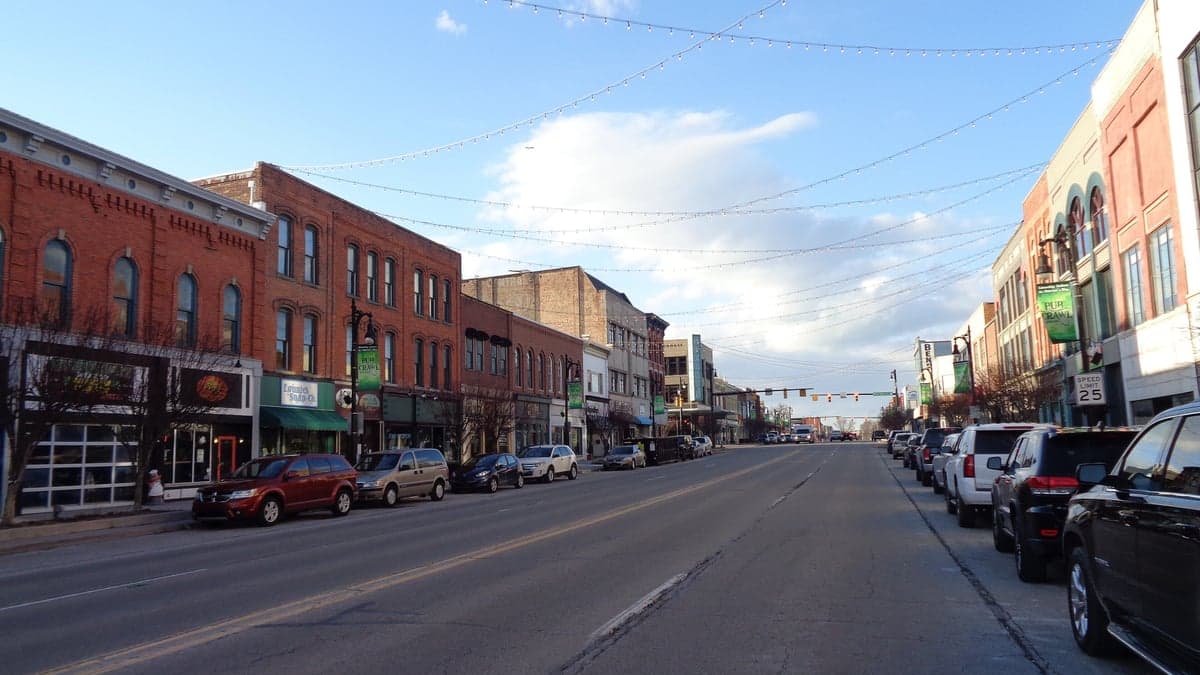
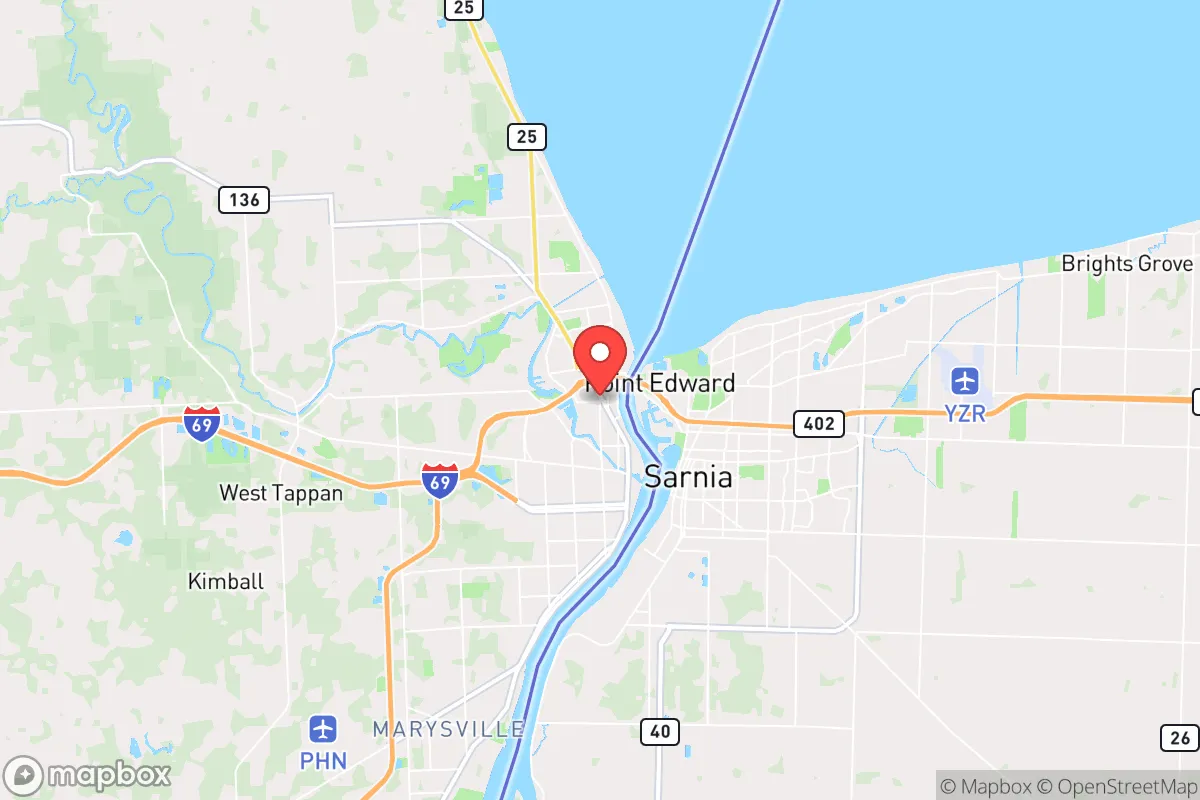
Port Huron’s population history begins with its strategic location at the southern end of Lake Huron, where the St. Clair River flows out. The area was originally inhabited by the Ojibwe and other Anishinaabe peoples, but European-American settlement accelerated after the 1820s, driven by the fur trade and later by the lumber boom. The city was officially incorporated in 1857, and its growth exploded with the arrival of the railroad and the establishment of shipbuilding and manufacturing along the waterfront. The first major wave of settlers were Yankees from New England and upstate New York, who built the early downtown and the South Park neighborhood, a historic district of Victorian homes near the river. A second wave, from the 1880s to the 1910s, brought German and Polish immigrants who worked in the shipyards and foundries. These groups settled in Fort Gratiot, a northern neighborhood that grew around the military fort and later became a working-class enclave of frame houses and small businesses. The city’s peak population of roughly 36,000 was reached in the 1960s, fueled by the auto industry and the nearby Mueller Brass Company.
Modern era (post-1965)
After the 1965 Hart-Cellar Act, Port Huron saw only a modest increase in foreign-born residents, unlike larger Michigan cities. The foreign-born share today is just 1.3%, with the largest group being Hispanic (7.1% of the total population) and Black (6.8%). The Black population, which grew from a small base after the 1960s, is concentrated in the Edison neighborhood, an area of older homes and rental properties east of downtown. The Hispanic community, largely of Mexican origin, has settled in the Wadhams area, a more rural fringe of the city that offers lower housing costs. East/Southeast Asian residents (0.6%) and Indian-subcontinent residents (0.1%) are very small populations, mostly professionals or small business owners scattered across the city with no single ethnic enclave. The dominant domestic trend has been suburbanization: middle-class white families have moved to neighboring towns like Marysville and St. Clair, leaving Port Huron’s core neighborhoods—such as Downtown and South Park—with an older, lower-income population. The city’s population has declined by roughly 20% since its 1960s peak, a loss driven by deindustrialization and the shift of retail and jobs to the suburbs.
The future
Port Huron’s population is likely to continue its slow decline, with the city aging and outmigration of young adults persisting. The Hispanic share is growing gradually, driven by births and some in-migration from other parts of Michigan, but the overall foreign-born rate is unlikely to rise sharply. The Black population has plateaued, and the Asian and Indian communities remain too small to form distinct neighborhoods. The city is not tribalizing into ethnic enclaves; rather, it is homogenizing as the white population ages and the few minority groups remain dispersed. The next 10-20 years will likely see Port Huron become an even older, more stable community, with a shrinking tax base and a growing reliance on regional healthcare and tourism jobs. New development is concentrated in the Downtown district, where efforts to attract young professionals and empty-nesters are underway, but these are small-scale and unlikely to reverse the demographic trend.
For someone moving in now, Port Huron offers a low-cost, quiet, and safe environment with a strong sense of local history. The population is overwhelmingly native-born and English-speaking, with a conservative-leaning political culture. The trade-off is limited diversity, a modest job market, and a population that is not growing. This is a place for those seeking stability and affordability, not for those looking for a dynamic, multicultural urban experience.

* Values derived from national, state, county, city and local statistics and may differ in a specific area. Last updated: 2026-04-30T05:02:37.000Z
Narrative content on this page is AI-generated and may contain mistakes. Verify any details that matter before acting on them.
ReloMaps may earn a commission from affiliate links at no extra cost to you.

