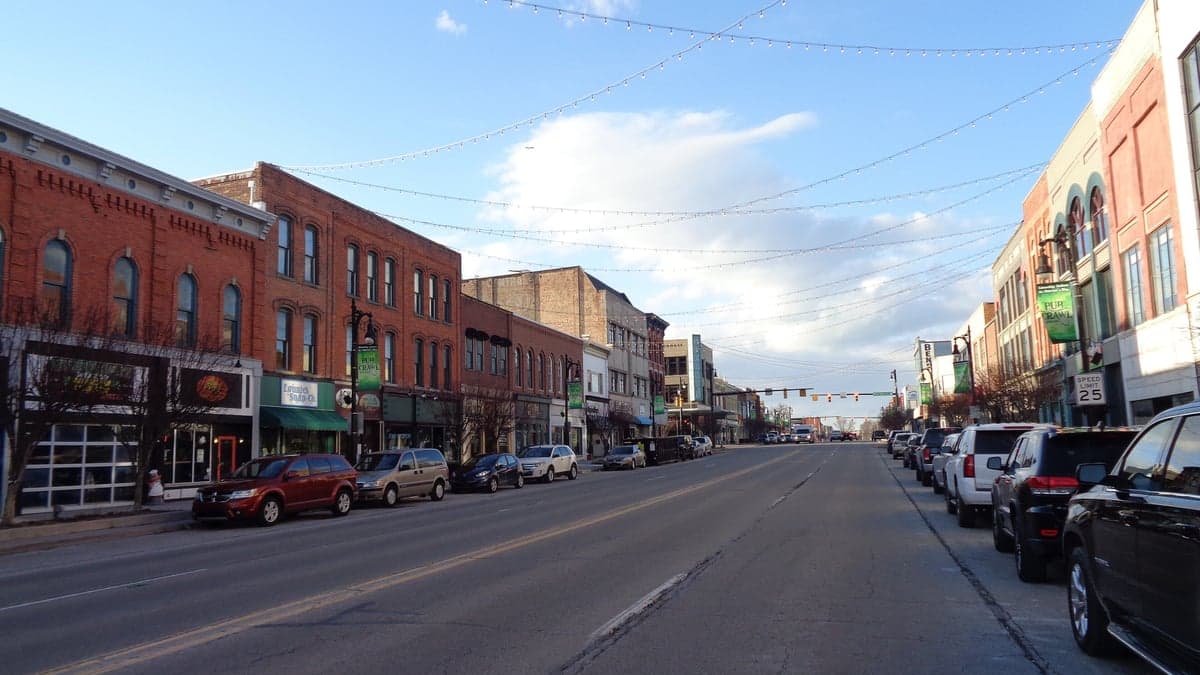
Photo: Wikipedia
Personal Sovereignty in Port Huron, MI
Strong independent fundamentals that actively favor personal liberty and low regulation.
What does Personal Sovereignty tell us?
Personal Sovereignty measures your capacity for self-reliance and independence with minimal government friction. Higher scores mean fewer barriers between you and the way you want to live... but it assumes you have the space you need and good neighbors.
What does this tell us?
Personal Sovereignty measures your capacity for self-reliance and independence with minimal government friction. Higher scores mean fewer barriers between you and the way you want to live... but it assumes you have the space you need and good neighbors.
State Policy
Energy independence: Importer (20% of energy produced in-state)
Personal Liberty
Homesteading

Personal Liberty Analysis
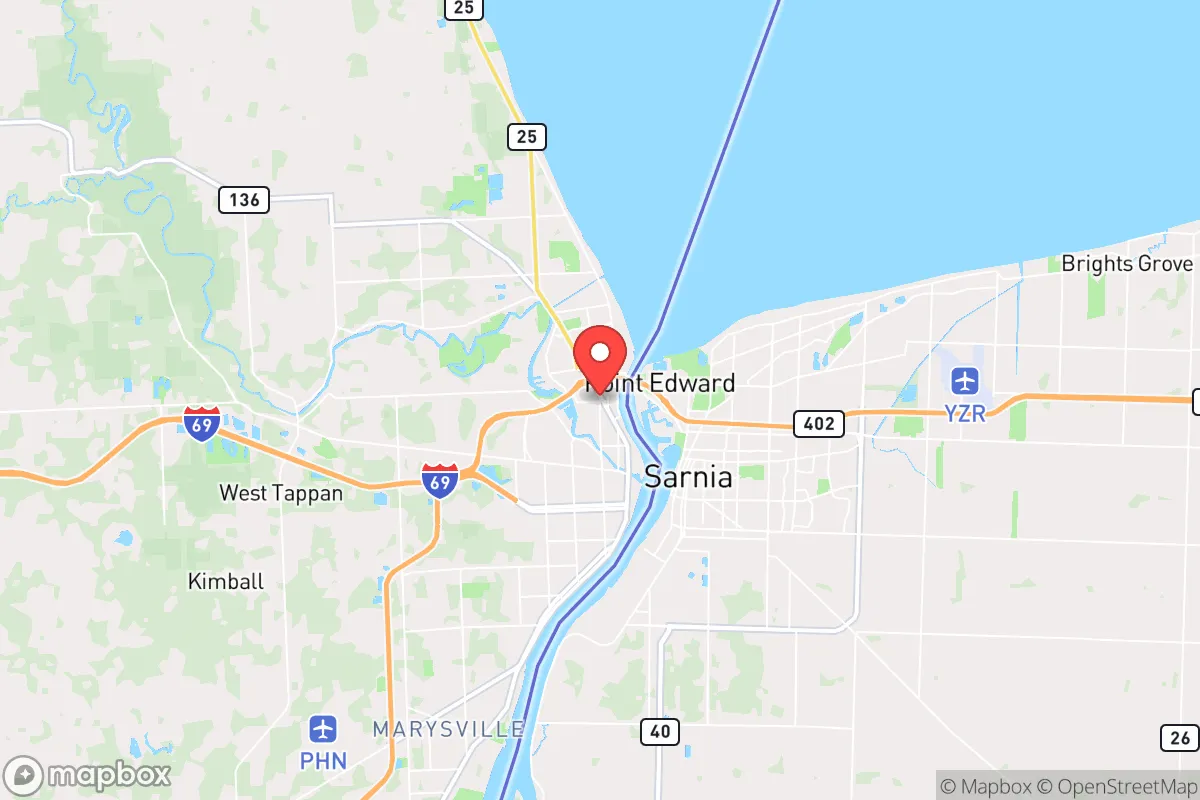
Port Huron, Michigan, offers a notably high degree of personal sovereignty relative to many other parts of the country, particularly for those who prioritize self-reliance and minimal government interference. Situated along the St. Clair River at the base of Lake Huron, this city of roughly 28,000 provides a strategic buffer from the more heavily regulated urban centers of southeast Michigan while still offering access to essential infrastructure. For the survivalist or prepper mindset, the key question is whether local and state-level policies respect the individual’s right to live, defend, and provide for themselves without excessive bureaucratic overhead. The answer here is largely favorable, though not without nuance, as Michigan’s state-level framework provides a solid baseline for autonomy that Port Huron’s local governance generally does not undermine.
Tax burden and regulatory posture for the self-reliant
Michigan’s tax structure is moderate but leans favorably for those seeking to keep more of their own resources. The state levies a flat 4.25% individual income tax as of 2026, with no local income tax in Port Huron itself, meaning your earnings are not double-taxed at the municipal level. Property taxes are a mixed bag: the statewide average effective rate is about 1.54% of assessed value, but Port Huron’s millage rates can push that higher depending on the specific school district and local bonds. However, Michigan’s Headlee Amendment caps annual property tax increases at the rate of inflation or 5%, whichever is lower, providing a predictable ceiling for long-term property holders. For the prepper, this predictability is crucial—you can budget for your land and improvements without fear of sudden tax spikes. On the regulatory front, Michigan is a right-to-work state (though this status is under political pressure), and Port Huron’s local government is generally hands-off regarding home-based businesses, small-scale manufacturing, and agricultural activities within city limits. Building permits are required for major structural changes, but the city’s zoning code is less restrictive than in suburban Detroit enclaves, allowing for workshops, sheds, and even limited livestock in certain residential zones. The overall regulatory posture is one of tolerated self-sufficiency, not active encouragement, but it is far from the overreach seen in coastal states.
Self-defense rights and gun law specifics in Michigan
Michigan is a shall-issue state for concealed pistol licenses (CPL), meaning that if you meet basic criteria—no felony record, no domestic violence convictions, and completion of a state-approved safety course—the county sheriff must issue your permit. St. Clair County, where Port Huron sits, has a historically pro-2A sheriff’s office that processes CPL applications efficiently, typically within 45 days. The state does not require registration of most firearms, and there is no state-level assault weapons ban, though local municipalities cannot preempt state law to create their own bans. For the survivalist, the key detail is that Michigan allows open carry of handguns without a permit for anyone legally allowed to possess a firearm, and vehicle carry is also lawful without a CPL as long as the firearm is not concealed on your person. Stand-your-ground laws are in effect, with no duty to retreat in any place you have a legal right to be. However, be aware that Michigan has a universal background check law for private handgun sales (passed in 2023), which adds a layer of bureaucracy to private transfers. Long gun private sales remain unregulated. For home defense, there are no magazine capacity limits, and suppressors are legal with federal paperwork. Port Huron’s local police department is generally supportive of lawful gun ownership, and there are no local ordinances restricting storage or ammunition types. This is a solid environment for the armed citizen.
Self-reliance and homesteading viability: lot sizes, zoning, and off-grid feasibility
Port Huron’s residential zoning allows for a surprising degree of self-sufficiency, especially in its older neighborhoods and outlying areas. Standard residential lots in the city proper range from 5,000 to 10,000 square feet, but many properties in the northern and western parts of the city (near the Fort Gratiot border) sit on quarter-acre to half-acre parcels. The city’s zoning code permits backyard chickens (hens only, no roosters) on lots of 6,000 square feet or more, and beekeeping is allowed with a simple registration. For those looking at the broader St. Clair County area, rural parcels of 1 to 5 acres are available within a 15-minute drive of downtown, often with no HOA restrictions. Off-grid feasibility is moderate: Michigan’s building code requires connection to municipal water and sewer within city limits, but in the township areas outside Port Huron, private wells and septic systems are standard. Solar panels are permitted without special permits, and the state has net metering policies that allow you to sell excess power back to the grid. However, Michigan’s climate is a challenge for full off-grid living—long, cloudy winters mean solar alone is insufficient without a backup generator or wind turbine. Rainwater collection is legal for non-potable uses, and wood burning for heat is common and unregulated at the state level, though local burn bans during dry periods can apply. For the serious homesteader, the best strategy is to buy a few acres in the surrounding townships (e.g., Kimball Township or Clyde Township) where zoning is minimal and you can build a pole barn, raise larger livestock, and store supplies without city interference.
Personal liberties: parental rights, medical autonomy, speech, and property
Michigan’s legal framework generally respects parental rights, though recent state-level changes warrant caution. The state does not have a specific parental rights in education law, but local school boards in St. Clair County are conservative-leaning and typically defer to parents on curriculum and medical decisions. Port Huron’s public schools, while not exceptional, do not push controversial ideologies aggressively, and the district allows parents to opt out of sex education and certain health screenings. On medical autonomy, Michigan is a COVID-19 vaccine mandate-free state for most public settings as of 2026, and there are no state-level vaccine mandates for children attending school beyond the standard MMR, DTaP, and polio requirements (religious exemptions are available). The state has a broad medical marijuana program and legalized recreational cannabis in 2018, which some preppers view as a positive for personal medicinal freedom. Free speech protections are robust, with no local hate speech ordinances that chill political expression. Property rights are strong: Michigan is a “builder’s remedy” state for zoning disputes, meaning that if a municipality’s zoning is overly restrictive, landowners have some legal recourse. Eminent domain abuse is rare in St. Clair County, and the county’s tax foreclosure process is transparent, with a minimum of bureaucratic hurdles for those who fall behind. The overall vibe is one of live-and-let-live conservatism, where the government stays out of your business as long as you pay your taxes and don’t cause public disturbances.
In the broader landscape of personal sovereignty, Port Huron ranks as a strong B+ to A- for the survivalist or prepper. It lacks the extreme libertarian permissiveness of, say, rural Idaho or Alaska, but it offers a realistic middle ground: a low-tax, pro-2A, moderate-regulation environment within a state that still has functioning infrastructure and access to Great Lakes water. The biggest threats to this sovereignty are state-level trends—potential future restrictions on private firearm sales, increased property tax millages, and the slow creep of environmental regulations on land use. But for now, Port Huron provides a strategic foothold for those who want to live on their own terms, with enough elbow room to prepare for whatever comes, without the suffocating oversight found in more populous regions. It’s a place where you can own your home, defend your family, and keep the government at arm’s length—and that’s increasingly rare in America.

* Values derived from national, state, county, city and local statistics and may differ in a specific area. Last updated: 2026-04-30T05:02:37.000Z
Narrative content on this page is AI-generated and may contain mistakes. Verify any details that matter before acting on them.
ReloMaps may earn a commission from affiliate links at no extra cost to you.

