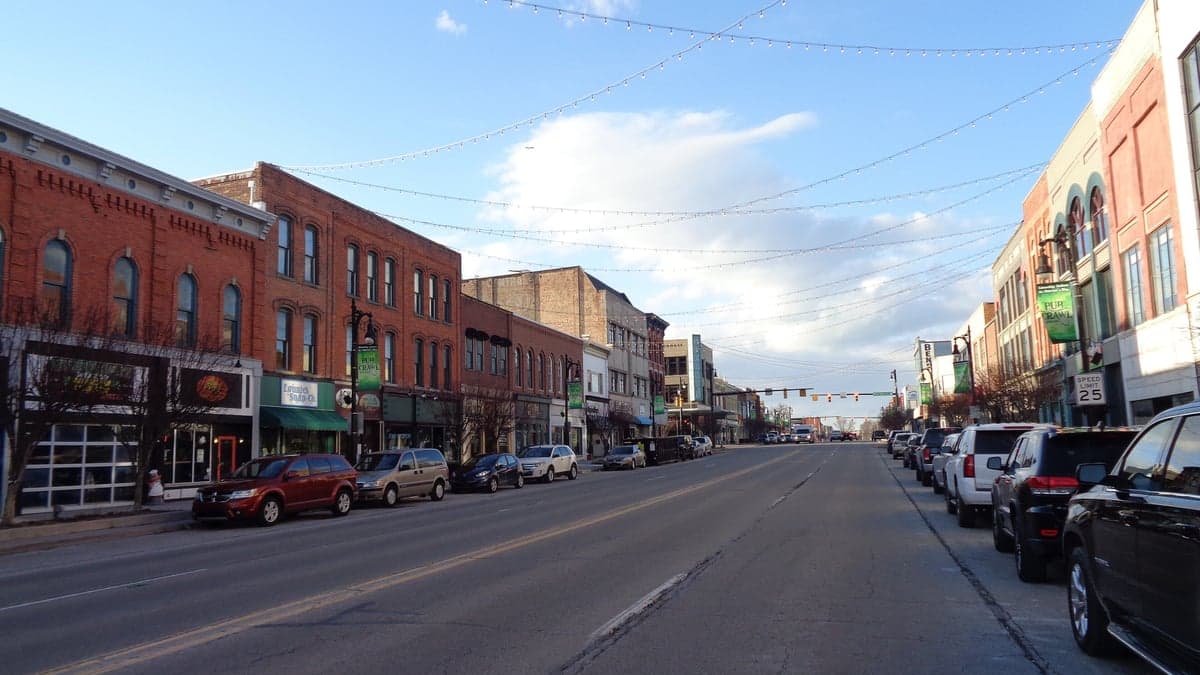
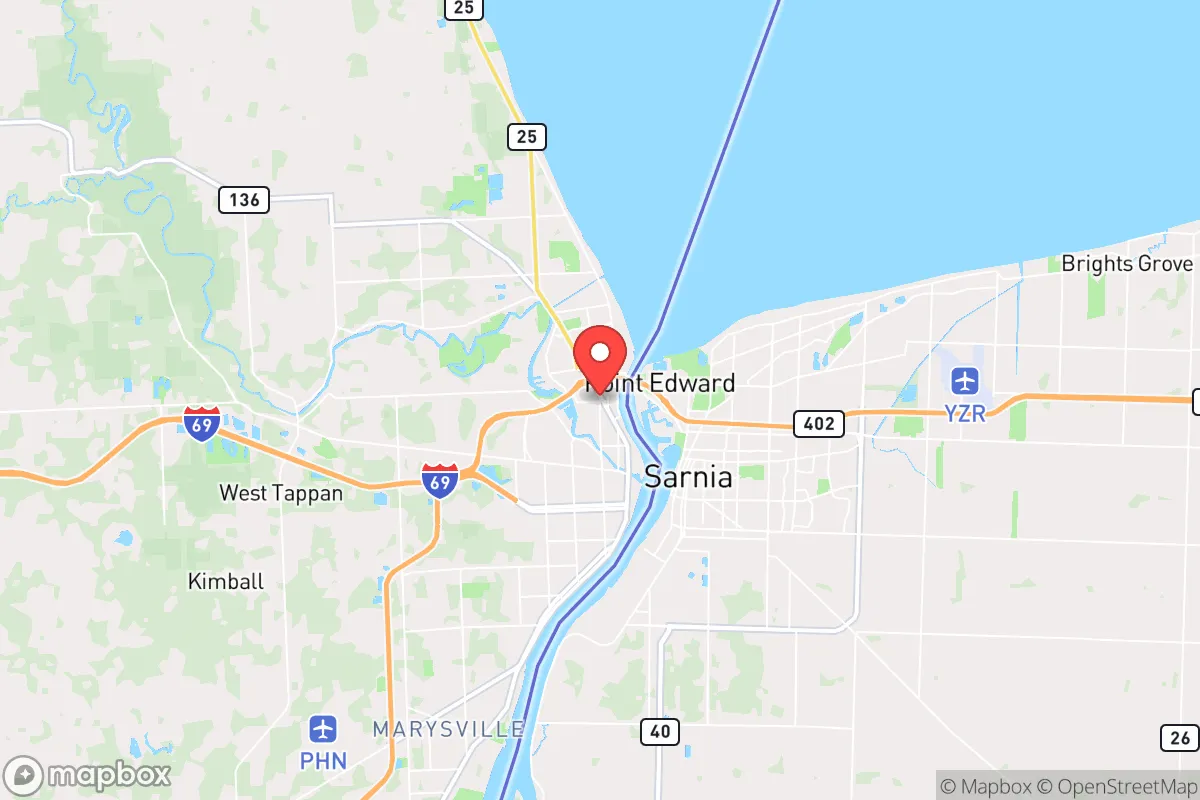
Photo: Wikipedia
Political ClimatePolitical Climate in Port Huron, MI
District shown is the primary district for this city’s centroid. Cities may span multiple districts.
Local Political AnalysisPolitical Analysis of Port Huron, MI
Port Huron has always been a solidly conservative community, and the numbers back that up with a Cook PVI of R+16. But if you’ve lived here as long as I have, you know it’s more than just a statistic—it’s a way of life that’s been tested over the last decade. The city itself leans red, but the surrounding St. Clair County is even more reliably conservative, while places like Detroit, about 60 miles southwest, are a whole different world politically. That contrast is something we feel keenly, especially when state-level policies from Lansing start creeping in. The trajectory here is one of cautious resistance: we’ve held the line on most fronts, but there’s a growing unease about outside influence trying to shift things leftward.
How it compares
Compared to nearby cities, Port Huron is a conservative anchor. Head north to Marysville or Fort Gratiot, and you’ll find similar values—low taxes, strong Second Amendment support, and a general distrust of big government. But drive 30 minutes west to Flint, and you’re in a very different political climate, one that’s been battered by progressive policies and economic decline. The real contrast, though, is with the metro Detroit area. Places like Ann Arbor and Royal Oak are pushing hard on progressive agendas—think heavy-handed COVID mandates, zoning overhauls, and DEI initiatives in schools. Port Huron has largely avoided that, but we’re not immune. The state legislature’s recent moves on gun control and energy regulations feel like a direct overreach into our personal freedoms, and that’s got folks here worried. We’re a blue-collar town that values self-reliance, and seeing Lansing try to micromanage our lives is a red flag that’s getting harder to ignore.
What this means for residents
For the average person living here, the political climate means you can still live your life without a lot of government interference—for now. Property taxes are reasonable, and there’s no city income tax, which is a big deal compared to places like Detroit. But the shift is real. You’ll notice it in local school board meetings, where debates over curriculum and library books have gotten heated. There’s a growing push from progressive groups to bring “equity” initiatives into our schools, and that’s a concern for parents who want their kids taught basics, not ideology. On the plus side, the community is tight-knit and vocal. If you’re a conservative who values personal liberty—whether it’s the right to own a firearm, choose your own healthcare, or run a small business without red tape—Port Huron still feels like a safe bet. But you’ve got to stay engaged. The local elections matter more than ever, because the alternative is watching our town get dragged into the same mess as the bigger cities.
Culturally, Port Huron is a place where people wave at neighbors and leave their doors unlocked, but that’s changing slowly. The biggest policy distinction is our relationship with the St. Clair River and the Blue Water Bridge—this is a border town, so we’re used to a certain level of federal presence, but most locals are skeptical of any expansion of government authority. There’s a strong libertarian streak here, especially among the older crowd who remember when the city was more self-sufficient. Looking ahead, I see us holding steady if we keep pushing back against the progressive tide. But if Lansing keeps tightening the screws on energy regulations or gun laws, you’ll see more folks packing up for places like Texas or Florida. For now, though, Port Huron is still a place where you can breathe easy—if you’re willing to fight for it.

State Political ClimatePolitical Climate in Michigan
State Political AnalysisPolitical Environment in the State
Michigan has shifted from a reliably purple battleground to a state where Democrats now hold unified control of the governor’s office, state House, and state Senate for the first time in four decades. The 2022 elections cemented this change, with Governor Gretchen Whitmer winning a second term by 10 points and Democrats flipping both legislative chambers. Over the past 20 years, the state has moved leftward on cultural and economic issues, driven largely by the dominance of the Detroit metro area and the collapse of GOP strength in the suburbs. For a conservative considering relocation, the political climate is increasingly challenging, with a policy agenda that has rapidly expanded government reach into personal freedoms, parental rights, and economic liberty.
Urban vs. rural divide
The political map of Michigan is a stark story of two states. The urban core of Detroit and its inner-ring suburbs like Southfield and Dearborn are deep blue, delivering massive Democratic margins that outweigh the rest of the state. Wayne County alone gave Joe Biden over 500,000 votes in 2020, more than the entire population of many rural counties. Meanwhile, the western side of the state, including Grand Rapids and Holland, has historically been a GOP stronghold, but even there, the suburbs are trending left. Kent County, home to Grand Rapids, flipped to Biden in 2020 after voting for Trump in 2016. The rural thumb and Upper Peninsula remain reliably red, but their populations are shrinking. The real battleground is the suburban ring around Detroit—places like Macomb County and Oakland County. Macomb, once the iconic Reagan Democrat county, voted for Trump in 2016 and 2020, but by narrower margins, while Oakland County has become solidly Democratic. This urban-rural split means that statewide elections are now decided by the Detroit metro area, making it nearly impossible for a conservative candidate to win without cutting deeply into those suburban margins.
Policy environment
The policy environment in Michigan has shifted dramatically since Democrats took full control in 2023. The state’s income tax rate was temporarily reduced from 4.25% to 4.05% due to a 2015 law triggered by surplus revenue, but the Whitmer administration has signaled interest in raising it again. Property taxes remain high, with the average effective rate around 1.5%, and the state’s Headlee Amendment caps, which limit tax increases, are under constant legal attack. On education, Michigan has eliminated the “right-to-work” law that had been in place since 2012, allowing unions to once again require dues as a condition of employment. The state also repealed its “read by grade three” law, which had held back struggling readers, and replaced it with a less rigorous approach. In healthcare, Michigan expanded Medicaid under the Affordable Care Act and has codified abortion access into state law, including the repeal of a 1931 ban. Election laws have been loosened: the state now has no-excuse absentee voting, same-day voter registration, and nine days of early voting. For conservatives, the policy environment is increasingly hostile to school choice, labor freedom, and fiscal restraint.
Trajectory & freedom
Michigan’s trajectory on personal freedom is concerning for conservatives. In 2023, the legislature passed a series of gun control measures, including universal background checks, safe storage requirements, and a red flag law that allows courts to temporarily confiscate firearms from individuals deemed a risk. These laws were passed without a single Republican vote. On parental rights, the state has moved in the opposite direction of many red states: it expanded the Elliott-Larsen Civil Rights Act to include sexual orientation and gender identity, which critics argue could be used to compel speech or force schools to hide information from parents about a child’s gender identity. The state also banned conversion therapy for minors. On medical freedom, Michigan maintained its COVID-19 emergency powers longer than most states, and the governor still holds broad authority under the 1976 Emergency Management Act. Property rights have been weakened by a new law that allows local governments to impose rent control on mobile home parks, a rare move in a state that had preempted such measures. The overall direction is toward more government control over personal choices, from firearms to medical decisions to what parents can know about their children.
Civil unrest & political movements
Michigan has been a flashpoint for political activism on both sides. The 2020 lockdown protests at the state capitol in Lansing, where armed demonstrators entered the building, drew national attention and highlighted deep frustration with Whitmer’s executive orders. The “Wolverine Watchmen” plot to kidnap the governor in 2020 further polarized the state. On the left, groups like Michigan United and the ACLU have been highly active, pushing for criminal justice reform and immigrant rights. The state has a sanctuary policy in Detroit and Washtenaw County, where local law enforcement limits cooperation with federal immigration authorities. Election integrity remains a hot-button issue: the 2020 election in Michigan saw widespread allegations of irregularities, particularly in Detroit’s absentee ballot counting process, though multiple audits and court cases found no evidence of widespread fraud. The state’s new early voting and absentee ballot laws have only intensified these concerns. For a new resident, the political atmosphere is charged, with visible protests, partisan media, and a sense that the state’s direction is being contested block by block.
Projection
Over the next 5-10 years, Michigan is likely to become more Democratic and more progressive. The Detroit metro area continues to grow in political influence, while rural counties lose population. In-migration from blue states like California and Illinois is modest but concentrated in the liberal-leaning college towns of Ann Arbor and East Lansing. The GOP’s base in western Michigan is aging, and the party has struggled to attract younger voters or suburbanites. The 2024 election will be a test: if Trump loses Michigan again, the state’s electoral votes will likely remain out of reach for Republicans for the foreseeable future. The policy agenda will continue to expand: expect further gun control, a push for a state-level version of the Green New Deal, and potential tax increases to fund expanded government programs. For a conservative moving in now, the state will feel increasingly like a one-party state, with limited ability to influence local or state policy outside of a few rural strongholds.
For a conservative considering Michigan, the bottom line is this: the state offers natural beauty, Great Lakes access, and a lower cost of living than many coastal states, but the political climate is actively hostile to conservative values. If you value gun rights, school choice, low taxes, and parental authority, you will find yourself swimming against a strong current. The best bets for a conservative-friendly enclave are the rural counties of the Upper Peninsula, the thumb region, or the western Michigan lakeshore outside of Grand Rapids. But even there, state-level policies will increasingly affect your daily life, from how you can store a firearm to what your child is taught in school. Michigan is a beautiful state, but for a conservative, it is no longer a friendly one.
* Values derived from national, state, county, city and local statistics and may differ in a specific area. Last updated: 2026-04-30T05:02:37.000Z
Narrative content on this page is AI-generated and may contain mistakes. Verify any details that matter before acting on them.
ReloMaps may earn a commission from affiliate links at no extra cost to you.

