Photo: Wikipedia
Strategic Assessment of Portsmouth, VA
Multiple tactical vulnerabilities. Population density, target proximity, or disaster risk are likely compounding. A retreat property and exit planning is required.
What does the Strategic Assessment tell us?
Our Strategic Assessment grades tactical survivability of an area. Major population centers, military targets, fallout zones, natural disasters, and border exposure all drive risk — lower exposure means a more defensible position in a crisis.
This is heavily inspired by Joel Skousen's Strategic Relocation book. Highly recommended you checkout the book ($)What does this tell us?
Our Strategic Assessment grades tactical survivability of an area. Major population centers, military targets, fallout zones, natural disasters, and border exposure all drive risk — lower exposure means a more defensible position in a crisis.
This is heavily inspired by Joel Skousen's Strategic Relocation book. Highly recommended you checkout the book ($)Strategic Pillars

Key Distances
Regional Safe Places
Below is our recommended "safe zones" in Virginia and the surrounding area based on our strategic heuristics. For most people, it's unrealistic to live in a “safe zone” full-time due to work, family or other personal reasons. They tend to be more rural. However, many of these areas are perfect for second homes and retreat properties that double as a vacation home or even a short-term rental.
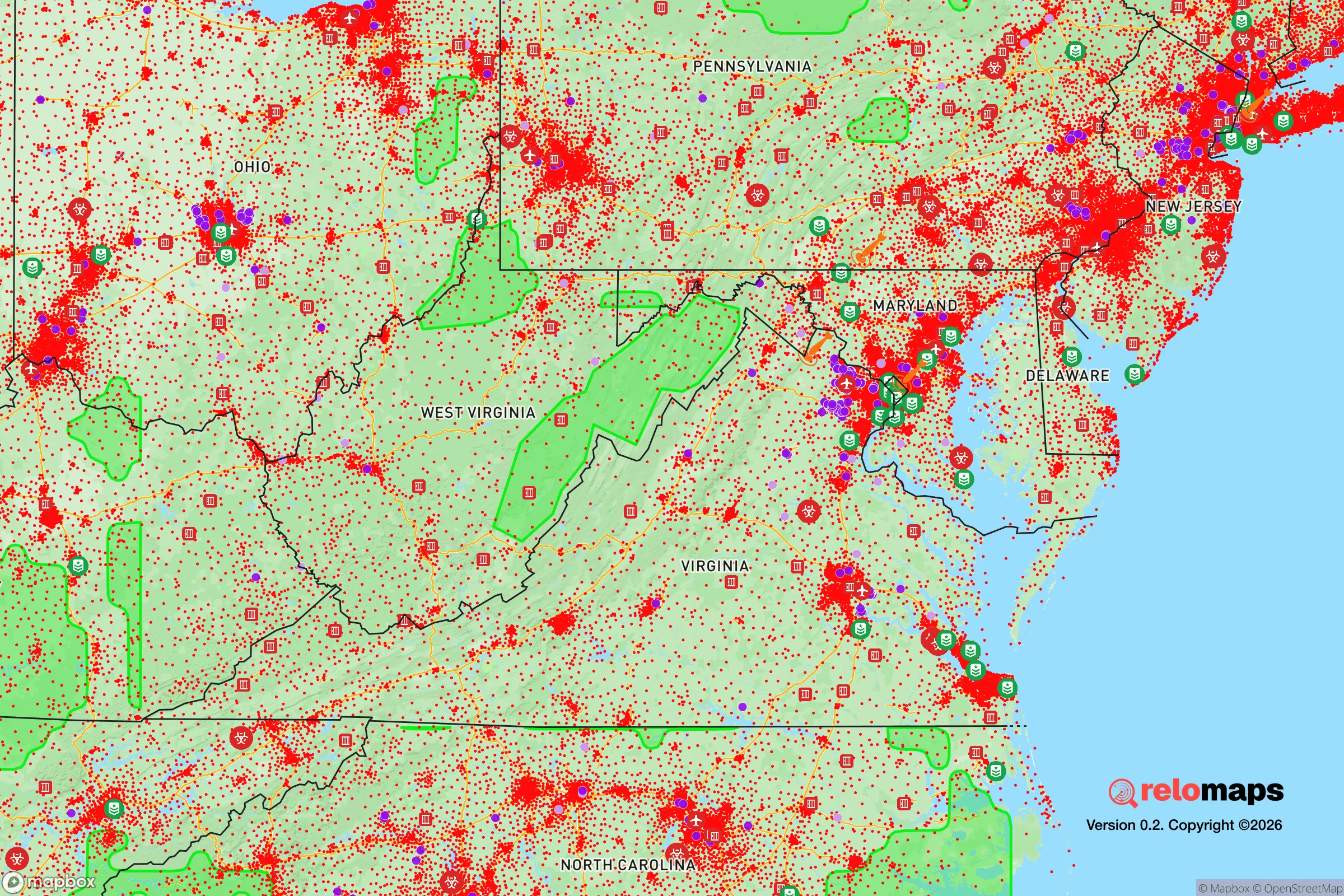
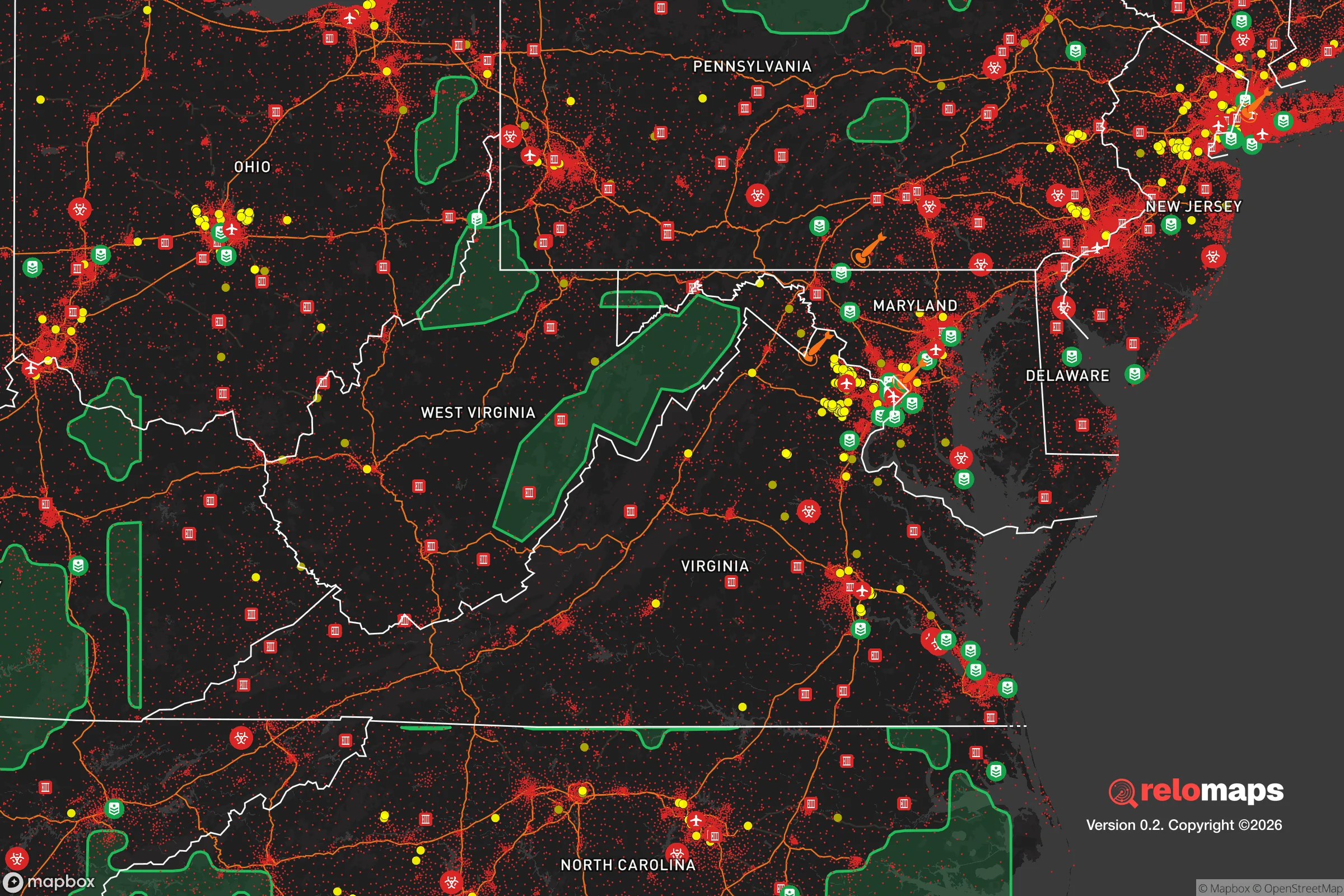


Important Note: For informational purposes only. This does not mean nothing bad ever happens in the green zones. Please use common sense. This is based on public data and modeled with AI. We tried to take a conservative approach but mistakes happen. We update this regularly as new information becomes available.
Solar Generator Recommendations
Backup power matters more here than in safer locations. We've picked three solar generators across budgets and capacity tiers — start with the budget unit if you only need a few essentials, or step up if you want to run a fridge and HVAC for days at a time.

Jackery Portable Power Station Explorer 300
Budget OptionPower on the Go: Weighing only 11 lbs, it's convenient to set up and store with book-sized foldable solar panels

BLUETTI Portable Power Station AC180
Designed for both indoor and outdoor scenarios, AC180 is highly capable as it has a robost capacity and continuous output power.

EF ECOFLOW DELTA Pro Ultra Power Station
Upgraded PickEcoFlow DELTA Pro Ultra is a whole-home energy system designed to grow with your family. Integrated with the Smart Home Panel 2, it scales to meet your evolving energy needs — keeping your home powered, intelligent, and secure through every stage of life.
We earn a commission, at no additional cost to you.
Strategic Assessment Analysis
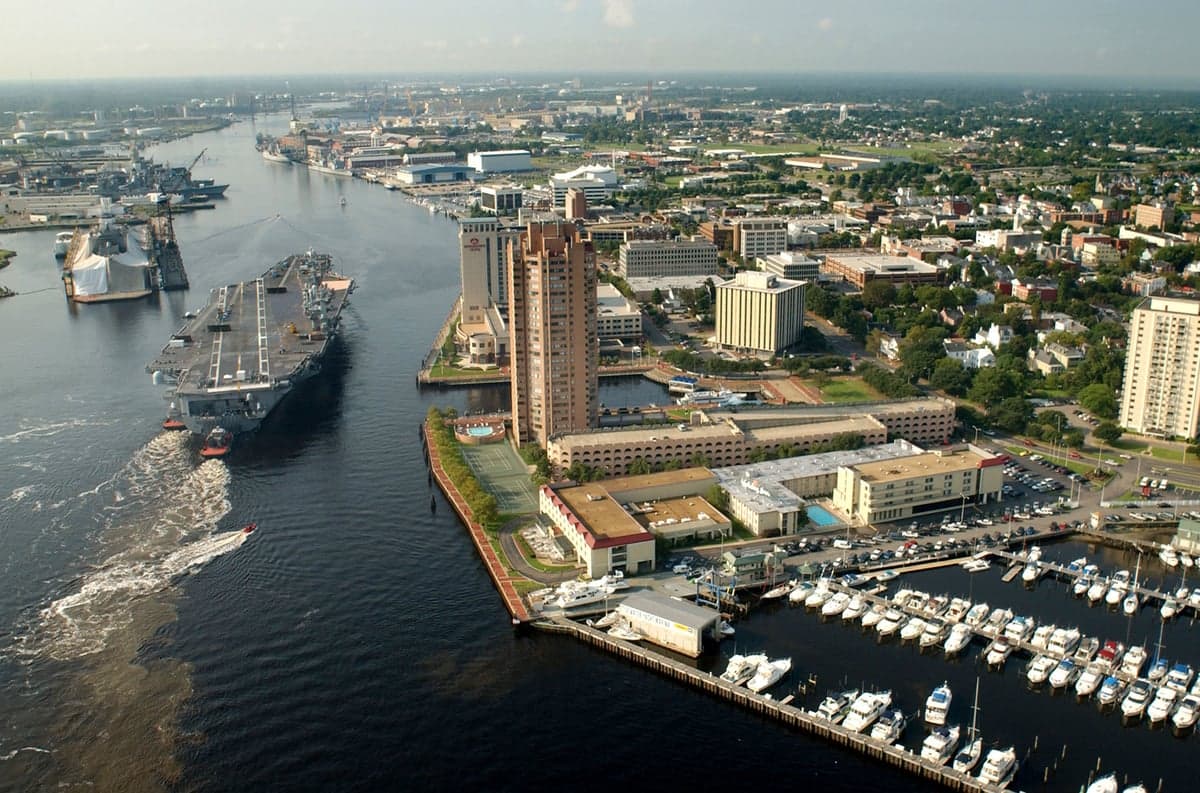
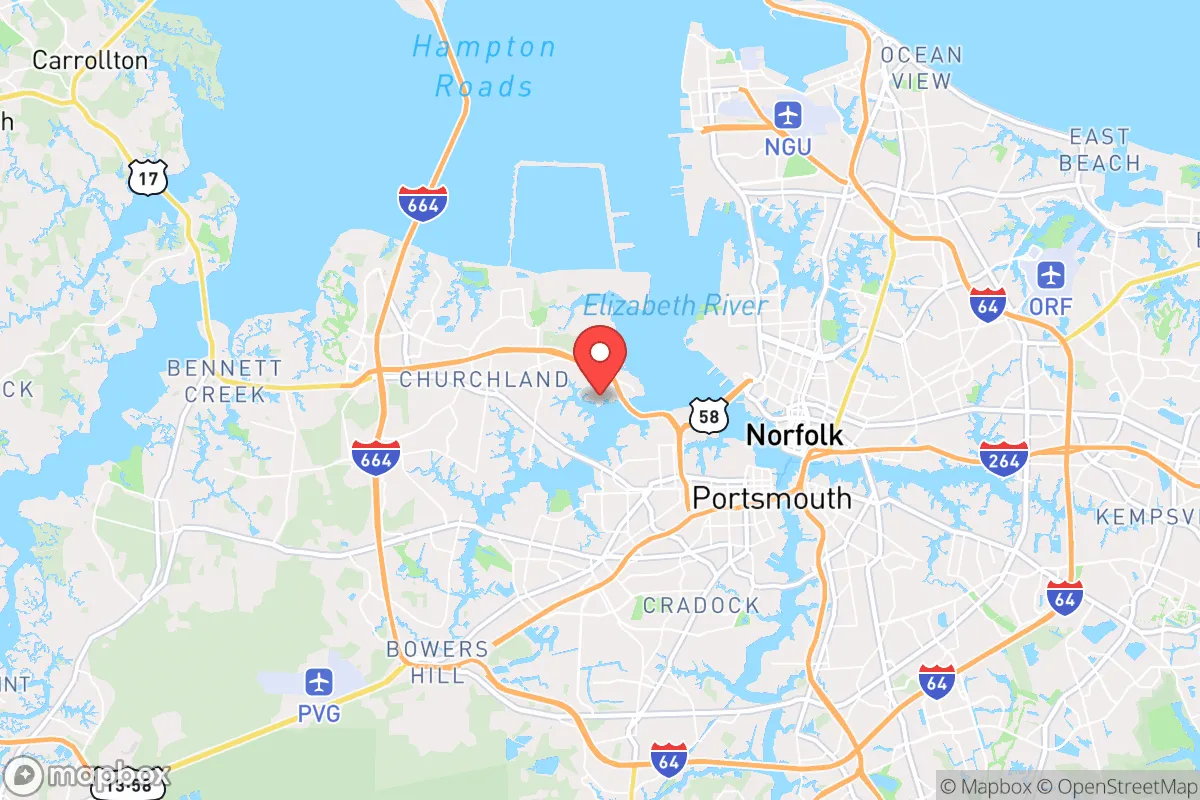
Portsmouth, Virginia, sits at a strategic but precarious crossroads for anyone serious about long-term preparedness. Its location on the Elizabeth River, directly across from Norfolk and within the Hampton Roads metropolitan area, offers unique advantages for maritime logistics and trade, but also places it in the crosshairs of one of the most concentrated military and industrial targets on the East Coast. For a relocator with a survivalist mindset, the city presents a paradox: proximity to critical infrastructure for resupply and transport, yet extreme vulnerability to the fallout of any major conflict, natural disaster, or civil breakdown. The key question isn't whether Portsmouth has resources—it's whether you can get to them and keep them when the system falters.
Geographic position and natural advantages for a prepper
Portsmouth's primary strategic asset is its deep-water port and access to the Intracoastal Waterway, which connects to the Chesapeake Bay and the Atlantic Ocean. This makes it a potential hub for waterborne resupply, fishing, and evacuation if road networks become compromised. The city itself sits on relatively flat, low-lying terrain, with the Great Dismal Swamp to the south and west offering a natural buffer zone—dense, difficult-to-traverse wetlands that could slow movement from inland threats. The Elizabeth River provides a defensible water barrier on the east, though it also funnels traffic into chokepoints like the Downtown Tunnel and the Midtown Tunnel, which are critical for egress to Norfolk or Suffolk. The region's temperate climate allows for year-round gardening and foraging, with a growing season from March to November, and the nearby Chesapeake Bay offers abundant seafood—oysters, crabs, and fish—that could supplement food stores. However, the same water features that aid resupply also make the area a natural target for naval operations, and the flat topography offers few defensible high-ground positions. For a prepper, the land is a double-edged sword: rich in natural resources but lacking in concealment and elevation.
Risks, exposures, and proximity to fallout-relevant landmarks
This is where Portsmouth's strategic calculus turns sharply negative. The city sits in the heart of Hampton Roads, home to the world's largest naval base (Naval Station Norfolk), multiple shipyards (including Norfolk Naval Shipyard in Portsmouth itself), and a major Air Force base (Langley). In any major conflict—whether conventional, nuclear, or cyber-induced—Portsmouth is a top-tier target. The shipyard alone employs over 10,000 people and is a critical repair facility for the Atlantic Fleet. A single conventional strike or sabotage event could cripple the region's infrastructure, causing cascading failures in power, water, and transportation. Additionally, the city is within 20 miles of the Surry Nuclear Power Station (across the James River), and while a meltdown is unlikely, the proximity to a potential radiological release zone is a concern for anyone planning a long-term stay. Portsmouth also lies in a hurricane-prone zone, with storm surge risks from the Elizabeth River and Chesapeake Bay—Category 2 or higher storms could flood large portions of the city, particularly the downtown and waterfront areas. For a conservative prepper concerned with civil unrest, the dense urban population of over 95,000 (and over 1.7 million in the metro area) means that any disruption to supply chains—food, fuel, medicine—could trigger rapid, violent competition for resources. The city's crime rate is above the national average, with property crime being a particular concern, and during a breakdown, the proximity to high-crime areas in Norfolk and Newport News would amplify risks.
Practical resilience for a relocator: food, water, energy, and defensibility
For a single individual or family looking to establish a resilient foothold, Portsmouth requires significant upfront investment. Municipal water comes from the Lake Gaston pipeline and the Western Tidewater Water Authority, which are vulnerable to both natural disasters and sabotage. A well is not a realistic option in most of the city due to the high water table and potential contamination from industrial sites and saltwater intrusion. Rainwater collection is feasible, but the region's average 47 inches of annual rainfall must be filtered and stored, and a 1,000-gallon cistern would be a minimum for a family of four for a month. Energy-wise, the grid is heavily reliant on Dominion Energy's mix of natural gas, coal, and nuclear, and outages are common during storms. Solar panels with battery backup are a must, but the flat terrain and tree cover in many neighborhoods limit sun exposure—a south-facing roof with no shading is ideal but not guaranteed. For food, the city has several farmers' markets and a strong local food scene, but reliance on grocery stores is a vulnerability. A prepper should plan for at least a 3-month supply of non-perishables, plus seeds for a garden (raised beds are recommended due to potential soil contamination from industrial history). Defensibility is the weakest link: Portsmouth's urban layout means most homes are on small lots with close neighbors, making perimeter security difficult. Rural areas to the west, like Suffolk or Isle of Wight County, offer better defensibility with acreage and distance from population centers, but they come with longer commutes and less access to waterborne resupply. For a relocator, the best strategy is to treat Portsmouth as a resource node—a place to access maritime trade and medical facilities—but not as a primary residence. A better approach is to live in a more rural, defensible location within 30-45 minutes, using Portsmouth as a supply and work hub only when conditions are stable.
The overall strategic picture for Portsmouth is one of high risk with moderate reward. Its maritime access and temperate climate are genuine assets for a prepper, but the concentration of military targets, dense population, and vulnerability to storms and civil unrest make it a poor choice for a primary retreat. For a conservative individual or family serious about long-term survival, Portsmouth is best viewed as a temporary staging area or a resource cache, not a permanent home. If you must relocate here, prioritize a home on high ground away from flood zones, invest in robust water filtration and off-grid power, and maintain a low profile. The city's future is tied to the fate of the Navy and the national economy—if those hold, Portsmouth can be a functional, if tense, place to live. If they don't, it will be one of the first places to burn. Plan accordingly.

* Values derived from national, state, county, city and local statistics and may differ in a specific area. Last updated: 2026-05-02T04:06:43.000Z
Narrative content on this page is AI-generated and may contain mistakes. Verify any details that matter before acting on them.
ReloMaps may earn a commission from affiliate links at no extra cost to you.

