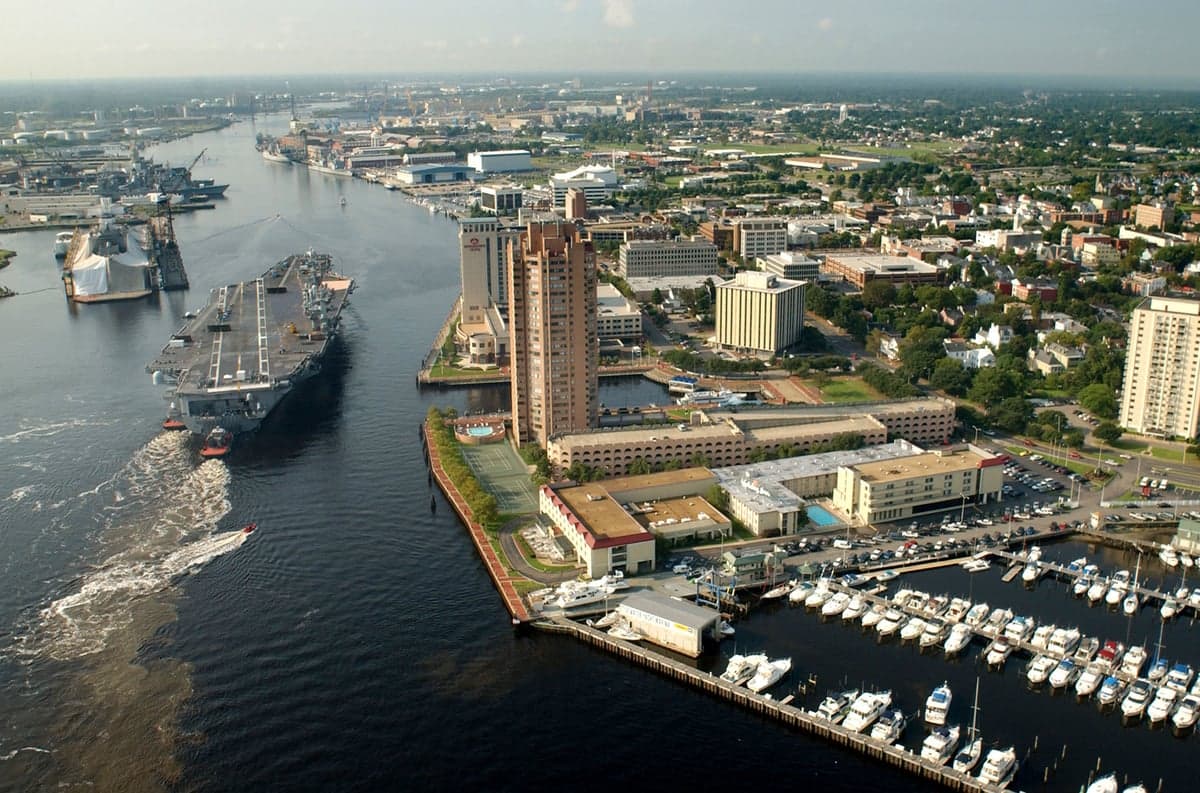
Photo: Wikipedia
Quality of Life in Portsmouth, VA
A high quality of life with strong walkability, manageable living costs, healthy neighborhood signals, and solid amenity access.
What does Quality of Life tell us?
Quality of Life blends cost of living, nearby amenities, socioeconomic signals, and neighborhood character. City-level scores represent the whole municipality; individual neighborhoods can differ.
What does this tell us?
Quality of Life blends cost of living, nearby amenities, socioeconomic signals, and neighborhood character. City-level scores represent the whole municipality; individual neighborhoods can differ.
Cost of Living
2% below national average
The Real Cost of Living in Portsmouth, VA for 2026
| Tier | Individual | Family (4) |
|---|---|---|
| Survival | $20k | $38k |
| Comfortable | $45k | $66k |
| Luxury | $104k+ | $161k+ |
| Elite (Top 5%) | $122k+ | $189k+ |
90%
The Area Signal
A metric tracking the socioeconomic signals of the area.
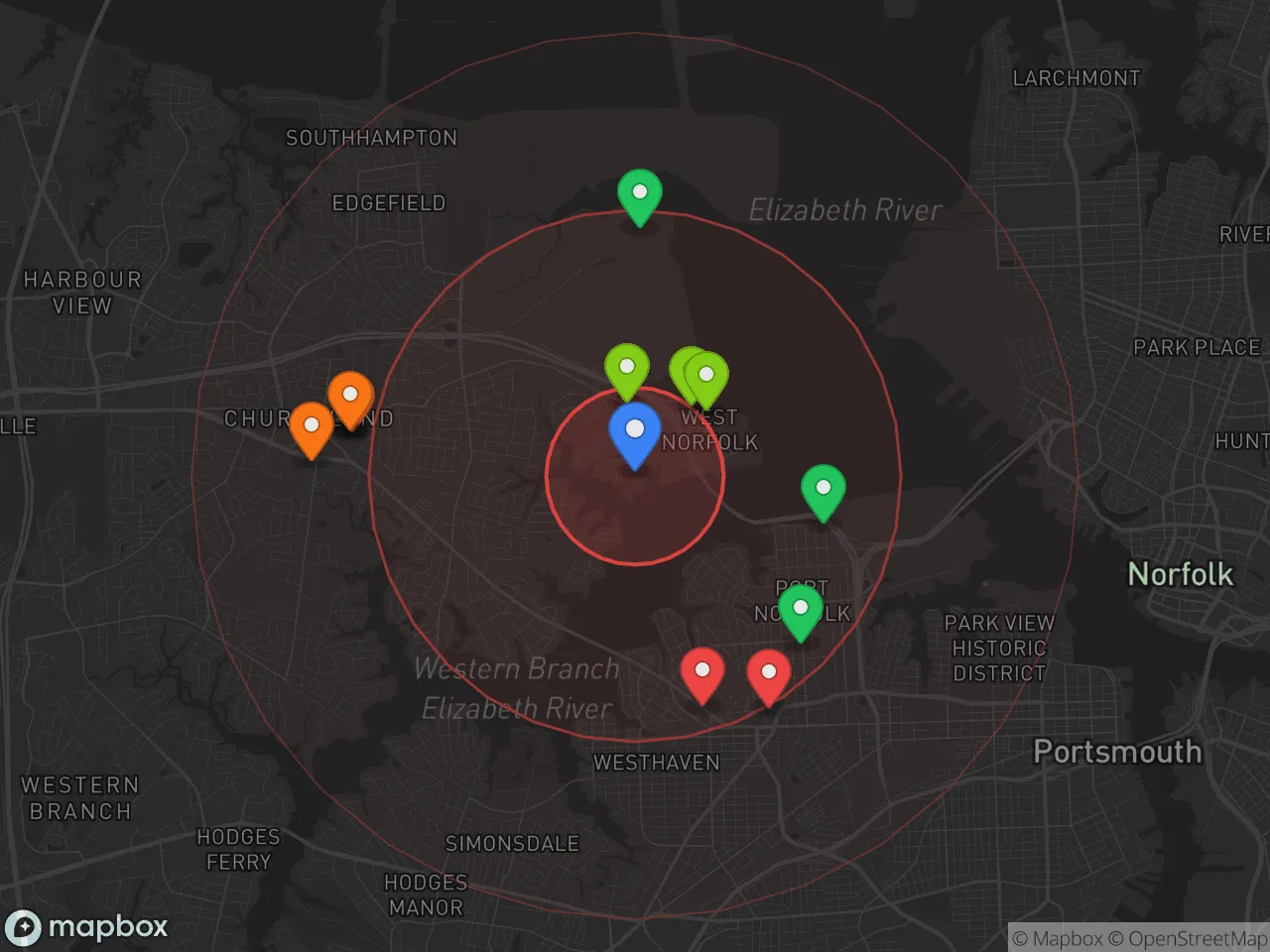
Hobbies
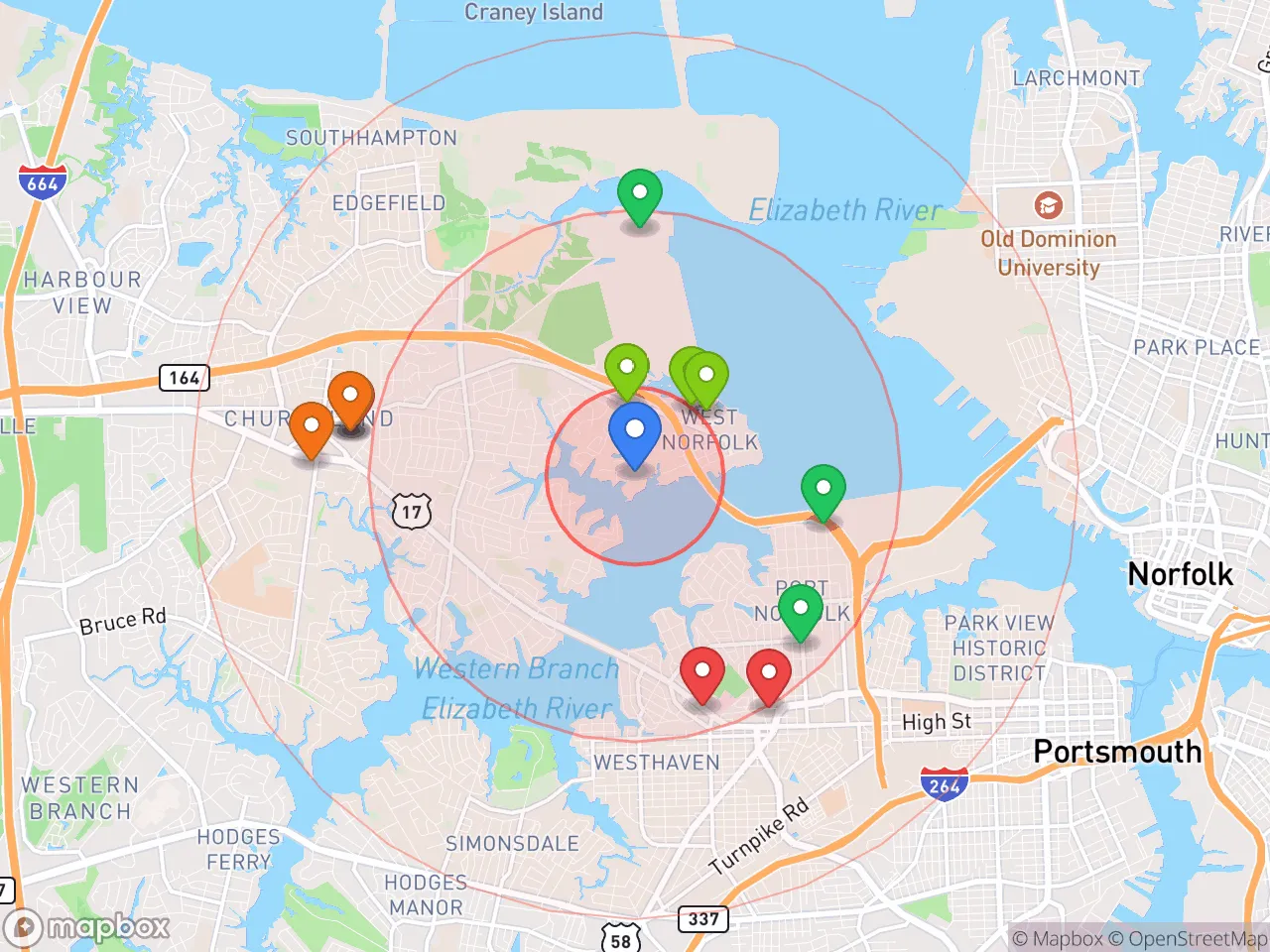
Explore the areaGroceries
7 within 10 miles
Gas
20 within 10 miles
Hospital
20 within 20 miles
Airport
DCA — Ronald Reagan Washington National
Post Office
USPS — Portsmouth, VA
Critical Amenities
Quality-of-Life Analysis
Portsmouth, Virginia, presents a quality-of-life profile that balances affordability with urban convenience, attracting a mix of military families, young professionals, and long-term residents seeking value near the Hampton Roads waterfront. With a cost-of-living index of 98 (2% below the U.S. average), the city offers a notably lower financial barrier than neighboring Norfolk or Virginia Beach, while still providing access to a historic downtown, the Elizabeth River waterfront, and a commute that averages just 23 minutes — well under the national average of 27 minutes. The population skews toward middle-income households and defense-sector workers, with a median age of 35 and a strong presence of active-duty and retired Navy personnel stationed at nearby Naval Support Activity Hampton Roads and Norfolk Naval Shipyard.
Cost of living, housing affordability, and how Portsmouth compares to nearby cities
Portsmouth’s housing market is a primary draw for budget-conscious movers. The median home value sits at $229,400, roughly $70,000 below the Virginia statewide median and about $100,000 less than the median in Virginia Beach. Median rent of $1,266 is similarly competitive — about $300 less per month than comparable units in Norfolk’s Ghent district or Virginia Beach’s Town Center. This affordability extends to utilities and groceries, which track close to national averages, while transportation costs are tempered by the short average commute. For renters and first-time buyers, Portsmouth offers a path to homeownership that is increasingly out of reach in other Hampton Roads cities. However, property taxes in Portsmouth (at a rate of $1.12 per $100 of assessed value) are slightly higher than in neighboring Chesapeake, so buyers should factor that into monthly cost comparisons.
Everyday amenities, schools, and the daily rhythm of life in Portsmouth
Daily life in Portsmouth centers on a mix of historic charm and practical convenience. The Olde Towne district provides walkable access to the Portsmouth Art & Cultural Center, the Children’s Museum of Virginia, and the Elizabeth River Ferry to Norfolk’s Waterside District — a commute option that bypasses traffic entirely. For families, Portsmouth Public Schools serve roughly 13,000 students, with Churchland High School and I.C. Norcom High School offering dual-enrollment and career-tech programs tied to local shipyard and healthcare employers. Grocery access is solid, with a Food Lion and Harris Teeter in the midtown area, though residents often drive to Chesapeake for larger big-box retailers. The city’s park system includes the 104-acre Hoffler Creek Wildlife Preserve and the waterfront Portsmouth City Park, which hosts a popular farmers market. The daily rhythm is quieter than Norfolk’s but more urban than Suffolk’s, with a noticeable military presence shaping weekday traffic patterns near the naval shipyard gates.
Portsmouth is best suited for those who prioritize affordable waterfront living and a short commute over nightlife density or top-tier school rankings. Military personnel and defense contractors will find the proximity to Norfolk Naval Shipyard and Naval Station Norfolk a major time-saver, while remote workers and retirees can leverage the low cost of housing to free up income for travel or hobbies. Families should weigh the school system’s mixed performance — Portsmouth schools rank below state averages in math and reading proficiency — against the savings on housing, which can fund private school tuition or tutoring. For singles and couples without children, the city’s emerging food scene, historic architecture, and ferry access to Norfolk’s cultural venues make it a pragmatic basecamp for exploring the broader Hampton Roads region without paying Virginia Beach prices.

Crime in Portsmouth, VA
Significantly higher crime rates than 78% of comparable U.S. locations.
Violent CrimeViolent Crime Analysis
Property CrimeProperty Crime Analysis
Crime Analysis
Portsmouth, Virginia, reports a violent crime rate of 704.6 incidents per 100,000 residents and a property crime rate of 2,937.9 per 100,000, placing it among the higher-risk cities in the Hampton Roads region. These figures indicate that both personal safety and property security are significant concerns for residents and prospective movers. The city’s proximity to Norfolk and its status as a mid-sized urban center with a major naval presence contribute to a complex public safety environment that requires careful evaluation.
Crime in context
Portsmouth’s violent crime rate is roughly double the national average of approximately 380 per 100,000 and significantly exceeds the Virginia state average of about 240 per 100,000. Property crime in Portsmouth, at 2,937.9 per 100,000, also runs well above the national benchmark of roughly 1,950 per 100,000. These comparisons place Portsmouth in the bottom tier of Virginia cities for public safety, alongside other urban centers like Petersburg and Danville. The city’s crime index is consistently rated as "much higher than average" by third-party analytics, a factor that directly impacts insurance premiums and daily quality of life.
What residents experience
Residents frequently cite property crime—particularly vehicle break-ins, theft from porches, and residential burglary—as the most common safety nuisance. Violent crime, while less frequent, is concentrated in specific areas and often involves disputes among individuals known to one another rather than random attacks on strangers. A critical factor driving these elevated rates is the local criminal justice system’s ideological orientation. Portsmouth operates under a progressive prosecutorial philosophy, with elected officials and judges who prioritize diversion programs, reduced bail requirements, and lenient sentencing for repeat offenders. While intended to reduce incarceration, this approach has a direct, measurable consequence: more offenders are released back onto the streets quickly, undermining deterrence and increasing the likelihood of recidivism. For law-abiding residents, this means a higher probability of encountering individuals with active warrants or a history of theft and assault, eroding trust in the justice system’s ability to protect victims and the public.
Neighborhood-level safety varies dramatically. Olde Towne and parts of Churchland report lower crime rates due to stronger neighborhood watch programs and higher property values, while areas like Prentis Park, Cavalier Manor, and the downtown corridor experience the highest concentrations of both violent and property offenses. Prospective residents should research block-by-block crime maps and consider that even in safer pockets, the city’s overall progressive justice policies mean that offenders from high-crime zones can quickly move into adjacent areas. For those prioritizing personal and family safety, Portsmouth’s crime data and prosecutorial environment present serious red flags that warrant comparison with neighboring cities like Chesapeake or Suffolk, which maintain more traditional law-and-order approaches.
* Values derived from national, state, county, city and local statistics and may differ in a specific area. Last updated: 2026-05-02T04:06:43.000Z
Narrative content on this page is AI-generated and may contain mistakes. Verify any details that matter before acting on them.
ReloMaps may earn a commission from affiliate links at no extra cost to you.

