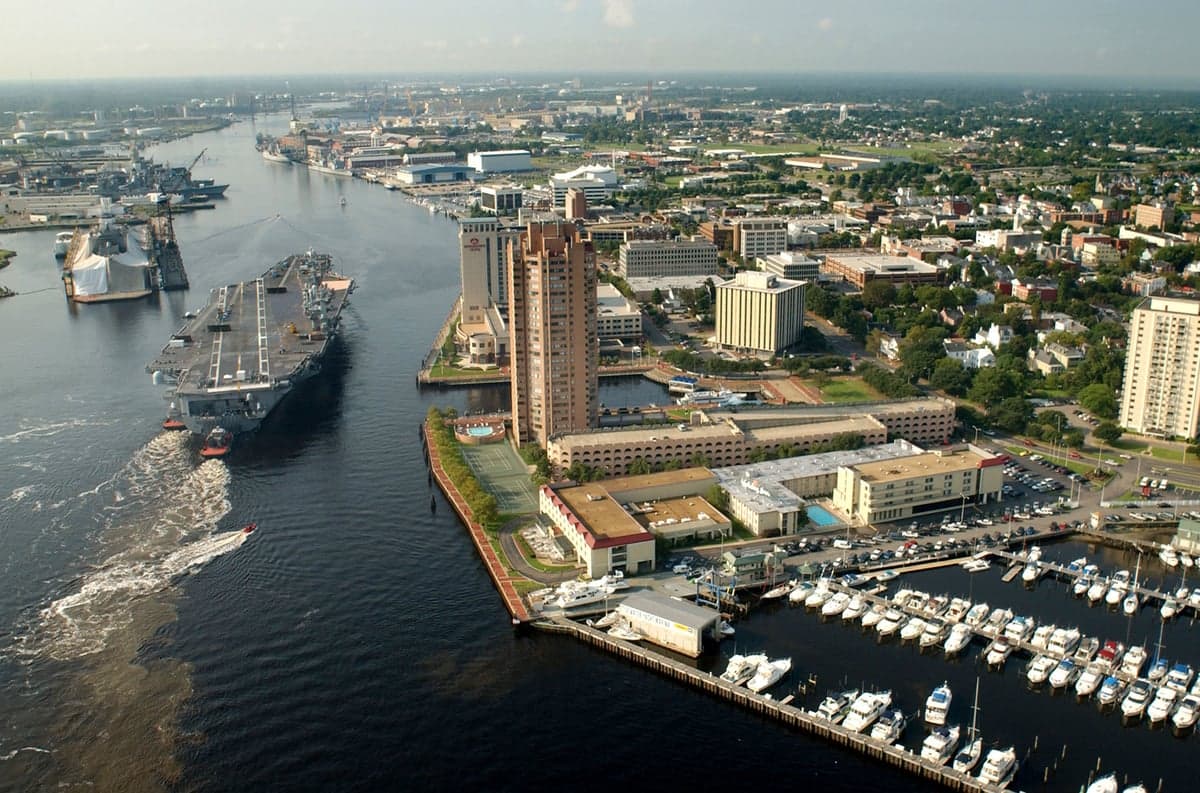
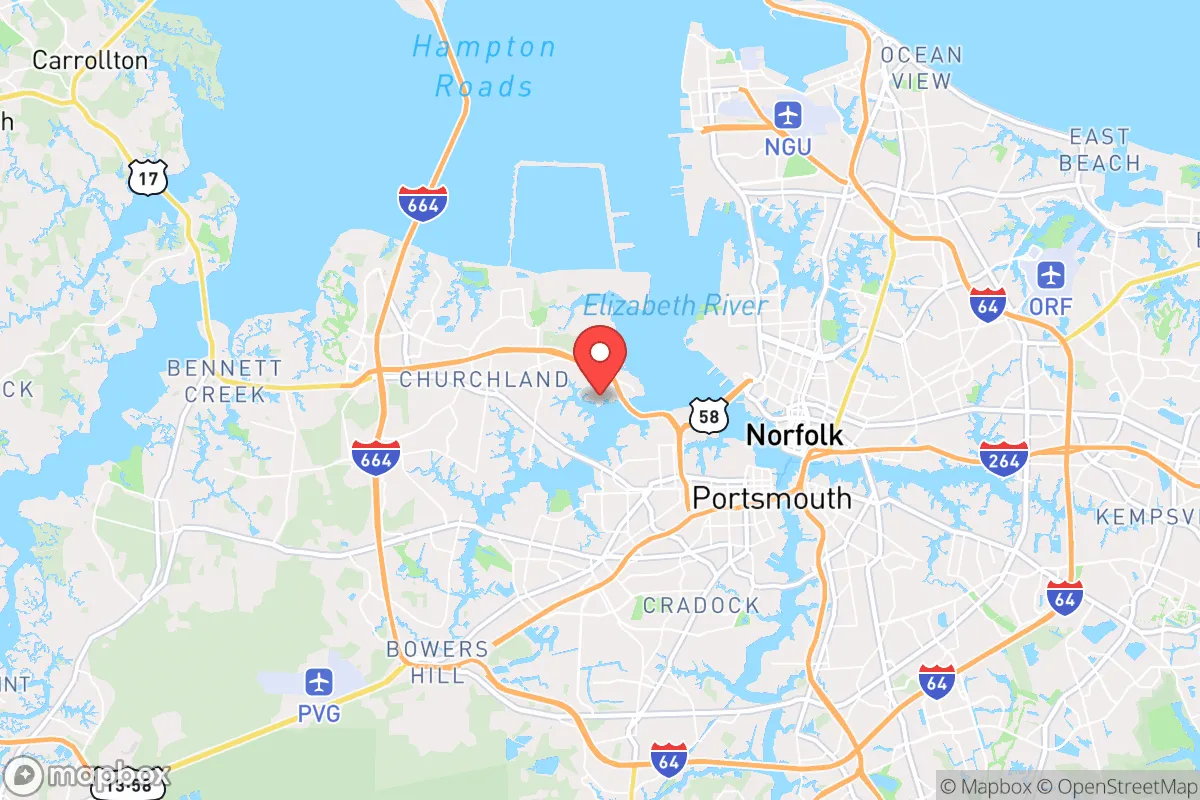
Photo: Wikipedia
Political ClimatePolitical Climate in Portsmouth, VA
District shown is the primary district for this city’s centroid. Cities may span multiple districts.
Local Political AnalysisPolitical Analysis of Portsmouth, VA
Portsmouth, Virginia, has been a solidly Democratic stronghold for decades, and that hasn't changed much. The Cook Partisan Voting Index (PVI) of D+18 tells you everything you need to know about the local elections—it's a place where a Republican candidate has a real uphill battle. But if you've lived here as long as I have, you know the political climate isn't just about party registration; it's about a slow, steady shift away from the traditional, common-sense values that used to define this city. The old guard, the folks who remembered when Portsmouth was a quiet, family-oriented shipbuilding town, are being replaced by a younger, more progressive crowd that's pushing for changes that feel less like freedom and more like government telling you how to live.
How it compares
Drive just a few miles west to Suffolk, or north to Chesapeake, and you'll feel the political temperature drop about 20 degrees. Those cities lean more conservative, with a mix of suburban and rural voters who still believe in low taxes and less government interference. Portsmouth, by contrast, is an island of deep-blue politics in a region that's actually pretty purple. The contrast is stark: you can go from a neighborhood in Portsmouth where the city council is debating new zoning restrictions and "equity" initiatives to a backyard barbecue in Suffolk where folks are just talking about their boats and their property taxes. The surrounding counties, like Isle of Wight, are even more conservative, making Portsmouth feel like an outlier—a place where the local government seems more interested in social engineering than in keeping the streets safe and the schools focused on reading, writing, and arithmetic.
What this means for residents
For the average person living here, the political climate translates into a few real-world headaches. First, there's the constant push for higher taxes to fund programs that sound good on paper but don't always deliver. You see it in the school system, where administrative bloat seems to grow faster than student achievement. Then there's the creeping overreach into personal freedoms—things like strict rental inspection ordinances that treat property owners like potential slumlords, or noise ordinances that make it hard to have a simple backyard gathering. The city council has a habit of passing feel-good resolutions that don't solve problems but do create more bureaucracy. If you value your right to live your life without a city official looking over your shoulder, you'll find that Portsmouth's progressive tilt can feel suffocating. The long-term trend is concerning: as the older, more moderate Democrats retire or move away, the new voices are louder, more ideological, and less interested in compromise.
One cultural distinction that stands out is the city's relationship with its own history. Portsmouth has a proud naval and shipbuilding heritage, centered on the Norfolk Naval Shipyard, but the current political leadership seems almost embarrassed by that past. Instead of celebrating the hard work and discipline that built this city, there's a push to rename streets, remove statues, and focus on grievances rather than gratitude. The local government has also embraced "sanctuary city" policies in spirit, if not in law, which creates tension with federal immigration enforcement. For a long-time resident, it feels like the city is losing its identity—trading its blue-collar, patriotic roots for a vague, progressive agenda that doesn't reflect what most of us actually believe. If you're thinking of moving here, just know that the political climate is a real factor in daily life, and it's not getting any more conservative anytime soon.

State Political ClimatePolitical Climate in Virginia
State Political AnalysisPolitical Environment in the State
Virginia has shifted from a reliably purple swing state to a solidly blue-leaning one over the past 15 years, driven largely by explosive growth in the Washington D.C. suburbs. While the state still has deep-red rural and exurban pockets, the political center of gravity has moved decisively left, with Democrats controlling the governorship, both chambers of the legislature, and the state’s electoral votes since 2020. For a conservative considering relocation, the key takeaway is that Virginia is no longer the moderate, business-friendly commonwealth it was a generation ago—it’s now a state where progressive policy is the default, and the rural-urban divide is a chasm.
Urban vs. rural divide
The political map of Virginia is a tale of two commonwealths. The urban crescent—Northern Virginia (Fairfax, Loudoun, Prince William counties), Richmond, and Hampton Roads (Norfolk, Virginia Beach)—drives the state’s blue lean. Fairfax County alone, with over 1.1 million residents, votes more than 60% Democratic, effectively canceling out the entire rural vote. Loudoun County, once a conservative stronghold, flipped blue in the 2010s and now votes 55-60% Democratic. Meanwhile, Southwest Virginia (Bristol, Roanoke, the coal counties) and the Shenandoah Valley (Harrisonburg, Staunton) remain deeply Republican, often voting 70-80% for GOP candidates. The Richmond suburbs (Chesterfield, Henrico) are a battleground—Chesterfield still leans slightly red, but Henrico has trended blue. The Virginia Beach area is a microcosm: the city itself is purple, but the surrounding rural counties (like Isle of Wight) are solidly red. The bottom line: if you’re a conservative, you’ll feel at home in the western half of the state, but you’ll be politically isolated in NoVA or Richmond.
Policy environment
Virginia’s policy environment has shifted sharply left since Democrats took full control in 2020. Taxes: The state has a flat income tax rate of 5.75%, but Democrats have proposed moving to a progressive rate structure, and the sales tax is 5.3% (higher in some localities). Property taxes are set locally and vary widely—Loudoun County has some of the highest in the state. Regulation: Virginia has adopted California-style emissions standards (the Advanced Clean Cars II rule), effectively banning new gas car sales by 2035. Education: The state has eliminated advanced math tracks in many public schools, adopted “equity” frameworks, and seen a surge in parental rights battles—especially in Loudoun County, where a 2021 sexual assault scandal in schools became a national flashpoint. Healthcare: Virginia expanded Medicaid under the Affordable Care Act, and the state has some of the strictest abortion laws in the South (no restrictions until the third trimester, with a broad “health” exception). Election laws: Virginia now has no-excuse absentee voting, same-day voter registration, and automatic voter registration—all of which conservatives argue reduce election integrity. The state also has a Democratic trifecta that has passed a slew of progressive bills, from gun control to LGBTQ+ protections.
Trajectory & freedom
Virginia is becoming less free by any conservative measure. Gun rights: In 2020, Democrats passed a package of gun control laws including universal background checks, a “red flag” law, a one-handgun-per-month limit, and a ban on assault weapons (the latter was later blocked by a court). Parental rights: The state has passed laws that allow schools to hide a child’s gender identity from parents, and the “model policies” for transgender students are among the most permissive in the country. Medical autonomy: Virginia has no religious or philosophical exemptions for vaccine mandates, and the state’s health department aggressively pushed COVID-19 mandates. Property rights: The state has a strong “eminent domain” record, and localities have broad zoning powers that can restrict development. Taxation: The state’s tax burden is moderate, but Democrats have proposed a “millionaire’s tax” and other progressive levies. The trajectory is clear: Virginia is following the California/New York model of high regulation, high taxes, and top-down social policy. The only bright spot for conservatives is that the state’s constitution allows for a strong governor, and a Republican governor (Glenn Youngkin) was elected in 2021—but his agenda was largely blocked by the Democratic legislature.
Civil unrest & political movements
Virginia has been a flashpoint for political violence and activism. The 2017 Unite the Right rally in Charlottesville remains a scar on the state’s reputation, and the city has since become a symbol of progressive activism. Loudoun County has seen massive protests from both sides over school policies, with parents clashing with school boards. Richmond saw the removal of Confederate statues in 2020, which sparked both celebration and backlash. Immigration politics: Virginia has several “sanctuary cities” (including Richmond and Alexandria), and the state has passed laws limiting cooperation with ICE. Election integrity: The 2020 election saw widespread allegations of irregularities in Virginia, though no major fraud was proven. The state’s voter rolls are notoriously messy, with thousands of non-citizens reportedly registered. Secession/nullification rhetoric: There’s a small but vocal movement in Southwest Virginia to join West Virginia, driven by frustration with Richmond’s liberal policies. A new resident in rural areas will notice a palpable sense of alienation from the state government.
Projection
Over the next 5-10 years, Virginia will likely become more blue. The D.C. suburbs continue to grow, with Loudoun County adding 20,000+ residents annually, most of whom are white-collar professionals who lean left. The Hampton Roads area is aging and losing population, while Richmond is gentrifying and attracting young progressives. The rural areas are shrinking and aging. The only hope for conservatives is a national red wave that could flip the legislature, but even then, the demographic trends are relentless. A conservative moving to Virginia now should expect to live under a Democratic-controlled state government for the foreseeable future, with all the policy implications that entails. The best bet for a conservative is to move to a red enclave like Roanoke or Fredericksburg (which is still purple), but even those areas are trending left.
Bottom line for a new resident: If you’re a conservative, Virginia is a state where you’ll be politically outnumbered and increasingly governed by policies you oppose. The rural areas offer a refuge, but they’re losing influence fast. The state’s tax burden is moderate for now, but the trajectory is toward higher taxes and more regulation. The schools are a minefield for parents who want traditional values. If you value personal freedom, low taxes, and a government that stays out of your life, Virginia is not the safe bet it once was. Consider the western counties or the Shenandoah Valley if you must move here, but be prepared for a long-term fight to preserve your way of life.
* Values derived from national, state, county, city and local statistics and may differ in a specific area. Last updated: 2026-05-02T04:06:43.000Z
Narrative content on this page is AI-generated and may contain mistakes. Verify any details that matter before acting on them.
ReloMaps may earn a commission from affiliate links at no extra cost to you.

