Photo: Wikipedia
Find The Best Places To Live
in Portsmouth
PRO TIP! You can paste a Zillow or Redfin link to get info on that property.
What It's Like Living in Portsmouth, VA
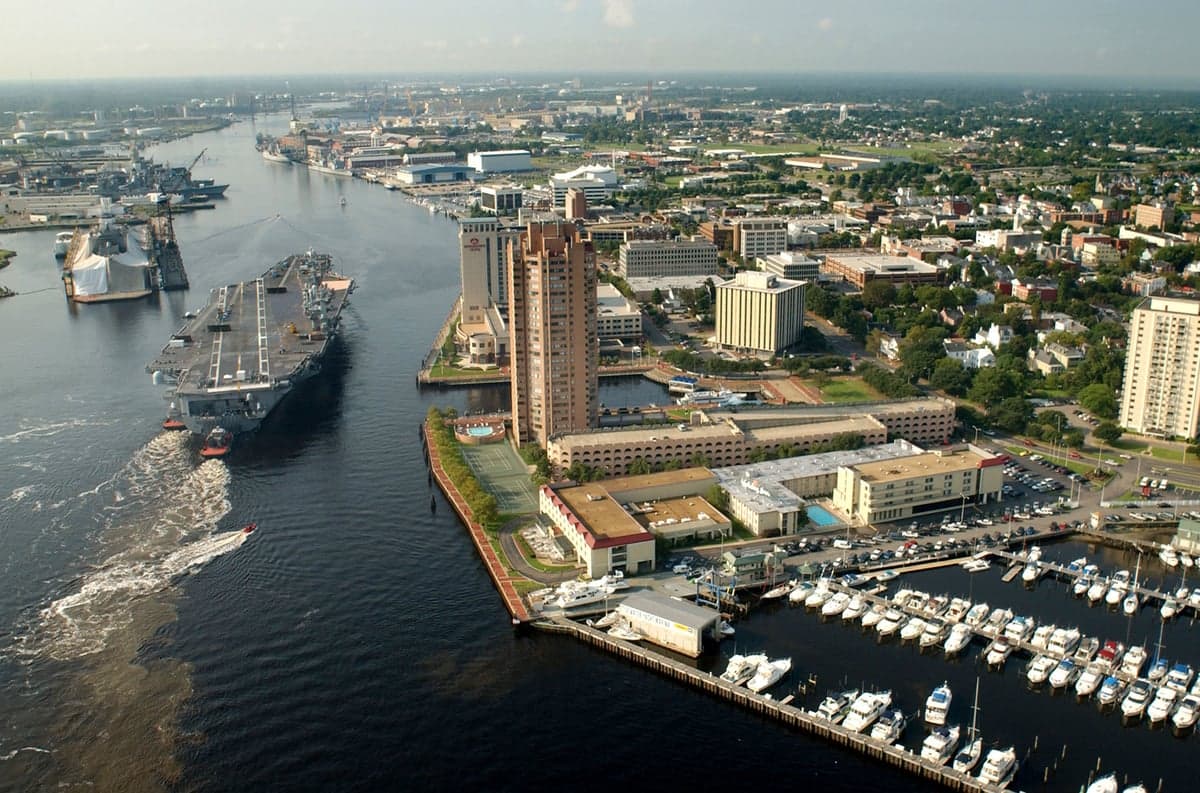
Portsmouth, Virginia, has a split personality that somehow works. On one side, it’s a historic waterfront town with brick sidewalks, Civil War-era forts, and a sleepy, almost Southern-genteel pace. On the other, it’s a working-class Navy city where the sound of shipyard horns and the sight of sailors in uniform are part of the daily fabric. If you’re looking for a place that feels like a real community rather than a polished suburb or a tourist trap, Portsmouth is worth a serious look — but you need to know what you’re getting into.
The Daily Rhythm: Shipyards, Porches, and Water Views
Most mornings in Portsmouth start early. The Norfolk Naval Shipyard is the city’s largest employer, and a huge chunk of the workforce heads there before sunrise. That 23-minute average commute is a real thing — it’s short enough to run home for lunch, long enough to finish a podcast. After work, people tend to cluster around Olde Towne, the historic district along the Elizabeth River. You’ll see folks walking dogs past 18th-century homes, grabbing oysters at Baron’s Pub, or sitting on their front porches with a drink. Weekends often mean a trip to the Portsmouth Farmers Market (running since the 1700s) or a lazy afternoon at City Park, which has a decent golf course and paddleboats. The vibe is unhurried. People here aren’t trying to impress anyone.
Sports, Community, and the Navy Connection
Portsmouth doesn’t have a major pro sports team of its own — you’ll drive the tunnel to Norfolk for Norfolk Tides (baseball) or Norfolk Admirals (hockey) games. But high school football is a genuine event. I.C. Norcom High School and Churchland High School pack bleachers on Friday nights, and the rivalries are fierce. The city’s identity is deeply tied to the military. You’ll see “Welcome Home” banners on light poles, and the Portsmouth Naval Shipyard Museum is a point of pride. The annual Portsmouth Seawall Festival in May brings live music, craft vendors, and a whole lot of fried seafood to the waterfront. It’s not a huge spectacle — more like a big block party where everyone knows someone.
What’s There to Do: Parks, Breweries, and Hidden Gems
Outdoor life here is underrated. Hoffler Creek Wildlife Preserve has boardwalks through tidal marshes where you can spot ospreys and herons. Portsmouth City Park is huge — 140 acres with a lake, a skate park, and a disc golf course. For nightlife, it’s low-key. MoMac Brewing Company is a local favorite for craft beer and trivia nights. The Bier Garden in Olde Towne has a massive outdoor patio and a German beer list that draws a loyal crowd. If you want live music, you’re usually looking at Roger Brown’s Restaurant and Sports Bar or the Portsmouth Art & Cultural Center, which hosts smaller concerts and gallery openings. The Virginia Sports Hall of Fame is here too, though it’s more of a museum than a hangout. The biggest cultural quirk? The Portsmouth Trolley — a free, vintage-style bus that loops through Olde Towne. Locals ride it just for fun.
Pros and Cons of Living Here
Let’s be honest about the trade-offs. The cost of living index is 98 — slightly below the national average — and the median home value of $229,400 is genuinely affordable for the Hampton Roads region. You can buy a decent single-family home in a safe neighborhood for under $250,000, which is almost unheard of in Norfolk or Virginia Beach. The median household income of $58,972 is tight for a family, but doable if you’re dual-income or single with no kids. The median age of 35.8 means a lot of young families and early-career military personnel. The downsides? Violent crime is a real concern at 704.6 per 100,000 — well above the national average. You need to know your neighborhoods. Parts of the city near the shipyard and downtown have higher crime, while areas like Churchland and Western Branch feel much safer. Traffic can be brutal when the tunnels to Norfolk or Portsmouth close for accidents — locals call it “tunnel fever.” And only 23.2% of adults have a college degree, which means the job market outside the shipyard and military is thin. If you’re a remote worker or a skilled tradesperson, you’ll do fine. If you’re looking for a white-collar corporate scene, you’ll be commuting to Norfolk or Virginia Beach.
Who Fits In Here
Portsmouth is a good fit for someone who values affordability over flash, who doesn’t mind a little grit, and who wants to be near the water without paying beach-town prices. It’s great for Navy families, young couples starting out, and retirees who want a historic home with character. It’s less ideal for people who want a 24/7 nightlife scene, top-tier public schools, or a crime rate that lets you walk anywhere at midnight. The weather is mild — winters rarely freeze hard, summers are humid but breezy near the river, and hurricane season keeps everyone on their toes. The schools are a mixed bag; some are excellent (like Churchland Elementary), others struggle. Most families with means either go private or move to Suffolk or Chesapeake for the school districts. But if you’re willing to do your homework, Portsmouth offers a slice of Tidewater life that’s genuine, walkable, and still affordable in a region that’s getting pricier by the year.

Similar small cities to Portsmouth
* Values derived from national, state, county, city and local statistics and may differ in a specific area. Last updated: 2026-05-02T04:06:43.000Z
Narrative content on this page is AI-generated and may contain mistakes. Verify any details that matter before acting on them.
ReloMaps may earn a commission from affiliate links at no extra cost to you.

