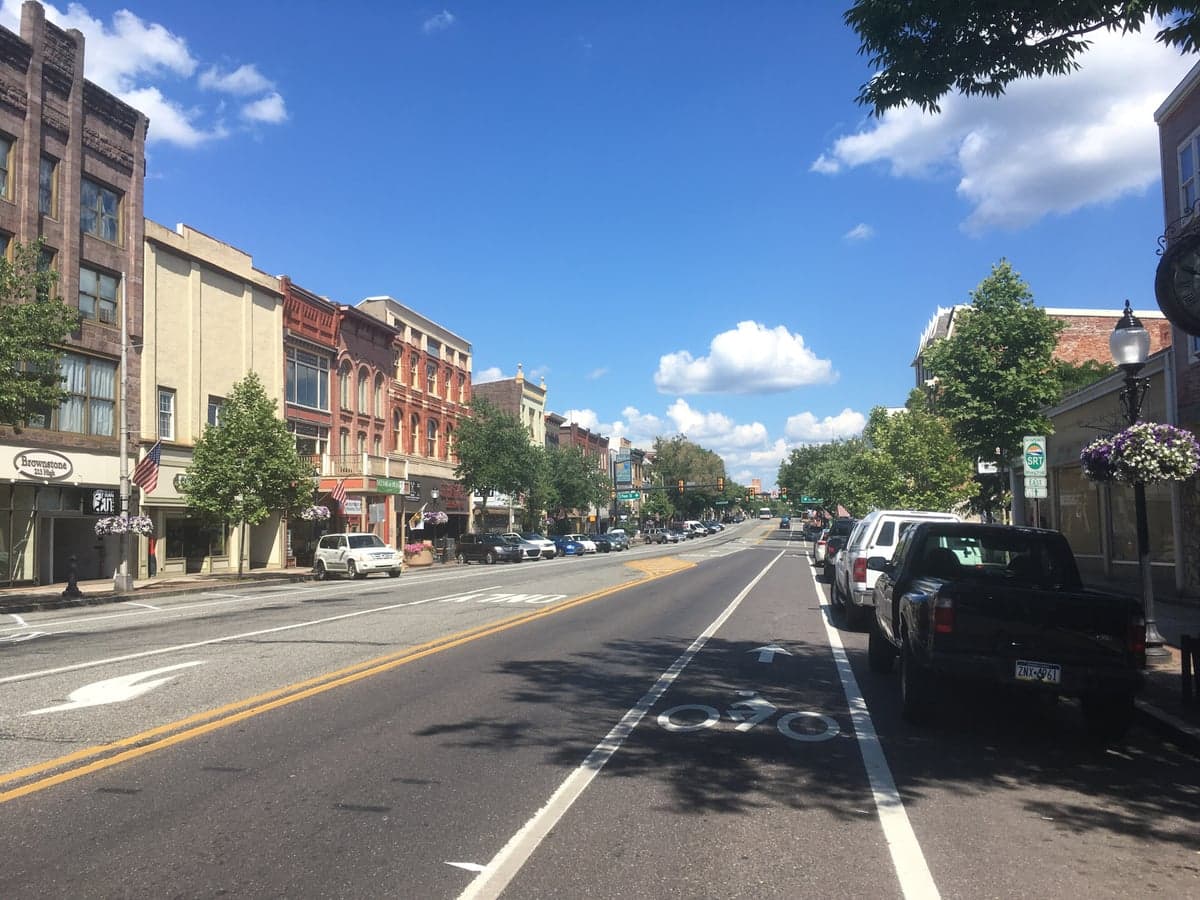
Photo: Wikipedia
Political ClimatePolitical Climate in Pottstown, PA
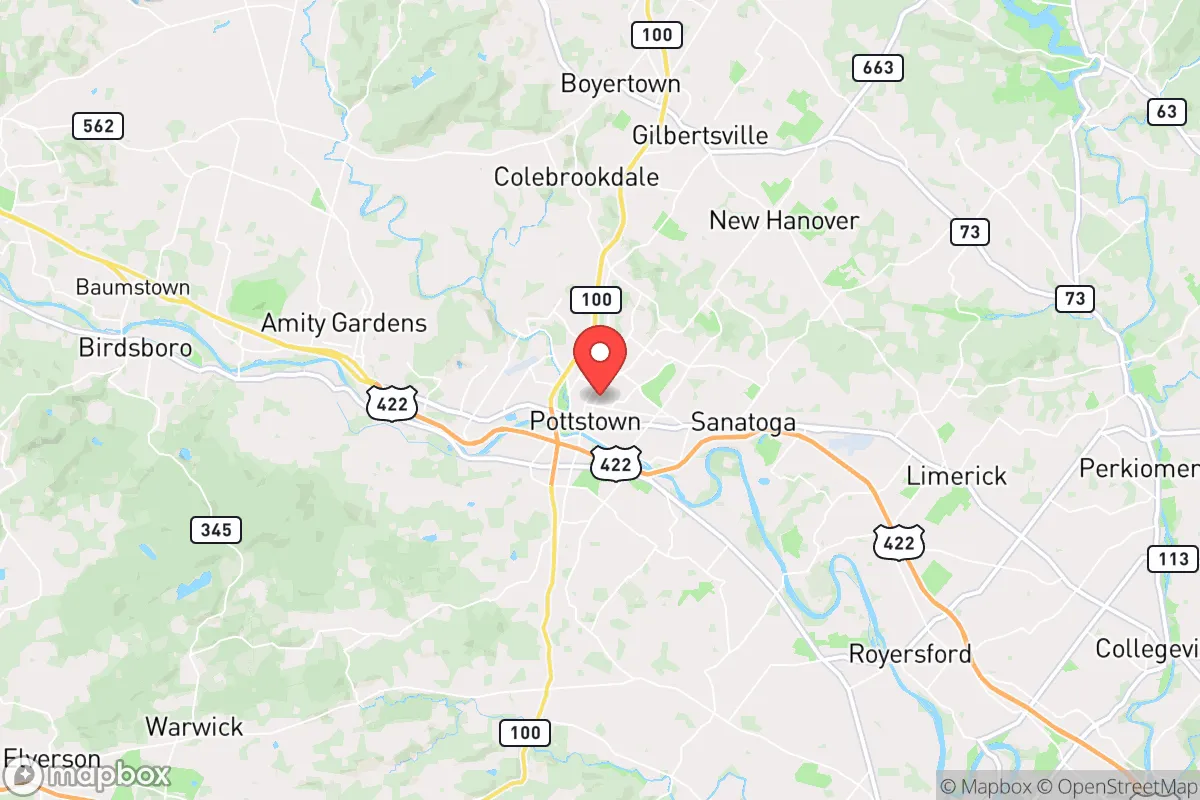
District shown is the primary district for this city’s centroid. Cities may span multiple districts.
Local Political AnalysisPolitical Analysis of Pottstown, PA
Pottstown’s political climate has shifted noticeably leftward in recent years, and if you’ve lived here as long as I have, you can feel it in the air. The borough now carries a Cook PVI of D+8, meaning it votes about eight points more Democratic than the nation as a whole—a far cry from the blue-collar, independent streak this town used to be known for. You’ll see it in local elections, in the chatter at the diner, and in the way folks talk about taxes and property rights. It’s not the same Pottstown I remember from the 90s, and the trajectory has a lot of us watching closely.
How it compares
Drive ten minutes in almost any direction, and you’ll hit towns that feel like a different world. Gilbertsville and Boyertown to the north lean reliably red, with voters who still prize low taxes and minimal government interference. Limerick and Royersford to the south are more purple but trend conservative on fiscal issues. Even Reading, about 20 minutes west, has a more mixed political history, though it’s also shifted left. Pottstown stands out as the progressive anchor in this corner of Montgomery County—a county that itself has moved sharply blue since 2016. The contrast is stark: you can cross the Schuylkill River and feel like you’ve entered a different political universe, where personal freedoms and Second Amendment rights are still taken seriously.
What this means for residents
For those of us who value local control and limited government, the D+8 lean translates into real-world concerns. Property taxes have crept up as the borough pursues more social programs and downtown redevelopment projects that don’t always align with what long-time homeowners want. There’s been a push for stricter rental regulations and zoning changes that some see as government overreach into how you use your own land. The school board has also become a battleground, with progressive members pushing curriculum changes that raise eyebrows among parents who want transparency and local say. If you’re a small business owner or a gun owner, you’ve likely noticed the regulatory creep—more permits, more fees, more hoops to jump through. It’s not tyranny, but it’s a steady erosion of the hands-off attitude that made this town a good place to raise a family.
On the cultural side, Pottstown has leaned into its arts district and diversity initiatives, which is fine on paper, but the execution sometimes feels like a top-down agenda rather than grassroots community will. The annual Pottstown Pride event and the push for sanctuary city status are two examples that split the town—some see progress, others see a loss of the quiet, traditional character that kept folks here for generations. The borough council has become more vocal on state-level issues like marijuana legalization and police reform, which sounds good in headlines but often means more bureaucracy at the local level.
Looking ahead, I’d expect the D+8 lean to hold or even deepen as younger, more progressive families move in from Philadelphia and the Main Line. That means more pressure on property rights, more spending on social services, and a continued drift away from the independent, live-and-let-live ethos that defined Pottstown for decades. If you’re considering a move here, just know what you’re walking into—and keep an eye on those local elections. They matter more than ever.

State Political ClimatePolitical Climate in Pennsylvania
State Political AnalysisPolitical Environment in the State
Pennsylvania is a true battleground state, and if you’re looking at it from a conservative lens, the picture is deeply mixed. Over the last 20 years, the state has shifted from a reliably blue-leaning swing state to a pure toss-up, but the underlying trends are concerning for those who value limited government and personal freedom. The 2020 and 2024 elections saw razor-thin margins, with the state flipping back to Donald Trump in 2024 after narrowly going for Joe Biden in 2020. The long-term trajectory is a slow, grinding erosion of the old Democratic machine in the west and northeast, offset by explosive growth in the southeastern suburbs and the continued dominance of Philadelphia. For a conservative, the state is a battlefield where you can win, but you have to fight for every inch.
Urban vs. rural divide
The political map of Pennsylvania is a classic story of two states. Philadelphia and its collar counties (Montgomery, Delaware, Chester) are the engine of the Democratic vote, delivering margins of 80% or more in the city proper. Pittsburgh, while smaller, is also a deep blue island in the west. The real story is the vast, red expanse in between. The "T" – the rural central and northern tier – is overwhelmingly Republican. Counties like Tioga, Potter, and Bradford routinely vote 70-80% Republican. The key battlegrounds are the suburban and exurban counties that ring Philadelphia and Pittsburgh. Bucks County, once a reliable red suburb, has trended blue in recent cycles, while Lancaster County has become a conservative stronghold, with its Amish and evangelical population driving huge margins. The Scranton/Wilkes-Barre area (Lackawanna and Luzerne counties) is a classic bellwether – historically union-Democrat, it has shifted hard toward Trump, reflecting the working-class realignment. The divide isn't just urban vs. rural; it's also about the old industrial towns that feel left behind versus the booming, diverse suburbs.
Policy environment
Pennsylvania’s policy environment is a mixed bag for conservatives. On the plus side, the state has a flat income tax rate of 3.07%, which is relatively low and hasn’t been raised in years. There is no state tax on Social Security benefits, and retirement income is largely exempt, making it a decent place for retirees. However, the state’s property taxes are among the highest in the nation, and there is no statewide cap on how much they can increase, which is a major burden for homeowners. The regulatory posture is moderate – not as heavy as New York or California, but far from the free-market approach of Texas or Florida. Education policy is a flashpoint: the state has a massive teacher’s union that fights school choice, and while there is a limited charter school program, a full Education Savings Account (ESA) bill has been repeatedly blocked. Healthcare is dominated by large systems like UPMC and Jefferson Health, which have near-monopoly power. Election laws are a sore spot for conservatives: the state has no voter ID requirement (though a photo ID is requested for first-time voters), and the 2020 election saw widespread use of no-excuse mail-in voting, which was expanded by the legislature but has been a source of ongoing controversy. The state also has a Democratic governor, Josh Shapiro, who has vetoed several conservative bills, including a constitutional amendment requiring voter ID.
Trajectory & freedom
On the freedom scale, Pennsylvania is trending in the wrong direction. The most concerning recent trend is the erosion of Second Amendment rights. In 2018, the state passed Act 192, which preempted local gun ordinances, but that was a win. Since then, the pendulum has swung back. In 2023, Governor Shapiro signed a bill expanding background checks for long guns (a significant expansion of the current system), and there are active pushes for "red flag" laws and a ban on so-called "assault weapons." The state also has a Castle Doctrine law, but it’s not as strong as in states like Florida. On medical freedom, Pennsylvania was one of the first states to impose strict COVID-19 mandates, and the state health department still has broad emergency powers that were not rolled back after the pandemic. Parental rights are under assault: the state’s Department of Education has pushed "LGBTQ+ inclusive" curriculum guidelines that many parents find intrusive, and there is no statewide parental notification law for school medical or mental health services. Property rights are relatively strong, but the state’s use of eminent domain for economic development projects has been controversial. The tax burden is a slow bleed – no income tax cut has been passed in years, and the state’s pension debt (over $60 billion) looms as a future tax bomb.
Civil unrest & political movements
Pennsylvania has seen its share of political flashpoints. The 2020 election aftermath was particularly intense in Philadelphia, where the city’s ballot counting process was the subject of national scrutiny. Protests erupted in the city after the George Floyd incident, leading to property damage and a heavy police response. On the right, the "Pennsylvania Freedom Coalition" and groups like "Moms for Liberty" have been active in school board battles, particularly in Central Bucks School District, which became a national battleground over library books and transgender policies. The state has also seen a rise in "Second Amendment sanctuaries" – over 200 counties and municipalities have passed resolutions declaring themselves sanctuaries from state or federal gun laws. Immigration politics are less visible than in border states, but Philadelphia is a self-declared "sanctuary city," and the state has a "Clean Slate" law that automatically seals certain criminal records, which has been criticized as soft on crime. The most visible political movement is the ongoing fight over election integrity, with grassroots groups pushing for hand-counted paper ballots and stricter ID laws. A new resident would notice the political tension in the air, especially in the suburbs, where yard signs and bumper stickers are a constant reminder of the divide.
Projection
Looking ahead 5-10 years, the trajectory is not favorable for conservatives. The demographic trends are clear: the Philadelphia suburbs are becoming more diverse and more liberal, driven by migration from the city and from out of state. The rural areas are aging and losing population. The only hope for a conservative resurgence is the continued realignment of working-class voters in the old industrial towns, but that is a one-time shift, not a sustainable growth engine. The state’s in-migration is mostly from blue states like New York and New Jersey, and those newcomers tend to bring their politics with them. The state legislature is currently Republican-controlled, but the maps are not favorable, and a Democratic governor has veto power. The most likely scenario is a slow, grinding shift toward a more progressive policy environment: higher taxes, more gun control, and more state control over education and healthcare. The state’s pension crisis will eventually force a tax increase, and the growing influence of the Philadelphia and Pittsburgh metros will continue to pull the state leftward. A conservative moving here now should expect to be fighting a rear-guard action for the next decade, not leading a charge.
Bottom line for a new resident: If you’re a conservative, Pennsylvania is a place where you can live well, but you have to be politically engaged to protect your freedoms. The low income tax and retirement-friendly policies are a draw, but the high property taxes and looming pension crisis are a warning. You’ll find like-minded communities in the rural areas and in places like Lancaster, York, and Franklin County, but you’ll also be living in a state where the major cities and the governor’s office are actively working against your values. It’s a state for fighters, not for those looking for a red-state refuge. If you’re willing to get involved in school boards, local government, and the state legislature, you can make a difference. If you just want to be left alone, you might be better off looking at Florida, Texas, or Tennessee.
* Values derived from national, state, county, city and local statistics and may differ in a specific area. Last updated: 2026-05-01T07:21:23.000Z
Narrative content on this page is AI-generated and may contain mistakes. Verify any details that matter before acting on them.
ReloMaps may earn a commission from affiliate links at no extra cost to you.

