Photo: Wikipedia
Find The Best Places To Live
in Princeton
PRO TIP! You can paste a Zillow or Redfin link to get info on that property.
What It's Like Living in Princeton, NJ
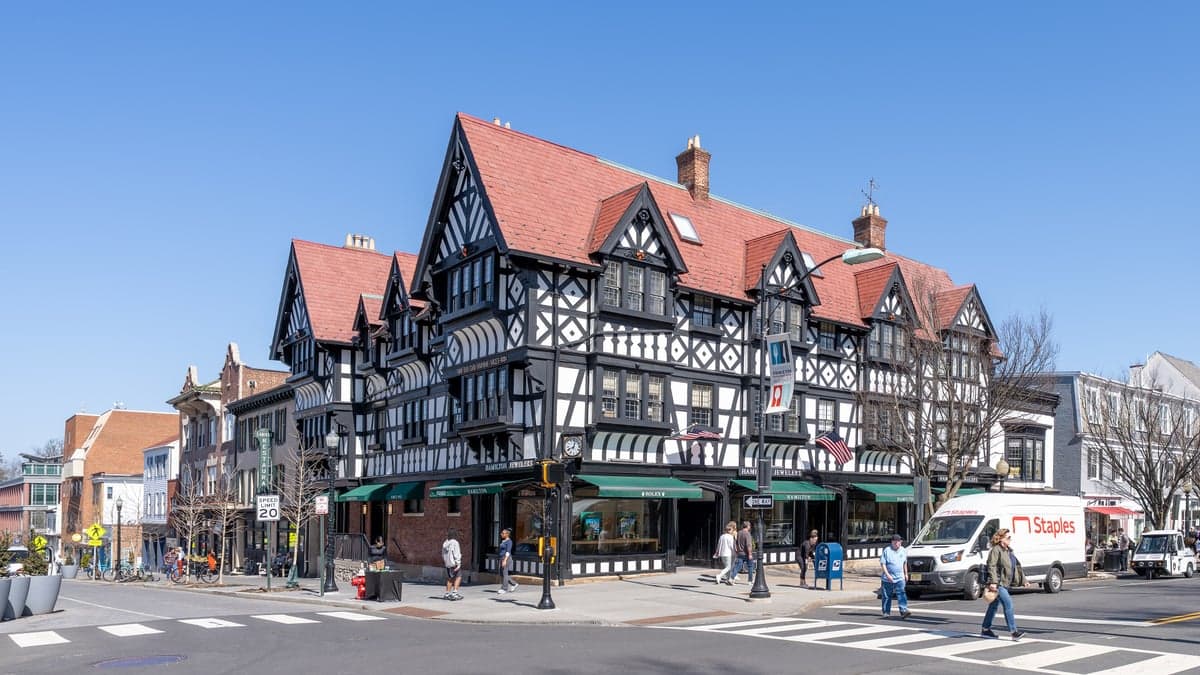
Princeton is a place that feels less like a typical New Jersey suburb and more like a small, intensely intellectual town that happens to have a world-class university at its center. Walk down Nassau Street on a Saturday morning and you’ll see professors grading papers over coffee at Small World Coffee, families heading to the farmers market, and students from the university weaving through it all — it has a deliberate, thoughtful pace that sets it apart from the commuter towns around it. The identity here is shaped by the university, but not dominated by it; longtime residents and local business owners give the place a grounded, unpretentious character that keeps it from feeling like a campus annex.
The Daily Rhythm and Who Fits In
Daily life in Princeton revolves around a mix of intellectual curiosity and practical suburban routines. People shop at the McCaffrey’s on North Harrison Street or the Whole Foods on Nassau Park Boulevard, and weekends often include a walk through the Institute Woods or a trip to the Princeton Farmers Market on Hinds Plaza. The median age here is just 27.5, which reflects the large student population, but the permanent residents skew older and more established — the median household income is $184,113, and 84.6% of adults hold a college degree. That combination means the town attracts professionals in academia, biotech, and finance, as well as families who prioritize education above almost everything else. If you’re a single professional or a parent who values deep conversation over nightlife, you’ll find your people here. If you’re looking for a rowdy bar scene or a place where people don’t ask what you do for a living, this might feel a bit stifling.
Sports, Entertainment and Community Life
Sports culture in Princeton is real but niche. Princeton University athletics are the main draw — football games at Powers Field and basketball at Jadwin Gym draw decent crowds, especially when Harvard or Yale come to town. High school sports are taken seriously but not obsessively; the Princeton High School Tigers have strong lacrosse and soccer programs that pack the stands on fall Fridays. For entertainment, the McCarter Theatre Center is the crown jewel — it’s a professional venue that hosts Broadway-caliber plays, concerts, and spoken word events. The Princeton Summer Theater offers a more intimate, student-run alternative. Outdoor life centers on Lake Carnegie for rowing and walking trails, and the Delaware and Raritan Canal towpath runs right through town for biking and jogging. The Princeton Festival in June brings classical music and opera to the area, and the Communiversity ArtsFest in April fills the streets with local artists and food trucks. For bars, The Alchemist & Barrister is the reliable neighborhood pub, while Triumph Brewing Company draws a younger crowd with its house-made beers and live music.
What Longtime Residents Love and What Frustrates Them
- What they love: The walkability of the central town — you can live without a car if you’re near Nassau Street. The public schools are exceptional, with Princeton High School consistently ranked among the top in the state. The cultural amenities (McCarter Theatre, Princeton University Art Museum, live music at the Tavern) are disproportionate to the town’s size of 30,451 people. The sense of safety is real — the violent crime rate is 156.7 per 100,000, well below the national average.
- What frustrates them: The cost of living is punishing. The cost of living index is 274 (more than 2.7 times the national average), and the median home value is $1,040,400. That prices out many middle-class families and young professionals. Traffic on Route 1 and Nassau Street during rush hour is genuinely bad — the average commute is about 24 minutes, but that number hides the fact that a 5-mile drive can take 30 minutes. Parking in the downtown is a constant headache, and the town’s strict zoning and preservation rules mean new housing is scarce, which keeps prices high. Some residents also feel the town can be insular — it’s easy to feel like an outsider if you don’t have a connection to the university or a child in the schools.
Cultural Quirks and Practical Realities
Princeton has a few traditions that define its character. P-rade during Reunions weekend in late May is a spectacle — alumni in class-year costumes parade through town, and the whole community turns out to watch. The Princeton Public Library is a genuine hub, not just for books but for lectures, film screenings, and community meetings. The town’s identity is proudly progressive in a way that can feel performative to some — you’ll see more “In This House We Believe” signs than almost anywhere else in the state. Weather follows the standard New Jersey pattern: summers are humid and in the 80s 80s, winters are cold with occasional snow (snowfall averages about 25 inches per year), and spring and fall are genuinely beautiful. The school system is the gravitational center for families — it’s not just about academics but also the social network. If you don’t have kids in the schools, you might find it harder to break into the social fabric. For single people, the dating scene is heavily skewed toward graduate students and university staff, which can feel limiting if you’re outside that world. Ultimately, Princeton rewards people who value intellectual life, walkability, and top-tier schools — and who can afford the price of admission.

Similar towns to Princeton
* Values derived from national, state, county, city and local statistics and may differ in a specific area. Last updated: 2026-05-18T00:17:49.000Z
Narrative content on this page is AI-generated and may contain mistakes. Verify any details that matter before acting on them.
ReloMaps may earn a commission from affiliate links at no extra cost to you.

