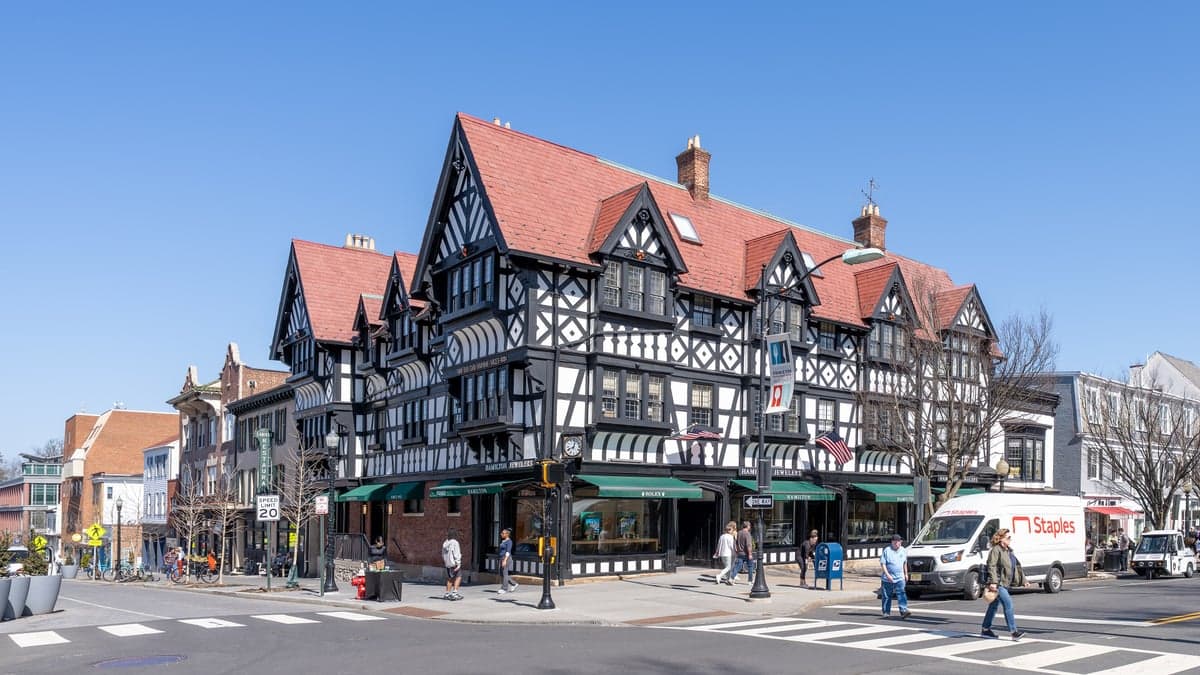
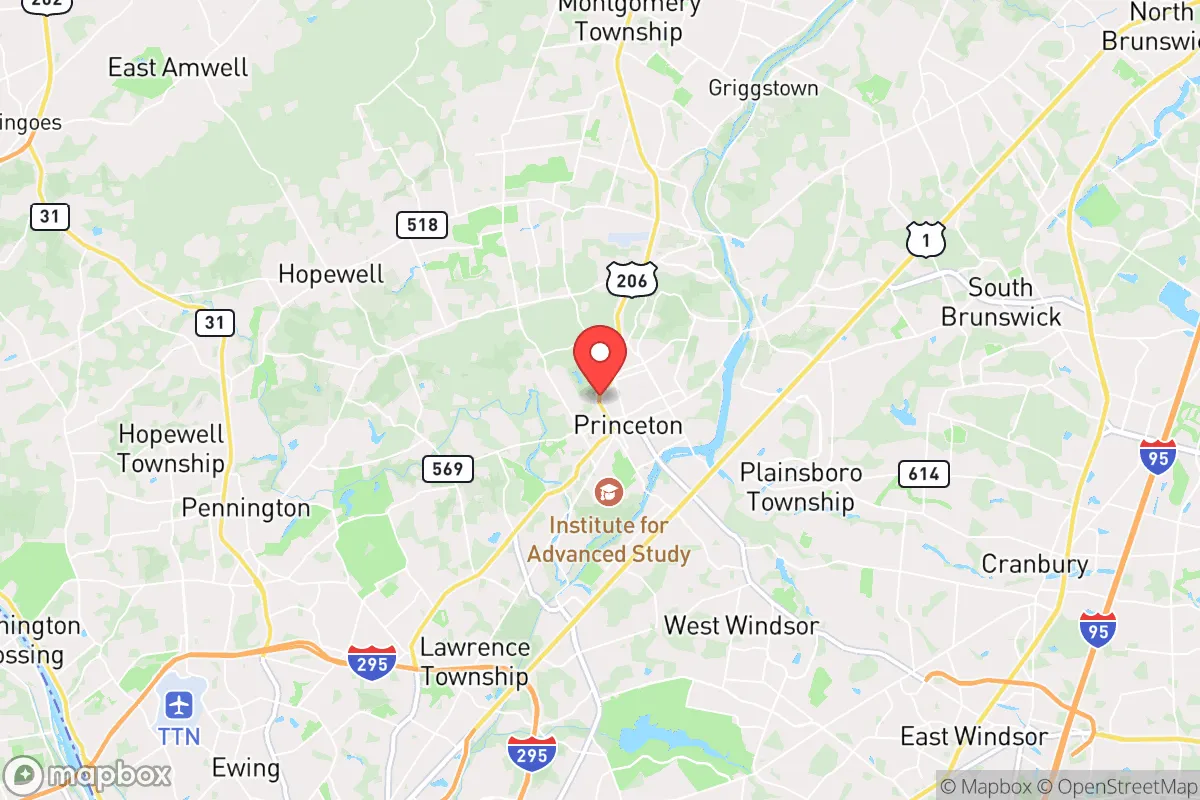
Photo: Wikipedia
Personal Sovereignty in Princeton, NJ
Viable for self-reliance. Generally workable, though some barriers may limit total independence.
What does Personal Sovereignty tell us?
Personal Sovereignty measures your capacity for self-reliance and independence with minimal government friction. Higher scores mean fewer barriers between you and the way you want to live... but it assumes you have the space you need and good neighbors.
What does this tell us?
Personal Sovereignty measures your capacity for self-reliance and independence with minimal government friction. Higher scores mean fewer barriers between you and the way you want to live... but it assumes you have the space you need and good neighbors.
State Policy
Energy independence: Importer (8% of energy produced in-state)
Personal Liberty
Homesteading

Personal Liberty Analysis
Princeton, New Jersey, presents a complex environment for personal sovereignty, where a world-class intellectual community coexists with some of the nation's most restrictive state-level governance. For the survivalist or prepper evaluating this area, the calculus is stark: you gain proximity to elite medical and educational resources, but you operate under a state government that consistently prioritizes collective mandates over individual autonomy. The local culture leans heavily progressive, meaning your personal choices regarding health, education, and self-defense will face both legal hurdles and social scrutiny. This is not a place for those seeking low-regulation freedom; it is a place for those who can navigate a high-control environment while carving out private spheres of self-reliance.
Tax burden and regulatory posture: the cost of operating in a high-control state
New Jersey's regulatory posture is a primary constraint on personal sovereignty, and Princeton sits at its epicenter. The state imposes the highest property tax burden in the nation, with Princeton's effective rate hovering around 2.3% of assessed value annually. For a $600,000 home, that's nearly $14,000 per year in property taxes alone—money that funds a state apparatus with expansive reach into your daily life. The state income tax is progressive, topping out at 10.75% for high earners, and applying to all income over $1 million. This creates a significant drag on capital accumulation, which is the lifeblood of any self-reliant strategy. Beyond taxes, New Jersey's regulatory environment is dense: building permits, land use approvals, and environmental reviews can take months or years, making any off-grid or homesteading project a bureaucratic ordeal. The state's strict environmental regulations limit what you can do with your own land, from rainwater collection to septic system modifications. For the prepper, this means every step toward self-sufficiency requires navigating a thicket of permits and inspections, with local officials holding significant discretionary power.
Self-defense and gun law specifics: navigating the Garden State's restrictions
For those prioritizing the right to self-defense, Princeton is a challenging jurisdiction. New Jersey has some of the most restrictive gun laws in the United States, including a "may-issue" concealed carry regime that was only partially reformed after the 2022 Bruen decision. While the state now must issue permits to qualified applicants, the process remains onerous: you need four character references, a firearms training course, a psychological evaluation, and a background check that includes a mental health records review. The state also bans "assault weapons" and standard-capacity magazines (over 10 rounds), and requires a separate permit to purchase handguns, which involves a 30-day waiting period. Self-defense with a firearm in your home is legally protected under the "Castle Doctrine," but the state's duty to retreat in public spaces severely limits your options outside the home. Pepper spray and tasers are legal but regulated. For the survivalist-minded individuals should be aware that New Jersey's legal climate is hostile to firearm ownership; any defensive use of a weapon will face intense legal scrutiny. For those unwilling to navigate this system, Princeton is effectively a no-go zone for armed self-reliance.
Self-reliance and homesteading viability: lot sizes, zoning, and off-grid feasibility
Princeton's dense suburban character makes traditional homesteading nearly impossible. The typical residential lot is 0.25 to 0.5 acres, with most homes on quarter-acre plots in established neighborhoods. Zoning codes are strict: raising chickens is allowed but limited to four hens (no roosters), and beekeeping requires a permit. Keeping larger livestock like goats or pigs is prohibited in most residential zones. Vegetable gardens are permitted, but front-yard gardens may face HOA or municipal aesthetic restrictions. Off-grid living is essentially illegal: the town requires connection to municipal water and sewer, and solar panels must be grid-tied. Rainwater collection for potable use is restricted by state health codes. The local climate—humid summers and cold winters—makes year-round food production challenging without significant infrastructure. For a serious prepper, Princeton offers no realistic path to food or energy self-sufficiency on a residential lot. The best you can do is a robust home garden, a small solar backup system (with generator), and deep pantry storage. The real value here is in community networking and knowledge exchange, not in land-based independence.
Personal liberties: parental rights, medical autonomy, speech, and property
Personal liberties in Princeton are heavily shaped by state-level mandates. Parental rights are significantly curtailed by New Jersey's progressive education policies: the state mandates LGBTQ-inclusive curriculum from kindergarten, and schools are not required to notify parents if a child changes their gender identity or pronouns. This creates a direct conflict for parents who want to control their children's moral and medical education. Medical autonomy is also constrained: New Jersey has some of the strictest vaccine mandates in the country, including for school attendance, with very narrow religious exemptions. The state's COVID-era policies, including mask and vaccine mandates for healthcare workers, signaled a willingness to override individual medical choice. Free speech is legally protected, but the local culture in Princeton is overwhelmingly left-leaning, meaning expressing conservative or libertarian views can lead to social ostracism or professional repercussions, especially in academic or corporate settings. Property rights are limited by the state's strong eminent domain powers and strict zoning; you cannot use your land as you see fit. The overall environment is one where the state and local community actively shape personal choices, leaving little room for the rugged individualism prized by the survivalist mindset.
In the broader landscape of personal sovereignty, Princeton ranks low compared to rural areas in the South or West. The combination of high taxes, restrictive gun laws, limited homesteading barriers, and limited parental rights creates a net loss of autonomy for the individual. However, for those who value the area's intellectual resources, medical infrastructure, and community resilience networks, there are workarounds: deep pantry storage, legal firearm ownership (with effort), and strategic use of private spaces. The key is to approach Princeton as a high-control environment that requires careful legal compliance and social navigation, not as a place for unfettered freedom. If your priority is maximum personal sovereignty, look elsewhere. If you can operate within constraints while building private resilience, Princeton offers a unique but demanding path.

* Values derived from national, state, county, city and local statistics and may differ in a specific area. Last updated: 2026-05-18T00:17:49.000Z
Narrative content on this page is AI-generated and may contain mistakes. Verify any details that matter before acting on them.
ReloMaps may earn a commission from affiliate links at no extra cost to you.

