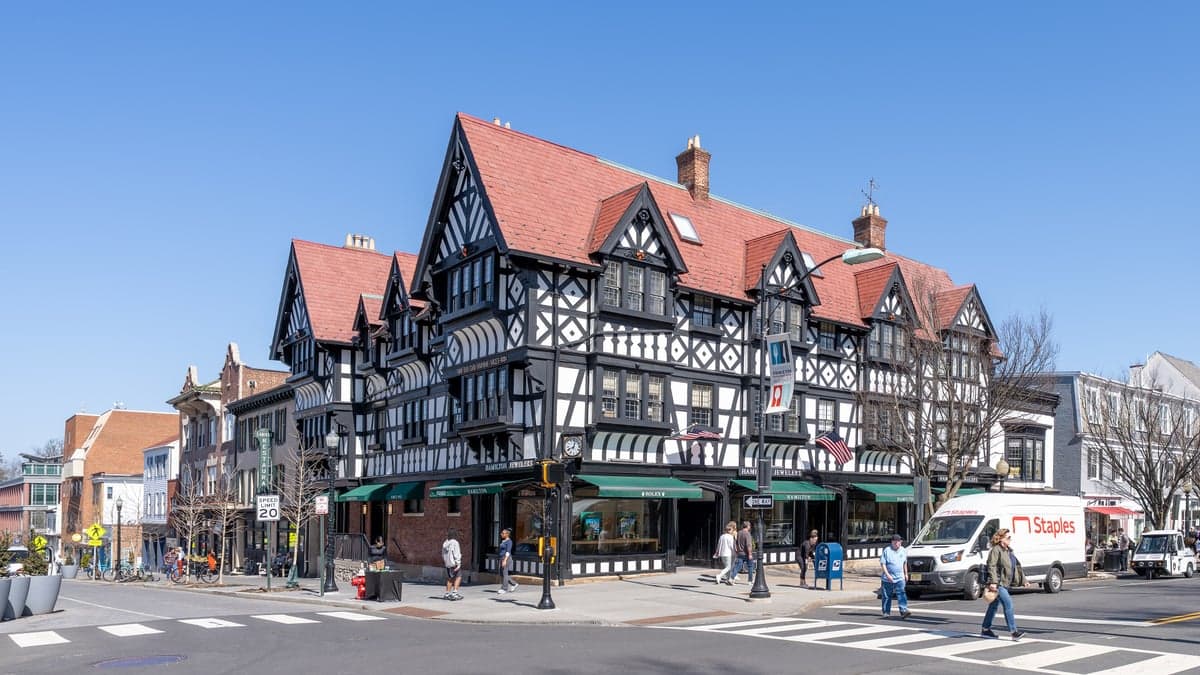
Photo: Wikipedia
Political ClimatePolitical Climate in Princeton, NJ
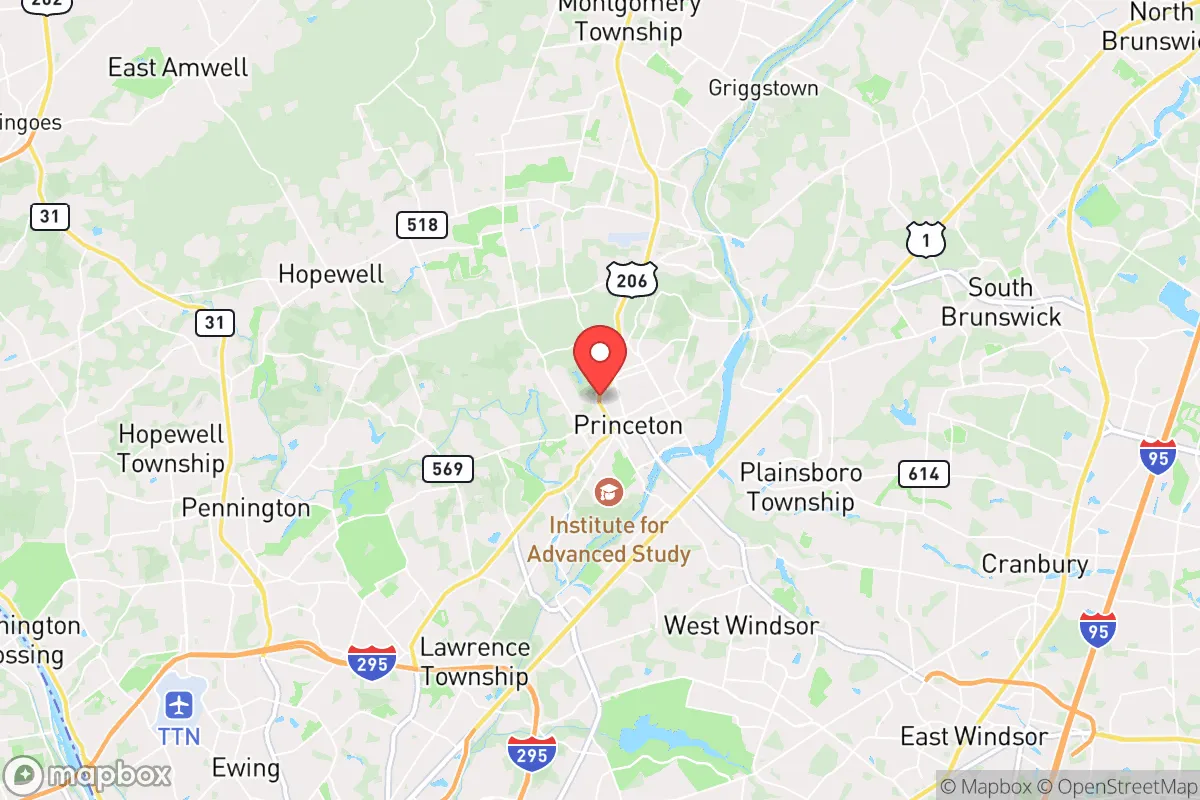
District shown is the primary district for this city’s centroid. Cities may span multiple districts.
Local Political AnalysisPolitical Analysis of Princeton, NJ
Look, I’ve lived in Princeton long enough to remember when this town was more about quiet, independent-minded folks than the political machine it’s become. Today, Princeton is a deep blue stronghold, with a Cook PVI of D+13—that’s more than double the statewide lean of New Jersey’s D+5. The shift hasn’t been subtle. Over the last decade, local elections have become a rubber stamp for progressive policies, and the old-school, live-and-let-live attitude has been replaced by a top-down approach that feels less like community consensus and more like government overreach.
How it compares
When you stack Princeton against the rest of New Jersey, the difference is stark. The state as a whole leans Democratic, but it’s a mixed bag—you’ve got reliably red towns like Montgomery and Hopewell just a few miles away, where people still push back on tax hikes and zoning mandates. In Princeton, though, the local council rarely meets a new regulation it doesn’t like. The D+13 PVI isn’t just a number; it reflects a voting bloc that consistently backs candidates who prioritize state-level directives over local control. For example, while New Jersey’s D+5 lean means some balance in statewide races, Princeton’s voters have become one-party affairs where dissenting voices are brushed aside. It’s a far cry from the days when you could disagree on taxes or development without being labeled a pariah.
What this means for residents
For anyone who values personal freedoms, the writing’s on the wall. The local government has embraced a “we know best” attitude that touches everything from property rights to school curriculum. Property taxes here are among the highest in the state, and instead of reining in spending, the council keeps adding layers of bureaucracy—think strict energy mandates and zoning rules that make it harder to run a small business or renovate your own home. The school board, too, has leaned into progressive ideology, pushing policies that prioritize social engineering over academic rigor. If you’re a parent who wants a say in what your kids are taught, you’ll find yourself on the losing side of most votes. The trajectory is clear: more regulations, less individual choice, and a growing disconnect between what residents want and what the political class delivers.
On the cultural front, Princeton’s identity has shifted from a college town with a healthy dose of skepticism toward authority to a place that actively celebrates government intervention. The university’s influence amplifies this, creating a bubble where progressive orthodoxy is the norm. Nearby towns like Lawrenceville and Kingston still retain a more balanced political vibe, but Princeton itself feels increasingly insular. If you’s. If you’re considering a move here, ask yourself: are you comfortable with a local government that sees its role as shaping your lifestyle rather than protecting your rights? For me, the answer’s getting harder to defend.

State Political ClimatePolitical Climate in New Jersey
State Political AnalysisPolitical Environment in the State
New Jersey is a solidly blue state with a Cook PVI of D+5, meaning it consistently votes Democratic by about five points more than the national average in presidential elections. The dominant coalition is a mix of urban progressives, suburban moderates, and powerful public-sector unions, but the state has been drifting leftward for the past two decades—a trend that accelerated after 2016. While the state was once a bellwether with competitive races, it now reliably delivers its 14 electoral votes to Democrats, and Republicans hold no statewide elected offices. For a conservative considering relocation, the political climate here is increasingly hostile to traditional values and personal freedoms, though there are pockets of resistance worth knowing about.
Urban vs. rural divide
The political map of New Jersey is a tale of two worlds. The northern and central urban corridor—Newark, Jersey City, Paterson, and Elizabeth—drives the state's blue lean, with these cities routinely delivering 70-80% of their votes to Democrats. These areas are dense, diverse, and heavily unionized, and they benefit from the state's generous social programs and progressive tax structure. In contrast, the rural and exurban regions—Sussex County, Warren County, and much of Salem and Cumberland counties—vote reliably Republican, often by 15-20 points. The suburbs are where the real battle happens: Bergen County (the state's most populous) has flipped from a swing county to a solidly Democratic one, while Ocean County remains a GOP stronghold thanks to its large retirement and law-enforcement populations. The divide is stark: drive 30 minutes west from Newark and you'll hit Hunterdon County, where Trump flags still fly on pickup trucks, but the state legislature is dominated by Republicans, and property taxes are among the highest in the nation—but at least you can own a gun without a permission slip.
Policy environment
New Jersey's policy environment is a textbook case of progressive governance that conservatives find suffocating. The state has the highest property taxes in the nation (averaging over $9,500 annually), a progressive income tax that tops out at 10.75% for earners over $1 million, and a sales tax of 6.625%. The regulatory posture is aggressive: the state has its own version of the EPA (the DEP) that routinely blocks development, and the Clean Energy Act of 2018 mandates a 100% clean energy grid by 2050, driving up utility costs. Education policy is dominated by the teachers' union (NJEA), which has successfully blocked school choice and charter expansion; the state spends over $25,000 per pupil, yet outcomes in urban districts remain abysmal. Healthcare is heavily regulated, with the state expanding Medicaid under Obamacare and imposing a mandate for paid sick leave. Election laws are among the most liberal: no-excuse mail-in voting was made permanent in 2020, and automatic voter registration is in place. For a conservative, this feels like a state where the government is in your wallet, your child's classroom, and your mailbox.
Trajectory & freedom
New Jersey is becoming less free by nearly any measure, and the trend has accelerated under Governor Phil Murphy. On gun rights, the state already had some of the strictest laws in the nation, but in 2022 it passed a "sensitive places" law that effectively bans carry in most public spaces, and the Gun Safety Act of 2023 requires a permit to purchase ammunition. On parental rights, the state passed a law in 2022 that prohibits schools from notifying parents if a child changes their gender identity or pronouns—a direct assault on family autonomy. On speech, the state's Anti-Bullying Bill of Rights Act has been used to punish students for expressing religious or political views deemed "harassing." On medical autonomy, New Jersey legalized assisted suicide in 2019 and has no parental consent requirement for minors seeking abortions. Property rights are under constant threat from the state's Mount Laurel Doctrine, which forces towns to build affordable housing, often overriding local zoning. The only area where freedom has expanded is marijuana: recreational use was legalized in 2021, but the state then imposed a 6.625% sales tax plus local taxes, making it a revenue grab, not a liberty expansion.
Civil unrest & political movements
New Jersey has seen its share of political flashpoints. In 2020, Black Lives Matter protests in Newark and Trenton turned violent, with looting and fires, and the state's Democratic leadership largely defended the unrest. The sanctuary state status—codified by the 2018 "Immigrant Trust Directive"—means local police cannot cooperate with ICE, and the state has become a magnet for illegal immigration, straining schools and hospitals in cities like Paterson and Elizabeth. On the right, the New Jersey Second Amendment Society has been active in lawsuits against the state's gun laws, and the Garden State Equality group pushes hard on LGBTQ+ issues. Election integrity is a hot topic: the 2020 election saw widespread use of mail-in ballots without signature verification, and the state's Vote by Mail Law (2020) made it permanent. A new resident will notice the political activism is personal here—bumper stickers, yard signs, and local Facebook groups are constantly arguing about taxes, schools, and the governor's latest mandate.
Projection
Over the next 5-10 years, New Jersey will likely become more blue and less free. The demographic trends are clear: the state's population is aging and declining, but the growth is concentrated in the urban core and among immigrant communities who lean Democratic. The suburbs are trending left as well, driven by college-educated professionals moving from New York City. The state's fiscal situation is precarious—pension liabilities exceed $200 billion—which will likely lead to even higher taxes. For a conservative moving in now, expect to see more gun restrictions, more parental rights erosion, and more state control over local zoning and education. The only countervailing trend is the exodus of high-earners to Florida and Texas, which could eventually force a tax revolt, but don't hold your breath. In a decade, New Jersey will look like a smaller, denser version of California: progressive, expensive, and increasingly unaffordable for anyone who values personal freedom.
For a conservative considering New Jersey, the bottom line is this: you can find your tribe in places like Ocean County, Sussex County, or Hunterdon County, but you'll be fighting a losing battle at the state level. The taxes will eat your paycheck, the schools will teach your kids values you don't share, and the government will treat your gun ownership as a privilege, not a right. If you're moving here for a job in New York or Philadelphia, be prepared to pay a steep price in both money and liberty. If you value freedom, look west—or south. New Jersey is a beautiful state with great beaches and good schools, but it's a state that has chosen a path that leaves conservatives behind.
* Values derived from national, state, county, city and local statistics and may differ in a specific area. Last updated: 2026-05-18T00:17:49.000Z
Narrative content on this page is AI-generated and may contain mistakes. Verify any details that matter before acting on them.
ReloMaps may earn a commission from affiliate links at no extra cost to you.

