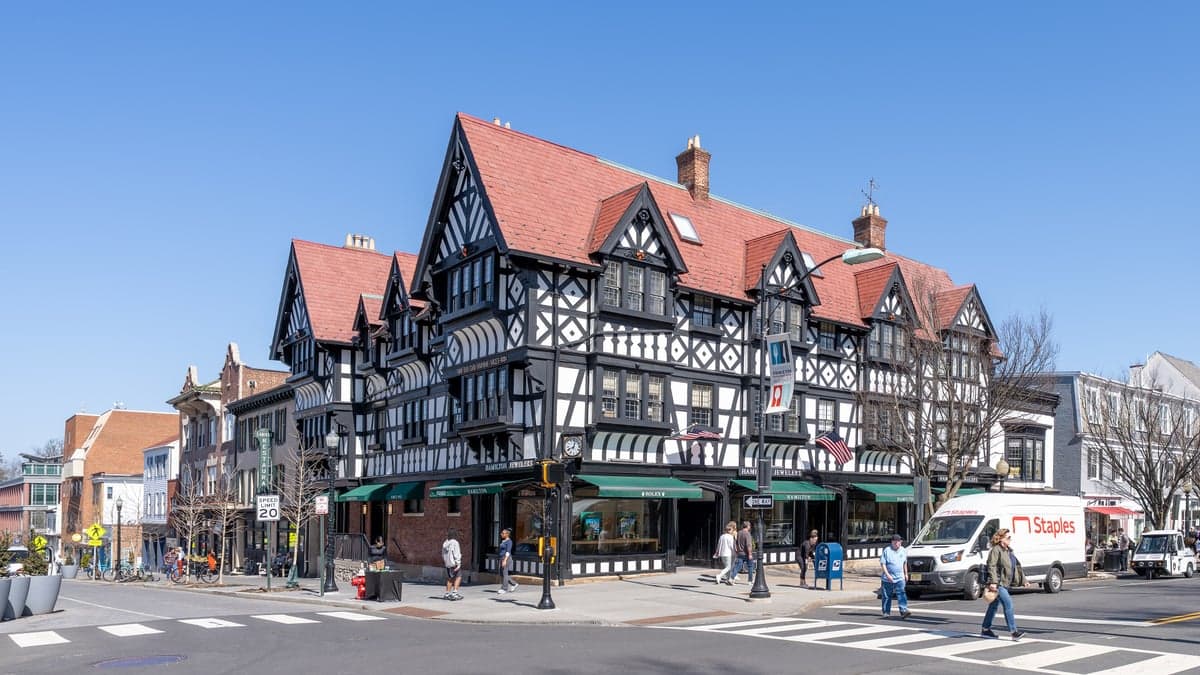
Photo: Wikipedia
Strategic Assessment of Princeton, NJ
Multiple tactical vulnerabilities. Population density, target proximity, or disaster risk are likely compounding. A retreat property and exit planning is required.
What does the Strategic Assessment tell us?
Our Strategic Assessment grades tactical survivability of an area. Major population centers, military targets, fallout zones, natural disasters, and border exposure all drive risk — lower exposure means a more defensible position in a crisis.
This is heavily inspired by Joel Skousen's Strategic Relocation book. Highly recommended you checkout the book ($)What does this tell us?
Our Strategic Assessment grades tactical survivability of an area. Major population centers, military targets, fallout zones, natural disasters, and border exposure all drive risk — lower exposure means a more defensible position in a crisis.
This is heavily inspired by Joel Skousen's Strategic Relocation book. Highly recommended you checkout the book ($)Strategic Pillars

Key Distances
Regional Safe Places
Below is our recommended "safe zones" in New Jersey and the surrounding area based on our strategic heuristics. For most people, it's unrealistic to live in a “safe zone” full-time due to work, family or other personal reasons. They tend to be more rural. However, many of these areas are perfect for second homes and retreat properties that double as a vacation home or even a short-term rental.
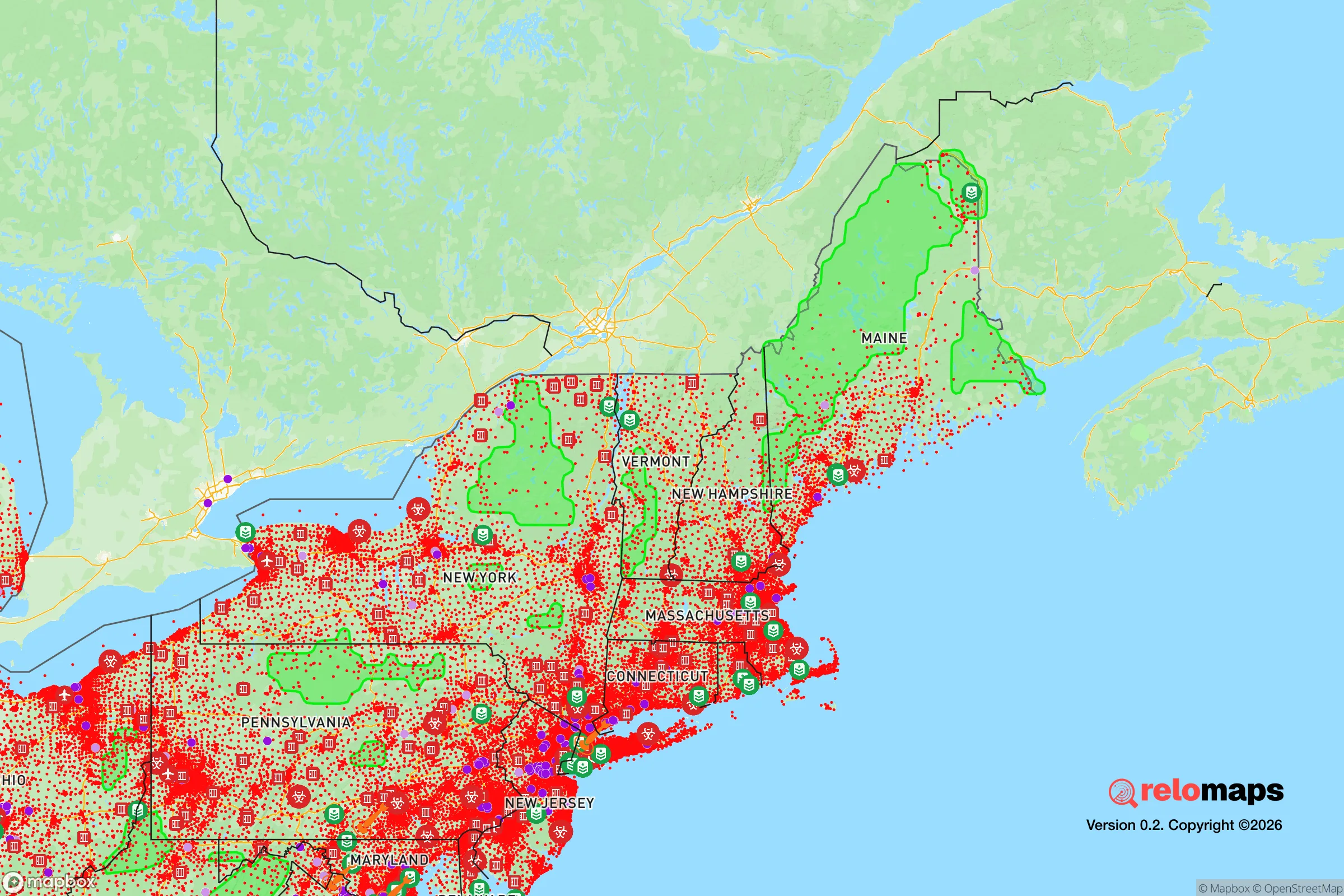
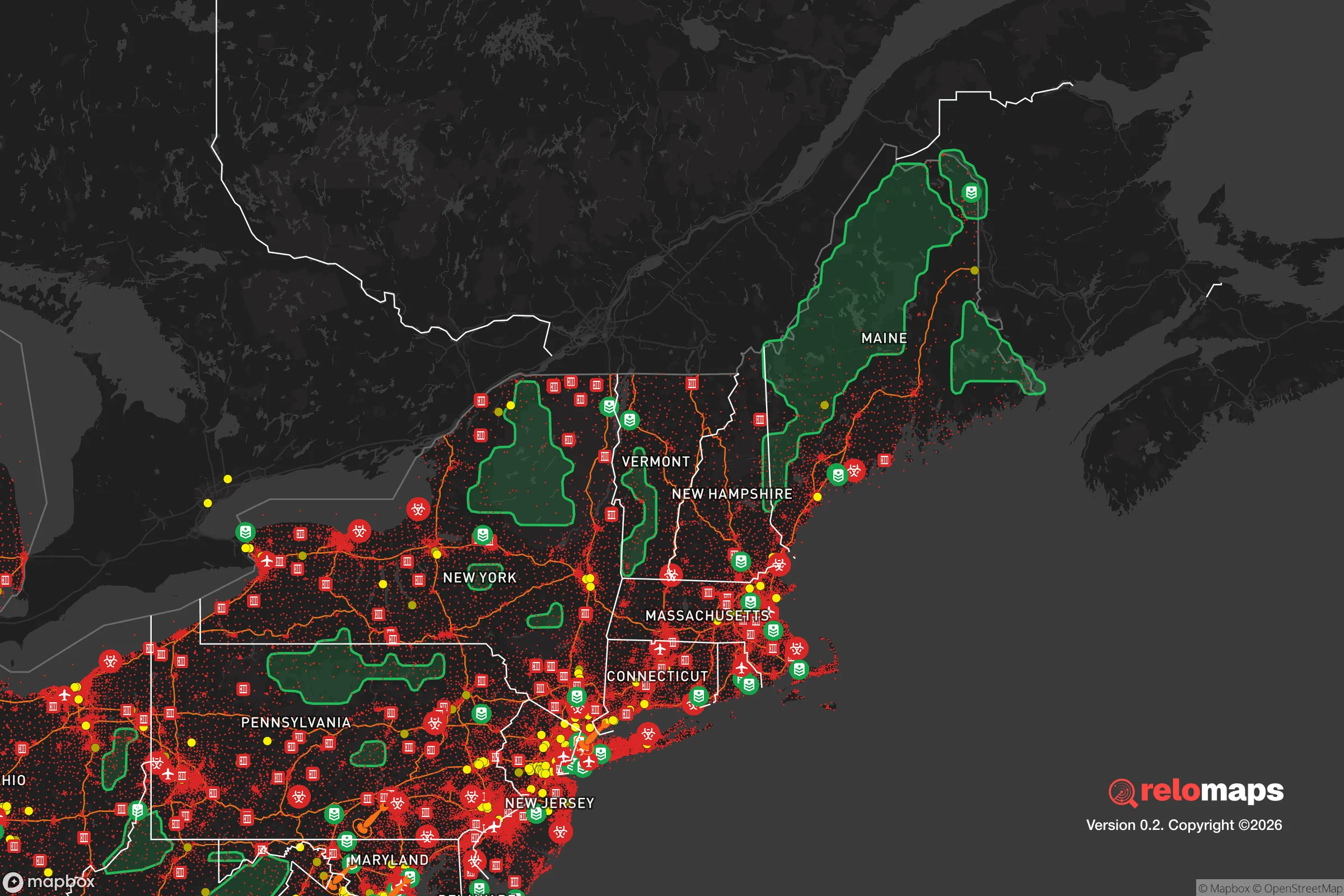


Important Note: For informational purposes only. This does not mean nothing bad ever happens in the green zones. Please use common sense. This is based on public data and modeled with AI. We tried to take a conservative approach but mistakes happen. We update this regularly as new information becomes available.
Solar Generator Recommendations
Backup power matters more here than in safer locations. We've picked three solar generators across budgets and capacity tiers — start with the budget unit if you only need a few essentials, or step up if you want to run a fridge and HVAC for days at a time.

Jackery Portable Power Station Explorer 300
Budget OptionPower on the Go: Weighing only 11 lbs, it's convenient to set up and store with book-sized foldable solar panels

BLUETTI Portable Power Station AC180
Designed for both indoor and outdoor scenarios, AC180 is highly capable as it has a robost capacity and continuous output power.

EF ECOFLOW DELTA Pro Ultra Power Station
Upgraded PickEcoFlow DELTA Pro Ultra is a whole-home energy system designed to grow with your family. Integrated with the Smart Home Panel 2, it scales to meet your evolving energy needs — keeping your home powered, intelligent, and secure through every stage of life.
We earn a commission, at no additional cost to you.
Strategic Assessment Analysis
Princeton, New Jersey, presents a complex strategic picture for the conservative prepper. On one hand, its deep academic and institutional roots provide a veneer of stability and a concentration of medical and logistical resources. On the other, its location in the dense Northeast Corridor and its overwhelmingly progressive political culture create significant vulnerabilities for those prioritizing long-term resilience and self-sufficiency. The town’s historic wealth and infrastructure are a double-edged sword: they offer immediate advantages but also make it a high-value target during any widespread disruption.
Geographic position and natural advantages for long-term survival
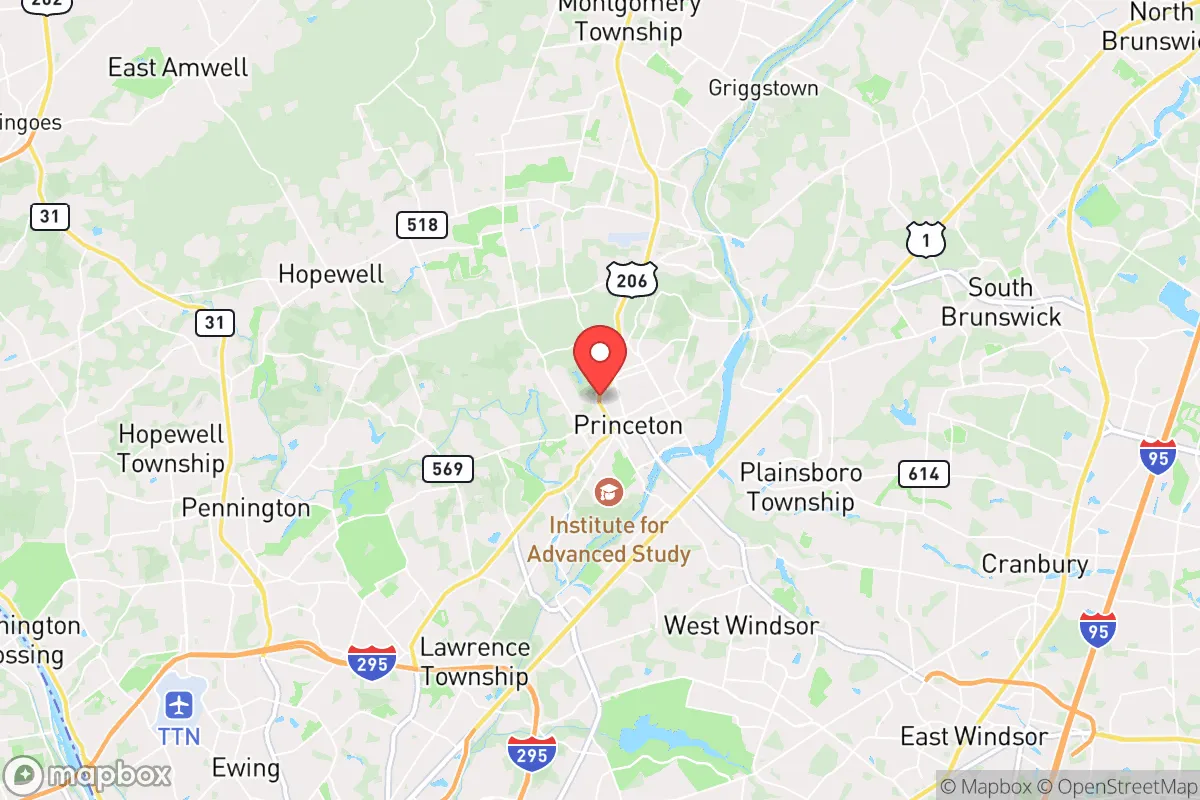
Princeton sits in a relatively favorable natural pocket within central New Jersey, roughly equidistant from New York City (45 miles northeast) and Philadelphia (40 miles southwest). This location offers a mix of suburban density and access to the surrounding farmland of Mercer and Somerset counties. The area is not prone to major natural disasters like hurricanes or earthquakes, though nor’easters and occasional flooding from the nearby Millstone River and Lake Carnegie are real concerns. The primary geographic advantage is the presence of the Stony Brook-Millstone Watershed, which provides a significant local water source and some degree of natural buffer. However, the town’s position within the most densely populated state in the union means that any large-scale evacuation or collapse scenario would be complicated by the sheer number of people funneling through the same limited road networks—primarily Route 1, US-206, and I-295. For a relocator, the key takeaway is that while the immediate environment is not hostile, the surrounding region is a pressure cooker of population density that could become a liability.
Risks, exposures, and proximity to fallout-relevant landmarks
The most significant strategic liability for Princeton is its proximity to multiple high-value, high-risk targets. The town is home to the Princeton Plasma Physics Laboratory (PPPL), a major U.S. Department of Energy research facility. While not a nuclear power plant, its research into fusion energy and its federal designation make it a potential target for sabotage or collateral damage during a conflict. More broadly, the town lies within the fallout shadow of several potential targets: the Philadelphia Naval Shipyard, the Newark Liberty International Airport (a major cargo and military transit hub), and the Linden Generating Station (a large fossil-fuel power plant). In a mass casualty event or EMP scenario, Princeton’s reliance on the regional power grid and its dense, interconnected population would be a severe weakness. The town’s own infrastructure—including the university’s research reactors and chemical storage—adds a layer of local risk. For the prepper, the calculus is clear: you are living in a potential blast or fallout zone, not a remote redoubt.
Practical resilience for a relocator: food, water, energy, and defensibility
When assessing day-to-day survival capabilities, Princeton scores poorly on self-sufficiency. The town is almost entirely dependent on the regional food supply chain, with most residents relying on supermarkets like Whole Foods, McCaffrey’s, and Wegmans. Local agriculture exists in the surrounding townships (e.g., Hopewell, Montgomery), but the town itself has minimal arable land for personal gardening. Water is sourced from the Elizabethtown Water Company and local wells, but a grid-down scenario would quickly strain these systems. Energy is similarly fragile: the town is served by PSE&G, and while there are some backup generators at the university and hospital, the average home is not equipped for off-grid living. Defensibility is the weakest point. Princeton is a compact, walkable town with a dense street grid, but it is surrounded by suburban sprawl and major highways. There are few natural chokepoints or defensible positions. The presence of a large, transient student population and a politically active, often progressive, community means that during civil unrest, the town could become a flashpoint rather than a sanctuary. For a conservative relocator, the social and political environment is a liability: local governance is overwhelmingly Democratic, and the culture is hostile to firearms ownership, prepping, and self-reliance as a lifestyle. New Jersey’s strict gun laws strict gun laws, high taxes, and heavy regulation further complicate any attempt to build a resilient homestead.
In the final strategic assessment, Princeton offers a high baseline of institutional resources—world-class medical care at Penn Medicine Princeton Medical Center, a robust local police force, and a wealthy tax base that can absorb short-term shocks. However, for the prepper focused on long-term survival, civic unrest, and mass casualty events, the negatives outweigh the positives. The town’s location in the Northeast Corridor, its proximity to multiple high-value targets, its dependence on fragile supply chains, and its politically hostile environment for self-reliance make it a poor choice for a strategic relocation. It is a place to visit for its history and culture, but not a place to hunker down when the world goes sideways. The prudent conservative relocator would look further west or south, where population density drops, gun laws are friendlier, and the land offers more room to breathe and defend.

* Values derived from national, state, county, city and local statistics and may differ in a specific area. Last updated: 2026-05-18T00:17:49.000Z
Narrative content on this page is AI-generated and may contain mistakes. Verify any details that matter before acting on them.
ReloMaps may earn a commission from affiliate links at no extra cost to you.

