Photo: Wikipedia
Quality of Life in Princeton, NJ
Above-average quality of iife. The area offers a reasonable cost of living, decent mobility, and a mix of neighborhood amenities.
What does Quality of Life tell us?
Quality of Life blends cost of living, nearby amenities, socioeconomic signals, and neighborhood character. City-level scores represent the whole municipality; individual neighborhoods can differ.
What does this tell us?
Quality of Life blends cost of living, nearby amenities, socioeconomic signals, and neighborhood character. City-level scores represent the whole municipality; individual neighborhoods can differ.
Cost of Living
174% above national average
The Real Cost of Living in Princeton, NJ for 2026
| Tier | Individual | Family (4) |
|---|---|---|
| Survival | $39k | $73k |
| Comfortable | $202k | $297k |
| Luxury | $333k+ | $516k+ |
| Elite (Top 5%) | $506k+ | $784k+ |
62%
The Area Signal
A metric tracking the socioeconomic signals of the area.
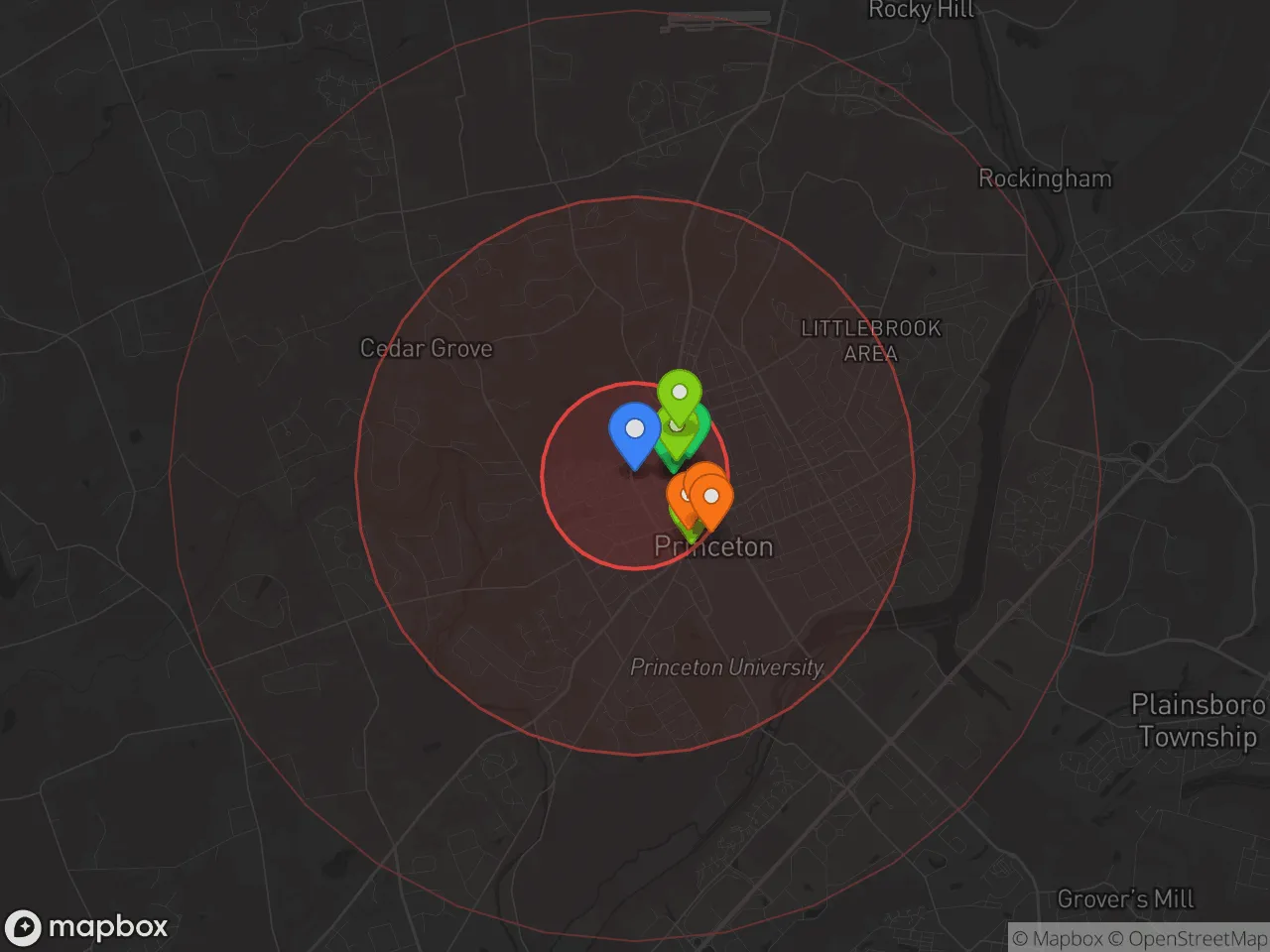
Hobbies
Explore the areaGroceries
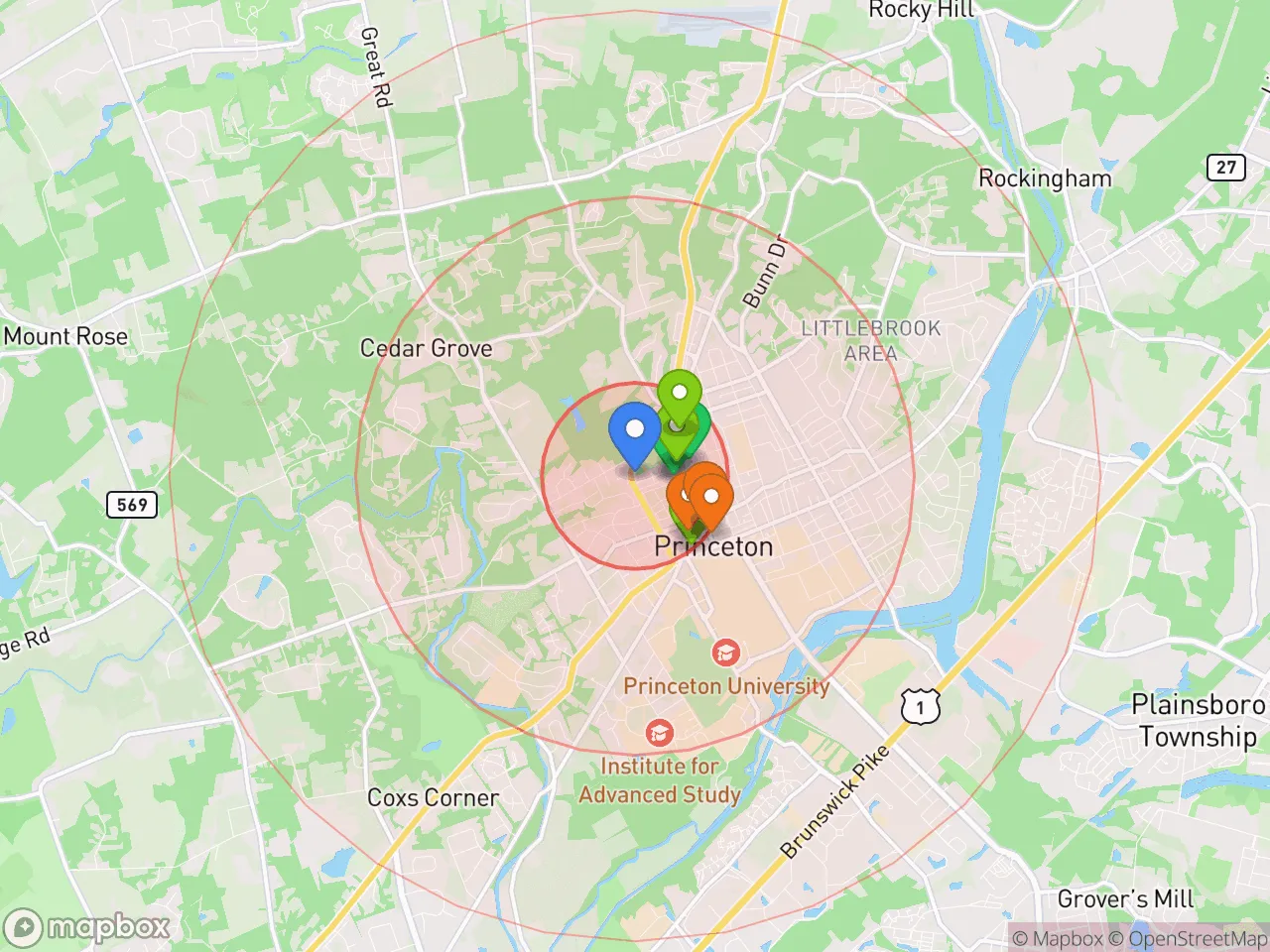
7 within 10 miles
Gas
20 within 10 miles
Hospital
18 within 20 miles
Airport
EWR — Newark Liberty International
Post Office
USPS — Princeton, NJ
Critical Amenities
Quality-of-Life Analysis
Princeton, New Jersey, is one of the most affluent and educated small cities in the United States, with a cost of living index of 274 (more than 2.7 times the national average) that reflects its concentration of high-income professionals, academics, and executives. The city is dominated by Princeton University and a dense cluster of pharmaceutical and biotech research firms, drawing a population where the median household income exceeds $130,000 and over 80% of adults hold a bachelor's degree or higher. This creates a community that is intellectually driven, politically progressive, and highly focused on education, culture, and quality public services, but it also means that affordability is a significant barrier for most newcomers.
Cost of living, housing, and how Princeton compares to nearby towns
Princeton's cost of living is among the highest in New Jersey, driven almost entirely by housing. The median home value sits at $1,040,400, and the median monthly rent is $2,448 — figures that are roughly double the national median and significantly higher than neighboring communities like Lawrenceville (median home value ~$450,000) or Plainsboro (~$520,000). Compared to other wealthy Mercer County suburbs, Princeton is notably pricier than Hopewell Borough (median ~$650,000) but slightly below the most exclusive enclaves like Montgomery Township (~$1.1 million). The average commute time of 24 minutes is shorter than the New Jersey average of 30 minutes, reflecting the large share of residents who work locally at the university, the Institute for Advanced Study, or corporate campuses such as Bristol Myers Squibb and Novo Nordisk. For renters, the $2,448 median is about 40% higher than the national median, and competition for units under $2,000 is fierce, with vacancy rates below 3%.
What daily life is like: amenities, schools, and community rhythm
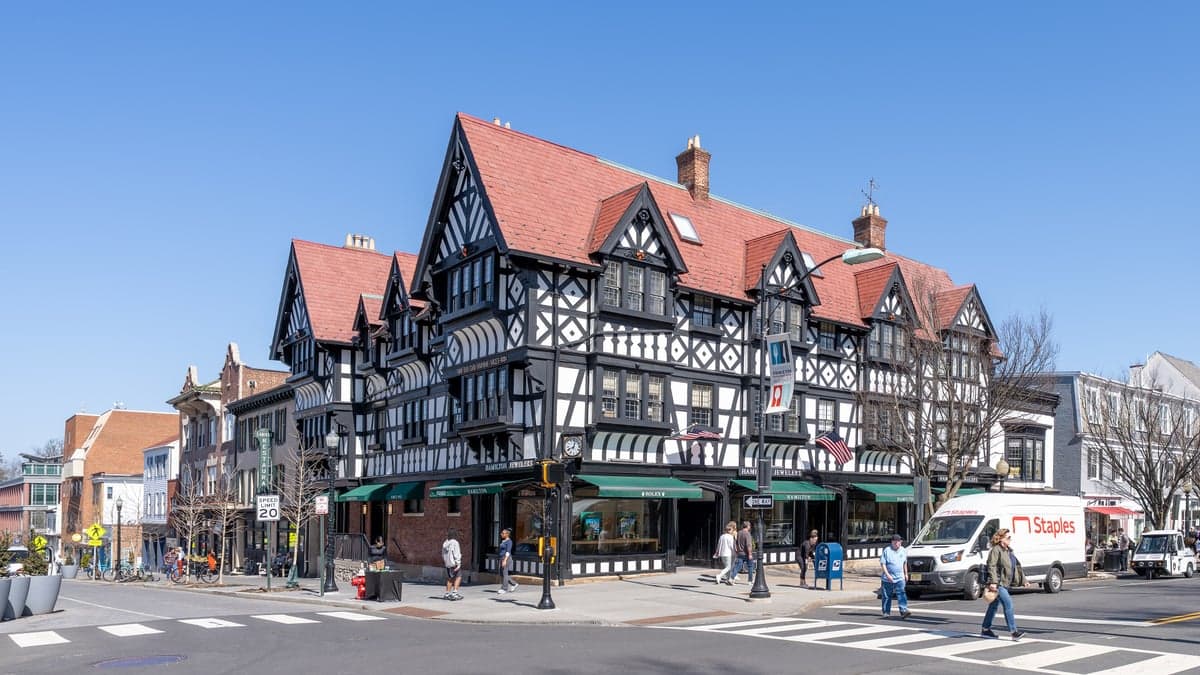
Daily life in Princeton revolves around a walkable downtown centered on Nassau Street, which is lined with independent bookstores (Labyrinth Books), farm-to-table restaurants (Agricola, Mistral), and cultural venues like the McCarter Theatre Center and the Princeton University Art Museum. The Princeton Public Schools system is consistently ranked among the top 10 in New Jersey, with John Witherspoon Middle School and Princeton High School both earning Blue Ribbon designations and sending over 90% of graduates to four-year colleges. The community rhythm is shaped by the academic calendar — summers are noticeably quieter as university students depart, while fall brings a surge of lectures, concerts, and football games at Princeton Stadium. Outdoor amenities include the 600-acre Institute Woods for hiking, Lake Carnegie for rowing and kayaking, and the D&R Canal Towpath for cycling. The city also has a robust farmers' market on Saturdays and a strong network of parent-teacher organizations and neighborhood associations that drive local events like the Princeton Festival and Communiversity Day.
Princeton is best suited for families and professionals who prioritize elite public schools, a vibrant intellectual and cultural scene, and a walkable, historic downtown — and who have the financial resources to afford the premium. It is less ideal for young singles on a budget, retirees seeking low property taxes (the effective rate is about 2.1%, above the national average), or anyone who needs a short commute to New York City (the train to Penn Station takes roughly 75 minutes). For those who can absorb the housing costs, Princeton offers a quality of life that combines small-town safety and community engagement with big-city cultural amenities, all within a compact, pedestrian-friendly setting.

Crime in Princeton, NJ
Lower crime rates than 81% of comparable U.S. locations.
Violent CrimeViolent Crime Analysis
Property CrimeProperty Crime Analysis
Crime Analysis
Princeton, New Jersey, presents a safety profile that is statistically mixed but contextually concerning when viewed through the lens of its progressive judicial environment. The town’s violent crime rate of 156.7 incidents per 100,000 residents is notably lower than the national average, yet its property crime rate of 1,048.2 per 100,000 sits significantly above the national benchmark. These numbers, however, do not tell the full story; the real risk for residents and businesses is amplified by a local justice system that prioritizes offender rehabilitation over public safety, a common pattern in liberal-leaning jurisdictions near major metro areas.
Crime in context
Princeton’s violent crime rate is roughly half the U.S. average, placing it among safer communities for personal safety. However, its property crime rate is approximately 30% higher than the national rate of roughly 800 per 100,000. This disparity is typical of affluent college towns where opportunistic theft—bicycle theft, package theft, and vehicle break-ins—is prevalent. More troubling is the broader regional context: as part of the New York-Newark-Jersey City metro area, Princeton is subject to the policies of Mercer County’s progressive district attorney and judges who have adopted bail reform and diversion programs that reduce incarceration for repeat property offenders. This directly contributes to a revolving-door effect where known criminals are quickly returned to the streets, undermining deterrence and increasing the likelihood of victimization for residents and local businesses.
What residents experience
Daily life in Princeton is shaped by a low risk of violent confrontation but a persistent, low-grade threat to property. Residents commonly report porch piracy, car break-ins (especially near the university and train station), and occasional residential burglaries. The Princeton Police Department is well-funded and responsive, but its effectiveness is hamstrung by a court system that routinely releases non-violent offenders on summons rather than holding them in custody. For example, a 2024 report from the Mercer County Prosecutor’s Office showed that over 60% of property crime arrestees were released pre-trial, with many re-offending within weeks. This creates a frustrating cycle for victims, who see little justice and face repeat losses. The presence of Princeton University’s campus safety force helps patrol the core, but the surrounding residential neighborhoods and commercial corridors remain vulnerable.
Neighborhood-level variation is significant. The wealthier, more isolated enclaves near the Institute for Advanced Study and the Western Section (around Herrontown Road) experience the lowest crime rates, benefiting from low density and private security. In contrast, the downtown area near Nassau Street and the Witherspoon-Jackson neighborhood—closer to transit hubs and rental housing—see the highest concentration of property crimes. The Princeton Shopping Center and the Route 1 corridor are particular experience frequent vehicle thefts and shoplifting. For families and retirees considering relocation, the key takeaway is that while violent crime is rare, the combination of a high property crime rate and a lenient justice system means that preventive measures—such as security cameras, alarm systems, and comprehensive insurance—are not optional but essential for a safe and secure experience in Princeton.
* Values derived from national, state, county, city and local statistics and may differ in a specific area. Last updated: 2026-05-18T00:17:49.000Z
Narrative content on this page is AI-generated and may contain mistakes. Verify any details that matter before acting on them.
ReloMaps may earn a commission from affiliate links at no extra cost to you.

