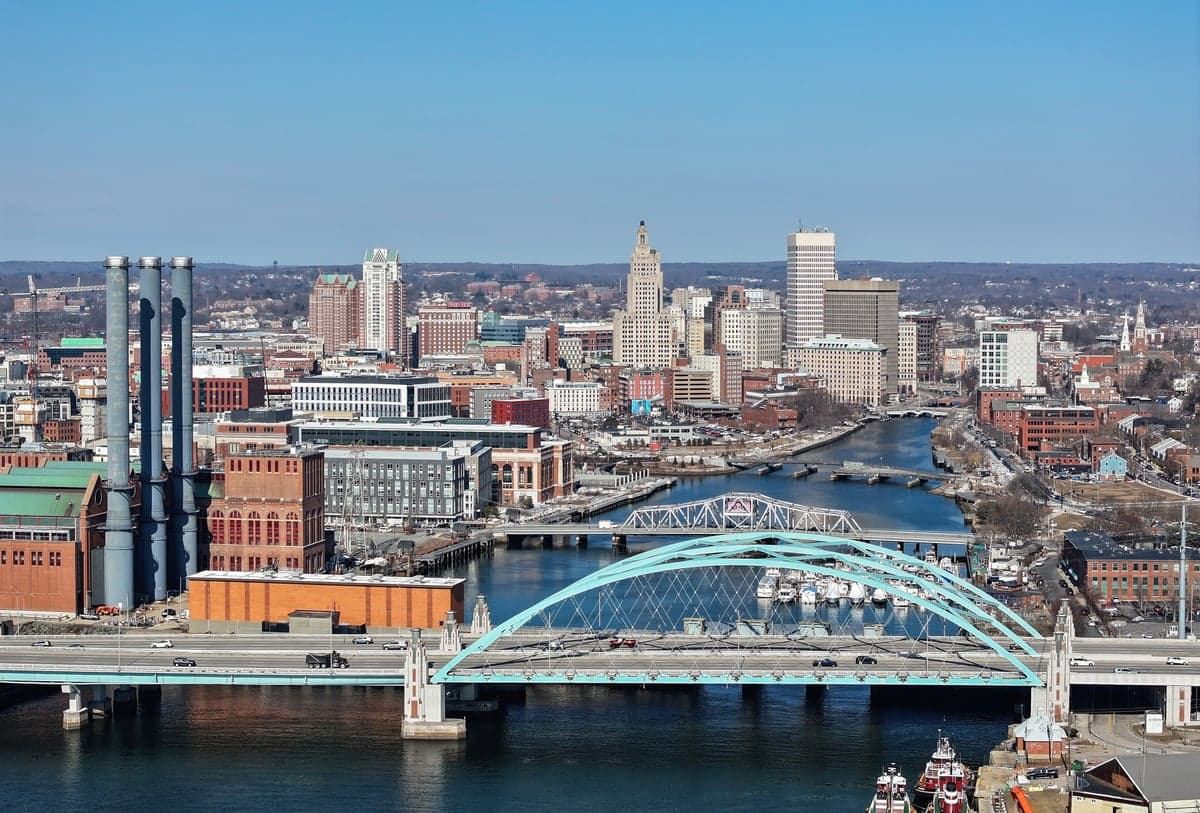
Photo: Wikipedia
Personal Sovereignty in Providence, RI
Viable for self-reliance. Generally workable, though some barriers may limit total independence.
What does Personal Sovereignty tell us?
Personal Sovereignty measures your capacity for self-reliance and independence with minimal government friction. Higher scores mean fewer barriers between you and the way you want to live... but it assumes you have the space you need and good neighbors.
What does this tell us?
Personal Sovereignty measures your capacity for self-reliance and independence with minimal government friction. Higher scores mean fewer barriers between you and the way you want to live... but it assumes you have the space you need and good neighbors.
State Policy
Energy independence: Importer (1% of energy produced in-state)
Personal Liberty
Homesteading

Personal Liberty Analysis
Providence, Rhode Island, presents a challenging environment for personal sovereignty, particularly for those with a survivalist or prepper mindset who prioritize autonomy from government overreach. The state’s dense urban core and deep-blue political culture create a regulatory landscape that systematically limits individual freedoms in areas like self-defense, property use, and medical choice. While the city offers some cultural and economic advantages, anyone serious about self-reliance should view Providence as a place where personal sovereignty is heavily constrained by state and municipal authority, requiring careful navigation of restrictive laws and high costs.
Tax burden and regulatory posture: how state policy affects your autonomy
Rhode Island’s tax and regulatory environment is among the most burdensome in the nation, directly undermining financial independence. The state’s combined state and local tax burden ranks in the top five nationally, with property taxes in Providence averaging around 1.8% of assessed value—among the highest in New England. Income taxes are progressive, with a top marginal rate of 5.99% on income over $155,050, and the state taxes Social Security benefits for higher earners, a policy that hits retirees and those building long-term savings. Sales tax is 7%, applied broadly, including to many preparedness supplies. Business regulations are dense: starting a home-based enterprise or cottage food operation requires multiple permits and inspections, and zoning laws in most residential areas prohibit activities like vehicle repair, small-scale manufacturing, or keeping livestock. The state’s energy costs are among the highest in the continental U.S., driven by mandates for renewable energy and grid reliability fees, which adds a recurring cost to any off-grid or backup power setup. For a prepper, this means every dollar earned is taxed heavily, and every attempt to become more self-sufficient—whether through a side business or alternative energy—faces bureaucratic hurdles and high fees.
Self-defense and gun law specifics: what you can and cannot do in Providence
Rhode Island’s gun laws are restrictive, and Providence adds its own layer of local control that further limits self-defense options. The state requires a purchase permit or license to carry for any handgun, with a mandatory 7-day waiting period. The “safe storage” law mandates that firearms be locked in a secure container or with a trigger lock when not in use, even inside your home—a provision that can delay access in a self-defense scenario. Providence itself has a municipal ordinance requiring all firearms to be registered with the police department, a process that includes a background check and a $40 fee per firearm. The state’s “red flag” law allows law enforcement or family members to petition for the temporary removal of firearms based on vague “extreme risk” criteria, without a criminal conviction. Open carry is effectively banned in urban areas, and concealed carry permits are issued at the discretion of the local police chief or the state attorney general, with no “shall issue” guarantee. Magazine capacity is limited to 10 rounds for long guns and 10 rounds for handguns. For a survivalist, these laws mean that building a robust personal armory is legally difficult, and the ability to defend your home or property in a crisis is constrained by bureaucratic approval processes and storage mandates that prioritize government control over individual readiness.
Self-reliance and homesteading viability: lot sizes, zoning, and off-grid feasibility
Providence’s urban density and zoning codes make traditional homesteading or off-grid living nearly impossible within city limits. The typical residential lot size in the city is less than 5,000 square feet, with many homes on tiny plots or in multi-unit buildings. Zoning ordinances prohibit keeping chickens, goats, or bees in most residential zones, and any agricultural activity requires a special permit that is rarely granted. Rainwater collection is legal but limited to 100 gallons per property without a permit, and composting toilets are not allowed in homes connected to the municipal sewer system. Solar panel installation is permitted but subject to historic district review in many neighborhoods, and battery storage for off-grid systems must meet fire code requirements that add significant cost. The city’s building codes are strict, requiring permits for any structural change, including sheds, fences over 4 feet, and even certain types of gardening structures. For a prepper seeking self-reliance, the practical reality is that you cannot grow a meaningful portion of your own food, store significant water, or generate your own power without running afoul of city regulations. The viable alternative is to look at rural areas in neighboring towns like Scituate or Foster, where lot sizes of 1-5 acres are common and zoning is more permissive, but that requires a commute and still subjects you to state-level restrictions.
Personal liberties: parental rights, medical autonomy, speech, and property
Rhode Island’s legal framework consistently prioritizes state authority over individual and parental rights. On parental rights, the state has a broad “mandatory reporter” law that requires any adult to report suspected child abuse or neglect, with vague definitions that have been used to investigate parents for homeschooling choices or medical decisions. The state’s vaccine mandates for school attendance are among the strictest in the country, with no philosophical exemption and a narrow religious exemption that requires documentation from a clergy member. Medical autonomy is further limited by the state’s COVID-era emergency powers, which remain on the books and allow the governor to mandate treatments or restrict access to unapproved therapies. On speech, while First Amendment protections apply, Providence has a “disorderly conduct” ordinance that has been used to arrest individuals for loud or profane speech in public, and the state’s hate crime laws enhance penalties for speech deemed to target protected groups. Property rights are constrained by the state’s “public trust” doctrine, which gives the government broad authority to regulate land use for environmental or “community benefit” purposes, and by a strong eminent domain precedent that allows the city to seize property for private development if it serves a “public purpose.” For a conservative-leaning individual, these policies create an environment where your authority over your own children, your own body, your own speech, and your own land is constantly subject to state override.
Overall, Providence ranks among the least sovereign urban areas in the Northeast for those prioritizing personal autonomy. The combination of high taxes, restrictive gun laws, dense zoning that blocks homesteading, and a legal culture that subordinates individual rights to state authority makes it a poor fit for a survivalist or prepper mindset. While the city offers cultural amenities and a walkable urban core, those benefits come at the cost of constant government oversight and limited room for self-reliance. For relocation, the strategic move is to either accept these constraints and build a low-profile, compliant lifestyle within the city, or to look to more rural parts of Rhode Island—or neighboring states like New Hampshire—where tax burdens are lower, gun laws are more permissive, and zoning allows for genuine self-sufficiency. In the current national climate, Providence is a place where personal sovereignty is something you have to fight for, not something the system respects by default.

* Values derived from national, state, county, city and local statistics and may differ in a specific area. Last updated: 2026-04-30T04:53:38.000Z
Narrative content on this page is AI-generated and may contain mistakes. Verify any details that matter before acting on them.
ReloMaps may earn a commission from affiliate links at no extra cost to you.

