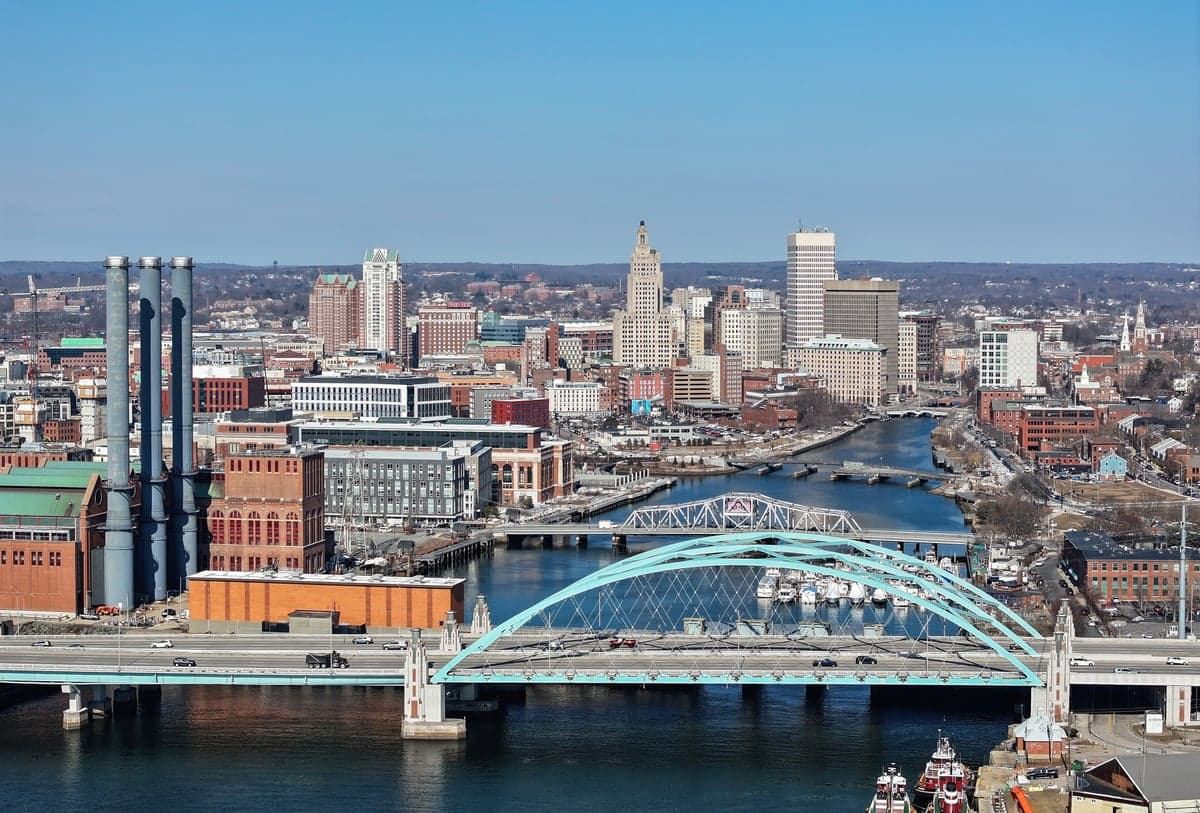
Photo: Wikipedia
Political ClimatePolitical Climate in Providence, RI
District shown is the primary district for this city’s centroid. Cities may span multiple districts.
Local Political AnalysisPolitical Analysis of Providence, RI
Providence has been a deep blue stronghold for decades, and it’s only getting bluer. The city’s Cook PVI of D+4 actually understates the reality on the ground—Providence routinely delivers 70-80% of its vote to Democratic candidates, and the local machine has a tight grip on everything from zoning to school policy. If you’re coming from a more balanced or conservative area, you’ll notice the difference immediately: the city council, the mayor’s office, and the state delegation all march in lockstep on progressive priorities. It wasn’t always this way—I remember when the city had a more moderate, working-class Democratic tradition that at least listened to small business owners and homeowners. Now, it feels like the pendulum has swung hard, and there’s little appetite for dissent.
How it compares
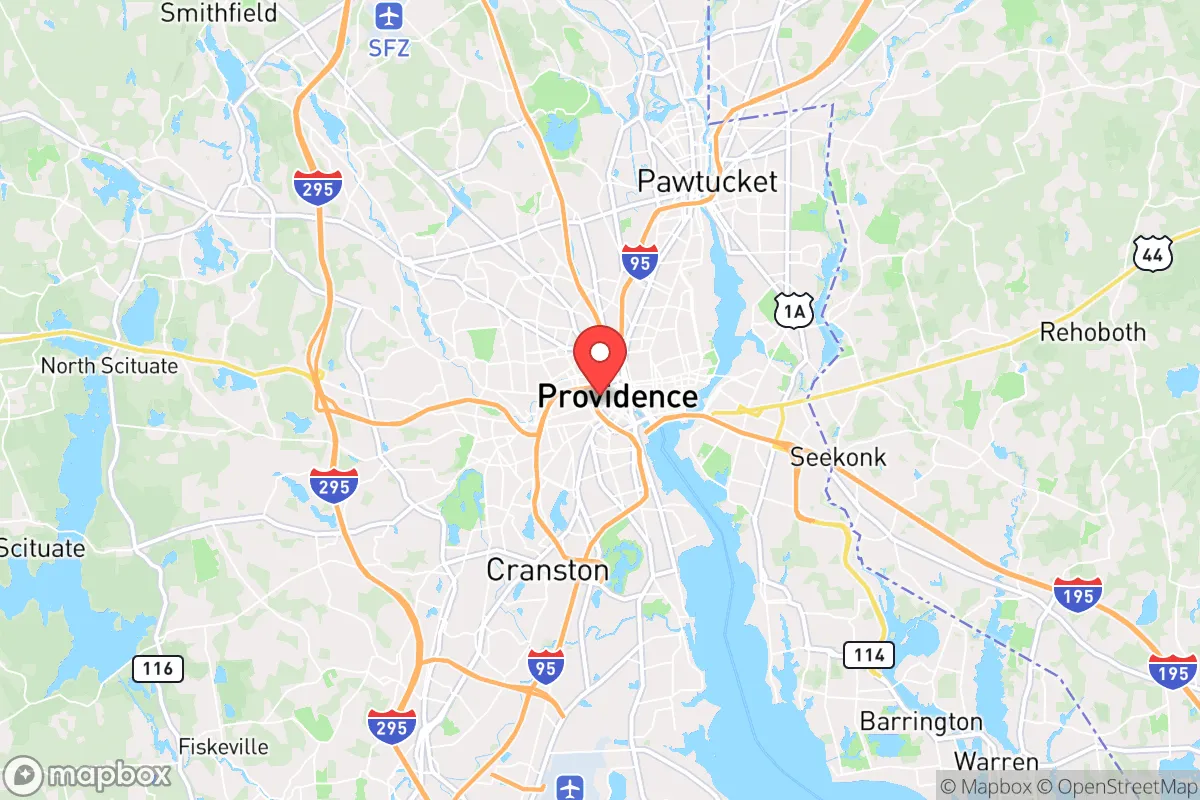
Drive 15 minutes west to Cranston or Warwick, and you’ll find a completely different political atmosphere. Those suburbs still lean Democratic, but they’re far more pragmatic—tax rates are lower, zoning is friendlier to single-family homes, and the local governments are less eager to experiment with social policy. Head north to East Providence or Pawtucket, and you’ll see a similar pattern: blue-collar towns that vote Democrat but push back on the kind of aggressive progressive agenda that Providence’s leadership champions. The contrast is starkest in the state legislature: Providence’s delegation often drives bills on rent control, sanctuary city policies, and police reform that the rest of the state’s representatives view with skepticism. If you value local control and limited government, the suburbs offer a much better fit than the city proper.
What this means for residents
For everyday life, the political climate translates into higher taxes, more regulations, and a growing sense that the city government sees itself as a social engineering project rather than a service provider. Property taxes in Providence are among the highest in Rhode Island, and the city has been aggressive about implementing new fees—on trash collection, on parking, on short-term rentals. The school system is a particular sore point: the mayor-appointed school board has pushed curriculum changes and discipline policies that many parents feel prioritize ideology over academics. If you’re a small business owner, you’ll face a thicket of licensing requirements, paid leave mandates, and minimum wage hikes that make it hard to compete with suburban competitors. The city’s leadership is responsive to activist groups, not to the quiet majority of residents who just want safe streets and efficient services.
One cultural distinction that catches newcomers off guard is the city’s approach to public space and public behavior. Providence has decriminalized many low-level offenses and adopted a “housing first” model that prioritizes shelter over enforcement. The result is visible homelessness downtown and near the State House, with fewer police resources dedicated to quality-of-life issues like public intoxication, open drug use, or aggressive panhandling. The city also has a strong tenant-rights ordinance that makes evictions difficult even for nonpayment, which landlords say discourages investment in rental properties. If you’re used to a city that balances compassion with order, Providence’s current trajectory may feel like it’s leaning too far toward permissiveness. Longtime residents will tell you the city has lost some of its old character—the tight-knit neighborhoods, the sense of mutual responsibility—in exchange for a top-down progressive vision that doesn’t always match what people actually want.

State Political ClimatePolitical Climate in Rhode Island
State Political AnalysisPolitical Environment in the State
Rhode Island has long been a deep blue state, but the reality on the ground is more complicated than the registration numbers suggest. The Democratic Party holds a supermajority in the General Assembly and every statewide office, but the state’s political culture is a strange mix of old-school machine politics, union power, and a growing progressive activist wing that has pushed the state sharply left over the past decade. While the Ocean State hasn’t voted Republican in a presidential election since 1984, the margin has actually tightened slightly in recent cycles — from a 27-point Biden win in 2020 down to a 14-point margin for Harris in 2024 — driven by working-class exurbs and rural towns that feel abandoned by the Providence-centric agenda.
Urban vs. rural divide
The political map of Rhode Island is essentially a story of Providence versus everywhere else. Providence itself is the engine of the state’s Democratic dominance — a dense, diverse, heavily unionized city where progressive candidates routinely win 80% of the vote. The city’s political machine, still influenced by the legacy of Buddy Cianci, has been overtaken by a younger, more ideological class of activists focused on racial equity, climate policy, and housing reform. Providence County as a whole, which includes the industrial cities of Pawtucket and Central Falls, delivered 63% of the state’s Democratic votes in 2024, making it nearly impossible for Republicans to win statewide without breaking into that bloc.
Drive 20 minutes south or west, and the picture flips. Washington County, home to the coastal towns of Narragansett and South Kingstown, has become a genuine swing area — it voted for Biden by just 6 points in 2020 and flipped to Trump by 2 points in 2024, driven by coastal homeowners angry about property tax hikes and regulatory overreach. The rural western half of the state, including Kent County’s exurbs like Coventry and West Warwick, and the rural towns of Burrillville and Glocester in Providence County’s northwest corner, are now reliably Republican. These are the areas where the “Rhode Island Republican” still exists — fiscally conservative, socially moderate, and deeply skeptical of Providence’s one-party rule. The divide isn’t just partisan; it’s cultural. Providence residents see the state as a progressive laboratory; rural residents see it as a place where their property rights and local control are constantly under siege.
Policy environment
Rhode Island’s policy environment is a textbook case of a state where the government has its hand in nearly everything. The state has the 10th highest tax burden in the nation, with a progressive income tax that tops out at 5.99% on income over $166,500, and property taxes that are among the highest in New England — the median effective rate is 1.53%, but in Providence it’s closer to 2.2%. The sales tax is 7%, applied to most goods and some services, and the state has a notoriously complex estate tax that kicks in at just $1.9 million, driving wealthy retirees to Florida or New Hampshire. On the regulatory side, Rhode Island is a “blue state” in the truest sense: it has a statewide paid family leave program, a $15 minimum wage that’s indexed to inflation, and some of the strictest environmental regulations in the country, particularly around coastal development and renewable energy mandates.
Education policy is a flashpoint. The state’s public schools are a mixed bag — wealthy suburbs like Barrington and East Greenwich have top-tier systems, while Providence and Central Falls struggle with chronic underfunding and low test scores. The state has aggressively expanded early childhood education and universal pre-K, but school choice is virtually nonexistent; charter schools are capped, and there is no voucher or education savings account program. On healthcare, Rhode Island expanded Medicaid under the Affordable Care Act and has a state-based health insurance exchange, but the system is strained by high costs and a shortage of primary care providers, especially in rural areas. Election laws are solidly blue: no voter ID requirement, automatic voter registration, same-day registration, and mail-in voting without an excuse. For a conservative, the policy environment feels like a slow-motion squeeze — more taxes, more mandates, and fewer options to opt out.
Trajectory & freedom
Over the past five years, Rhode Island has moved decisively in the direction of expanded government control, and the trend is accelerating. The most visible flashpoint is gun rights. In 2022, the state passed a sweeping gun control package that banned “ghost guns,” raised the purchasing age to 21, and created a “red flag” law that allows courts to temporarily seize firearms from individuals deemed a risk. In 2024, the legislature passed a ban on “assault weapons” and large-capacity magazines, despite a federal court challenge that is still pending. For gun owners, the message is clear: your rights are shrinking.
Parental rights have also taken a hit. In 2023, the state passed a law requiring school districts to adopt policies that affirm LGBTQ+ students’ gender identity, including allowing them to use preferred names and pronouns without parental notification. The law explicitly prohibits schools from informing parents if a student requests a name or pronoun change, unless the student consents. This has sparked fierce opposition from conservative and religious families, who see it as a direct assault on their authority. On medical autonomy, Rhode Island has some of the most permissive vaccine mandates in the country — COVID-19 vaccine requirements for healthcare workers and school staff were only lifted in 2024, and the state maintains a strict school immunization schedule with limited religious exemptions. Property rights are under pressure too: the state’s “Rent Stabilization Act” of 2023 capped annual rent increases at 5% plus inflation, and a 2024 law gave tenants the right to organize and collectively bargain with landlords. For a conservative, the trajectory is unmistakable: more government in your home, your school, and your wallet.
Civil unrest & political movements
Rhode Island has seen its share of political turbulence, though it rarely makes national headlines. The most visible flashpoint in recent years was the 2020-2021 Black Lives Matter protests in Providence, which included several nights of clashes with police, property damage, and the toppling of a Christopher Columbus statue in the city’s Piazza Della Vittoria. The protests led to a wave of police reform legislation, including a ban on chokeholds and a requirement for body cameras, but also deepened the divide between Providence’s progressive activists and the state’s more moderate suburbs.
On the right, the most organized movement is the Rhode Island Firearms Coalition, which has successfully challenged several gun laws in court and mobilized thousands of voters in rural towns. The state also has a small but vocal “school choice” movement, led by groups like the Rhode Island Center for Freedom and Prosperity, which has pushed for education savings accounts and charter school expansion, so far without success. Immigration politics are relatively quiet compared to neighboring Massachusetts — Rhode Island is a “sanctuary state” in practice, with Providence and Central Falls declaring themselves sanctuary cities, but the state has not passed a formal sanctuary law. Election integrity has been a low-level concern: the state’s mail-in voting system was expanded during COVID and made permanent in 2021, but there have been no major fraud scandals. What a new resident would notice is the pervasive sense of one-party rule — the General Assembly is so overwhelmingly Democratic that internal faction fights (progressives vs. moderates) are more consequential than any Republican opposition.
Projection
Looking ahead five to ten years, Rhode Island is likely to become more progressive, not less. The demographic trends are clear: Providence is growing younger and more diverse, while the rural towns are aging and shrinking. The state’s economy is increasingly tied to the “eds and meds” sector — Brown University, Rhode Island Hospital, and the University of Rhode Island are the largest employers — and these institutions lean heavily left. In-migration is modest, but the people moving in tend to be either retirees from Massachusetts (who bring their blue-state habits) or young professionals drawn to Providence’s relatively affordable housing and urban amenities. The rural exurbs that vote Republican are losing population, and their political influence is waning.
The most likely scenario is that Rhode Island continues its drift toward a California-style model: higher taxes, stricter regulations, and a government that is deeply involved in every aspect of life. The gun ban will likely survive legal challenges, the parental rights fight will intensify, and the state will probably add new taxes on wealth and property to fund its generous social programs. For a conservative, the state is not going to flip or even become competitive at the statewide level. The best-case scenario is that the moderate Democratic governor (whoever that is) occasionally vetoes the most extreme bills from the progressive caucus, but that’s a thin reed to hang your hopes on.
For a conservative considering a move to Rhode Island, the bottom line is this: you can live here and be happy, but you have to pick your zip code carefully. If you want good schools, low crime, and a community that shares your values, look at the rural towns in the western part of the state — Burrillville, Glocester, Foster, Scituate — or the coastal exurbs like Narragansett and South Kingstown. Avoid Providence, Pawtucket, and Central Falls unless you’re prepared for high taxes, struggling schools, and a political culture that will feel alien. You’ll be fighting an uphill battle on policy, but you’ll have good neighbors, beautiful coastline, and a state small enough that your vote actually matters in local races. Just don’t expect the state government to have your back — it won’t.
* Values derived from national, state, county, city and local statistics and may differ in a specific area. Last updated: 2026-04-30T04:53:38.000Z
Narrative content on this page is AI-generated and may contain mistakes. Verify any details that matter before acting on them.
ReloMaps may earn a commission from affiliate links at no extra cost to you.

