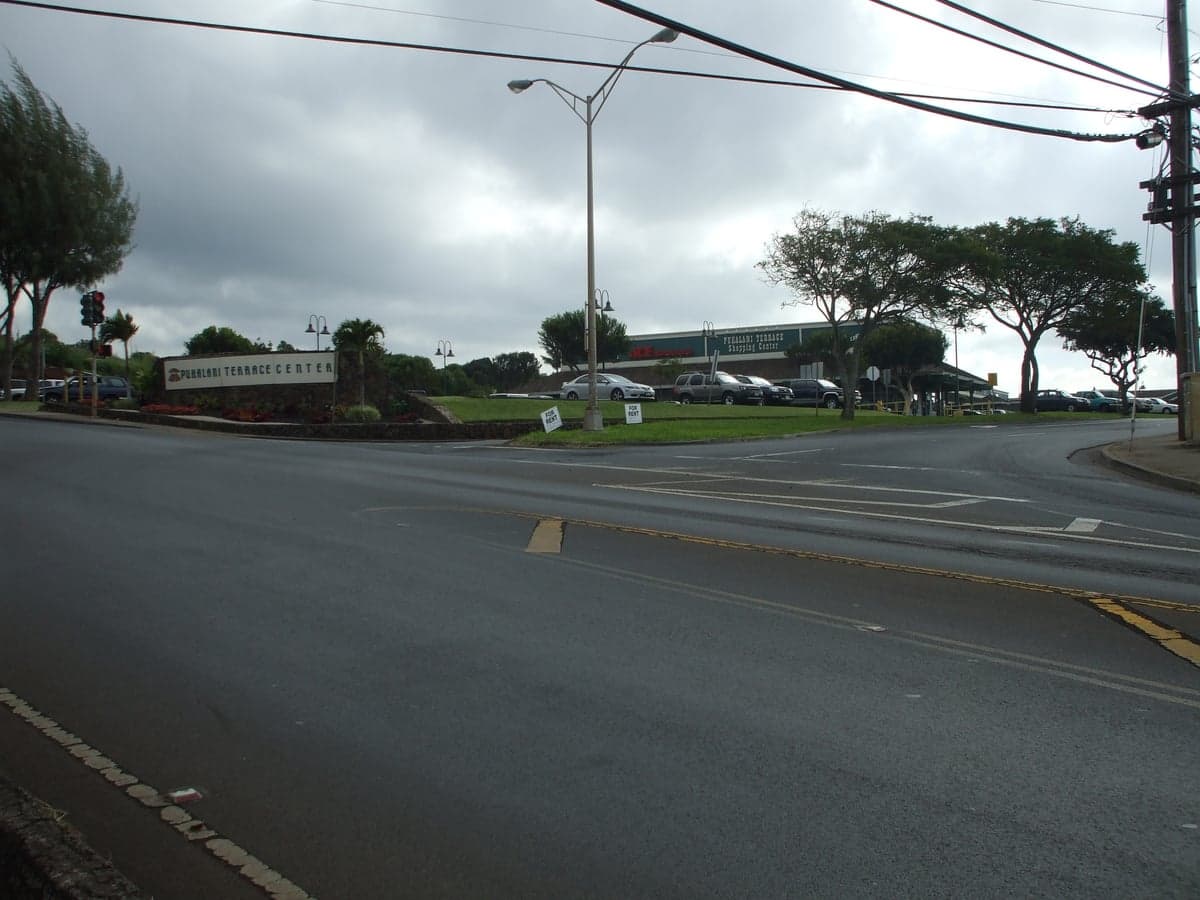
Photo: Wikipedia
Personal Sovereignty in Pukalani, HI
Moderate friction. Expect trade-offs in some aspect of personal liberty and independence.
What does Personal Sovereignty tell us?
Personal Sovereignty measures your capacity for self-reliance and independence with minimal government friction. Higher scores mean fewer barriers between you and the way you want to live... but it assumes you have the space you need and good neighbors.
What does this tell us?
Personal Sovereignty measures your capacity for self-reliance and independence with minimal government friction. Higher scores mean fewer barriers between you and the way you want to live... but it assumes you have the space you need and good neighbors.
State Policy
Energy independence: Importer (2% of energy produced in-state)
Personal Liberty
Homesteading

Personal Liberty Analysis
Pukalani, a residential community on the upper slopes of Maui, presents a complex picture for those prioritizing personal sovereignty. While the area offers a quieter, more rural feel than the tourist-heavy coastlines, it operates entirely under Hawaii’s state-level regulatory framework—one that is among the most restrictive in the nation for individual autonomy. For a survivalist or prepper mindset, the trade-offs here are stark: you gain physical isolation and a temperate climate, but you lose significant control over land use, self-defense options, and the ability to opt out of state mandates. The overall environment is one where personal freedom is heavily mediated by government authority, making it a location to approach with clear-eyed caution rather than libertarian optimism.
Tax burden and regulatory posture in Hawaii’s controlled economy
Hawaii’s tax and regulatory climate is a primary concern for anyone seeking to maximize personal sovereignty. The state imposes a combined state and local tax burden that consistently ranks among the top five highest in the nation, driven by a 4% general excise tax applied to nearly all goods and services—including rent and groceries—and a progressive income tax that tops out at 11%. Property taxes in Pukalani are relatively low compared to the mainland, often under 0.5% of assessed value, but this is a trade-off for the state’s heavy reliance on income and consumption taxes. More critically, Hawaii’s regulatory posture is deeply interventionist. Land use is governed by strict county and state zoning laws that limit what you can build, how you can use your property, and even what plants you can grow. The state’s Office of Planning and Sustainable Development has broad authority over development, and permits for even minor structures can take months. For a prepper, this means that the ability to modify your property for self-sufficiency—like adding a workshop, a root cellar, or a rainwater catchment system—is subject to bureaucratic approval that may never come. The regulatory environment is designed for centralized control, not individual initiative.
Self-defense and gun law specifics under Hawaii’s restrictive regime
For those prioritizing the right to self-defense, Hawaii is one of the most difficult states in the country. The state operates under a “may-issue” concealed carry framework, meaning local police chiefs have near-total discretion to deny permits, and as of 2025, very few are issued in Maui County. The 2022 Supreme Court decision in New York State Rifle & Pistol Association v. Bruen forced Hawaii to loosen its carry laws slightly, but the process remains onerous: applicants must demonstrate “exceptional circumstances” beyond general fear, pass a background check, complete a state-approved training course, and pay substantial fees. Even then, permits are often restricted to specific times and places. Open carry is effectively banned. Additionally, Hawaii has a strict assault weapons ban that covers many common semi-automatic rifles and shotguns, and magazine capacity is limited to 10 rounds. Handgun purchases are limited to one per 30-day period, and all firearm sales must go through a licensed dealer with a 14-day waiting period. For a survivalist, this means that building a robust personal armory is legally constrained, and carrying a firearm for daily protection is nearly impossible without a lengthy, uncertain legal battle. The state’s posture is clear: self-defense is a privilege granted by the government, not a right exercised by the individual.
Self-reliance and homesteading viability in Pukalani’s zoning landscape
Pukalani’s residential lots typically range from a quarter-acre to one acre, which is larger than many suburban mainland plots but still small for serious homesteading. The area’s agricultural zoning—designated as “Agricultural” or “Rural” in Maui County’s code—does allow for farming, livestock, and limited commercial activity, but with significant restrictions. Rainwater catchment is legal and common, as municipal water is expensive and unreliable in some areas, but you must comply with county health department standards for potable water. Solar panels are permitted, but net metering policies have been curtailed in recent years, reducing the financial benefit of exporting excess power. Off-grid living is technically possible, but the county requires a building permit for any permanent structure, and living in a tent, RV, or shipping container without a permit is illegal and subject to fines. Composting toilets and greywater systems are allowed under strict guidelines, but you must obtain a permit and pass inspections. For a prepper, the viability of true self-reliance is limited: you can grow food and collect water, but you cannot fully disconnect from the grid or build infrastructure without government approval. The climate is forgiving—year-round growing seasons and mild temperatures—but the legal framework ensures that your homestead remains under state oversight.
Personal liberties: parental rights, medical autonomy, speech, and property
Hawaii’s approach to personal liberties is generally progressive, which can conflict with conservative values around parental rights and medical autonomy. The state has mandatory vaccination requirements for school attendance with limited exemptions, and during public health emergencies, the governor has broad authority to issue mandates that override individual choice. Parental rights in education are also constrained: Hawaii’s Department of Education sets a uniform curriculum, and while homeschooling is legal, it requires annual notification and submission of a curriculum plan. Medical autonomy is similarly limited—the state has a physician-assisted suicide law and broad public health powers that can compel treatment. Free speech is protected under the First Amendment, but Hawaii has enacted laws against “hate speech” and harassment that some critics argue chill political expression. Property rights are the most constrained: the state’s eminent domain authority is broad, and land use regulations can effectively prevent you from using your property as you see fit. For a survivalist, the cumulative effect is a legal environment where the state can intervene in nearly every aspect of life—from what you teach your children to how you manage your health to what you build on your land. The trade-off for living in a beautiful, isolated community is a significant loss of personal sovereignty.
In the broader context of the United States, Pukalani and Hawaii as a whole rank near the bottom for personal sovereignty. The state’s high taxes, restrictive gun laws, heavy-handed land use regulations, and expansive government authority create an environment where individual autonomy is secondary to state control. For a prepper or survivalist, the appeal of Maui’s climate and isolation is real, but the legal and regulatory costs are severe. Compared to states like Alaska, Montana, or New Hampshire—where property rights, self-defense, and self-reliance are more protected—Hawaii is a difficult place to maintain the independence that many conservative-leaning individuals seek. If you are willing to operate within a tightly controlled system and prioritize climate over freedom, Pukalani can work. But for those who value the ability to live without government permission, this is not a strategic relocation choice.

* Values derived from national, state, county, city and local statistics and may differ in a specific area. Last updated: 2026-04-30T14:27:52.000Z
Narrative content on this page is AI-generated and may contain mistakes. Verify any details that matter before acting on them.
ReloMaps may earn a commission from affiliate links at no extra cost to you.

