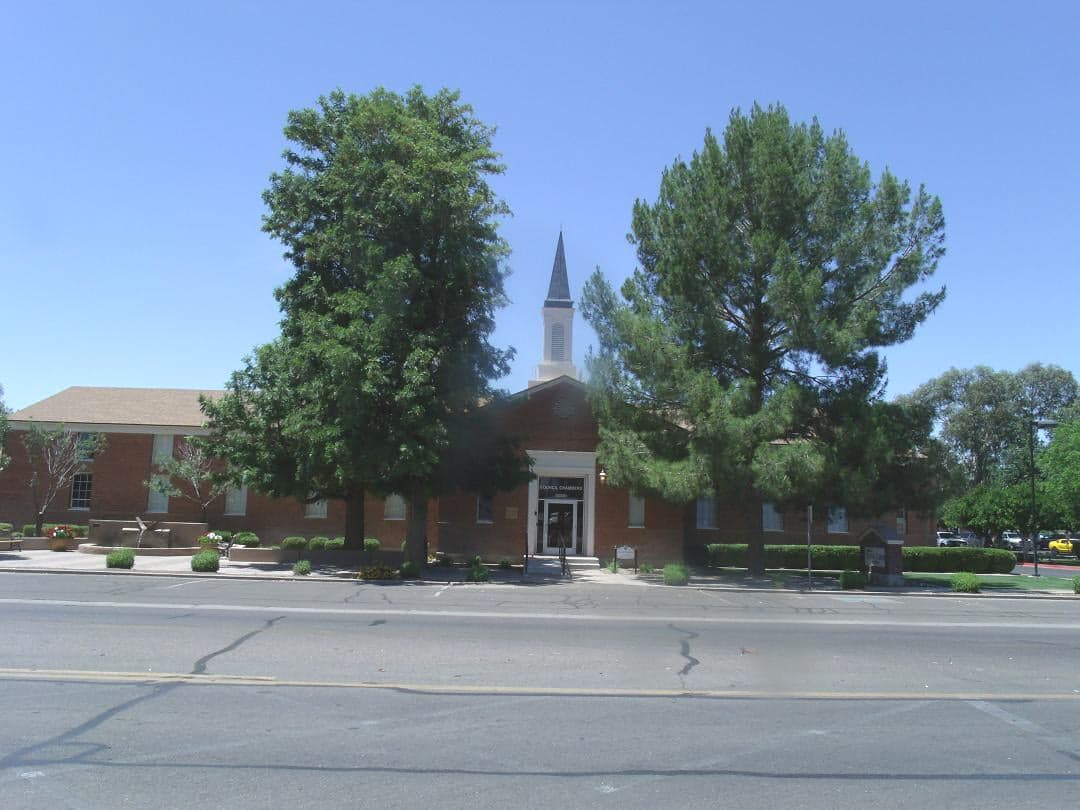
Photo: Wikipedia
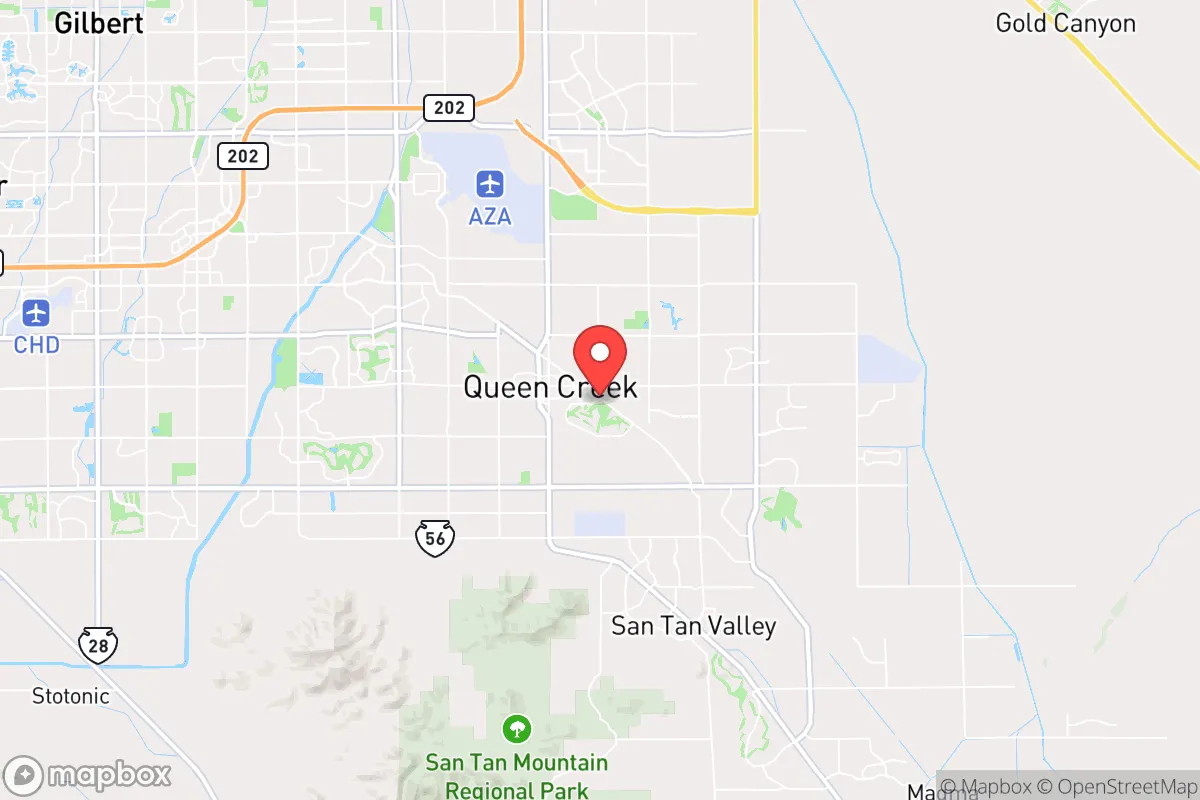
Personal Sovereignty in Queen Creek, AZ
Viable for self-reliance. Generally workable, though some barriers may limit total independence.
What does Personal Sovereignty tell us?
Personal Sovereignty measures your capacity for self-reliance and independence with minimal government friction. Higher scores mean fewer barriers between you and the way you want to live... but it assumes you have the space you need and good neighbors.
What does this tell us?
Personal Sovereignty measures your capacity for self-reliance and independence with minimal government friction. Higher scores mean fewer barriers between you and the way you want to live... but it assumes you have the space you need and good neighbors.
State Policy
Energy independence: Importer (20% of energy produced in-state)
Personal Liberty
Homesteading

Personal Liberty Analysis
Queen Creek, Arizona, offers one of the strongest personal sovereignty environments in the greater Phoenix metro, largely because it sits at the intersection of a deeply conservative municipal culture and Arizona’s famously permissive state laws. For a survivalist or prepper mindset, the town’s relative distance from urban centers, its agricultural zoning legacy, and its residents’ active resistance to federal and state overreach create a rare pocket where individual autonomy isn’t just tolerated—it’s expected. You won’t find the kind of nanny-state governance that chokes out personal responsibility in places like Portland or Denver; here, the default assumption is that you can handle your own life, your own property, and your own defense, as long as you’re not harming your neighbor.
Tax burden and regulatory posture: how Queen Creek keeps government off your back
Arizona’s overall tax climate ranks among the most favorable in the nation for those who want to keep more of what they earn. There is no state estate tax, no inheritance tax, and no tax on Social Security benefits. The state’s flat income tax rate, currently at 2.5% as of 2025, means your marginal rate doesn’t climb with your success—a stark contrast to California’s progressive brackets that can hit 13.3%. Queen Creek itself adds a modest 1.8% city sales tax on top of the state’s 5.6%, but the town has no separate city income tax. Property taxes are the real win: the effective rate in Queen Creek hovers around 0.6% of assessed value, roughly half the national average. For a $500,000 home, that’s about $3,000 annually—versus $8,000+ in many blue-state suburbs. The regulatory posture is equally lean. Queen Creek’s town council has consistently opposed state-level mandates on land use and building codes, and the town’s general plan explicitly prioritizes “limited government interference” in property rights. You won’t face the kind of permitting nightmares common in California or Washington; building a shed, installing a rainwater catchment system, or running a home-based business is straightforward. The town’s zoning code is available online and written in plain English, not legalese—a small but telling sign of a government that sees itself as a service, not a master.
Self-defense and gun law specifics: what you can carry and where
Arizona is a constitutional carry state, meaning you can carry a concealed firearm without a permit—no training requirement, no background check beyond the purchase, no waiting period. Queen Creek’s local police department has publicly stated they will not enforce any federal gun control measures they deem unconstitutional, a stance that aligns with the town’s 2021 resolution declaring itself a “Second Amendment Sanctuary City.” Open carry is legal without a permit, and there are no restrictions on magazine capacity or “assault weapon” features. Stand-your-ground laws are fully in effect: you have no duty to retreat before using deadly force if you reasonably believe it’s necessary to prevent death or serious bodily harm. Castle doctrine protections extend to your vehicle and your place of business, not just your home. For preppers, this means you can legally keep a rifle in your truck while running errands, and you can store a full arsenal in your home without worrying about storage laws that plague states like New York or Massachusetts. The only real restriction is that you cannot carry into a federal building, a K-12 school without a valid permit (though you can with a permit), or a private business that posts a sign—but those signs are rare in Queen Creek. The local gun culture is robust: there are three gun ranges within a 15-minute drive, and the Queen Creek Sportsman’s Club hosts regular training events on tactical shooting and home defense.
Self-reliance and homesteading viability: lot sizes, zoning, and off-grid feasibility
Queen Creek’s agricultural roots mean you can still find properties that allow genuine self-reliance. Minimum lot sizes in the town’s rural zoning districts start at one acre, and many parcels in the outlying areas are 2.5 to 5 acres—enough for a substantial garden, a few chickens, and even a goat or two. The town’s zoning code explicitly permits “urban agriculture” on any residential lot, including beekeeping, rabbit hutches, and up to four hens per acre (no roosters in subdivisions, but roosters are allowed on parcels over one acre). Rainwater harvesting is not just legal—it’s encouraged, with the town offering a rebate program for cisterns. Off-grid feasibility is high: Arizona law prohibits HOAs and municipalities from banning solar panels, and Queen Creek’s building department has a fast-track permit for solar-plus-battery systems. You can legally install a composting toilet and a greywater system, though you’ll need a permit for the latter. The bigger question is water independence. Queen Creek sits atop the Pinal Basin aquifer, and while the town has a 100-year water supply designation from the state, that’s based on current growth projections. For a serious prepper, drilling a private well is the gold standard—and it’s legal on parcels of one acre or more, provided you get a well permit from the Arizona Department of Water Resources. The cost runs $15,000 to $30,000, but once it’s in, you’re off the municipal grid. The town’s zoning also allows for “accessory dwelling units” (granny flats) on any lot over half an acre, which means you can build a separate structure for a generator, a root cellar, or a workshop without triggering a zoning variance.
Personal liberties: parental rights, medical autonomy, speech, and property
Parental rights are aggressively protected in Arizona. The state’s 2023 “Parental Bill of Rights” law (HB 2496) gives parents the explicit right to direct their child’s education, medical care, and religious upbringing, and it requires schools to get parental consent before administering any mental health screening or survey. Queen Creek’s school district—which includes some of the highest-rated public schools in the state—has been a battleground for these issues, and the current board majority is openly supportive of parental opt-outs for curriculum materials and library books. Medical autonomy is more nuanced. Arizona does not have a state-level vaccine mandate for adults, and the 2021 law banning vaccine passports remains in effect. However, the state does require certain childhood vaccines for school attendance, with a medical exemption available but no personal belief exemption. For those seeking alternative medical treatments, Arizona’s scope-of-practice laws are relatively permissive: naturopathic doctors can prescribe certain medications, and the state has a robust direct-primary-care market. Speech protections are strong: Arizona has no hate speech law that could be weaponized against political speech, and Queen Creek’s town council has a policy of not restricting signs on private property, even political ones. Property rights are the crown jewel. Arizona’s “private property rights” statute (ARS 12-1131) allows property owners to sue local governments for regulatory takings—if a zoning change reduces your property value by more than 20%, you’re entitled to compensation. This creates a powerful check against overreach. Queen Creek’s own zoning code includes a “right to farm” provision that protects agricultural operations from nuisance lawsuits, even as the town grows around them.
Compared to the rest of the country, Queen Creek offers a level of personal sovereignty that’s increasingly rare. You won’t find the kind of local tyranny that plagues cities like Austin or Seattle, where city councils routinely override state preemption laws on guns, housing, and land use. The trade-off is that you’re still subject to federal overreach—the EPA, the ATF, and the IRS don’t stop at the town line—but the local and state governments are actively working to push back. For a survivalist or prepper, the calculus is simple: Queen Creek gives you the legal and regulatory space to build the life you want, with minimal interference from the people who think they know better. It’s not a libertarian utopia—no place is—but it’s about as close as you’ll find in a state that still remembers what freedom looks like.

* Values derived from national, state, county, city and local statistics and may differ in a specific area. Last updated: 2026-04-21T19:42:00.000Z
Narrative content on this page is AI-generated and may contain mistakes. Verify any details that matter before acting on them.
ReloMaps may earn a commission from affiliate links at no extra cost to you.

