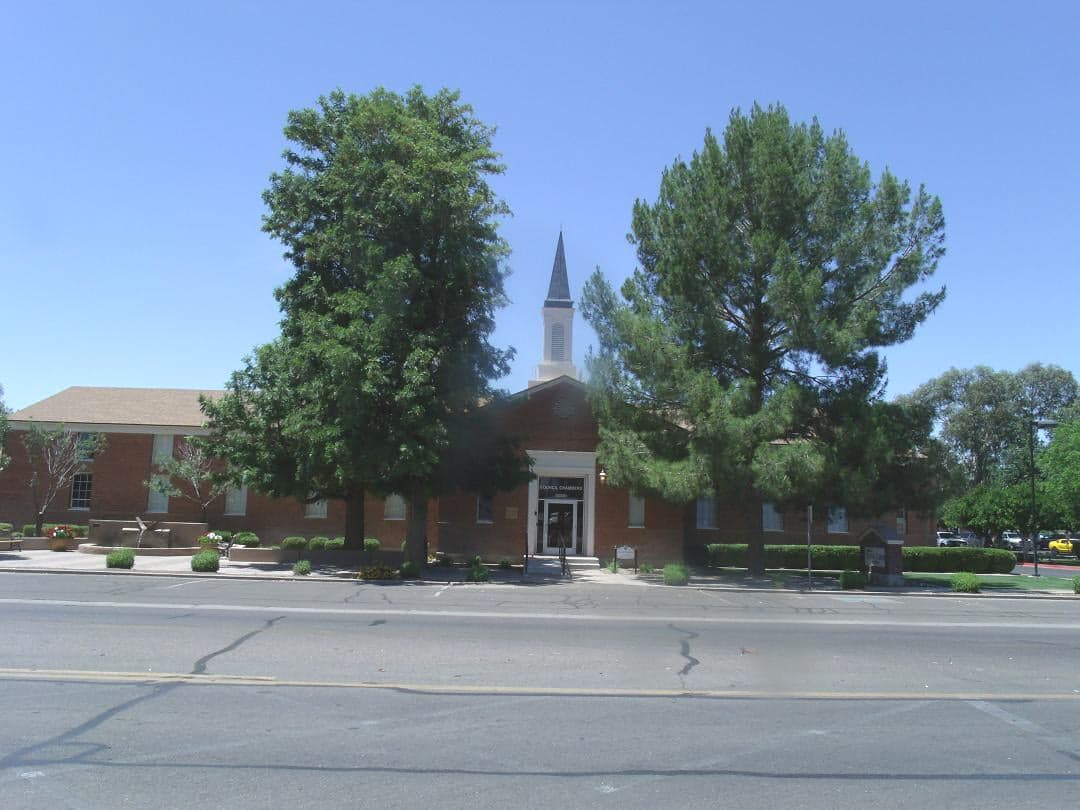
Photo: Wikipedia
Political ClimatePolitical Climate in Queen Creek, AZ
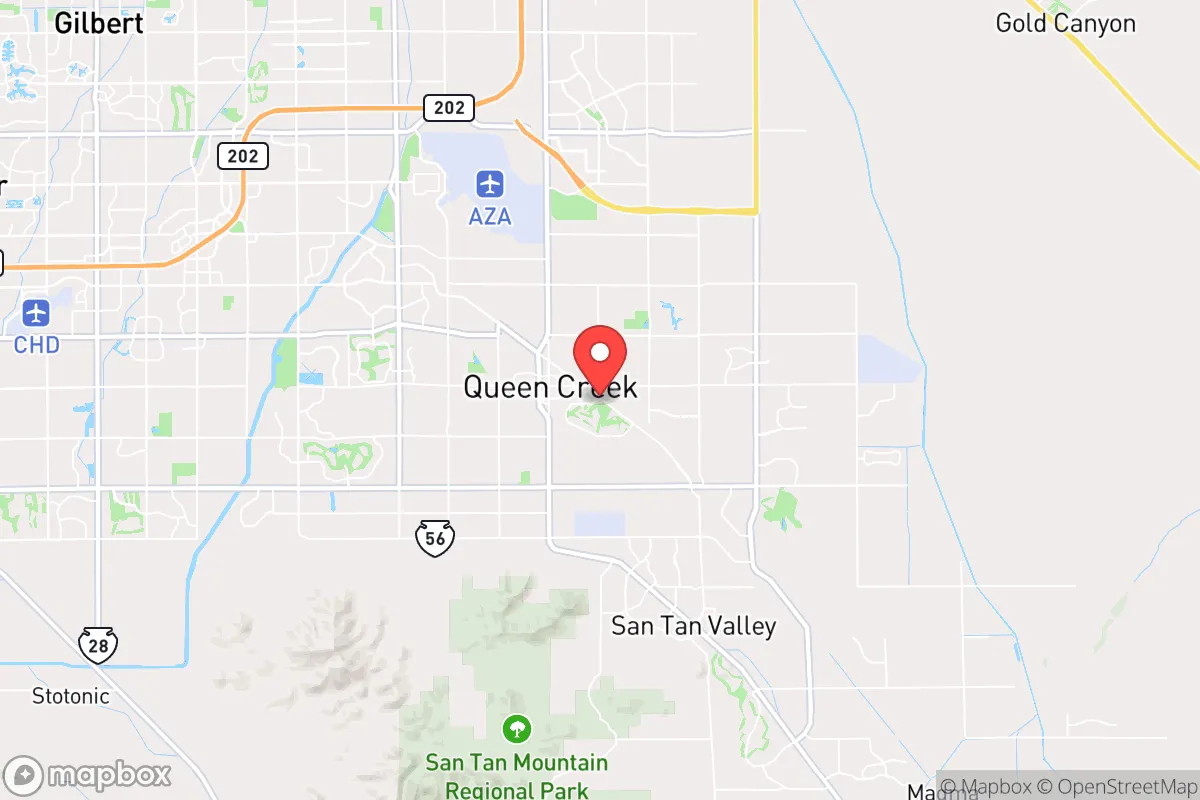
District shown is the primary district for this city’s centroid. Cities may span multiple districts.
Local Political AnalysisPolitical Analysis of Queen Creek, AZ
Queen Creek has long been a rock-solid conservative stronghold, and that hasn’t changed much even as the town has exploded in population. The Cook Partisan Voting Index (PVI) sits at R+10, meaning the area votes about 10 points more Republican than the national average—and in practice, local elections often feel even redder than that. You’ll see Trump signs on every other corner during election season, and the town council has historically leaned heavily toward limited government, low taxes, and a hands-off approach to personal freedoms. But as more families move in from Phoenix and other bluer areas, there’s been a quiet undercurrent of change that’s worth keeping an eye on.
How it compares
Drive 15 minutes west to Gilbert or Chandler, and you’ll feel the political temperature shift noticeably. Those towns have seen a steady influx of tech workers and out-of-state transplants, pulling them closer to purple territory—Gilbert’s PVI is R+9, but its city council races have gotten tighter. Head south to Coolidge or Florence, and you’re back in deep-red country, where R+15 or higher is the norm. Queen Creek sits in a sweet spot: it’s still rural enough to avoid the progressive creep that’s hit the East Valley suburbs, but it’s close enough to Phoenix that you’ll occasionally see a “Biden-Harris” yard sign—something that would have been unthinkable a decade ago. The real contrast is with Tucson, about 90 minutes south, which is a liberal island in a conservative state. Queen Creek residents tend to see Tucson’s policies—higher taxes, more regulations, and a general “government knows best” attitude—as a cautionary tale of what happens when you let the pendulum swing too far left.
What this means for residents
For the most part, life in Queen Creek still feels like the Old West of personal liberty. You can build a shed on your property without jumping through a dozen hoops, and the local schools still emphasize traditional values over woke curriculum. Property taxes are low, and the town government generally stays out of your business—no mask mandates, no vaccine passports, no nonsense about banning gas stoves. But there are warning signs. The town’s rapid growth has brought pressure to adopt more “urban” policies, like higher density zoning and more public transit, which often come with a side of government overreach. Some newer residents are pushing for things like “equity” initiatives in the school district and stricter environmental regulations on new construction. So far, the old guard has held the line, but if you’re the type who values your Second Amendment rights and doesn’t want the county telling you what you can plant in your front yard, you’ll want to stay engaged in local elections.
Culturally, Queen Creek still feels like a place where neighbors wave to each other and the Fourth of July parade is a bigger deal than any political rally. The town’s agricultural roots—you’ll still see working farms and horse properties—keep it grounded in a way that the strip-mall suburbs to the west have lost. The biggest policy distinction is the town’s consistent opposition to light rail expansion and its embrace of charter schools and school choice. If you’re looking for a place where the government’s main job is to pave the roads and stay out of your life, Queen Creek is still that place. But the long-term trajectory depends on whether the newcomers adopt the local culture or try to change it. My bet is the town stays red, but it’ll take work to keep it that way.

State Political ClimatePolitical Climate in Arizona
State Political AnalysisPolitical Environment in the State
Arizona has shifted from a reliably Republican stronghold to a true battleground state over the past two decades, with its political lean now hovering around a 50/50 split in statewide races. The dominant coalition is a tense mix of traditional Western libertarian conservatives, a growing population of moderate suburbanites, and a rapidly expanding Hispanic electorate that leans Democratic. Over the last 10-20 years, the state has moved from voting Republican by double digits in presidential races to flipping blue for Biden in 2020 by just over 10,000 votes, while still electing a Republican governor and a GOP-controlled legislature in 2022 and 2024. This volatility makes Arizona a fascinating but unpredictable place for a conservative considering relocation.
Urban vs. rural divide
The political map of Arizona is a classic story of a deep blue urban core versus a deep red rural expanse, with the critical battleground being the sprawling suburban ring around Phoenix. Maricopa County, home to Phoenix, Scottsdale, Mesa, and Chandler, contains over 60% of the state’s population and decides every election. In 2020, Maricopa County flipped to Biden by about 2 points, driven by suburban women and college-educated voters in places like Paradise Valley and Tempe. Meanwhile, Tucson (Pima County) is reliably Democratic, anchored by the University of Arizona. The rest of the state—places like Prescott, Flagstaff, Yuma, and Sierra Vista—is overwhelmingly Republican, with rural counties like Mohave and Yavapai voting 70-80% for Trump. The key dynamic is that the fast-growing exurbs like Buckeye and Maricopa (the city) are trending redder, while the inner-ring suburbs like Gilbert and Chandler are becoming more purple. If you’re looking for a conservative enclave, the rural north and west are safe bets, but the political future is being written in those suburban cul-de-sacs.
Policy environment
Arizona’s policy environment is a mixed bag for conservatives. On the positive side, the state has a flat income tax rate of 2.5% (passed in 2021 under Governor Doug Ducey), which is among the lowest in the nation. There is no state estate tax, and property taxes are relatively low compared to the national average. The regulatory posture is generally business-friendly, with a right-to-work law and minimal red tape for small businesses. On education, Arizona was a pioneer in school choice, with the nation’s first universal Empowerment Scholarship Account (ESA) program, allowing parents to use public funds for private school or homeschooling. However, the state has also seen a push for expanded Medicaid under the Affordable Care Act, which some conservatives view as government overreach. Election laws have been a flashpoint: after 2020, the GOP-controlled legislature passed stricter voter ID laws and banned ballot drop boxes in most counties, but a 2024 law also expanded early voting access. The overall posture is a strong tilt toward personal freedom on taxes and education, but with ongoing battles over election integrity and healthcare mandates.
Trajectory & freedom
The trajectory of freedom in Arizona is a tug-of-war. On the positive side, the state has expanded gun rights significantly: in 2021, it passed a constitutional carry law (SB 1382), allowing adults to carry concealed firearms without a permit. Parental rights were strengthened in 2022 with a law requiring schools to notify parents of any curriculum involving sexuality or gender identity (HB 2495), though it was later blocked in court. Medical autonomy saw a win in 2024 with a law banning COVID-19 vaccine mandates for state employees and contractors. However, there are concerning trends. In 2022, voters approved Proposition 209, which expanded Medicaid coverage for postpartum women, a government expansion of healthcare. More troubling for conservatives, a 2024 ballot initiative (Proposition 139) enshrined a constitutional right to abortion up to fetal viability, overriding a previous 15-week ban. This was a major loss for the pro-life movement and signals that direct democracy can override the legislature. Property rights are generally strong, with no statewide rent control, but local governments in Tucson and Flagstaff have imposed short-term rental restrictions. The overall trend is that while the legislature pushes for more freedom, ballot initiatives and court rulings are pulling the state toward progressive policies on social issues.
Civil unrest & political movements
Arizona has been a hotbed of political activism, particularly around immigration and election integrity. The state was ground zero for the “Stop the Steal” movement after 2020, with the infamous Maricopa County audit drawing national attention. While no widespread fraud was found, the controversy deepened distrust in election systems, and you’ll still see “Audit the Vote” signs in rural areas. Immigration politics are ever-present: the 2010 SB 1070 law (the “show me your papers” law) was largely gutted by courts, but border security remains a top concern, especially in Yuma and Nogales, where migrant crossings have surged. On the left, groups like LUCHA (Living United for Change in Arizona) have organized massive protests for driver’s licenses for undocumented immigrants and against restrictive voting laws. There have been periodic protests at the state capitol in Phoenix over abortion rights and transgender issues, with both sides turning out in force. A new resident would notice a palpable tension in the suburbs: yard signs for “Parents’ Rights” next to “Trans Rights” signs, and a general sense that the culture war is being fought block by block. Election integrity remains a live issue, with ongoing lawsuits over ballot signature verification and drop box surveillance.
Projection
Over the next 5-10 years, Arizona is likely to become more competitive and potentially lean Democratic in statewide races, driven by demographic shifts. The Hispanic population is growing rapidly and trending younger and more Democratic, while the influx of retirees from California and the Midwest is split—some are conservative, but many bring moderate or left-leaning views on social issues. The suburbs of Mesa and Chandler are filling with tech workers and remote employees who prioritize education and infrastructure over cultural battles. The Republican Party in Arizona is fractured between the MAGA wing and the more establishment “McCain” Republicans, which has led to messy primaries and weak general election candidates. If the GOP can unify around a pro-freedom, low-tax, school-choice message while moderating on social issues, they can hold the line. But if ballot initiatives continue to bypass the legislature on abortion, marijuana, and minimum wage, the state will drift left. A conservative moving in now should expect that the political environment will be a constant fight, not a settled reality. The state is not turning into California overnight, but the trend lines are concerning for those who value limited government and traditional values.
Bottom line for a new resident: Arizona offers a low-tax, business-friendly environment with strong school choice and gun rights, but you’ll be moving into a battleground where every election matters. If you settle in a red stronghold like Prescott or Buckeye, you’ll find like-minded neighbors and local governments that respect your freedoms. But if you choose the suburbs of Phoenix or Tucson, be prepared for a politically mixed neighborhood where your vote truly counts. The state’s trajectory is uncertain, but for now, it remains one of the better options in the West for a conservative looking for economic opportunity and personal liberty—just don’t expect it to stay that way without active engagement.
* Values derived from national, state, county, city and local statistics and may differ in a specific area. Last updated: 2026-04-21T19:42:00.000Z
Narrative content on this page is AI-generated and may contain mistakes. Verify any details that matter before acting on them.
ReloMaps may earn a commission from affiliate links at no extra cost to you.

