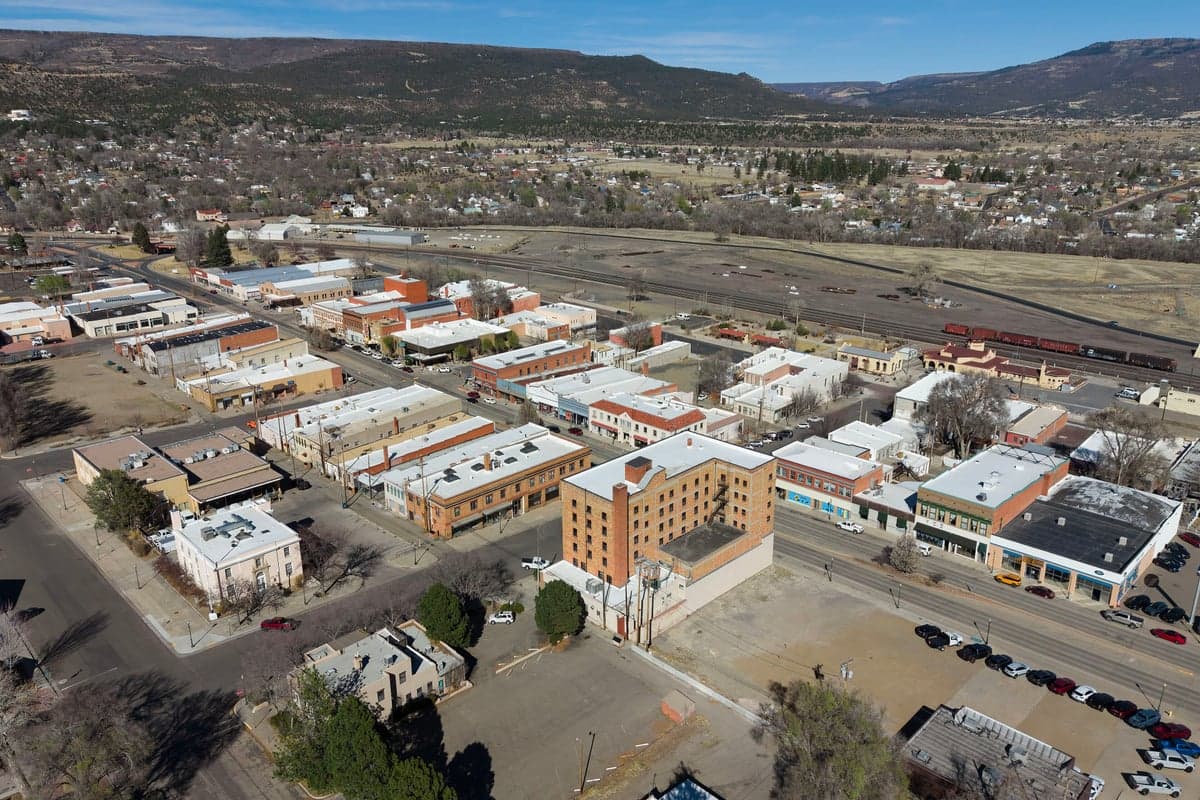
Photo: Wikipedia
Political ClimatePolitical Climate in Raton, NM
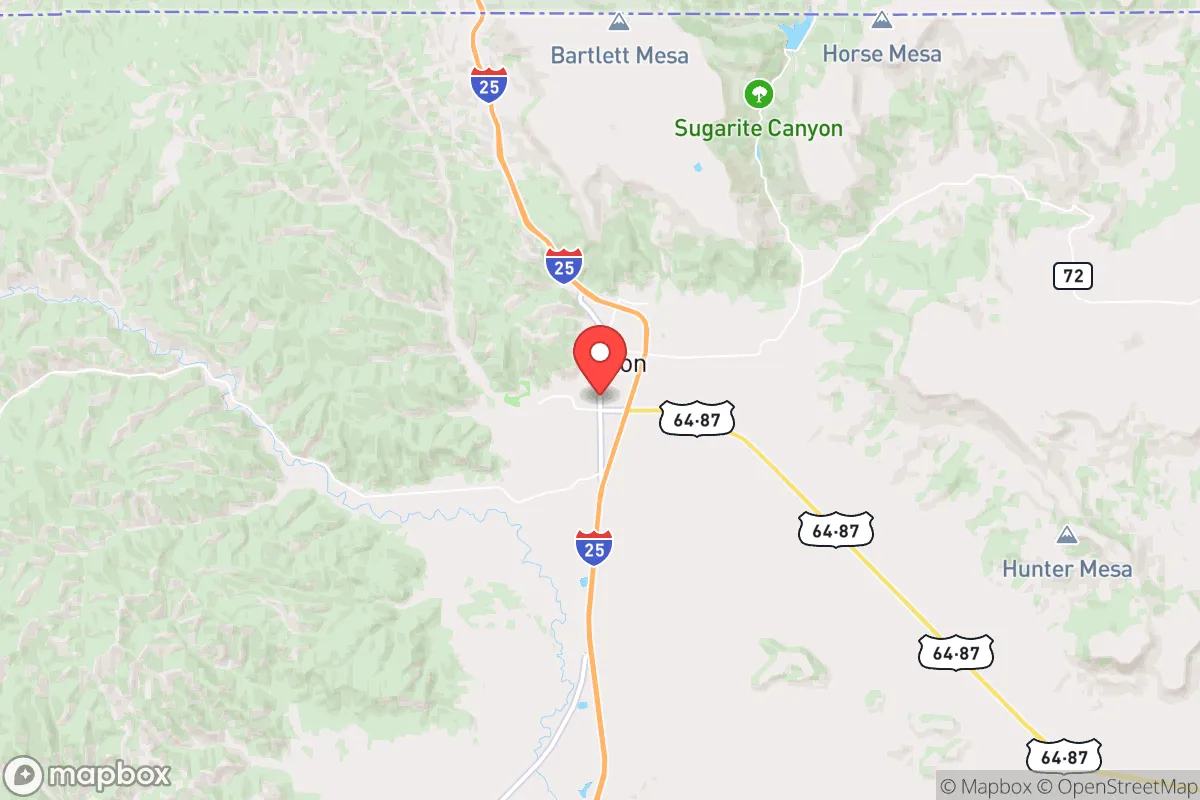
District shown is the primary district for this city’s centroid. Cities may span multiple districts.
Local Political AnalysisPolitical Analysis of Raton, NM
Raton, New Mexico, sits in a bit of a political tug-of-war, and if you’ve lived here as long as I have, you’ve felt the ground shift. The Cook PVI clocks the area at D+3, meaning it leans slightly Democratic on paper, but that number doesn’t tell the whole story of a town that’s historically been more independent and conservative at heart. In recent years, you’ve seen a slow but steady drift toward progressive policies coming out of Santa Fe, and that’s got a lot of us watching closely—especially when it comes to things like land use, energy regulations, and how much say the state has in our local business decisions.
How it compares
Drive just 30 miles south to Springer or head west toward Cimarron, and you’ll find communities that vote much more reliably red—places where the “keep government out of my backyard” attitude is still the default. Raton, being the county seat and a former railroad hub, has always had a more mixed crowd: some old-school union families from the mining days, a growing number of remote workers, and a few transplants from Colorado who bring their blue-state sensibilities with them. Compared to Taos (which is a whole different animal politically) or even Las Vegas, New Mexico, Raton feels like a moderate middle ground—but that middle is creeping left. The real contrast is with nearby Trinidad, Colorado, just 15 miles north, which has swung hard progressive in the last decade; Raton still holds onto a more cautious, live-and-let-live vibe, though the pressure to follow suit is real.
What this means for residents
For folks who value personal freedom and don’t want the government poking into every corner of life, the trend here is a little unsettling. You’re seeing more state-level mandates on everything from water rights to building codes, and there’s a growing push to limit oil and gas development in the region—which, let’s be honest, is a big part of what keeps our local economy breathing. Property taxes have crept up, and there’s chatter about stricter environmental regulations that could hit ranchers and small landowners hard. On the ground, though, most people still mind their own business. You won’t find a lot of political yard signs or heated town hall fights; it’s more of a quiet concern that the folks in Santa Fe don’t really understand what it’s like to live in a place where winter can shut down the highway and a good job is hard to come by. The long-term worry is that if the progressive agenda keeps gaining steam, we’ll lose the self-reliant character that’s kept Raton going through boom and bust.
Culturally, Raton still has a strong streak of Western independence—people here take pride in fixing their own trucks, hunting their own elk, and not needing a permit for every little thing. The annual Raton Balloon Rally and the NRA Whittington Center (a major shooting sports facility just outside town) are big draws that reflect that ethos. But there’s a quiet tension now: new housing developments come with more HOAs and restrictions, and the local school board has had some debates over curriculum that would’ve been unthinkable twenty years ago. If you’re thinking of moving here, know that you’ll find good neighbors and wide-open spaces, but keep an eye on how the political winds blow—because the kind of freedom that makes this place special isn’t guaranteed forever.

State Political ClimatePolitical Climate in New Mexico
State Political AnalysisPolitical Environment in the State
New Mexico has long been a reliably blue state in presidential elections, but its political landscape is far more nuanced than a simple partisan label suggests. The state’s Democratic dominance is driven by a coalition of urban progressives, Native American communities, and a growing Hispanic electorate, but this has shifted leftward over the past two decades, with the party now holding all statewide offices and both U.S. Senate seats. However, a significant conservative minority persists, particularly in rural and oil-rich areas, creating a stark urban-rural divide that makes the state feel like two different countries depending on where you live.
Urban vs. rural divide
The political map of New Mexico is a tale of two worlds. Albuquerque, the state’s largest city and home to roughly a quarter of the population, is a progressive stronghold where Democrats routinely win by 20-point margins. Its Bernalillo County is the engine of the state’s blue lean, driven by university faculty, government workers at Sandia National Labs, and a large Hispanic working class. Santa Fe, the capital, is even more liberal—a wealthy enclave of artists, retirees, and state bureaucrats where Republicans are nearly extinct in local elections. In contrast, the southeastern corner of the state, anchored by Hobbs and Carlsbad, is deeply conservative, powered by the oil and gas industry. Lea and Eddy Counties routinely vote 70-80% Republican. The rural north, including Taos and Las Vegas, leans left due to Hispanic and Native American populations, while the Las Cruces area in the south is a swing region, with Doña Ana County often deciding close races. The Farmington area in the northwest, near the Four Corners, is a conservative outpost surrounded by Navajo Nation land that votes reliably Democratic.
Policy environment
New Mexico’s policy environment has shifted sharply left in recent years, raising red flags for conservatives. The state has a progressive income tax with rates up to 5.9%, and a gross receipts tax that functions like a sales tax but applies to services, making it one of the highest tax burdens in the Southwest. Property taxes are relatively low, but the state’s regulatory posture is increasingly hostile to business—especially in energy. Governor Michelle Lujan Grisham signed a 2023 executive order targeting “climate pollution” that effectively caps oil and gas production, a direct threat to the state’s largest industry. Education policy is a battleground: the state has a universal school voucher-like program called the “Opportunity Scholarship,” but it’s limited to public colleges, not private K-12. Meanwhile, the state’s public schools rank near the bottom nationally, and a 2023 law removed the requirement for parental consent for students to access reproductive health services, including abortion, without notifying parents. Healthcare is heavily regulated, with a state-run insurance exchange and Medicaid expansion covering nearly half the population. Election laws are relatively loose: same-day voter registration, no-excuse absentee voting, and automatic voter registration are all in place, which conservatives view as ripe for fraud.
Trajectory & freedom
New Mexico is becoming less free by any conservative measure, and recent legislation confirms the trend. In 2021, the state repealed its pre-emption law that prevented local governments from enacting stricter gun ordinances, allowing Albuquerque and Santa Fe to pass “red flag” laws that let authorities seize firearms without a criminal conviction. The same year, the legislature passed a law banning conversion therapy for minors, which conservatives see as an infringement on parental rights. On the medical autonomy front, the state has become a safe haven for abortion, with a 2023 law protecting providers from out-of-state lawsuits and allowing late-term abortions. Property rights are under pressure: the state’s 2023 “Housing First” law mandates that local governments cannot enforce zoning laws that restrict homeless shelters, effectively overriding local control. Taxation is a mixed bag—the state cut its personal income tax rate slightly in 2023, but the overall burden remains high. The most concerning trend for conservatives is the erosion of parental rights, exemplified by the 2023 law allowing minors to consent to reproductive care without parental notification, which many see as a direct assault on family authority.
Civil unrest & political movements
New Mexico has seen its share of political flashpoints. In 2020, Albuquerque experienced weeks of protests following George Floyd’s death, with some turning violent and resulting in property damage. The state’s sanctuary policies are a major point of contention: New Mexico is a “sanctuary state” by practice, with local law enforcement prohibited from asking about immigration status, and the state has refused to cooperate with ICE detainers. This has led to tensions in border communities like Las Cruces and Deming, where illegal crossings are a daily reality. On the right, the “New Mexico Civil Guard” and other militia groups have held armed protests at the state capitol, particularly during the 2021 legislative session over gun control bills. Election integrity remains a hot-button issue: in 2020, New Mexico’s use of universal mail-in ballots and same-day registration drew criticism from conservatives, though no major fraud was proven. The state’s high crime rate—especially in Albuquerque, which consistently ranks among the nation’s most dangerous cities—has fueled a growing “law and order” movement among suburban voters, particularly in the Rio Rancho area, which is a rare Republican stronghold in the Albuquerque metro.
Projection
Over the next 5-10 years, New Mexico is likely to continue its leftward drift, but demographic shifts could slow the trend. The state’s population is aging and growing slowly, with many young people leaving for Texas or Colorado. In-migration is modest and tends to be from blue states like California, bringing progressive voters to Santa Fe and Taos. However, the oil and gas industry in the southeast remains a powerful conservative counterweight, and if energy prices stay high, areas like Hobbs and Carlsbad could gain political influence. The biggest wildcard is the Hispanic vote: while historically Democratic, younger Hispanic voters are trending more conservative on economic issues, and if the GOP can make inroads in Las Cruces or the rural north, the state could become competitive in a decade. But for now, the legislature is firmly in Democratic hands, and the governor’s office is likely to stay blue. A conservative moving here should expect continued expansion of government control over education, healthcare, and gun rights, with little chance of reversal.
For a conservative considering relocation, New Mexico offers beautiful landscapes and a low cost of living, but the political climate is increasingly hostile to traditional values. If you value low taxes, parental rights, and Second Amendment protections, you’ll find those under constant assault here. The best bet is to settle in a conservative pocket like Hobbs, Carlsbad, or Rio Rancho, where local politics can buffer some of the state-level overreach. But be prepared to fight for your freedoms—or plan your exit strategy if the trend continues.
* Values derived from national, state, county, city and local statistics and may differ in a specific area. Last updated: 2026-05-01T02:59:03.000Z
Narrative content on this page is AI-generated and may contain mistakes. Verify any details that matter before acting on them.
ReloMaps may earn a commission from affiliate links at no extra cost to you.

