
Photo: Wikipedia
Personal Sovereignty in Reading, PA
Strong independent fundamentals that actively favor personal liberty and low regulation.
What does Personal Sovereignty tell us?
Personal Sovereignty measures your capacity for self-reliance and independence with minimal government friction. Higher scores mean fewer barriers between you and the way you want to live... but it assumes you have the space you need and good neighbors.
What does this tell us?
Personal Sovereignty measures your capacity for self-reliance and independence with minimal government friction. Higher scores mean fewer barriers between you and the way you want to live... but it assumes you have the space you need and good neighbors.
State Policy
Energy independence: Net exporter (150% of energy produced in-state)
Personal Liberty
Homesteading

Personal Liberty Analysis
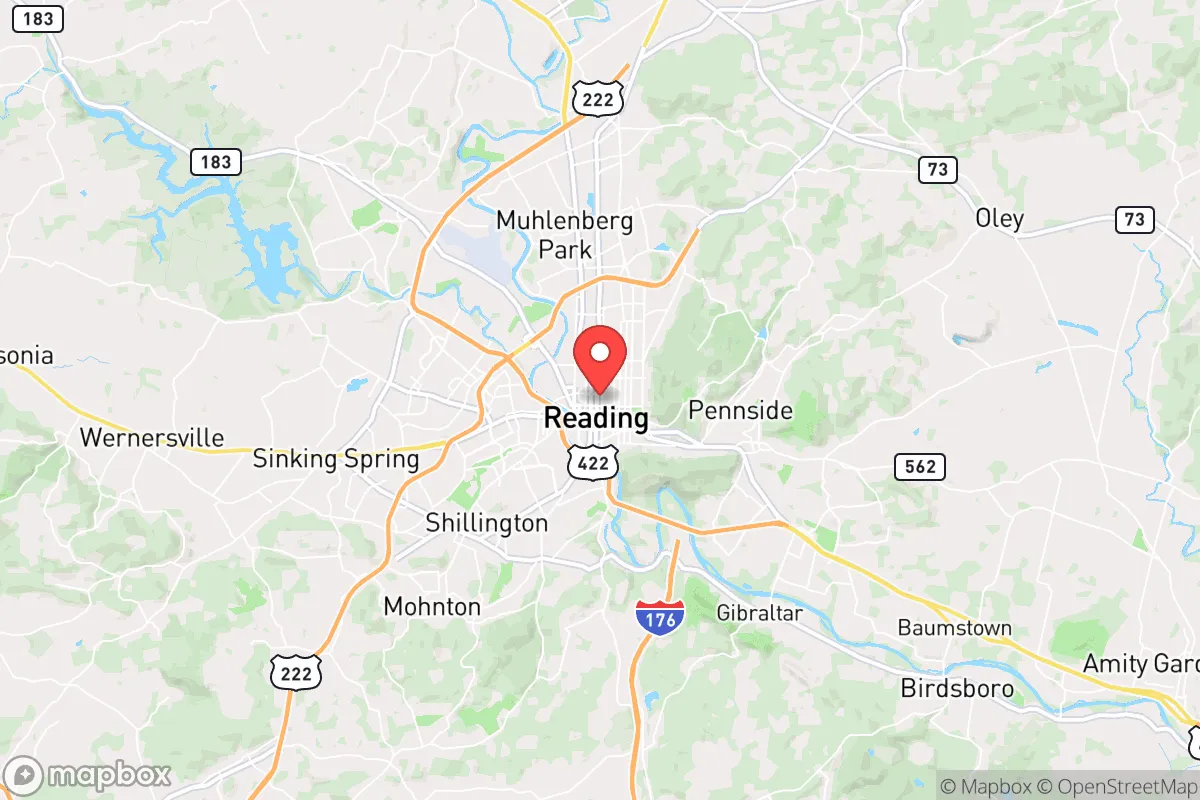
Reading, Pennsylvania, presents a mixed picture for those prioritizing personal sovereignty, with the city itself operating under a dense regulatory environment while the surrounding Berks County offers more breathing room for those willing to navigate state-level constraints. The city’s urban core is subject to typical northeastern municipal oversight, but the broader region provides opportunities for self-reliant living if you know where to look and are prepared to push back against a state government that has steadily expanded its reach into local affairs. For the survivalist or prepper, Reading is less a sanctuary and more a strategic outpost—close enough to resources and rural escape routes, but requiring constant vigilance against encroaching mandates and tax burdens.
Tax burden and regulatory posture in Berks County
Pennsylvania’s tax structure is a double-edged sword for sovereignty-minded individuals. The state income tax is a flat 3.07%, one of the lowest in the Northeast, and there is no tax on retirement income, which is a significant advantage for those seeking financial independence. However, Reading itself imposes a city wage tax of 3.5% on residents and 1.75% on non-residents working within city limits, plus a school district property tax that ranks among the highest in the state—often exceeding 25 mills. Combined with a county property tax of roughly 5.5 mills, the total effective property tax rate on a median home can approach 3% of assessed value annually, a heavy load for anyone trying to minimize government dependency. Regulatory posture is similarly burdensome: Pennsylvania’s Uniform Construction Code is strictly enforced in Reading, with permit fees and inspection requirements that can stall even minor DIY projects. The city also enforces rental licensing and occupancy limits, making it difficult to operate a homestead or multi-generational property without bureaucratic friction. For those seeking to reduce their footprint, the state’s vehicle emissions testing and annual safety inspections add another layer of compliance, though these are common across the region.
Self-defense and gun law specifics in Pennsylvania
Pennsylvania is a shall-issue state for concealed carry permits, meaning Reading residents can obtain a License to Carry Firearms (LTCF) from the Berks County Sheriff’s office without demonstrating a specific need—just a clean background check and a fee of about $20. This is a solid foundation for self-defense, but the state has notable restrictions. Open carry is legal without a permit outside Philadelphia, but Reading’s city ordinances and local police practices can create ambiguity; it’s wise to carry concealed to avoid unwanted attention. The state preempts most local gun laws, so Reading cannot ban firearms outright, but it does enforce a 48-hour waiting period for handgun purchases and requires a Pennsylvania Instant Check System (PICS) background check for all transfers, including private sales. Magazine capacity is not restricted, and there is no state-level assault weapons ban, which is a plus for preppers. However, the state’s Uniform Firearms Act prohibits carrying in courthouses, schools, and certain government buildings, and the city’s high crime rate—Reading’s violent crime rate is roughly three times the national average—means that situational awareness and a reliable defensive plan are non-negotiable. For those willing to commute, the rural townships of Berks County offer far fewer restrictions and a more gun-friendly culture.
Self-reliance and homesteading viability in the Reading area
True homesteading within Reading’s city limits is nearly impossible due to zoning restrictions and lot sizes that average less than 0.1 acres. The city’s code prohibits keeping livestock—chickens are allowed only with a special permit and strict coop regulations—and large gardens can run afoul of property maintenance ordinances if they appear unkempt. For off-grid feasibility, the picture is bleak: Pennsylvania’s building codes require connection to municipal water and sewer in most urban zones, and solar panel installation requires permits and utility approval that can take months. However, the surrounding townships of Exeter, Muhlenberg, and Spring offer a different reality. Here, lot sizes of 1 to 5 acres are common, and zoning is far more permissive. Chickens, goats, and even small-scale beekeeping are generally allowed without special permits. Off-grid water systems (wells and septic) are standard in rural areas, and the state’s net metering policy allows solar owners to sell excess power back to the grid, though the process is bureaucratic. The growing season in Berks County runs roughly from April to October, with fertile limestone-based soil that supports robust vegetable production. For the serious prepper, the key is to buy land outside the city—within a 20-minute drive—where you can establish a defensible property with water, food production, and minimal government oversight. The Amish and Mennonite communities in northern Berks County are living proof that self-reliance is viable here, but they operate under religious exemptions that secular homesteaders cannot claim.
Personal liberties: parental rights, medical autonomy, speech, and property
Pennsylvania’s record on parental rights is mixed. The state mandates school attendance from age 6 to 18, and homeschooling requires filing a notarized affidavit and maintaining a portfolio of student work that can be reviewed by the local school district. While this is less intrusive than some states, it still gives the government a foothold in family decisions. Medical autonomy is under increasing pressure: the state has a vaccine mandate for school attendance (with medical and religious exemptions that are frequently challenged), and COVID-era emergency powers gave the governor broad authority to shut down businesses and limit gatherings—powers that have since been curtailed by the legislature but not eliminated. Speech protections are strong under the Pennsylvania Constitution, but the city of Reading has a history of enforcing noise ordinances and parade permit requirements that can be used to suppress unsanctioned gatherings. Property rights are the most concerning area: the state’s eminent domain authority is broad, and Berks County has used it for economic development projects, including the controversial expansion of the Reading Regional Airport. Additionally, the city’s rental inspection program gives officials the right to enter properties without a warrant in some cases, a clear overreach that property owners should challenge. For those who value absolute control over their land and family, Reading’s urban environment is a constant negotiation with government authority.
Overall, personal sovereignty in Reading, PA, is a matter of strategic compromise. The city itself is a high-tax, high-regulation environment where self-defense is necessary but constrained, and homesteading is impractical. However, the surrounding Berks County offers a viable alternative for those willing to commute or relocate to rural townships. Compared to other northeastern cities, Reading provides a lower tax burden than New York or New Jersey, but it falls short of the freedom found in states like Texas or New Hampshire. For the survivalist or prepper, the best approach is to treat Reading as a base for income or resources while establishing a separate, self-sufficient property in the county’s rural fringe—where the government’s reach is weaker, and personal sovereignty can be defended with less daily friction.

* Values derived from national, state, county, city and local statistics and may differ in a specific area. Last updated: 2026-05-01T09:28:52.000Z
Narrative content on this page is AI-generated and may contain mistakes. Verify any details that matter before acting on them.
ReloMaps may earn a commission from affiliate links at no extra cost to you.

