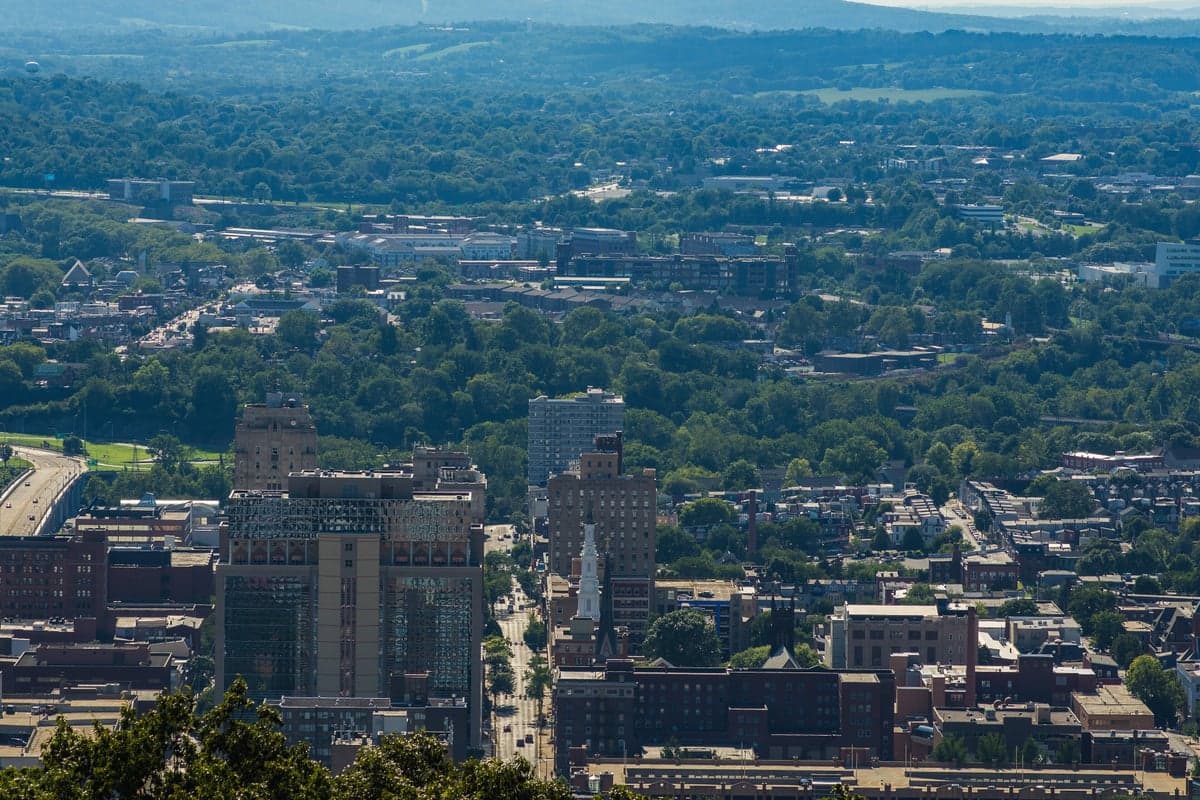
Photo: Wikipedia
Quality of Life in Reading, PA
A high quality of life with strong walkability, manageable living costs, healthy neighborhood signals, and solid amenity access.
What does Quality of Life tell us?
Quality of Life blends cost of living, nearby amenities, socioeconomic signals, and neighborhood character. City-level scores represent the whole municipality; individual neighborhoods can differ.
What does this tell us?
Quality of Life blends cost of living, nearby amenities, socioeconomic signals, and neighborhood character. City-level scores represent the whole municipality; individual neighborhoods can differ.
Cost of Living
32% below national average
The Real Cost of Living in Reading, PA for 2026
| Tier | Individual | Family (4) |
|---|---|---|
| Survival | $16k | $31k |
| Comfortable | $26k | $38k |
| Luxury | $81k+ | $125k+ |
| Elite (Top 5%) | $95k+ | $148k+ |
120%
The Area Signal
A metric tracking the socioeconomic signals of the area.
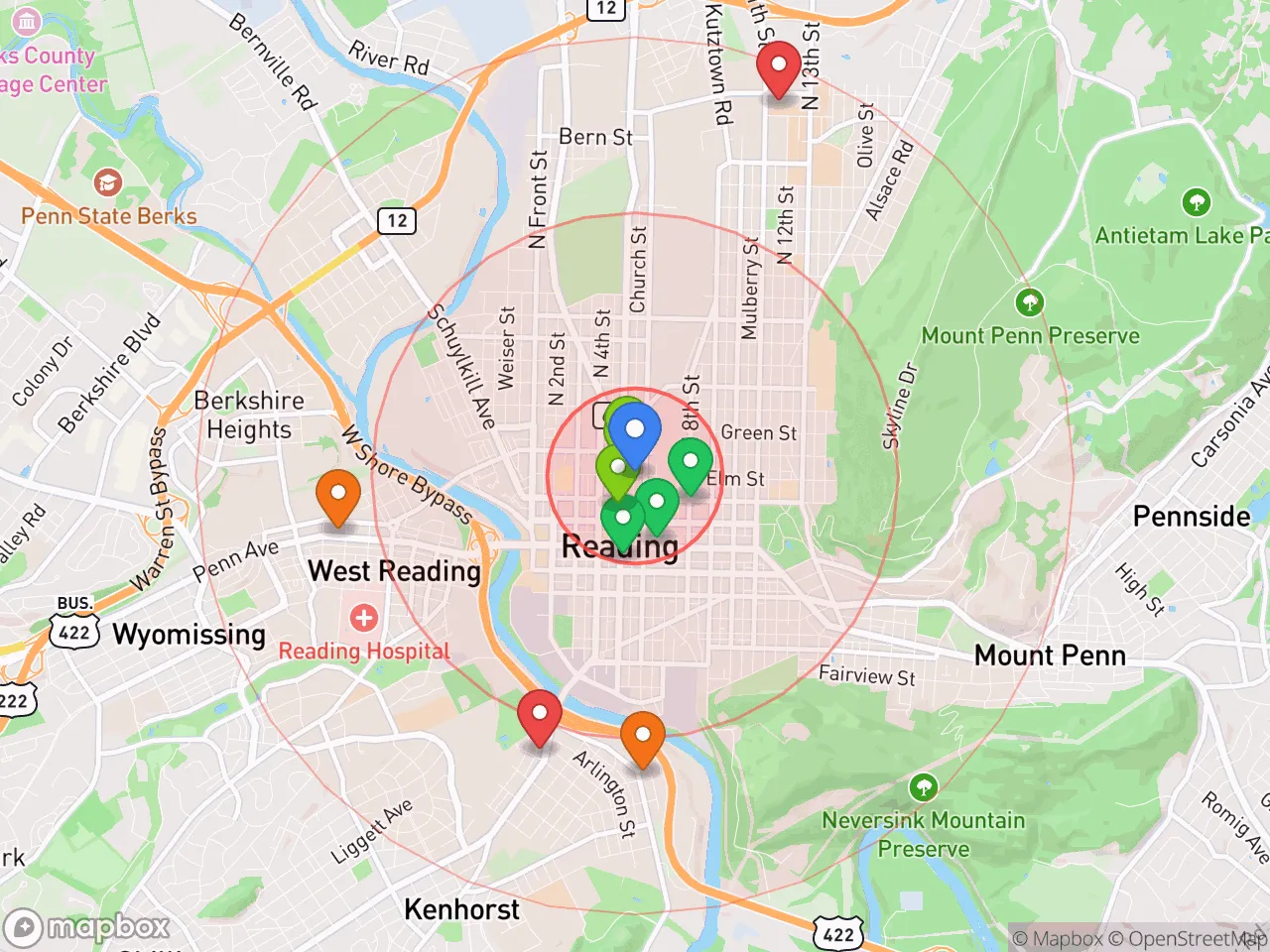
Hobbies
Explore the areaGroceries
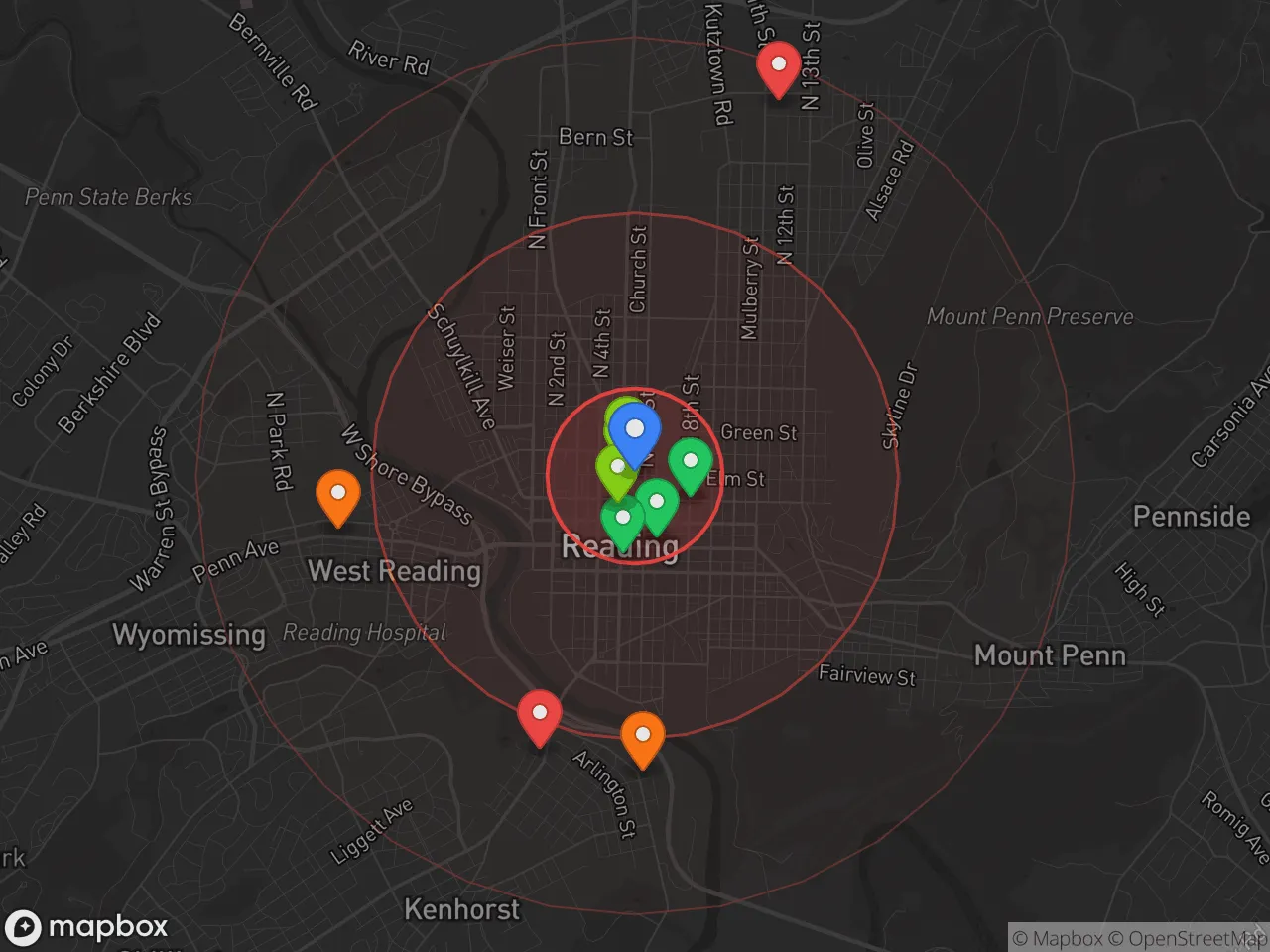
7 within 10 miles
Gas
20 within 10 miles
Hospital
10 within 20 miles
Airport
PHL — Philadelphia International
Post Office
USPS — 1021 Penn Avenue, Wyomissing
Critical Amenities
Quality-of-Life Analysis
Reading, Pennsylvania, presents a quality-of-life profile defined by stark affordability contrasts with the rest of the Northeast, attracting a population that is both economically diverse and increasingly younger. With a cost of living index of 68 (100 = US average), Reading is one of the most budget-friendly cities in the region, drawing residents who prioritize financial breathing room over the premium amenities of pricier suburbs. The city's demographic mix includes long-standing working-class families, a growing Hispanic community (over 60% of the population), and commuters who trade a longer drive for significantly lower housing costs.
Cost of living, housing affordability, and how Reading compares to nearby areas
Reading's housing market is the primary driver of its low cost of living, with a median home value of $109,800—roughly one-third the median in nearby Philadelphia and less than half that in Allentown. Median rent sits at $1,018, which is notably below the national average and a fraction of the $1,800+ typical in the Philadelphia suburbs. This affordability gap is a major draw for first-time homebuyers and renters priced out of the I-95 corridor. However, the trade-off is a higher property tax burden relative to home value, with Berks County millage rates that can add $2,500–$3,500 annually on a median-priced home. The average commute of 23.6 minutes is slightly above the national average, reflecting the many residents who drive to jobs in Wyomissing, West Reading, or even King of Prussia, but it remains manageable compared to the 30+ minute commutes common in the outer Philadelphia suburbs.
Local amenities, schools, and what daily life feels like for residents
Daily life in Reading centers on a compact, walkable downtown anchored by the Reading Public Museum and the GoggleWorks Center for the Arts, which host rotating exhibitions and community classes. The city's school district, Reading School District, serves roughly 18,000 students and has faced persistent challenges with state funding and test scores, though magnet programs like the Reading High School Engineering Academy offer specialized tracks. For families, the nearby Berks County Parks & Recreation system provides hiking and biking along the Schuylkill River Trail, while the Santander Arena brings minor-league hockey and concerts. Grocery access is uneven: downtown has a few bodegas and a small supermarket, but most residents drive to the larger chains on the city's outskirts in Muhlenberg Township or Exeter Township. The rhythm is slower than Philadelphia but busier than rural Berks County, with a noticeable weekend bustle around the Reading Terminal Market-style vendors at the Fairgrounds Farmers Market.
Reading is best suited for budget-conscious individuals and families who value low housing costs and a central location between Philadelphia (60 miles east) and Harrisburg (55 miles west) over high-end schools or luxury amenities. First-time homebuyers, artists attracted to the city's affordable studio spaces, and commuters who work in the I-78/I-76 corridor will find the math compelling. Those seeking top-tier public schools or a vibrant nightlife scene should look to the suburbs of Wyomissing or West Reading, but for anyone willing to accept a modest daily routine in exchange for financial flexibility, Reading offers a rare combination of low cost and urban proximity in the Northeast.

Crime in Reading, PA
Crime rates similar to the national median for U.S. locations.
Violent CrimeViolent Crime Analysis
Property CrimeProperty Crime Analysis
Crime Analysis
Reading, Pennsylvania, presents a challenging safety landscape for prospective residents, with crime rates that significantly exceed both state and national averages. The city’s violent crime rate stands at 257.8 incidents per 100,000 residents, while property crime is reported at 1,285 per 100,000. These figures place Reading among the higher-risk communities in Berks County, a reality shaped by its dense urban environment and the broader criminal justice policies of the surrounding region.
Crime in context
Reading’s violent crime rate is roughly 30% higher than the national average and nearly double the Pennsylvania state average of approximately 200 per 100,000. Property crime in Reading is also elevated, outpacing the national rate by about 20%. These statistics are particularly concerning given that Reading is part of a large metropolitan area (Philadelphia-Camden-Wilmington) where progressive prosecutorial policies have become common. In Berks County and nearby jurisdictions, district attorneys and judges who prioritize rehabilitation over incarceration have contributed to a revolving-door justice system. This ideological approach, while sympathetic to offenders, directly results in more criminals returning to the streets, undermining public safety and victim justice. The data reflects this: repeat offenders account for a disproportionate share of both violent and property crimes in the city.
What residents experience
Daily life for Reading residents involves navigating a heightened risk of theft, burglary, and vehicle break-ins, particularly in densely populated neighborhoods near the city center. Violent incidents, including aggravated assault and robbery, are concentrated in specific corridors such as Penn Street and the area around the Reading Terminal Market. The city’s police department has struggled with staffing shortages, leading to slower response times in some precincts. Residents frequently report that minor property crimes, such as package theft and vandalism, go uninvestigated due to limited resources. The presence of progressive judges in Berks County courts means that even repeat property offenders often receive probation or short sentences, eroding deterrence and emboldening criminal activity.
Neighborhood-level variation is stark. Areas like the Centre Park Historic District and the Glenside neighborhood experience lower crime rates, with violent incidents roughly half the city average, thanks to active community watch programs and better lighting. In contrast, the Northeast Reading and South of Penn Street zones report crime rates 40-60% above the city mean. Prospective residents should prioritize properties in the western and northwestern quadrants, where police patrols are more frequent and property values have remained more stable. Overall, Reading demands a cautious approach: while some blocks are safe, the city’s justice system’s leniency toward offenders creates a persistent undercurrent of risk that cannot be ignored.
* Values derived from national, state, county, city and local statistics and may differ in a specific area. Last updated: 2026-05-01T09:28:52.000Z
Narrative content on this page is AI-generated and may contain mistakes. Verify any details that matter before acting on them.
ReloMaps may earn a commission from affiliate links at no extra cost to you.

