Photo: Wikipedia
Strategic Assessment of Reading, PA
Multiple tactical vulnerabilities. Population density, target proximity, or disaster risk are likely compounding. A retreat property and exit planning is required.
What does the Strategic Assessment tell us?
Our Strategic Assessment grades tactical survivability of an area. Major population centers, military targets, fallout zones, natural disasters, and border exposure all drive risk — lower exposure means a more defensible position in a crisis.
This is heavily inspired by Joel Skousen's Strategic Relocation book. Highly recommended you checkout the book ($)What does this tell us?
Our Strategic Assessment grades tactical survivability of an area. Major population centers, military targets, fallout zones, natural disasters, and border exposure all drive risk — lower exposure means a more defensible position in a crisis.
This is heavily inspired by Joel Skousen's Strategic Relocation book. Highly recommended you checkout the book ($)Strategic Pillars

Key Distances
Regional Safe Places
Below is our recommended "safe zones" in Pennsylvania and the surrounding area based on our strategic heuristics. For most people, it's unrealistic to live in a “safe zone” full-time due to work, family or other personal reasons. They tend to be more rural. However, many of these areas are perfect for second homes and retreat properties that double as a vacation home or even a short-term rental.
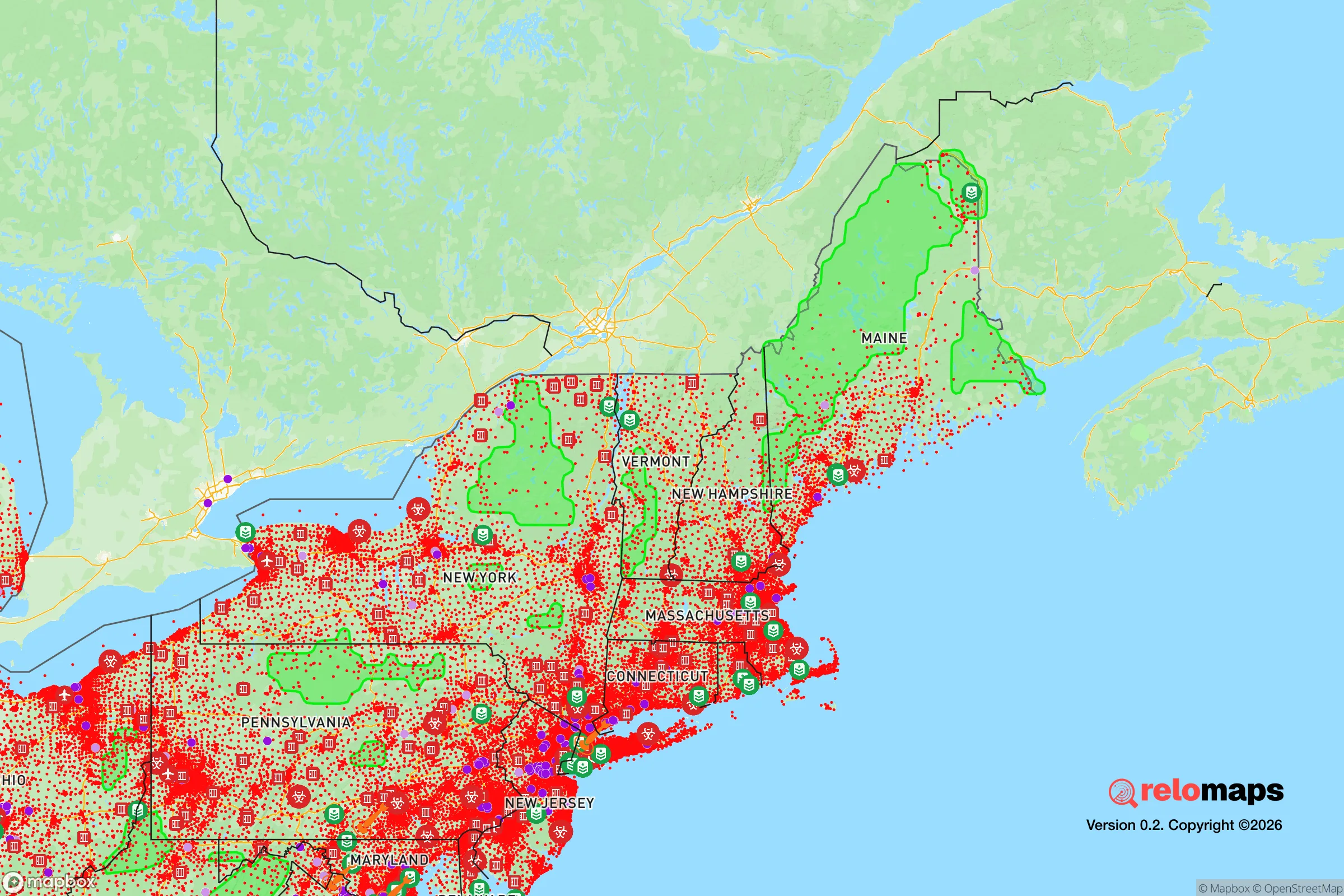
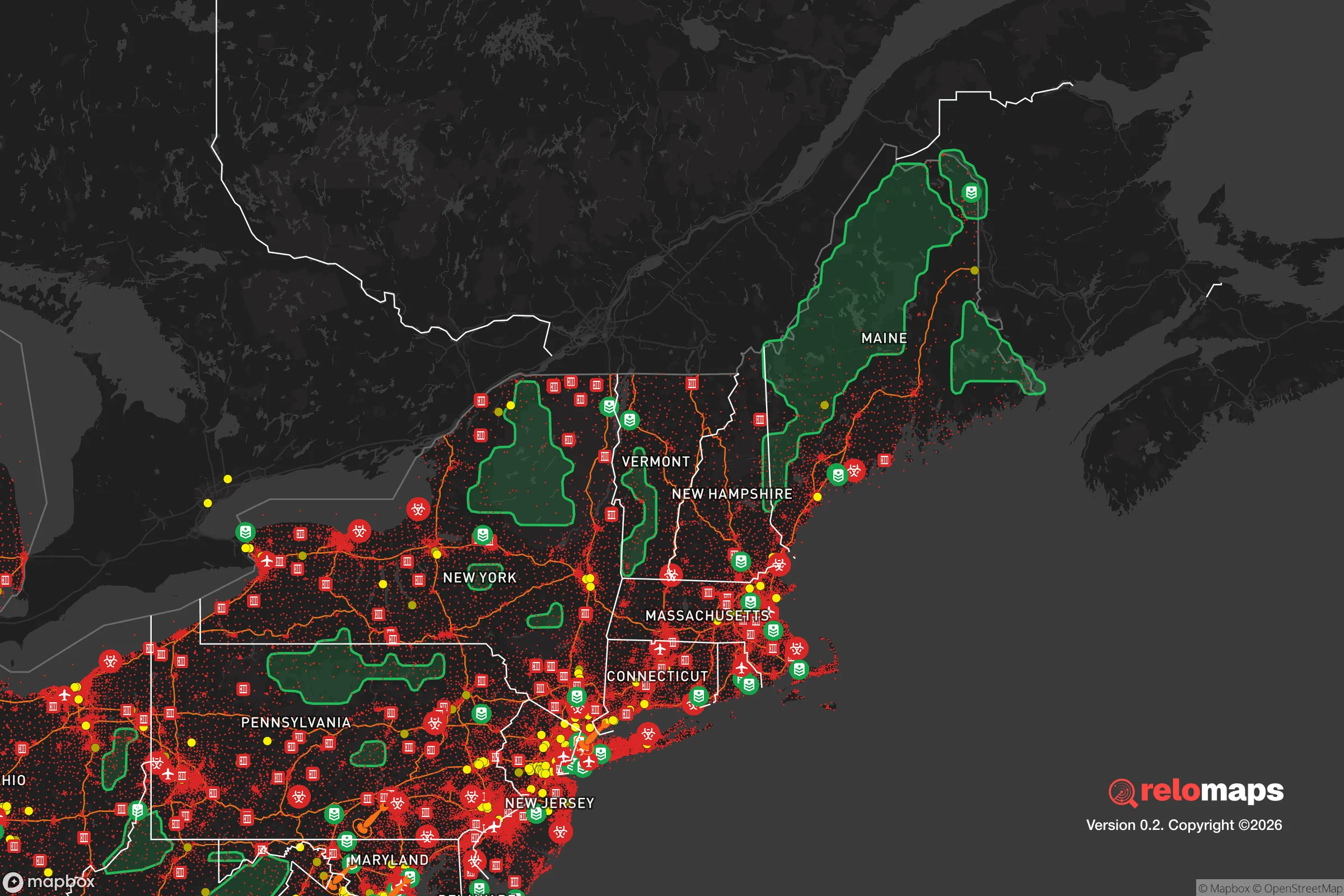


Important Note: For informational purposes only. This does not mean nothing bad ever happens in the green zones. Please use common sense. This is based on public data and modeled with AI. We tried to take a conservative approach but mistakes happen. We update this regularly as new information becomes available.
Solar Generator Recommendations
Backup power matters more here than in safer locations. We've picked three solar generators across budgets and capacity tiers — start with the budget unit if you only need a few essentials, or step up if you want to run a fridge and HVAC for days at a time.

Jackery Portable Power Station Explorer 300
Budget OptionPower on the Go: Weighing only 11 lbs, it's convenient to set up and store with book-sized foldable solar panels

BLUETTI Portable Power Station AC180
Designed for both indoor and outdoor scenarios, AC180 is highly capable as it has a robost capacity and continuous output power.

EF ECOFLOW DELTA Pro Ultra Power Station
Upgraded PickEcoFlow DELTA Pro Ultra is a whole-home energy system designed to grow with your family. Integrated with the Smart Home Panel 2, it scales to meet your evolving energy needs — keeping your home powered, intelligent, and secure through every stage of life.
We earn a commission, at no additional cost to you.
Strategic Assessment Analysis
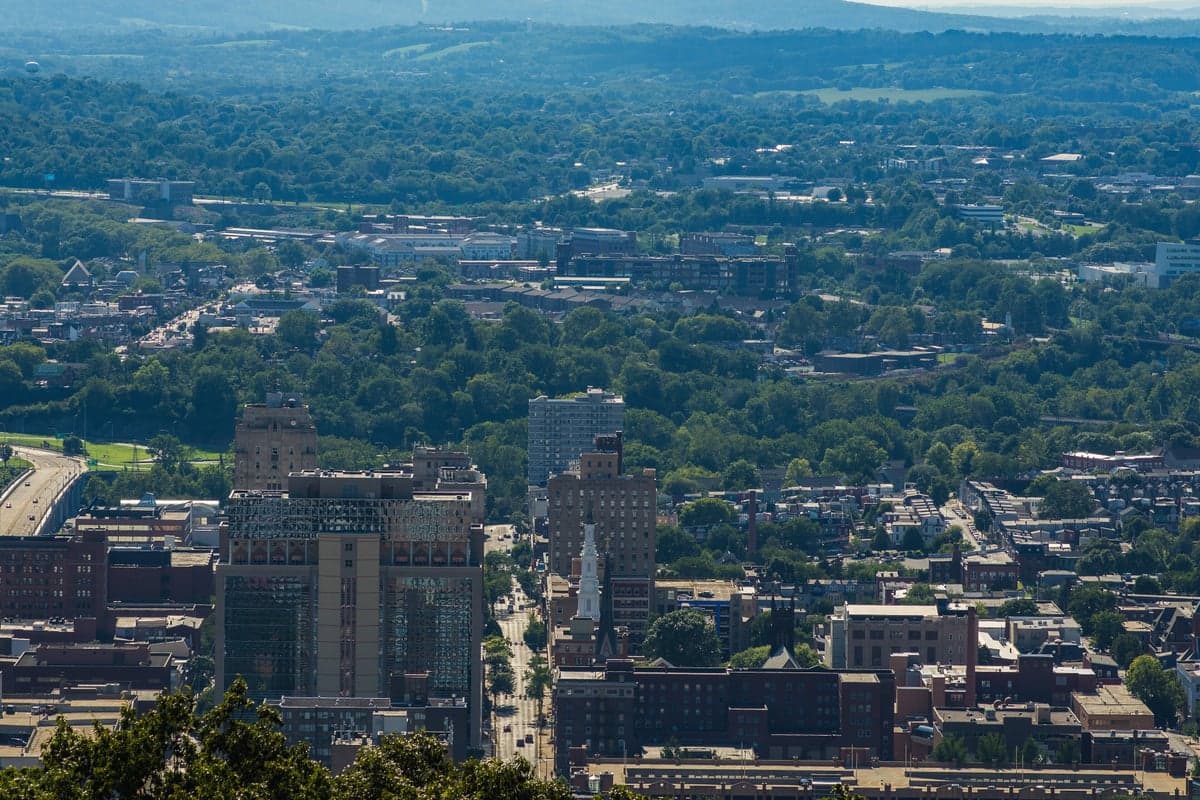
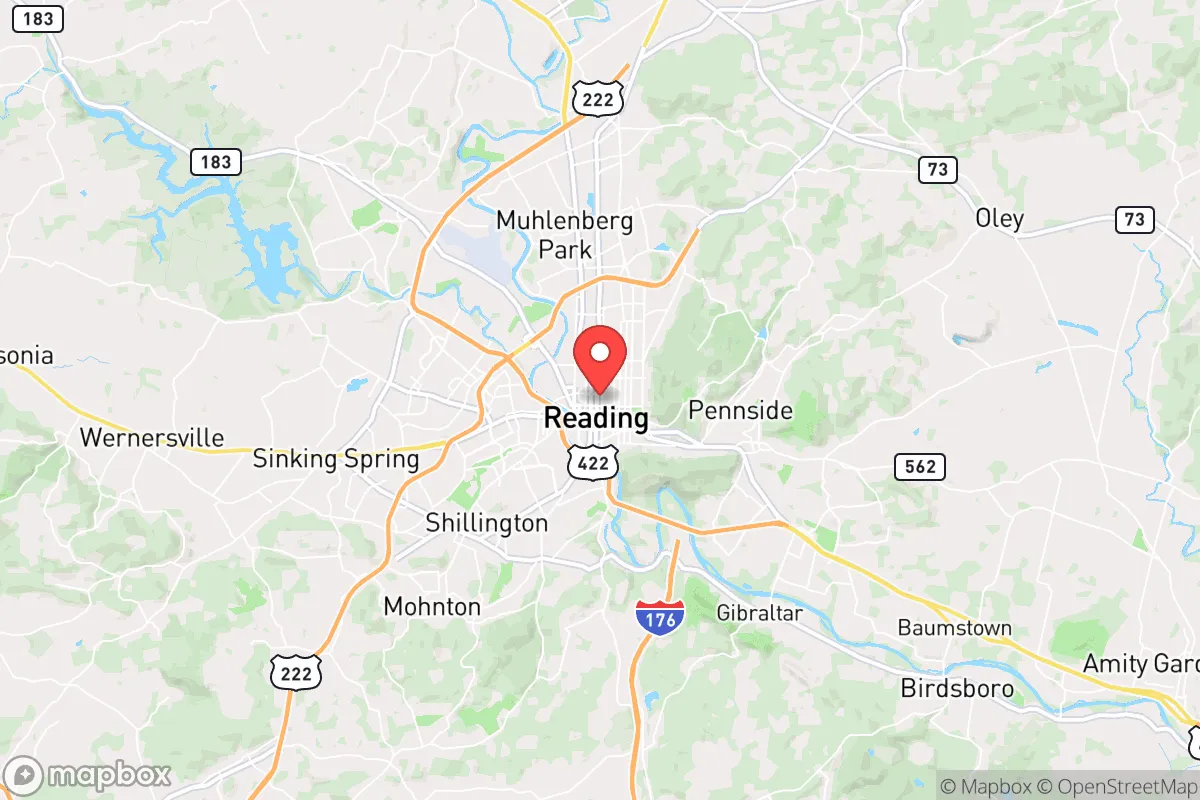
Reading, Pennsylvania, sits in a strategic pocket of Berks County that offers a blend of industrial resilience and geographic insulation, but it’s not without serious trade-offs for those prioritizing long-term preparedness. Located roughly 60 miles northwest of Philadelphia and 90 miles west of New York City, Reading provides a buffer from the immediate blast zones and civil chaos of major metropolitan areas, yet remains close enough to access supply chains and medical infrastructure when things are stable. The city itself has weathered decades of economic decline, which has fostered a gritty, self-reliant character among its residents—a trait that aligns well with a survivalist mindset. However, the area’s proximity to critical infrastructure and population corridors means that any major disruption—whether from civil unrest, grid collapse, or a mass casualty event—will ripple through here faster than in more remote regions like the Alleghenies.
Geographic position and natural advantages for long-term security
Reading’s location in the Schuylkill River Valley gives it a natural defensive advantage, with the Blue Mountain ridge forming a barrier to the north and the rolling hills of the Pennsylvania Dutch country to the south and west. This topography creates natural chokepoints along major routes like I-78 and US-222, which could be used to control movement during a crisis, but also means that evacuation or resupply corridors are limited and predictable. The area sits atop the Newark Basin aquifer, providing a reliable groundwater source that is less vulnerable to surface contamination than many coastal regions. For a relocator, the key advantage is the mix of farmland and forest within a 20-mile radius—Berks County is one of Pennsylvania’s top agricultural producers, with over 1,200 farms growing corn, soybeans, and hay, plus a strong Amish and Mennonite presence that maintains traditional farming skills and off-grid knowledge. This agricultural base means that local food production could sustain a reduced population for weeks or months if supply chains break down, unlike suburban sprawl areas that depend entirely on truck deliveries. The region’s moderate climate, with average annual rainfall around 42 inches and a growing season of roughly 170 days, supports subsistence gardening and small-scale livestock operations without the extreme weather risks of the Plains or Gulf Coast.
Risks, exposures, and proximity to fallout-relevant landmarks
The most significant vulnerability for Reading is its proximity to multiple high-value targets that could draw secondary effects during a conflict or terrorist event. The Limerick Generating Station, a nuclear power plant located just 30 miles southeast in Pottstown, is a primary concern—any accident or attack there could force a mandatory evacuation zone extending well into Berks County, with prevailing winds potentially carrying fallout directly over Reading. Additionally, the Philadelphia Naval Shipyard and the Port of Philadelphia, both within 70 miles, are strategic military and logistics hubs that could become targets in a major conflict. The city itself sits near the intersection of several major rail lines and natural gas pipelines, including the Mariner East pipeline system, which transports propane and ethane through the region—a rupture or sabotage event could create a localized disaster zone. For a prepper, the density of the surrounding population is another risk: Berks County has roughly 430,000 residents, with Reading’s city proper at 95,000, meaning that any large-scale evacuation would clog the limited road network, especially along the Schuylkill Expressway (I-76) and US-422. The area also has a history of civil unrest—Reading experienced significant protests and property damage during the 2020 riots, with fires set in the downtown core, and the city’s high poverty rate (over 30%) means that social tensions could escalate quickly during a prolonged crisis. While not a direct fallout zone, the concentration of pharmaceutical and chemical plants along the Schuylkill River corridor presents a secondary hazard: airborne toxins from an industrial accident could drift into the valley with little warning.
Practical resilience for a relocator: food, water, energy, and defensibility
For a single individual or family looking to establish a resilient foothold, Reading offers a mixed bag of practical advantages and hard limitations. On the positive side, the area has a strong network of local food producers—farmers’ markets operate year-round in Reading, Kutztown, and Fleetwood, and the Pennsylvania Dutch country to the west is known for bulk food stores like Shady Maple and Good’s Store, where you can stockpile grains, canned goods, and dried beans without drawing attention. Water is generally accessible via private wells in rural parts of the county, though city residents rely on the Reading Area Water Authority, which draws from the Schuylkill River and Lake Ontelaunee—both surface sources that could be contaminated by upstream industrial spills or biological attacks. A serious prepper would want to invest in a Berkey or similar gravity filter, plus a backup well-drilling plan if they’re outside city limits. Energy resilience is a weak point: the local grid is aging and prone to outages during winter storms and summer heat waves, with PPL Electric Utilities reporting an average of 1.2 outages per customer per year, slightly above the national average. Solar potential is moderate—Berks County gets about 4.5 peak sun hours per day, enough for a modest off-grid system, but the valley’s frequent cloud cover in winter reduces reliability. For defensibility, the ideal property would be on the northern slopes of the Blue Mountain ridge, where you get a clear view of the valley below and limited access points from the south. The Amish communities to the west are generally non-confrontational but will not share resources with outsiders, so building relationships with local Mennonite or independent farmers is critical for barter and mutual aid. The biggest practical hurdle for a relocator is the housing market: Reading’s city proper has cheap fixer-uppers (median home price around $150,000), but crime rates are high—the city’s violent crime rate is roughly 4 times the national average—so you’d want to look at outlying towns like Wernersville, Robesonia, or Hamburg, where prices are still reasonable ($200,000–$300,000) and the community is tighter-knit.
The overall strategic picture for Reading is one of calculated compromise: it offers better natural resources and agricultural access than most East Coast suburbs, but it lacks the isolation and low-profile security of deeper rural areas like Potter County or the West Virginia panhandle. For a conservative-minded prepper who needs to stay within commuting distance of Philadelphia or New York for work, Reading is a viable middle ground—you can stockpile supplies, establish a garden, and build a network of like-minded locals without raising eyebrows. But if your plan hinges on avoiding all major population centers and critical infrastructure, the risks from the nuclear plant, pipeline corridors, and civil unrest in the city itself are real enough that you’d be better off pushing another 50 miles west toward the Susquehanna River. The bottom line: Reading works as a staging area for a longer-term retreat, not as a final bug-out location. Get your property set up, make friends with the Amish, and keep a vehicle gassed up for a secondary move if the situation deteriorates beyond what the valley can absorb.

* Values derived from national, state, county, city and local statistics and may differ in a specific area. Last updated: 2026-05-01T09:28:52.000Z
Narrative content on this page is AI-generated and may contain mistakes. Verify any details that matter before acting on them.
ReloMaps may earn a commission from affiliate links at no extra cost to you.

