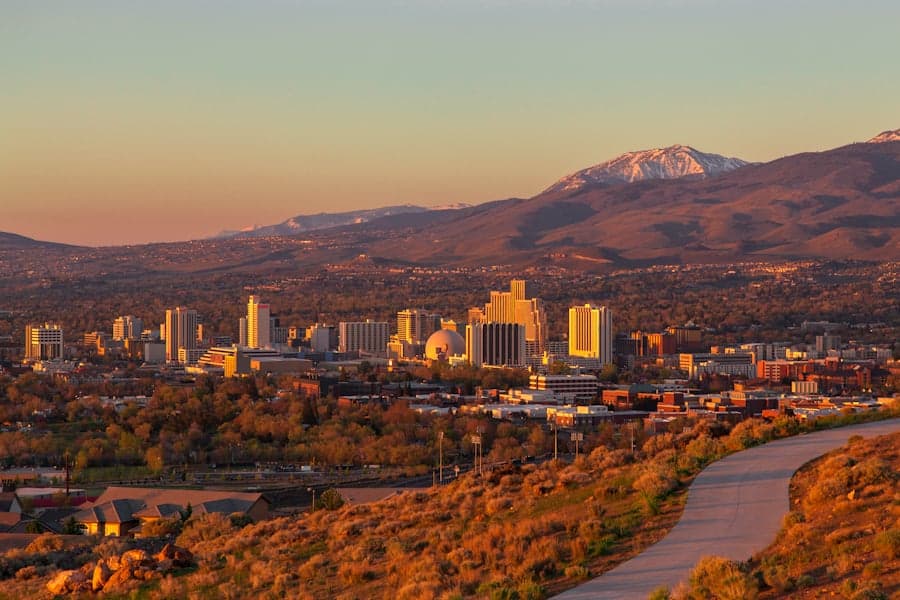
Photo: Wikipedia
Political ClimatePolitical Climate in Reno, NV
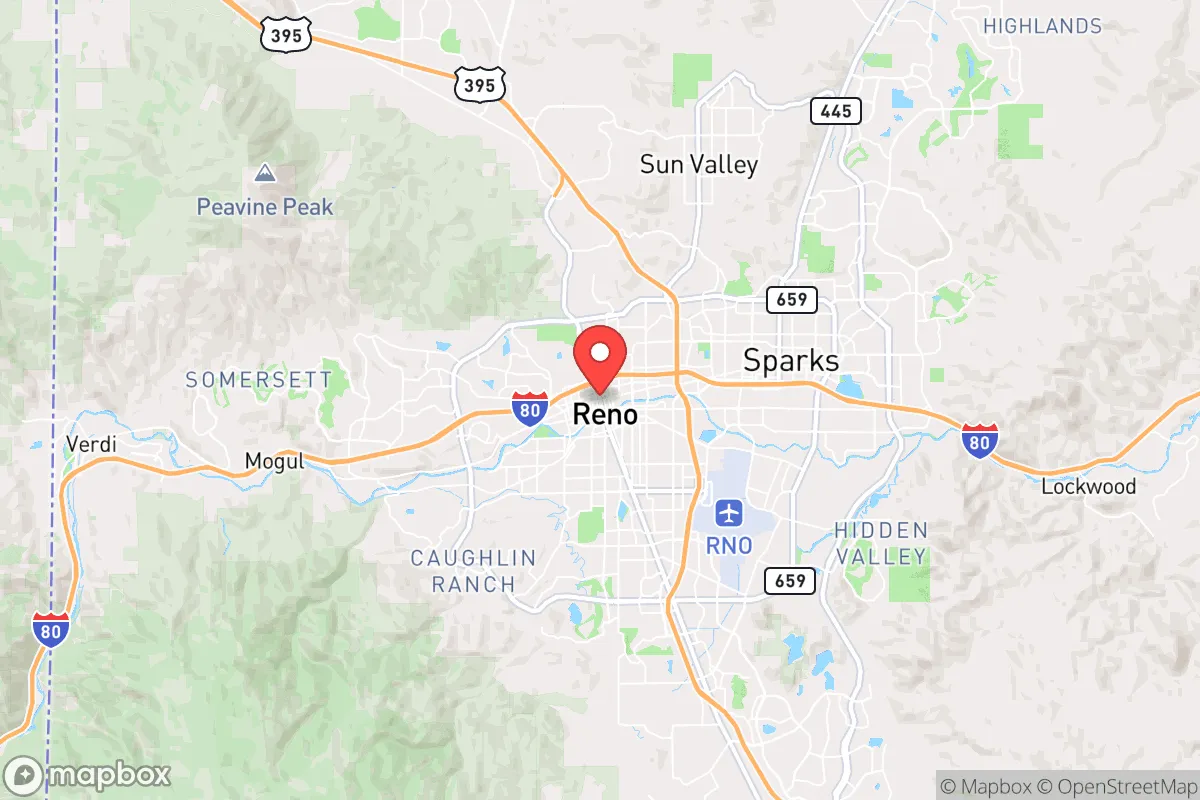
District shown is the primary district for this city’s centroid. Cities may span multiple districts.
Local Political AnalysisPolitical Analysis of Reno, NV
Reno’s political climate has shifted noticeably over the last decade, and if you’ve lived here as long as I have, you can feel it. The city itself used to be a reliably conservative stronghold, but the influx of out-of-state transplants—especially from California—has nudged Washoe County into a battleground. The Cook PVI for Nevada’s 2nd Congressional District, which covers Reno and most of the northern part of the state, sits at R+7, meaning the area still leans Republican by a solid seven points. But that number masks a real tension: the city core is trending left, while the surrounding suburbs and rural areas—like Sparks, Spanish Springs, and the ranching communities out toward Pyramid Lake—are holding the line. It’s a split that makes Reno feel like two different towns depending on which side of the interstate you’re on.
How it compares
Drive twenty minutes south to Carson City, and you’ll find a place that’s still reliably conservative, with a more traditional Western independence vibe. Head east to Elko, and you’re in deep-red territory where the Second Amendment and limited government are practically religion. But Reno? It’s the outlier. The city’s political lean is now closer to what you’d see in a place like Bend, Oregon—a former conservative hub that got gentrified by tech workers and retirees who brought their progressive voting habits with them. The contrast is stark: while Washoe County as a whole still votes red in most statewide races, the city council and school board have taken on a noticeably more progressive tone in recent years. That’s a red flag for anyone who values local control and personal freedoms, because those are the bodies that decide zoning, mask mandates, and curriculum.
What this means for residents
For folks who’ve been here a while, the biggest concern is government overreach creeping into daily life. The push for stricter land-use regulations, higher impact fees, and more aggressive code enforcement feels like a slow-motion takeover of the “live and let live” ethos that made Reno attractive in the first place. Property taxes are still relatively low compared to California, but the city council has floated proposals for new business license fees and rental inspection programs that sound reasonable on paper but end up being tools for control. On the plus side, the R+7 district still sends a Republican to Congress, which means federal overreach—like EPA water rules or BLM land restrictions—gets pushback. But locally, you have to keep an eye on ballot measures and city ordinances, because that’s where the real erosion of freedom happens.
Culturally, Reno still has a libertarian streak that cuts across party lines. People here don’t like being told what to do, whether it’s about mask mandates, gun ownership, or how they use their own property. That’s the good news. The bad news is that the progressive shift is real, and it’s accelerating. If you’re considering a move, I’d say come for the low taxes and the outdoor access, but get involved in local politics fast—because the character of this town is being decided right now, and it’s not going to settle itself.

State Political ClimatePolitical Climate in Nevada
State Political AnalysisPolitical Environment in the State
Nevada has long been a classic swing state, but over the past decade it has drifted noticeably leftward, with Democrats now holding all six statewide elected offices and both U.S. Senate seats. The state’s overall partisan lean is now a solid “Lean D” — President Biden won it by just over 2 points in 2020, but down-ballot Democrats consistently outperform that margin. The 10-20 year trajectory shows a state that was once a bellwether (voting for every winner from 1980 to 2012 except 1976) becoming increasingly blue, driven by massive growth in the Las Vegas metro area and a shrinking rural base. For a conservative considering relocation, the picture is mixed: low taxes and a libertarian streak remain, but the political culture in the population centers is now firmly progressive.
Urban vs. rural divide
The political map of Nevada is a tale of two worlds. Clark County (Las Vegas) is the Democratic engine, casting about 70% of the state’s votes and delivering margins of +10 to +15 points for Democrats. The city of Las Vegas itself, along with suburbs like Henderson and North Las Vegas, are solidly blue — Henderson has shifted left as it has grown, though it remains more moderate than the urban core. Reno and Sparks in Washoe County are the second major Democratic stronghold; Washoe has voted blue in every presidential election since 2008, though by narrower margins than Clark. The rural counties tell a different story. Elko in the northeast, Douglas County (Minden/Gardnerville), and Lyon County (Fernley/Yerington) are deeply red, often voting 70-80% Republican. Nye County (Pahrump) is also reliably conservative, though its proximity to Las Vegas brings some spillover. The urban-rural split is stark: the two blue counties (Clark and Washoe) contain nearly 90% of the state’s population, meaning rural conservatives are increasingly outvoted on state-level races.
Policy environment
Nevada’s policy environment is a study in contradictions. On the plus side for conservatives, there is no state income tax — a major draw for individuals and businesses. Property taxes are also relatively low, capped by a 2005 law that limits annual increases to 3% for owner-occupied homes. However, the state’s regulatory posture has grown more burdensome. In 2019, Democrats passed a broad-based business license fee and expanded prevailing wage requirements. Education policy is a sore spot: Nevada ranks near the bottom nationally in K-12 outcomes, and the state has a weak school choice landscape — no universal ESA program, though a limited voucher-style program exists for low-income students. Healthcare policy has shifted left: the state expanded Medicaid under Obamacare and in 2021 passed a public option study bill. Election laws are a concern for conservatives: Nevada has universal mail-in voting (made permanent in 2021), same-day registration, and automatic voter registration — all of which have been criticized for lax security. The state also has a top-five primary system (approved by ballot measure in 2022) that allows nonpartisan voters to participate in all primaries, diluting party control.
Trajectory & freedom
On the freedom index, Nevada is a mixed bag trending in the wrong direction. The state has historically been libertarian on personal liberties — no state income tax, legal gambling, legal brothels in some counties, and a permissive attitude toward vice. But recent years have seen significant expansions of government power. In 2023, Democrats passed a red flag law (SB 143) allowing courts to temporarily seize firearms from individuals deemed a threat, a major infringement on Second Amendment rights. The same session saw a universal background check bill for private firearm sales. On the other hand, Nevada has no “right-to-work” law, meaning union membership can be required for employment in certain sectors — a restriction on economic freedom. Parental rights have taken a hit: in 2021, the state passed a law requiring schools to adopt “culturally responsive” curricula that critics say elevates critical race theory concepts. Medical freedom is eroding: the state has strict vaccine mandates for schoolchildren, and in 2023 it expanded the scope of practice for physician assistants and nurse practitioners, which some see as a step toward government-controlled healthcare. Property rights are relatively strong, with no statewide rent control (though Las Vegas and Reno have considered it). The overall trajectory is toward more regulation and less personal autonomy, particularly on guns and education.
Civil unrest & political movements
Nevada has seen its share of political flashpoints. The 2020 election integrity controversy was intense: Clark County’s mail-in ballot processing was heavily scrutinized, and the state GOP filed multiple lawsuits alleging irregularities. The “Stop the Steal” movement had a significant presence in rural counties, with rallies in Carson City and Elko. On the left, the 2020 Black Lives Matter protests in Las Vegas turned violent, with looting and property damage downtown. Immigration politics are a constant tension: Nevada has a sanctuary state law (SB 223, passed in 2019) that limits local law enforcement cooperation with federal immigration authorities — a major concern for conservatives. The “Battle Born” secessionist rhetoric is mostly a rural phenomenon, with some in Elko and Nye counties floating the idea of splitting off into a separate “State of Jefferson” or “New Nevada,” though it remains fringe. The Washoe County School Board has been a battleground over critical race theory and mask mandates, with conservative parents organizing recall efforts. The Nevada Republican Party is internally divided between establishment and Trump-aligned factions, which has hurt its electoral effectiveness.
Projection
Looking 5-10 years out, Nevada is likely to become more Democratic unless trends reverse. The state is growing fast — about 1.5% annually — and the new arrivals are disproportionately from California, bringing progressive voting habits. The Las Vegas metro area is expected to add another 500,000 people by 2035, further diluting rural influence. The Hispanic population, now about 30% of the state, leans Democratic and is growing. However, there are countervailing trends: some Californians are fleeing high taxes and may bring a libertarian streak, and the rural counties are becoming more politically organized. The 2026 gubernatorial race will be a key test — if a Republican can win, it could slow the leftward drift. But the structural advantages for Democrats (union power in Las Vegas, mail-in voting, demographic trends) suggest the state will remain blue-leaning for the foreseeable future. A conservative moving in now should expect to live in a state where state-level politics are controlled by progressives, but local control in rural counties offers a refuge.
Bottom line for a new resident: Nevada offers genuine financial freedom (no income tax, low property taxes) and a live-and-let-live culture in many areas, but the state government is increasingly progressive and interventionist. If you’re moving to a rural county like Elko or Douglas, you’ll find a conservative community that largely governs itself. If you’re headed to Las Vegas or Reno, expect to live under progressive policies on guns, education, and immigration. The key is to choose your county wisely — Nevada’s political reality is hyper-local, and the state’s trajectory is something to watch closely.
* Values derived from national, state, county, city and local statistics and may differ in a specific area. Last updated: 2026-04-15T23:43:43.000Z
Narrative content on this page is AI-generated and may contain mistakes. Verify any details that matter before acting on them.
ReloMaps may earn a commission from affiliate links at no extra cost to you.

