Photo: Wikipedia
Strategic Assessment of Reno, NV
Multiple tactical vulnerabilities. Population density, target proximity, or disaster risk are likely compounding. A retreat property and exit planning is required.
What does the Strategic Assessment tell us?
Our Strategic Assessment grades tactical survivability of an area. Major population centers, military targets, fallout zones, natural disasters, and border exposure all drive risk — lower exposure means a more defensible position in a crisis.
This is heavily inspired by Joel Skousen's Strategic Relocation book. Highly recommended you checkout the book ($)What does this tell us?
Our Strategic Assessment grades tactical survivability of an area. Major population centers, military targets, fallout zones, natural disasters, and border exposure all drive risk — lower exposure means a more defensible position in a crisis.
This is heavily inspired by Joel Skousen's Strategic Relocation book. Highly recommended you checkout the book ($)Strategic Pillars

Key Distances
Regional Safe Places
Below is our recommended "safe zones" in Nevada and the surrounding area based on our strategic heuristics. For most people, it's unrealistic to live in a “safe zone” full-time due to work, family or other personal reasons. They tend to be more rural. However, many of these areas are perfect for second homes and retreat properties that double as a vacation home or even a short-term rental.
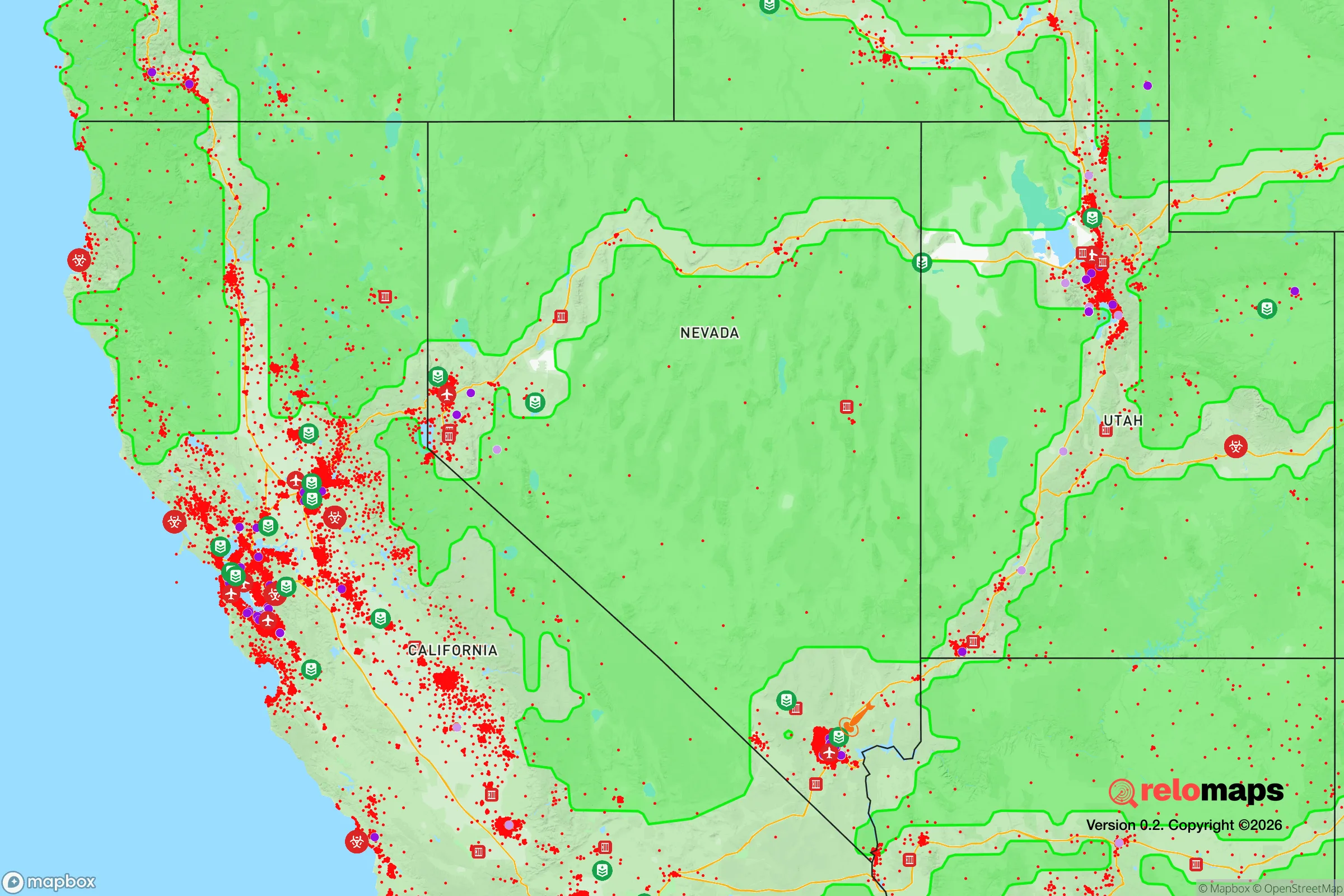
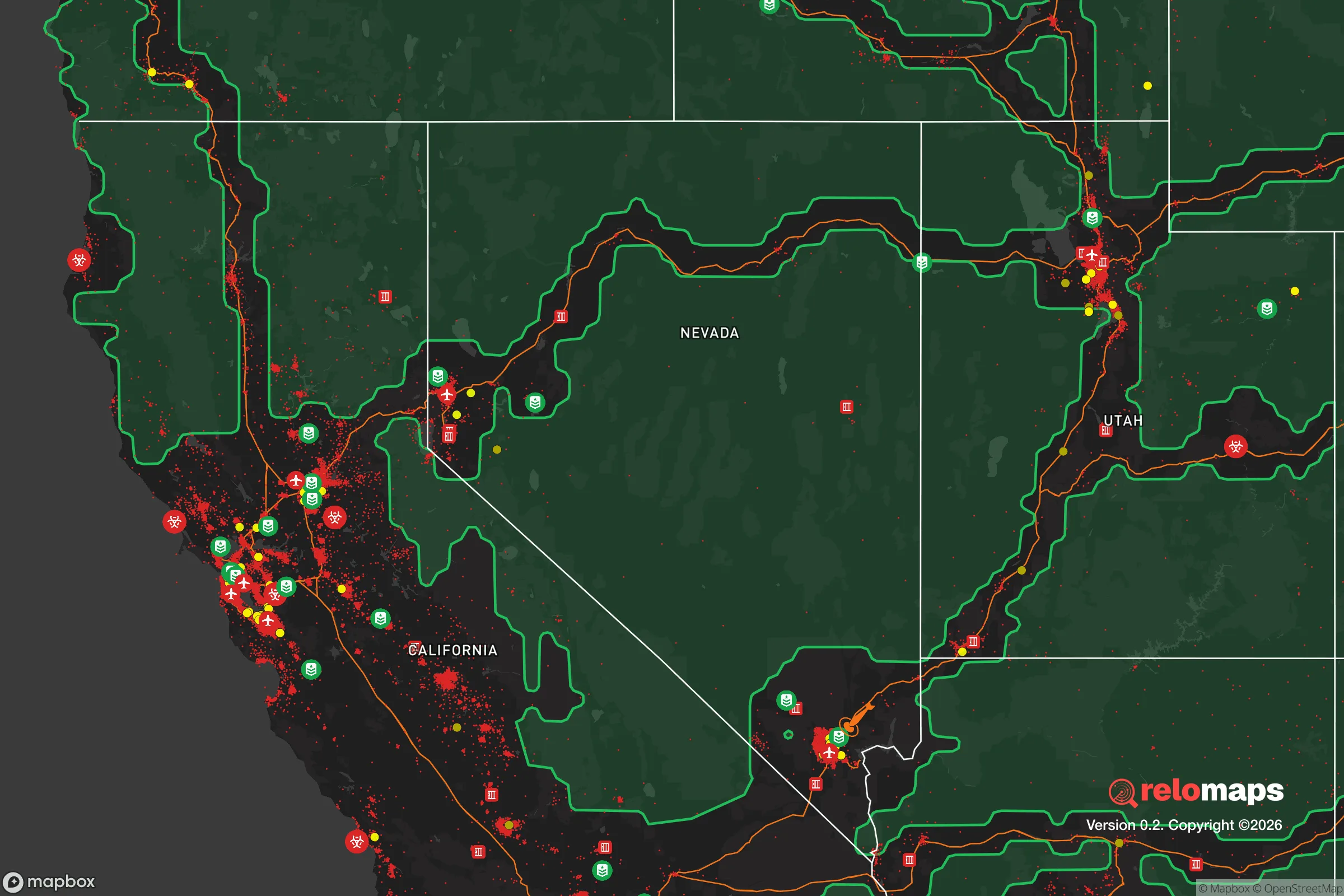


Important Note: For informational purposes only. This does not mean nothing bad ever happens in the green zones. Please use common sense. This is based on public data and modeled with AI. We tried to take a conservative approach but mistakes happen. We update this regularly as new information becomes available.
Solar Generator Recommendations
Backup power matters more here than in safer locations. We've picked three solar generators across budgets and capacity tiers — start with the budget unit if you only need a few essentials, or step up if you want to run a fridge and HVAC for days at a time.

Jackery Portable Power Station Explorer 300
Budget OptionPower on the Go: Weighing only 11 lbs, it's convenient to set up and store with book-sized foldable solar panels

BLUETTI Portable Power Station AC180
Designed for both indoor and outdoor scenarios, AC180 is highly capable as it has a robost capacity and continuous output power.

EF ECOFLOW DELTA Pro Ultra Power Station
Upgraded PickEcoFlow DELTA Pro Ultra is a whole-home energy system designed to grow with your family. Integrated with the Smart Home Panel 2, it scales to meet your evolving energy needs — keeping your home powered, intelligent, and secure through every stage of life.
We earn a commission, at no additional cost to you.
Strategic Assessment Analysis
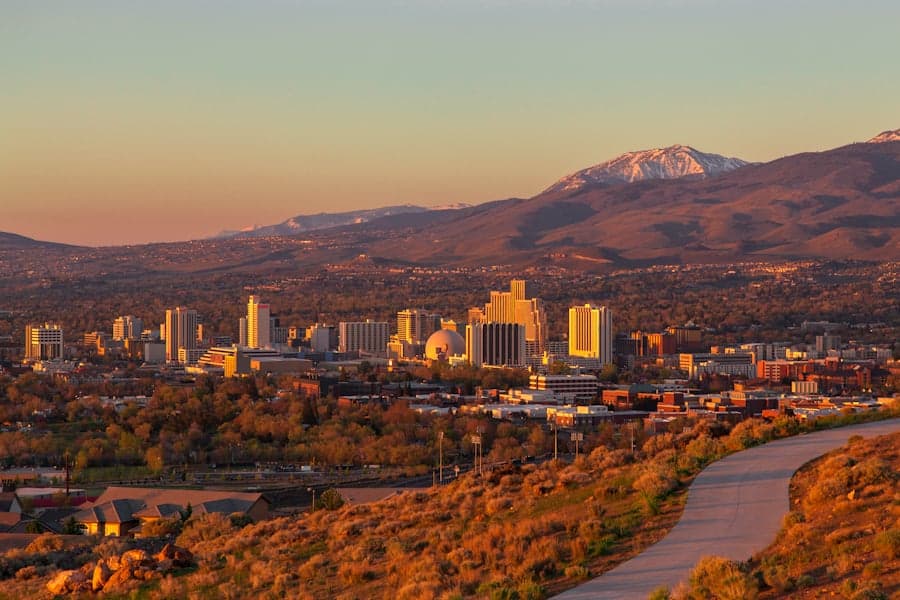
Reno, Nevada, often called "The Biggest Little City in the World," occupies a unique strategic position that makes it a serious contender for those prioritizing resilience and self-reliance. Sitting on the eastern slope of the Sierra Nevada at roughly 4,500 feet elevation, it offers a blend of high desert aridity and mountain access that few other Western cities can match. For a relocator with a prepper mindset, Reno’s key advantage is its relative isolation from the most volatile coastal population centers—San Francisco is about 220 miles west, Los Angeles over 400 miles south—while still providing a functional urban core with hospitals, supply chains, and transportation links. This balance of remoteness and access is rare, and it forms the foundation of Reno’s appeal for those concerned about civic unrest, supply chain disruptions, or large-scale disasters.
Geographic position and natural advantages for long-term security
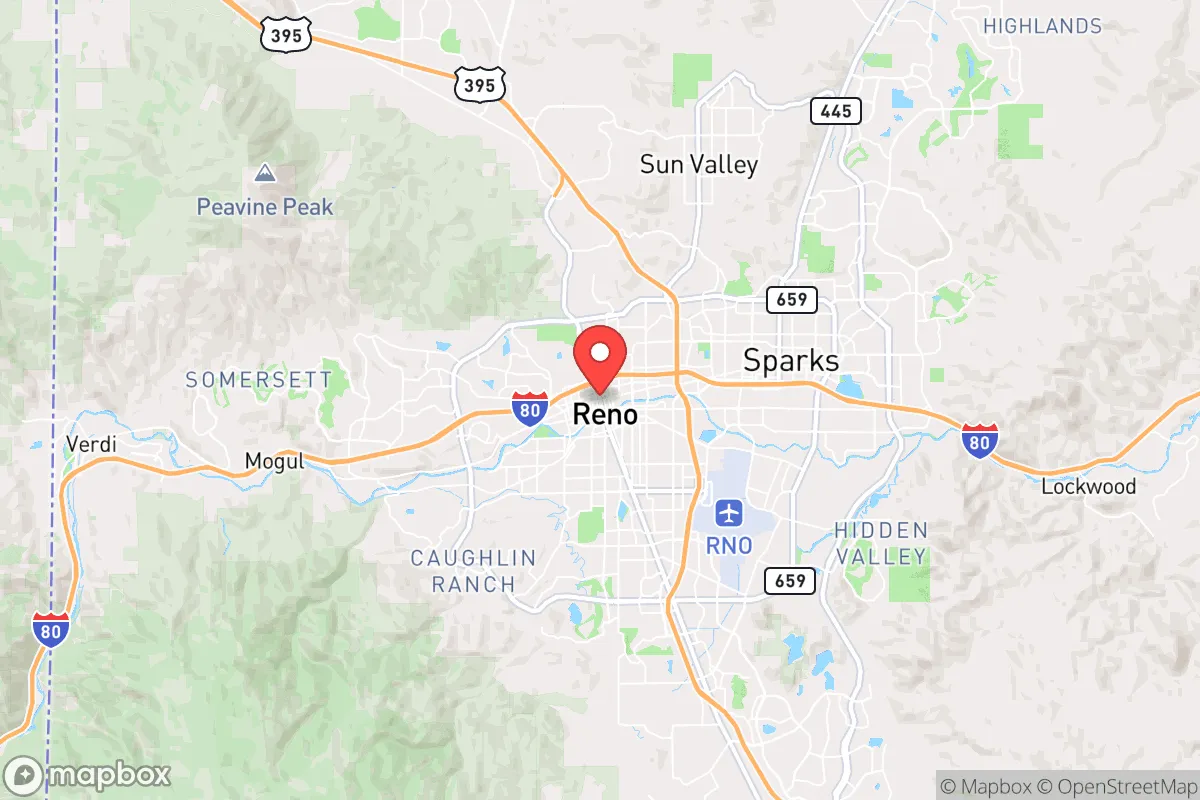
Reno’s geography is its strongest card. The city sits in the Truckee Meadows, a valley ringed by the Sierra Nevada to the west and the Virginia Range to the east. This natural bowl provides a degree of defensibility—approaches are limited, and the surrounding mountains create a buffer against the kind of sprawling, uncontrollable urban growth seen in places like Phoenix or Las Vegas. The Truckee River runs through downtown, a perennial water source fed by Sierra snowpack, which is a critical asset in a region where water rights are a constant battle. The high desert climate means fewer humidity-related health issues and less mold, but it also brings wildfire risk, especially in the foothills. For a survivalist, the ability to tap into mountain runoff, combined with the area’s relatively low population density (Washoe County has about 500,000 people spread over 6,500 square miles), means you’re not boxed in. The proximity to public lands—the Humboldt-Toiyabe National Forest and the Black Rock Desert are within an hour’s drive—offers retreat options if urban conditions deteriorate. Reno’s elevation also provides a cooler summer than the low desert, reducing heat-related stress on infrastructure and crops.
Risks, exposures, and proximity to fallout-relevant landmarks
No strategic assessment is honest without addressing vulnerabilities. Reno’s biggest exposure is its proximity to the Sierra Nevada’s eastern fault lines—the region sits near the Walker Lane seismic zone, which can produce magnitude 6.5 to 7.0 earthquakes. The 2008 Wells earthquake (magnitude 6.0) was a reminder that the ground can shake hard here, and older buildings in downtown Reno may not be retrofitted to modern codes. Wildfire is a more immediate annual threat: the 2021 Caldor Fire came within 20 miles of the city, and the 2022 Mosquito Fire sent smoke into the valley for weeks. For a prepper, this means defensible space, fire-resistant construction, and an evacuation plan are non-negotiable. On the fallout side, Reno is about 150 miles from the Nevada National Security Site (formerly the Nevada Test Site), where nuclear testing occurred until 1992. While no active testing is happening, the site remains a potential target in a conflict scenario. More practically, the city is 200 miles from the San Francisco Bay Area, a major population and economic hub that could become a source of refugee flow during a collapse or disaster. Interstate 80 is the primary corridor, and it could become a chokepoint or a route for mass exodus. The Reno-Tahoe International Airport is a civilian facility, but it also supports military cargo operations from nearby Naval Air Station Fallon (about 60 miles east), which could make the area a secondary target in a major conflict. For the survivalist, these risks are manageable with proper planning—but they are real.
Practical resilience for a relocator: food, water, energy, and defensibility
For someone serious about self-sufficiency, Reno offers a mixed but workable picture. Water is the strongest asset: the Truckee River flows year-round, and the city’s water rights are senior and well-established, unlike many desert communities that rely on the Colorado River. The Truckee Meadows Water Authority has a diversified portfolio of surface water and groundwater, and the region’s snowpack provides a natural reservoir. However, a relocator should plan for private well access or rainwater catchment, as municipal supply could be disrupted. Food production is viable but limited: the growing season is short (about 100-120 frost-free days), and the soil is alkaline and rocky. Raised beds, greenhouses, and cold frames are essential for any serious gardening. The area has a strong local farming community—the Great Basin Community Food Co-op and the Reno Farmers Market are good resources—but don’t expect to grow avocados or citrus. Energy is a bright spot: Nevada gets abundant solar radiation, and net metering policies are favorable. The state also has geothermal potential, and the nearby Ormat plants provide baseload renewable power. For off-grid setups, solar with battery storage is practical, though winter cloud cover can reduce generation. Defensibility is moderate: the valley floor is open, but the surrounding hills offer vantage points and retreat options. The city’s layout—with a compact downtown and sprawling suburbs—means that a rural property on the outskirts (like in Pleasant Valley or the Washoe Valley) provides better security than a house in a subdivision. Gun laws in Nevada are relatively permissive: no state permit is required for open carry, and concealed carry permits are shall-issue with a 30-day wait. The state also has a strong culture of hunting and shooting, with multiple ranges and public lands for practice. For a relocator, the key is to secure a property with a well, solar capability, and defensible space—and to be prepared for wildfire season as a recurring stress test.
The overall strategic picture for Reno is one of cautious optimism for the prepared individual. It is not a bunker—it has real vulnerabilities, including earthquake risk, wildfire danger, and proximity to a major interstate that could bring chaos from the coast. But compared to the dense, resource-strapped cities of California or the water-insecure desert hubs of the Southwest, Reno offers a rare combination of water security, mountain access, and relative isolation. For a conservative-leaning relocator who values self-reliance, community ties, and the ability to ride out disruptions without being in a war zone, Reno is a solid B+ option. It requires work—fire mitigation, seismic retrofitting, and a realistic plan for food production—but the foundation is there. The biggest unknown is how the city will handle a major influx of refugees from California during a crisis; that scenario could overwhelm local resources and test the social fabric. If you can secure a property with a well, solar panels, and a defensible position in the foothills, Reno becomes a strong base for long-term resilience. Just don’t expect it to be a secret—others are already looking.

* Values derived from national, state, county, city and local statistics and may differ in a specific area. Last updated: 2026-04-15T23:43:43.000Z
Narrative content on this page is AI-generated and may contain mistakes. Verify any details that matter before acting on them.
ReloMaps may earn a commission from affiliate links at no extra cost to you.

