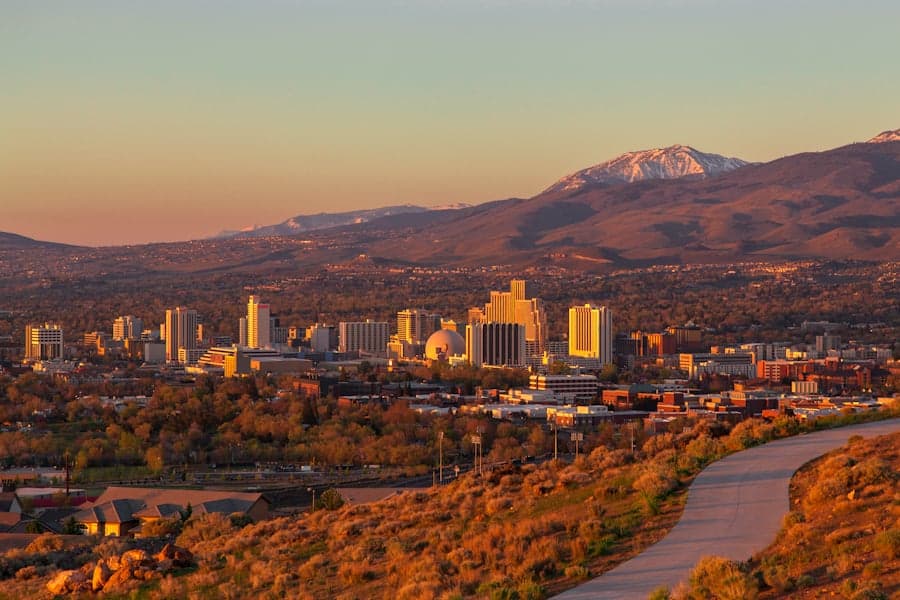
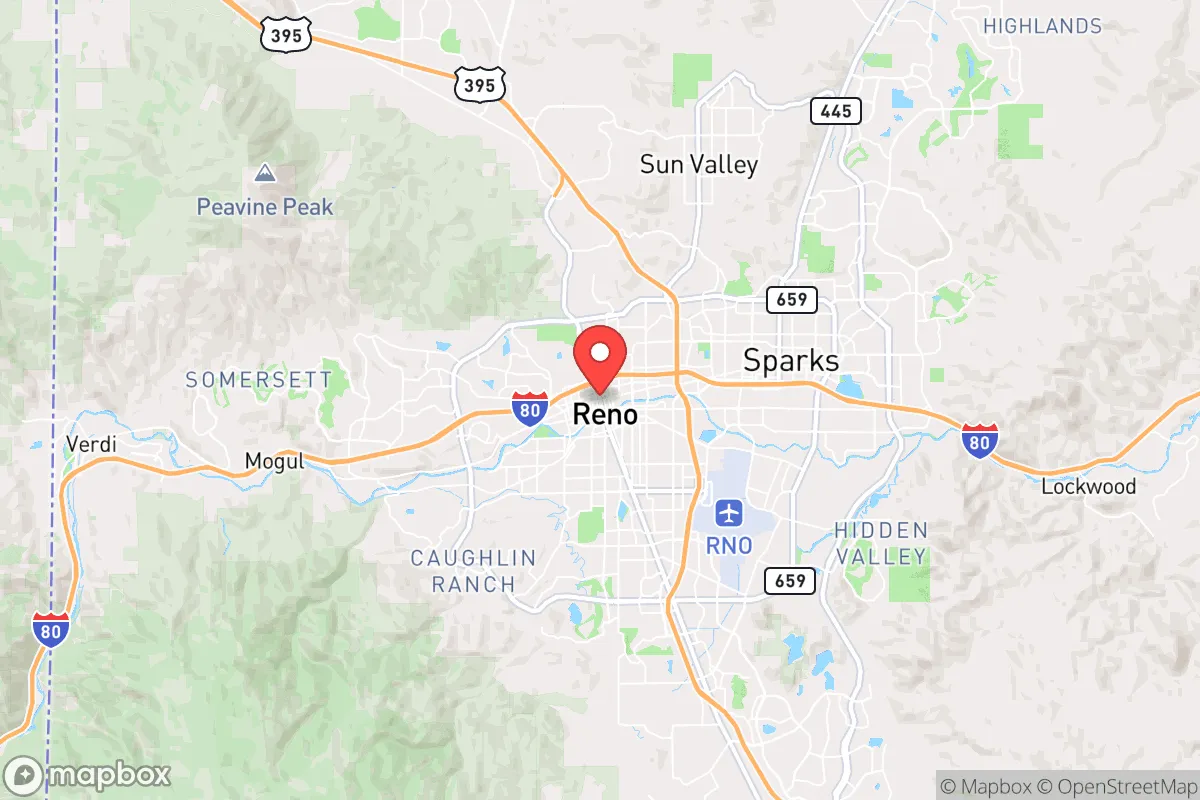
Photo: Wikipedia
Quality of Life in Reno, NV
Above-average quality of iife. The area offers a reasonable cost of living, decent mobility, and a mix of neighborhood amenities.
What does Quality of Life tell us?
Quality of Life blends cost of living, nearby amenities, socioeconomic signals, and neighborhood character. City-level scores represent the whole municipality; individual neighborhoods can differ.
What does this tell us?
Quality of Life blends cost of living, nearby amenities, socioeconomic signals, and neighborhood character. City-level scores represent the whole municipality; individual neighborhoods can differ.
Cost of Living
46% above national average
The Real Cost of Living in Reno, NV for 2026
| Tier | Individual | Family (4) |
|---|---|---|
| Survival | $23k | $44k |
| Comfortable | $97k | $142k |
| Luxury | $142k+ | $220k+ |
| Elite (Top 5%) | $175k+ | $272k+ |
55%
The Area Signal
A metric tracking the socioeconomic signals of the area.


Hobbies
Explore the areaGroceries
5 within 10 miles
Gas
0 within 10 miles
Hospital
3 within 20 miles
Airport
SAN — Oakland San Francisco Bay
Post Office
USPS — Reno, NV
Critical Amenities
Quality-of-Life Analysis
Reno, Nevada, presents a quality-of-life profile that blends urban convenience with outdoor access, attracting a demographic mix of remote tech workers, outdoor enthusiasts, and families seeking a lower-tax alternative to California. With a cost-of-living index of 146 (46% above the U.S. average), Reno is notably more affordable than the San Francisco Bay Area (index ~180+) but pricier than nearby Carson City (index ~115) or rural Washoe County communities. The city’s population skews younger and more transient than the national average, with a median age of 36.8 and a growing share of residents employed in logistics, gaming, and tech sectors.
Cost of living, housing affordability, and how Reno compares to nearby areas
Reno’s housing market has cooled slightly from its 2021–2022 peak but remains expensive relative to local wages. The median home value sits at $498,600, roughly 30% below the California state median but 15% above the national median. Median rent is $1,453, which is about 10% lower than the national average for similarly sized metro areas. For context, a household earning Reno’s median income of $72,000 would spend about 28% of gross income on a mortgage at current rates—within the traditional 30% affordability threshold, but tight for first-time buyers. Compared to Sparks (just east, median home ~$470,000) or Carson City (~$440,000), Reno commands a premium for proximity to downtown and the University of Nevada, Reno. The average commute of 20.6 minutes is well below the national average of 26 minutes, a practical advantage for workers at major employers like Tesla’s Gigafactory (in nearby Storey County) or the Reno-Sparks Convention Center.
Everyday amenities, schools, and the daily rhythm of life in Reno
Daily life in Reno revolves around a compact downtown core, the Truckee River corridor, and a growing network of bike lanes and trails. The city’s Washoe County School District serves roughly 62,000 students, with standout magnet programs at Reno High School (IB curriculum) and the Academy of Arts, Careers & Technology. For higher education, the University of Nevada, Reno enrolls over 20,000 students and anchors a lively midtown district with breweries, coffee shops, and independent bookstores. Outdoor amenities are a major draw: the Tahoe-Pyramid Trail runs through the city, and Mount Rose Ski Tahoe is a 35-minute drive for winter sports. The Reno-Sparks Livestock Events Center and the annual Artown festival (July) provide cultural anchors, while the Reno-Tahoe International Airport offers direct flights to 20+ U.S. cities. The daily rhythm is slower than Las Vegas but faster than rural Nevada—restaurants close by 10 p.m. on weeknights, and weekend traffic to Lake Tahoe can be heavy on I-80.
Reno is best suited for individuals and families who prioritize outdoor recreation, a moderate commute, and a lower tax burden (no state income tax) over dense urban amenities or top-tier public schools. Remote workers earning California-level salaries will find the housing market manageable, while those on fixed incomes may struggle with the 46% above-average cost of living. The city’s growing tech and logistics sectors offer stable employment, but the service economy still dominates—meaning career opportunities are uneven. For newcomers who value four-season recreation, a walkable downtown, and a community that balances “Biggest Little City” energy with small-town accessibility, Reno delivers a distinctive quality of life that few other Western metros can match at this price point.

Crime in Reno, NV
Higher crime rates than 65% of comparable U.S. locations.
Violent CrimeViolent Crime Analysis
Property CrimeProperty Crime Analysis
Crime Analysis
Reno, Nevada, reports a violent crime rate of 546.4 incidents per 100,000 residents and a property crime rate of 2,312.1 per 100,000, placing it well above both state and national averages. These figures indicate that safety is a significant concern for those considering relocation, particularly given the area's status as a large metro hub with a justice system influenced by progressive policies. The combination of elevated crime statistics and a lenient prosecutorial environment creates a challenging landscape for public safety.
Crime in context
Reno's violent crime rate is roughly 50% higher than the national average of approximately 380 per 100,000, while its property crime rate exceeds the U.S. average by a similar margin. Compared to other Nevada cities, Reno's rates are notably higher than those in suburban Henderson but lower than parts of Las Vegas. A critical factor driving these numbers is the region's progressive judicial philosophy. Washoe County, which includes Reno, has seen district attorneys and judges prioritize rehabilitation and reduced sentencing for non-violent and even some violent offenders. This approach, while intended to reduce recidivism, has resulted in more criminals returning to the streets sooner, directly undermining deterrence and victim justice. The property crime rate of 2,312.1 per 100,000 reflects a system where theft and burglary are often treated as low-priority offenses, emboldening repeat offenders.
What residents experience
Daily life for Reno residents involves navigating a heightened risk of property crime, including vehicle break-ins, package theft, and residential burglaries, particularly in areas near downtown and the University of Nevada, Reno campus. Violent crime, while less frequent, is concentrated in specific corridors and can include aggravated assault and robbery. The progressive justice system's focus on offender leniency means that even when perpetrators are caught, consequences are often minimal, leading to a revolving-door effect. Victims of crime in Reno frequently report frustration with a legal process that appears to prioritize the rights of the accused over public safety, a sentiment echoed in local news coverage of repeat offenders committing new crimes shortly after release.
Neighborhood-level variation
Safety in Reno varies significantly by neighborhood. Areas like the Southwest Reno foothills, Caughlin Ranch, and Somersett report substantially lower crime rates, often aligning with national averages, thanks to higher property values and more robust private security measures. Conversely, neighborhoods such as the downtown core, Wells Avenue, and parts of Sun Valley experience the highest concentrations of both property and violent crime. Prospective residents should thoroughly research specific zip codes and block-level data, as a few miles can separate a relatively safe suburban enclave from a high-crime zone. The progressive policies of the county's justice system, however, mean that even in safer neighborhoods, residents are not insulated from the regional trend of lenient sentencing and its downstream effects on crime spillover.
* Values derived from national, state, county, city and local statistics and may differ in a specific area. Last updated: 2026-04-15T23:43:43.000Z
Narrative content on this page is AI-generated and may contain mistakes. Verify any details that matter before acting on them.
ReloMaps may earn a commission from affiliate links at no extra cost to you.

