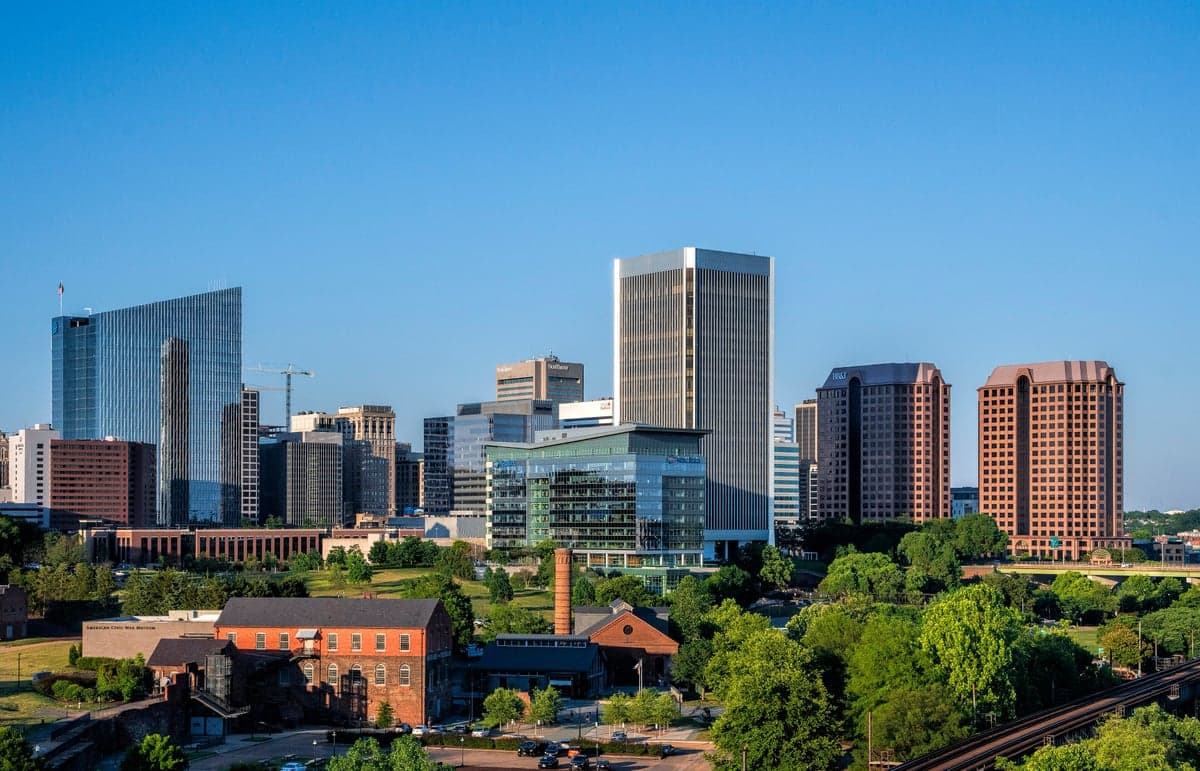
Photo: Wikipedia
Strategic Assessment of Richmond, VA
Meaningful friction. Expect exposure to either population pressure, blast zones, or natural disaster risk. Consider buying a retreat property.
What does the Strategic Assessment tell us?
Our Strategic Assessment grades tactical survivability of an area. Major population centers, military targets, fallout zones, natural disasters, and border exposure all drive risk — lower exposure means a more defensible position in a crisis.
This is heavily inspired by Joel Skousen's Strategic Relocation book. Highly recommended you checkout the book ($)What does this tell us?
Our Strategic Assessment grades tactical survivability of an area. Major population centers, military targets, fallout zones, natural disasters, and border exposure all drive risk — lower exposure means a more defensible position in a crisis.
This is heavily inspired by Joel Skousen's Strategic Relocation book. Highly recommended you checkout the book ($)Strategic Pillars

Key Distances
Regional Safe Places
Below is our recommended "safe zones" in Virginia and the surrounding area based on our strategic heuristics. For most people, it's unrealistic to live in a “safe zone” full-time due to work, family or other personal reasons. They tend to be more rural. However, many of these areas are perfect for second homes and retreat properties that double as a vacation home or even a short-term rental.
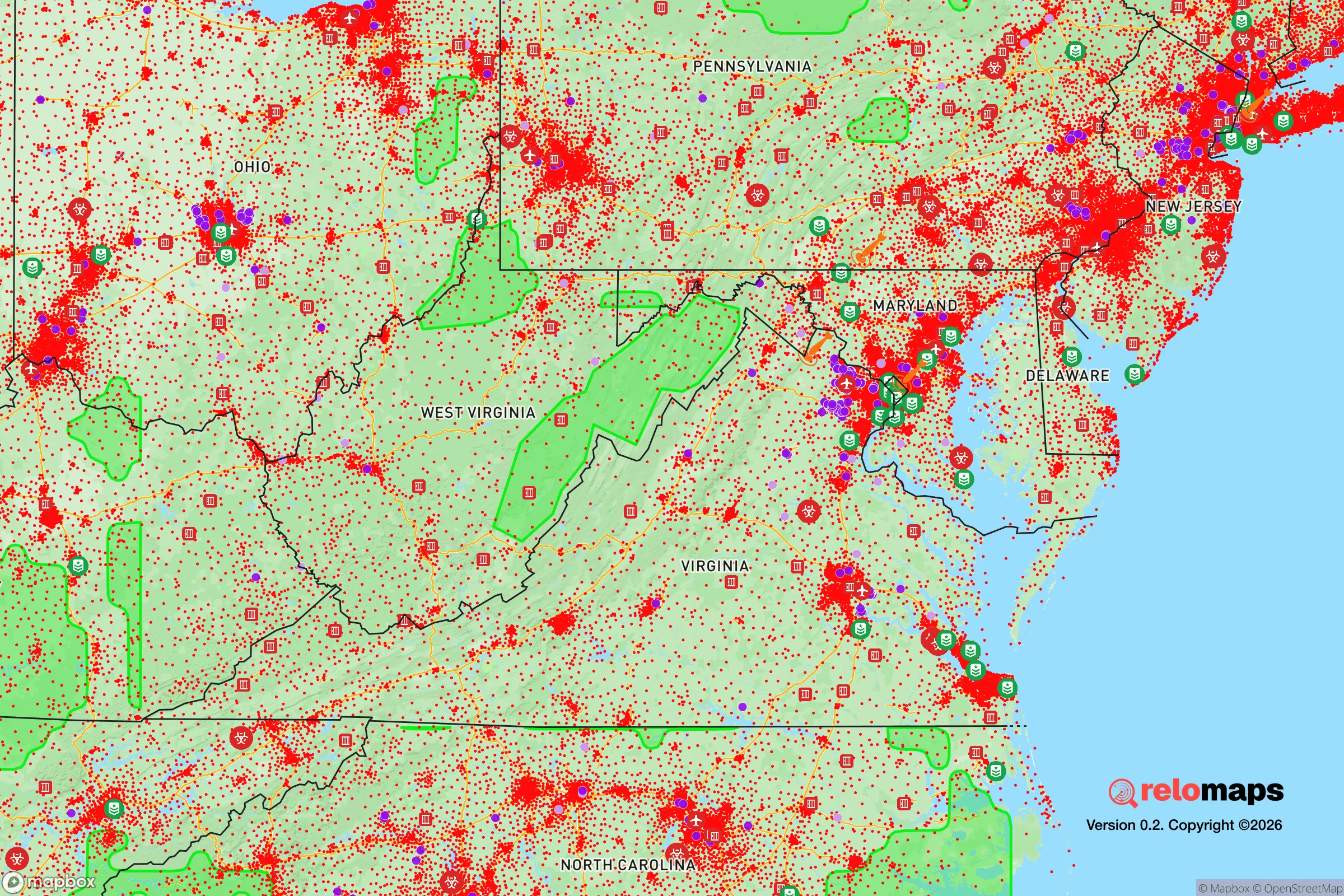
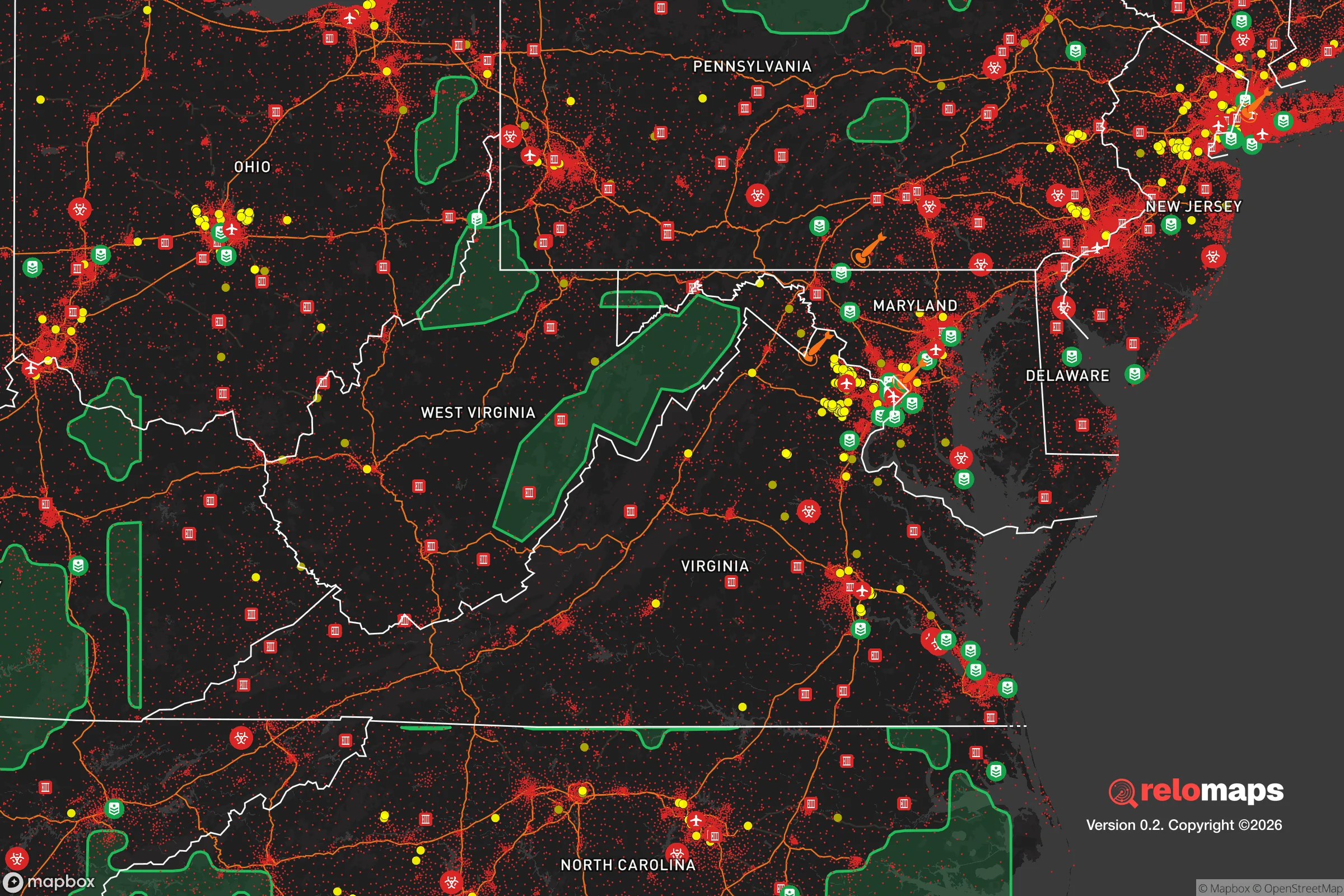


Important Note: For informational purposes only. This does not mean nothing bad ever happens in the green zones. Please use common sense. This is based on public data and modeled with AI. We tried to take a conservative approach but mistakes happen. We update this regularly as new information becomes available.
Solar Generator Recommendations
Backup power matters more here than in safer locations. We've picked three solar generators across budgets and capacity tiers — start with the budget unit if you only need a few essentials, or step up if you want to run a fridge and HVAC for days at a time.

Jackery Portable Power Station Explorer 300
Budget OptionPower on the Go: Weighing only 11 lbs, it's convenient to set up and store with book-sized foldable solar panels

BLUETTI Portable Power Station AC180
Designed for both indoor and outdoor scenarios, AC180 is highly capable as it has a robost capacity and continuous output power.

EF ECOFLOW DELTA Pro Ultra Power Station
Upgraded PickEcoFlow DELTA Pro Ultra is a whole-home energy system designed to grow with your family. Integrated with the Smart Home Panel 2, it scales to meet your evolving energy needs — keeping your home powered, intelligent, and secure through every stage of life.
We earn a commission, at no additional cost to you.
Strategic Assessment Analysis
Richmond, Virginia, presents a deeply contradictory strategic picture for the conservative prepper. On one hand, its position as a state capital and mid-Atlantic hub offers logistical advantages and a degree of institutional stability. On the other, its proximity to the dense, politically volatile I-95 corridor and the nation’s capital introduces significant risk vectors that a survival-minded relocator cannot ignore. This assessment weighs the city’s genuine resilience assets against its exposure to the very chaos you are seeking to avoid.
Geographic position and natural advantages for long-term survival
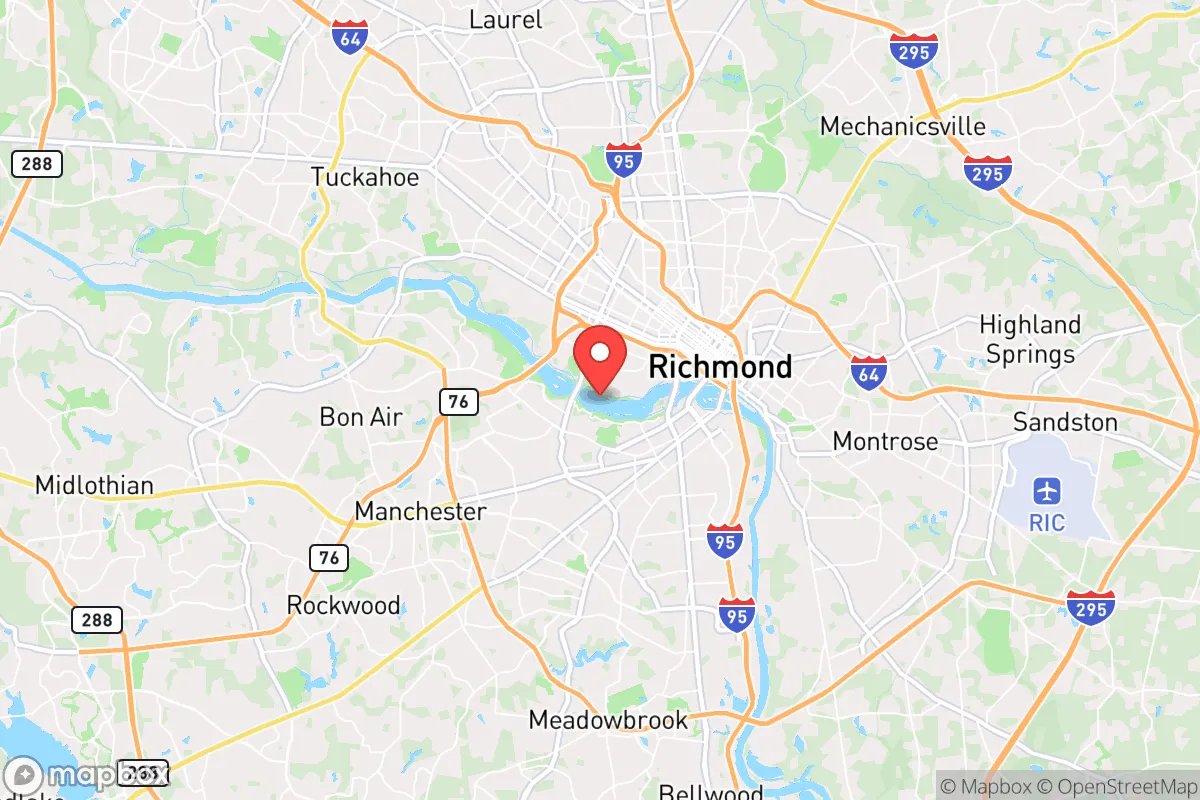
Richmond sits at the fall line of the James River, roughly 100 miles south of Washington, D.C., and 100 miles west of the Chesapeake Bay. This location provides a unique blend of access to fresh water, fertile soil, and a moderate climate that supports year-round food production. The James River itself is a major water artery, offering both a reliable water source and a potential transportation corridor if roads become impassable. The surrounding Piedmont region is dotted with small farms, hardwood forests, and rural counties like Goochland and Powhatan that remain sparsely populated relative to the city core. For a relocator, this means you can secure a property with acreage, a well, and septic within a 30-minute drive of downtown while still having access to the city’s hospitals, supply chains, and infrastructure. The region’s four distinct seasons reduce the risk of prolonged extreme weather events that plague the Gulf Coast or the Upper Midwest, and the area is not prone to earthquakes, wildfires, or hurricanes in the same way as California or Florida. The natural defensibility of the terrain—rolling hills, river bends, and dense tree cover—offers multiple chokepoints and retreat options if you need to bug out from the urban core.
Risks, exposures, and proximity to fallout-relevant landmarks
The single greatest vulnerability for Richmond is its position along the I-95 corridor, a primary evacuation route from Washington, D.C., and the Northeast. In the event of a mass casualty event, civil unrest, or a coordinated attack on federal infrastructure, Richmond would become a funnel for hundreds of thousands of panicked civilians fleeing the capital. The city itself is home to several high-value targets: the Virginia State Capitol, federal courthouses, the Defense Supply Center Richmond (a major military logistics hub), and multiple data centers and power substations that serve the East Coast grid. A coordinated attack on these facilities—whether via cyber, EMP, or conventional means—would cripple the region’s ability to maintain order. Additionally, Richmond’s port on the James River is a critical node for fuel and container shipping, making it a likely target for disruption. The city’s population density (roughly 230,000 within city limits, over 1.3 million in the metro area) means that any localized disaster—a chemical spill, a pandemic resurgence, or a food distribution failure—could cascade quickly. The proximity to the nation’s political nerve center also means that Richmond would be a staging ground for federal response efforts, drawing in National Guard units, FEMA personnel, and potentially martial law enforcement, which may not align with your desire for autonomy.
Practical resilience for a relocator: food, water, energy, and defensibility
For the individual or family looking to establish a resilient homestead, Richmond’s surrounding counties offer genuine opportunities. The James River provides a massive, renewable water source, but you should not rely on municipal treatment plants during a crisis. Properties with private wells and septic systems are common in the outer ring of Chesterfield, Hanover, and Henrico counties. The region’s growing season runs from April to October, allowing for substantial vegetable gardens, fruit orchards, and even small livestock operations. Local farmers’ markets and co-ops are well-established, and there is a thriving network of homesteaders and permaculture practitioners who share knowledge and resources. Energy resilience is more challenging: the grid is aging and vulnerable to both weather events and cyberattacks. Solar panel adoption is growing, but net metering policies are state-regulated and subject to change. A backup generator with a propane or diesel supply is a near-necessity for any serious prepper. Defensibility is mixed. A rural property with a long driveway, clear sightlines, and natural barriers (creeks, wooded ridges) is achievable within 20–30 minutes of the city. However, the suburban sprawl of Short Pump and Midlothian means that many “country” homes are still within earshot of major highways and strip malls. You need to prioritize acreage and distance from main roads. The local gun culture is strong—Virginia is a shall-issue state for concealed carry, and there are numerous ranges and training facilities—but recent political shifts in the state legislature have introduced restrictions on certain firearms and magazine capacities, so you must stay current on the legal landscape. Medical resilience is decent: VCU Medical Center is a Level I trauma center, and there are multiple hospitals in the metro area. But in a grid-down scenario, these facilities would be overwhelmed within hours, so a robust first-aid kit, training, and a stockpile of prescription medications are non-negotiable.
The overall strategic picture for Richmond is one of calculated risk. It offers genuine advantages—water, farmland, moderate climate, and a strong community of like-minded individuals—that make it a viable base for a prepared relocator. But those advantages come with the heavy baggage of proximity to the federal government’s epicenter, a dense urban population, and critical infrastructure that makes the region a target. If you are willing to invest in a rural property outside the I-95 blast radius, build your own water and energy systems, and maintain a low profile, Richmond can work. If you are looking for a place where you can simply ride out the storm without active preparation, this is not it. The city’s fate is tied to the stability of the nation’s capital, and that is a chain you cannot afford to ignore.

* Values derived from national, state, county, city and local statistics and may differ in a specific area. Last updated: 2026-05-01T21:27:23.000Z
Narrative content on this page is AI-generated and may contain mistakes. Verify any details that matter before acting on them.
ReloMaps may earn a commission from affiliate links at no extra cost to you.

