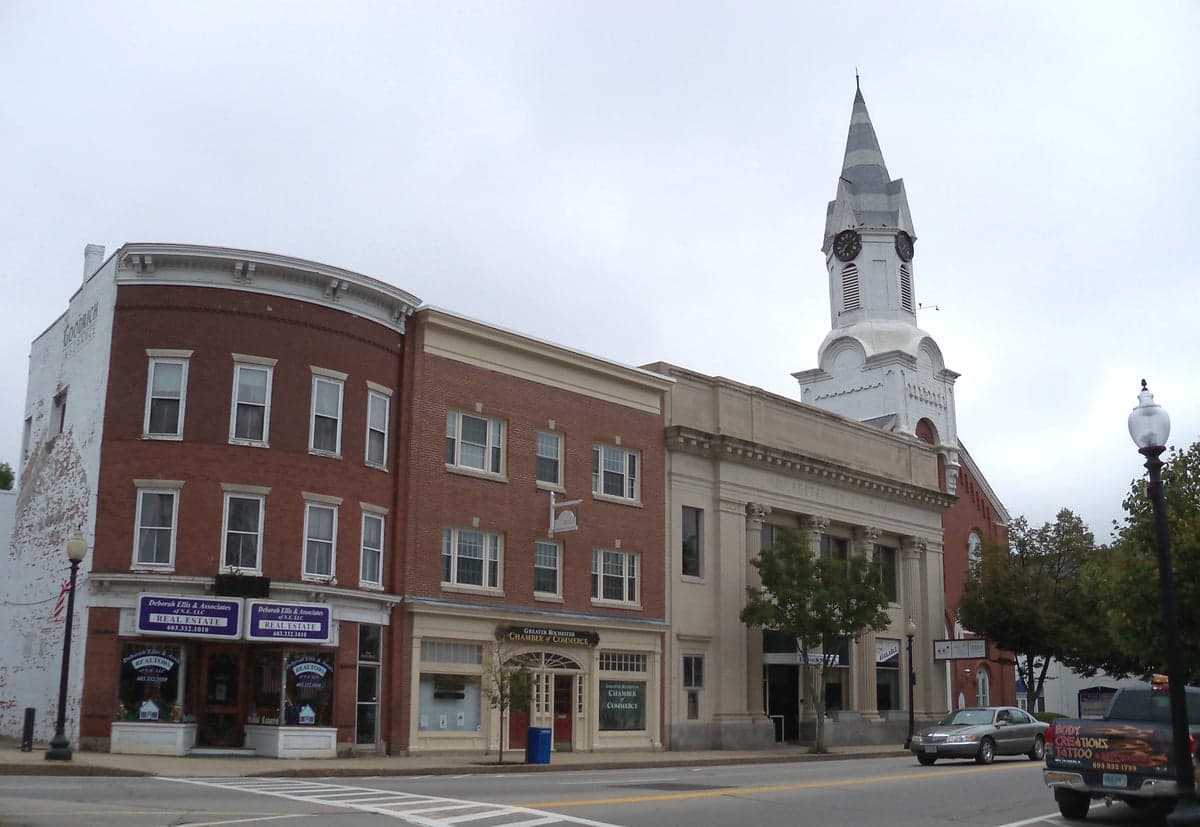
Photo: Wikipedia
Political ClimatePolitical Climate in Rochester, NH
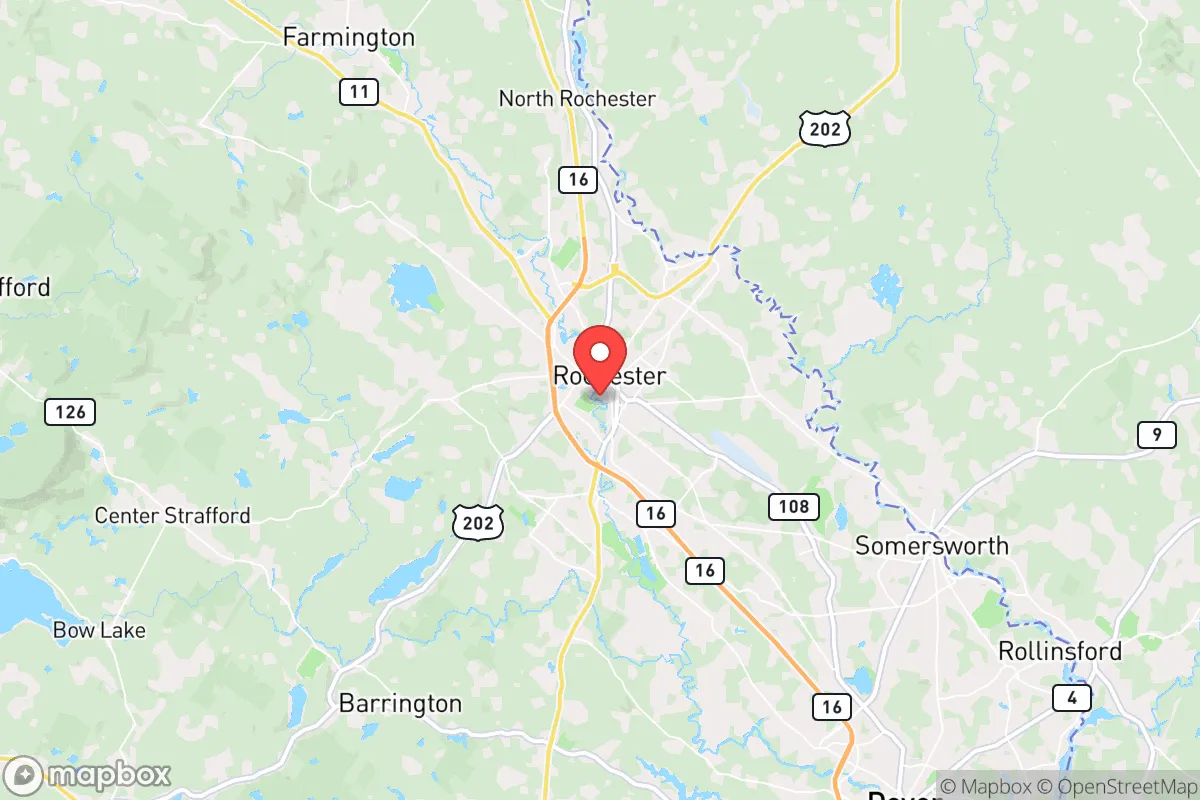
District shown is the primary district for this city’s centroid. Cities may span multiple districts.
Local Political AnalysisPolitical Analysis of Rochester, NH
Rochester, New Hampshire, has a Cook PVI of D+2, which tells you it leans slightly Democratic on paper, but that number doesn't capture the real story on the ground. For a long time, this was a reliably conservative town—working-class, independent-minded, and suspicious of big government meddling. Over the last decade or so, you've seen a slow but steady shift, especially as younger folks and remote workers move in from Massachusetts and other blue states, bringing their voting habits with them. The city council and school board races have gotten tighter, and there's a growing tension between the old-school live-free-or-die crowd and the newer, more progressive voices pushing for things like zoning changes and diversity initiatives.
How it compares
Drive ten minutes north to Farmington or fifteen minutes west to Barrington, and you're in deep red territory—those towns vote Republican by double digits and have a much stronger libertarian streak. Rochester sits right on the edge of that, but it's also the biggest city in Strafford County, so it absorbs more of the moderate-to-liberal influence coming out of Dover and Durham, which are solidly blue. The contrast is stark: Dover's city council is openly progressive on housing and environmental policy, while Rochester's still debates whether to even fund a diversity committee. If you're a conservative who values limited government and personal responsibility, you can still find plenty of like-minded neighbors here, but you'll also notice the local paper and social media are increasingly dominated by voices pushing for more regulation and government programs.
What this means for residents
For folks who moved here to escape high taxes and overreach elsewhere, the trend is concerning. The school board has seen heated fights over curriculum transparency and parental rights, with some members pushing for critical race theory and gender ideology materials that many parents feel are inappropriate. Property taxes are already a burden, and there's constant pressure to increase spending on social services and affordable housing mandates that could drive up costs even more. On the plus side, Rochester still has a strong Second Amendment culture—you won't get funny looks for carrying openly—and the local police are generally supportive of community safety without being heavy-handed. But if the current trajectory holds, you can expect more zoning restrictions, more government-funded programs, and a slow erosion of the live-and-let-live ethos that made this area attractive in the first place.
Culturally, Rochester is still a place where you can buy a decent hunting rifle at a local shop and not have to justify it, and the annual Rochester Fair feels more like a county fair than a woke festival. But the new developments—like the push for a "welcoming city" resolution and the growing number of pride flags on downtown businesses—signal a shift that many long-time residents find jarring. The real test will come in the next few election cycles: if the school board and city council flip further left, you'll see more families and small business owners heading north to places like Milton or Wakefield, where the politics still match the landscape. For now, Rochester is a battleground, and it's worth keeping a close eye on who's running for local office.

State Political ClimatePolitical Climate in New Hampshire
State Political AnalysisPolitical Environment in the State
New Hampshire has long been known as the "Live Free or Die" state, and that motto still carries real weight, but the political landscape has shifted noticeably over the past 10-20 years. The state overall leans slightly Republican in statewide elections, but it's a classic swing state with a deeply independent streak—think of it as a purple state with a red tint that's been slowly fading. The dominant coalitions are a mix of fiscally conservative, socially libertarian Yankees in the north and west, and a growing wave of progressive-leaning transplants in the southeastern corner. Over the last three cycles, the GOP has held the governor's office and state legislature, but the margins have tightened, and the 2024 presidential race saw the state vote for a Democrat by about 5 points, a sign that the in-migration from Massachusetts and beyond is slowly pulling the needle left.
Urban vs. rural divide
The political map of New Hampshire is a textbook case of the urban-rural split, and it's getting sharper every year. The southeastern corner—Manchester, Nashua, Portsmouth, and the Seacoast region—is the Democratic stronghold. These areas are dense, diverse, and filled with professionals who commute to Boston or work in tech and healthcare. Hillsborough County (home to Manchester) and Rockingham County (home to Portsmouth) together hold about 40% of the state's population, and they reliably vote blue in presidential years. Drive 20 minutes north or west, and the picture flips hard. Coos County in the far north, Grafton County (outside Hanover), and Belknap County around Lake Winnipesaukee are deeply red, with Trump winning some towns by 30-40 points. The Lakes Region and White Mountains are where you'll find the old-school libertarian conservatives—folks who hate taxes, love guns, and want the government out of their lives. The divide isn't just about party; it's about culture. In Berlin or Littleton, you'll hear about logging and snowmobiling; in Portsmouth, it's craft breweries and electric vehicles.
Policy environment
New Hampshire's policy environment is a mixed bag that still leans heavily toward freedom compared to its neighbors, but the cracks are showing. The big draw is the no state income tax and no state sales tax—that's a constitutional reality, not a political promise, so it's hard to undo. Property taxes are high (among the highest in the nation), but that's the trade-off. The regulatory posture is generally light: no seatbelt law for adults, no helmet law for motorcyclists, and a business-friendly climate that's kept the state near the top of freedom indexes. On education, the state has a robust school choice system with charter schools and a new Education Freedom Account program that lets parents use public funds for private or homeschool expenses—a huge win for parental rights. Healthcare is a mixed bag; the state expanded Medicaid under the ACA, but there's no state-run insurance mandate. Election laws are solid: same-day voter registration is allowed, but voter ID is required, and the state has a clean record on election integrity. The Right-to-Know law (open meetings and records) is strong, and the state has no "red flag" gun law, though a 2023 bill to ban "ghost guns" failed narrowly.
Trajectory & freedom
On the freedom front, New Hampshire is at a crossroads. The Live Free or Die spirit is still alive, but recent legislation shows a slow creep toward more government control. On the positive side, the state passed constitutional carry (no permit needed to carry a concealed firearm) back in 2017, and it's held firm against federal gun control pressure. The Education Freedom Account program, expanded in 2023, is a major win for parental rights—it lets families use state education funds for private school, tutoring, or homeschooling, with no income cap. On the concerning side, the state passed a vaccine mandate ban for private employers in 2023, but it was watered down to allow exemptions for healthcare workers. A 2024 bill to ban gender-affirming care for minors failed, signaling that the progressive wing is gaining ground. The medical marijuana program is limited (no edibles, no home grow), and recreational cannabis remains illegal despite neighboring Maine and Vermont legalizing it. Property taxes are rising fast, especially in the Seacoast, as home values skyrocket. The biggest threat to freedom is the in-migration from Massachusetts—new arrivals often bring big-government voting habits, and they're concentrated in the swing districts.
Civil unrest & political movements
New Hampshire is not a hotbed of civil unrest, but there are visible flashpoints. The Free State Project, a movement of libertarians who moved to the state to shrink government, has been active since the early 2000s and has a real presence in towns like Keene and Portsmouth. They've pushed for school choice, gun rights, and marijuana legalization, but they've also clashed with local progressives over mask mandates and vaccine passports. During the pandemic, there were large protests at the State House in Concord against lockdowns and business closures, with the "Live Free or Die" crowd facing off against public health advocates. Immigration politics are relatively quiet—the state has no sanctuary city policies, and Manchester has seen some tension over refugee resettlement, but nothing like the border states. Election integrity has been a hot topic since 2020, with the GOP-led legislature passing a voter ID law in 2022 that requires a photo ID for same-day registration, but no widespread fraud has been documented. The most visible movement is the parental rights wave, with groups like "Moms for Liberty" active in school board races, especially in Bedford and Londonderry, where they've fought against critical race theory and gender ideology in classrooms.
Projection
Over the next 5-10 years, New Hampshire is likely to become more purple, with a slow but steady leftward drift driven by demographics. The in-migration from Massachusetts, New York, and California is concentrated in the southeastern counties—Rockingham and Hillsborough—and these new residents tend to vote Democratic. The rural north and west are aging and losing population, which weakens the GOP's base. The state legislature is currently Republican-controlled, but the margins are thin, and the governor's office could flip in 2026. The Education Freedom Account program is likely to survive, but it will face constant legal challenges from teachers' unions. Gun rights are probably safe for now, but a "red flag" law could pass if Democrats take full control. The biggest wildcard is the property tax crisis—as home values soar, especially in the Seacoast, more residents will feel the pinch, and that could fuel a tax revolt or a push for a state income tax, which would fundamentally change the state's character. A new resident moving in now should expect a state that still feels free but is fighting to stay that way, with the political battles getting louder every year.
For a conservative-leaning individual or family, New Hampshire is still one of the best bets in the Northeast—no income tax, strong gun rights, school choice, and a culture that values personal responsibility. But the window is closing. The southeastern corridor is turning blue fast, and the rural strongholds are shrinking. If you're looking for a place where your vote will matter and your freedoms are respected, the Lakes Region (towns like Meredith or Wolfeboro) or the North Country (around Lancaster or Colebrook) are your best bets. Avoid the Seacoast and Manchester unless you're ready to fight for your values at the ballot box every two years. The bottom line: New Hampshire is still free, but it's not getting freer—so come prepared to defend what you've got.
* Values derived from national, state, county, city and local statistics and may differ in a specific area. Last updated: 2026-04-22T23:05:57.000Z
Narrative content on this page is AI-generated and may contain mistakes. Verify any details that matter before acting on them.
ReloMaps may earn a commission from affiliate links at no extra cost to you.

