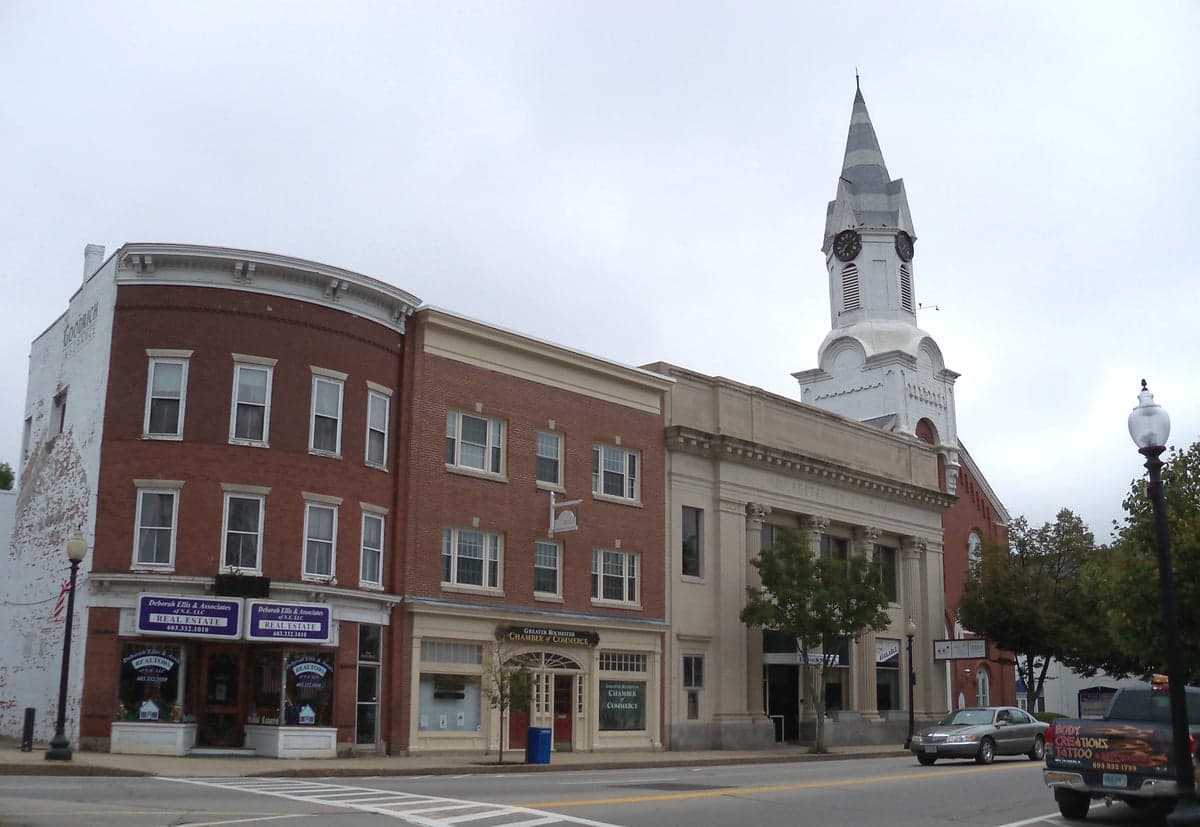
Photo: Wikipedia
Strategic Assessment of Rochester, NH
Multiple tactical vulnerabilities. Population density, target proximity, or disaster risk are likely compounding. A retreat property and exit planning is required.
What does the Strategic Assessment tell us?
Our Strategic Assessment grades tactical survivability of an area. Major population centers, military targets, fallout zones, natural disasters, and border exposure all drive risk — lower exposure means a more defensible position in a crisis.
This is heavily inspired by Joel Skousen's Strategic Relocation book. Highly recommended you checkout the book ($)What does this tell us?
Our Strategic Assessment grades tactical survivability of an area. Major population centers, military targets, fallout zones, natural disasters, and border exposure all drive risk — lower exposure means a more defensible position in a crisis.
This is heavily inspired by Joel Skousen's Strategic Relocation book. Highly recommended you checkout the book ($)Strategic Pillars

Key Distances
Regional Safe Places
Below is our recommended "safe zones" in New Hampshire and the surrounding area based on our strategic heuristics. For most people, it's unrealistic to live in a “safe zone” full-time due to work, family or other personal reasons. They tend to be more rural. However, many of these areas are perfect for second homes and retreat properties that double as a vacation home or even a short-term rental.
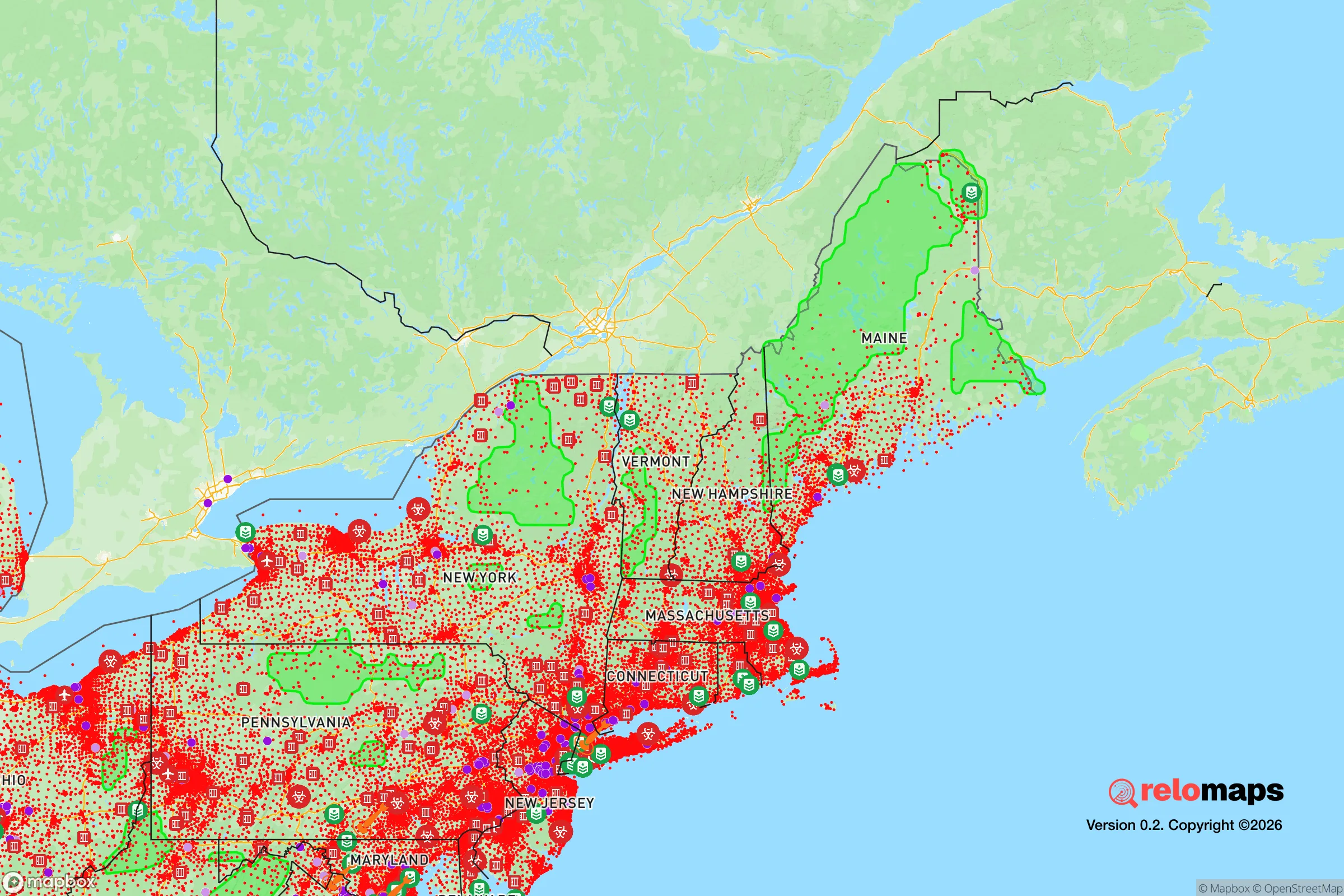
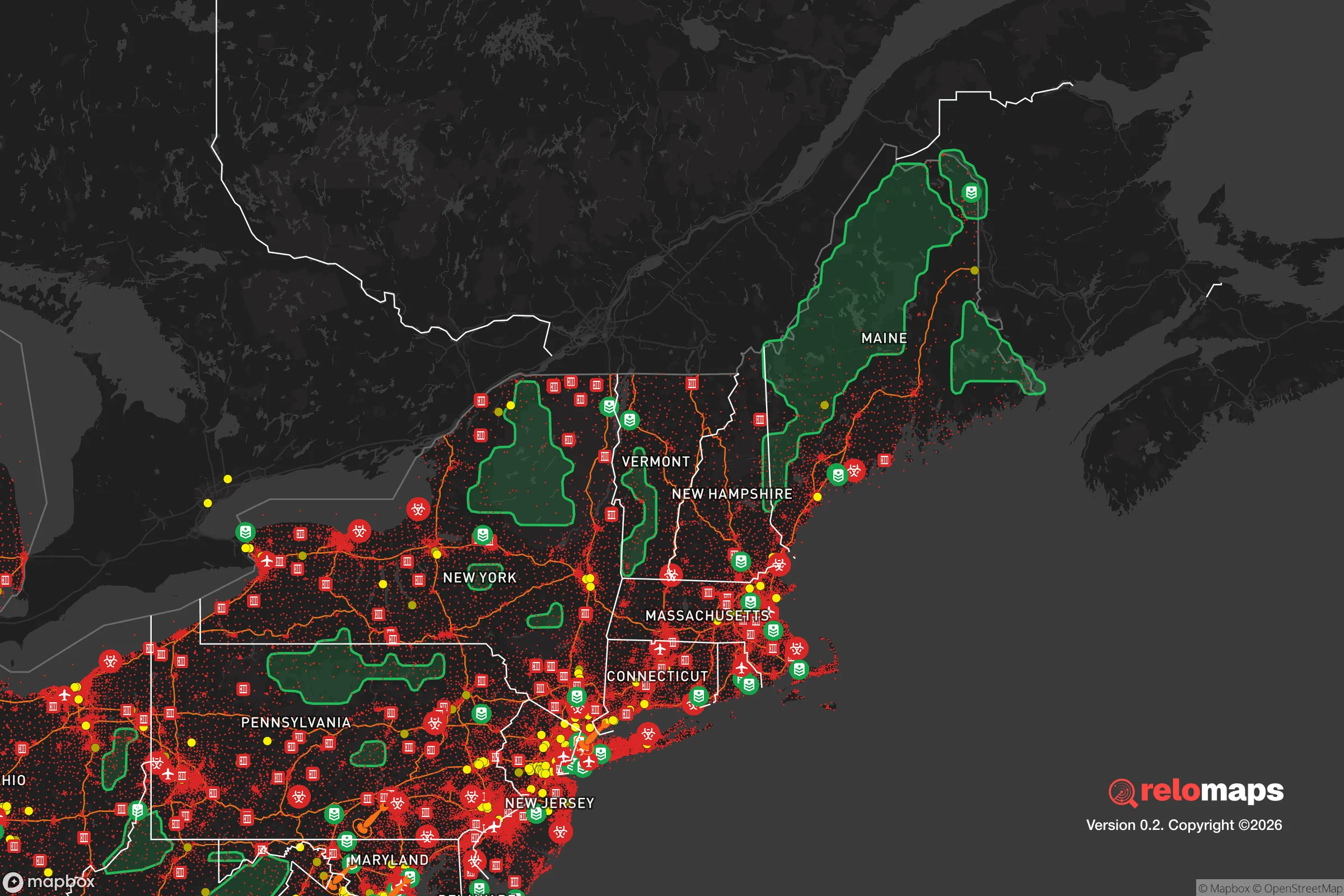


Important Note: For informational purposes only. This does not mean nothing bad ever happens in the green zones. Please use common sense. This is based on public data and modeled with AI. We tried to take a conservative approach but mistakes happen. We update this regularly as new information becomes available.
Solar Generator Recommendations
Backup power matters more here than in safer locations. We've picked three solar generators across budgets and capacity tiers — start with the budget unit if you only need a few essentials, or step up if you want to run a fridge and HVAC for days at a time.

Jackery Portable Power Station Explorer 300
Budget OptionPower on the Go: Weighing only 11 lbs, it's convenient to set up and store with book-sized foldable solar panels

BLUETTI Portable Power Station AC180
Designed for both indoor and outdoor scenarios, AC180 is highly capable as it has a robost capacity and continuous output power.

EF ECOFLOW DELTA Pro Ultra Power Station
Upgraded PickEcoFlow DELTA Pro Ultra is a whole-home energy system designed to grow with your family. Integrated with the Smart Home Panel 2, it scales to meet your evolving energy needs — keeping your home powered, intelligent, and secure through every stage of life.
We earn a commission, at no additional cost to you.
Strategic Assessment Analysis
Rochester, New Hampshire, sits in a strategic sweet spot that resilience-minded relocators should take seriously: close enough to the economic muscle of the Seacoast and Boston’s orbit to access resources, yet far enough from the blast zones and civil chaos of major metros to offer genuine breathing room. With a population hovering around 33,000, it’s large enough to support infrastructure—hospitals, big-box retail, a regional airport—but small enough that you’re not a nameless face in a crowd when things go sideways. The city’s position along the Cocheco River and its history as a mill town give it a rugged, self-reliant character that aligns well with a prepper’s calculus: you want a place that can absorb shocks, not amplify them.
Geographic position and natural advantages for long-term security
Rochester’s location in Strafford County places it at the northern edge of the Boston-Worcester-Providence megalopolis, roughly 70 miles from the Massachusetts line and about 15 miles inland from the Atlantic coast. That inland buffer is critical: a nuclear event or EMP strike targeting Boston or Portsmouth Naval Shipyard would leave Rochester outside the immediate thermal and blast radius, though fallout patterns would depend on wind. The city sits on the fall line of the Cocheco River, which provides a reliable freshwater source and historical mill power—useful if the grid goes down and you need to run a small hydro setup. Surrounding terrain is a mix of rolling hills, mixed hardwood forest, and scattered farmland, offering ample cover and retreat options. The White Mountains are a 90-minute drive north, giving you a bug-out corridor into sparsely populated wilderness if Rochester itself becomes compromised. New Hampshire’s lack of a state income tax or sales tax also means less government overhead eating into your prepping budget, and the state’s strong property rights culture makes it easier to secure land for a homestead or cache site without bureaucratic headaches.
Risks, exposures, and proximity to fallout-relevant landmarks
No place is immune to risk, and Rochester has its share of vulnerabilities that a strategic relocator must weigh. The most glaring exposure is proximity to the Portsmouth Naval Shipyard, a nuclear submarine maintenance facility located just 20 miles southeast on the Maine border. In a conflict scenario, that facility is a high-value target—think kinetic strike, sabotage, or a secondary effect from a larger exchange. Rochester sits upwind of prevailing westerlies, but a ground-level release or dirty bomb could still drift inland depending on weather. The city is also within 60 miles of the Seabrook Nuclear Power Plant, a single-unit reactor that’s been a target of anti-nuclear protests for decades; a catastrophic failure there would put Rochester in the plume zone. On the civil unrest front, Rochester’s location along the Spaulding Turnpike (NH-16) makes it a natural chokepoint for traffic fleeing the Seacoast or Boston during a crisis—expect gridlock and potential resource competition if you’re not already stocked. The city itself has a modest but real crime rate, with property crime above the national average, so you’ll need to harden your home and maintain situational awareness. Flooding along the Cocheco River is a recurring issue during heavy rains or snowmelt, particularly in low-lying neighborhoods near the downtown mill district—check FEMA flood maps before buying property.
Practical resilience for a relocator: food, water, energy, and defensibility
For a prepper moving to Rochester, the practicalities of daily survival in a degraded scenario break down into four pillars. Water is the strongest asset: the Cocheco River and its tributaries (the Salmon Falls River to the east, the Isinglass River to the west) provide year-round surface water, but you’ll need filtration—municipal treatment could fail in a prolonged outage. Wells are common in outlying areas, and many older homes have hand-pump backups. Food is more challenging: Rochester is not a farming hub. The surrounding farmland is mostly hay and corn, with some small orchards and vegetable operations, but you won’t find the self-sufficiency of the Midwest. You’ll need to stockpile at least three months of supplies, and consider joining a local food co-op or barter network—the Seacoast area has a strong homesteading community. Energy is a mixed bag. The grid is reasonably reliable, but winter ice storms can knock out power for days; a generator with a transfer switch is non-negotiable. Solar potential is decent (about 4.5 peak sun hours per day), and wood heat is viable given the forest cover—many homes already have wood stoves. Defensibility depends on your exact location. Downtown Rochester is dense and porous, with multiple access points from the turnpike. The outer neighborhoods—East Rochester, Gonic, the rural stretches near the Milton town line—offer better standoff distance, natural chokepoints (narrow roads, stone walls, wooded ridges), and fewer neighbors to worry about. New Hampshire’s constitutional carry law and strong castle doctrine mean you can legally defend your property without bureaucratic delays, which is a significant advantage over more restrictive states.
The overall strategic picture for Rochester is one of calculated trade-offs. It’s not a remote bunker in the Rockies—it’s a working-class New England city with real exposure to coastal threats and the chaos of a major metro evacuation. But for a relocator who wants to stay within striking distance of the Northeast’s economic and medical infrastructure while maintaining a credible retreat posture, it’s one of the better options in the region. The key is to treat Rochester as a base of operations, not a final redoubt: stock your home, build relationships with local preppers and farmers, and have a bug-out plan for the White Mountains or northern Maine if the Seacoast goes hot. If you’re looking for a place that balances access with autonomy, and where the local culture still values self-reliance over government dependency, Rochester deserves a hard look. Just don’t expect it to be a secret—other strategic thinkers are already moving in.

* Values derived from national, state, county, city and local statistics and may differ in a specific area. Last updated: 2026-04-22T23:05:57.000Z
Narrative content on this page is AI-generated and may contain mistakes. Verify any details that matter before acting on them.
ReloMaps may earn a commission from affiliate links at no extra cost to you.

