Strategic Assessment of Rockford, IL
Meaningful friction. Expect exposure to either population pressure, blast zones, or natural disaster risk. Consider buying a retreat property.
What does the Strategic Assessment tell us?
Our Strategic Assessment grades tactical survivability of an area. Major population centers, military targets, fallout zones, natural disasters, and border exposure all drive risk — lower exposure means a more defensible position in a crisis.
This is heavily inspired by Joel Skousen's Strategic Relocation book. Highly recommended you checkout the book ($)What does this tell us?
Our Strategic Assessment grades tactical survivability of an area. Major population centers, military targets, fallout zones, natural disasters, and border exposure all drive risk — lower exposure means a more defensible position in a crisis.
This is heavily inspired by Joel Skousen's Strategic Relocation book. Highly recommended you checkout the book ($)Strategic Pillars

Key Distances
Regional Safe Places
Below is our recommended "safe zones" in Illinois and the surrounding area based on our strategic heuristics. For most people, it's unrealistic to live in a “safe zone” full-time due to work, family or other personal reasons. They tend to be more rural. However, many of these areas are perfect for second homes and retreat properties that double as a vacation home or even a short-term rental.
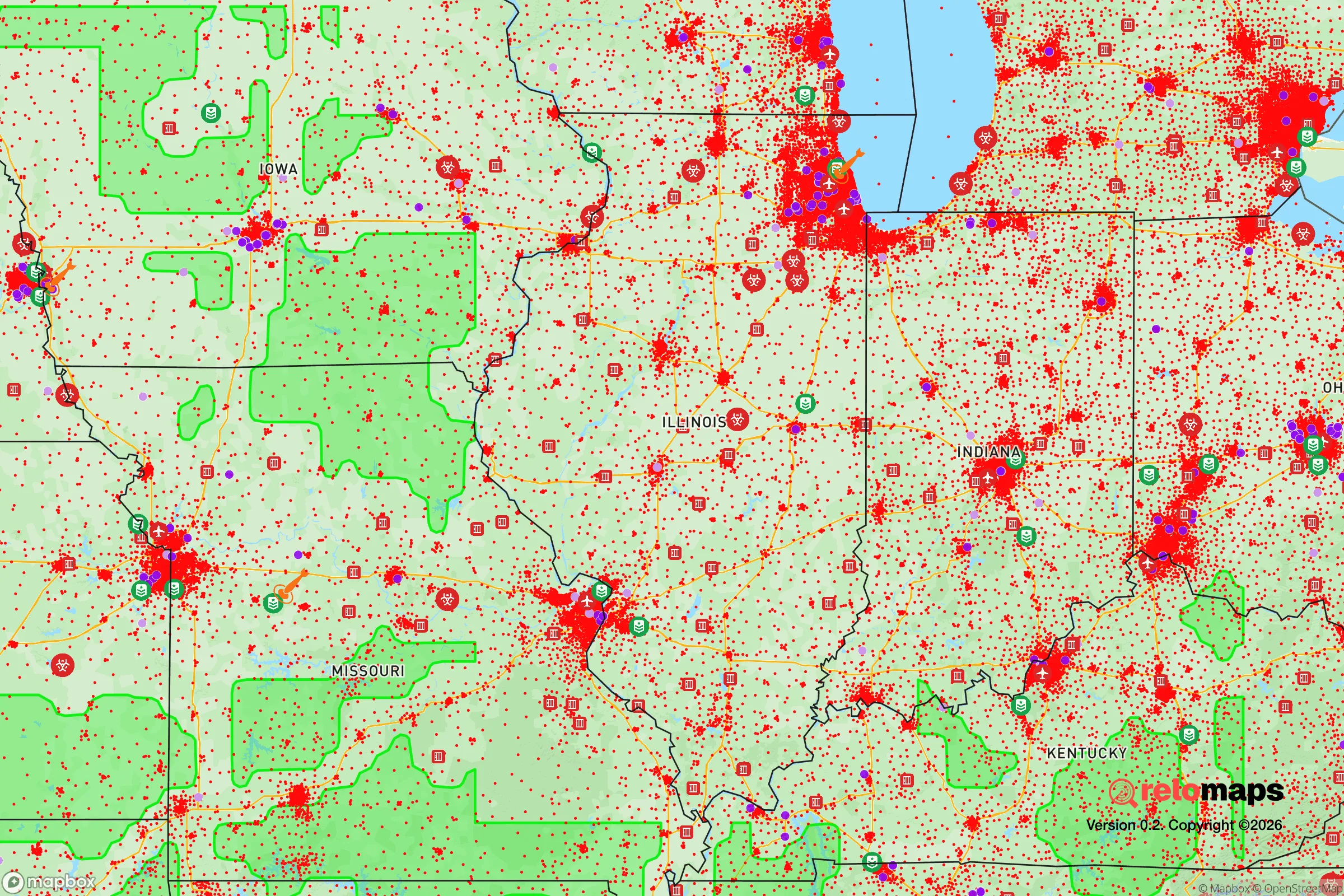
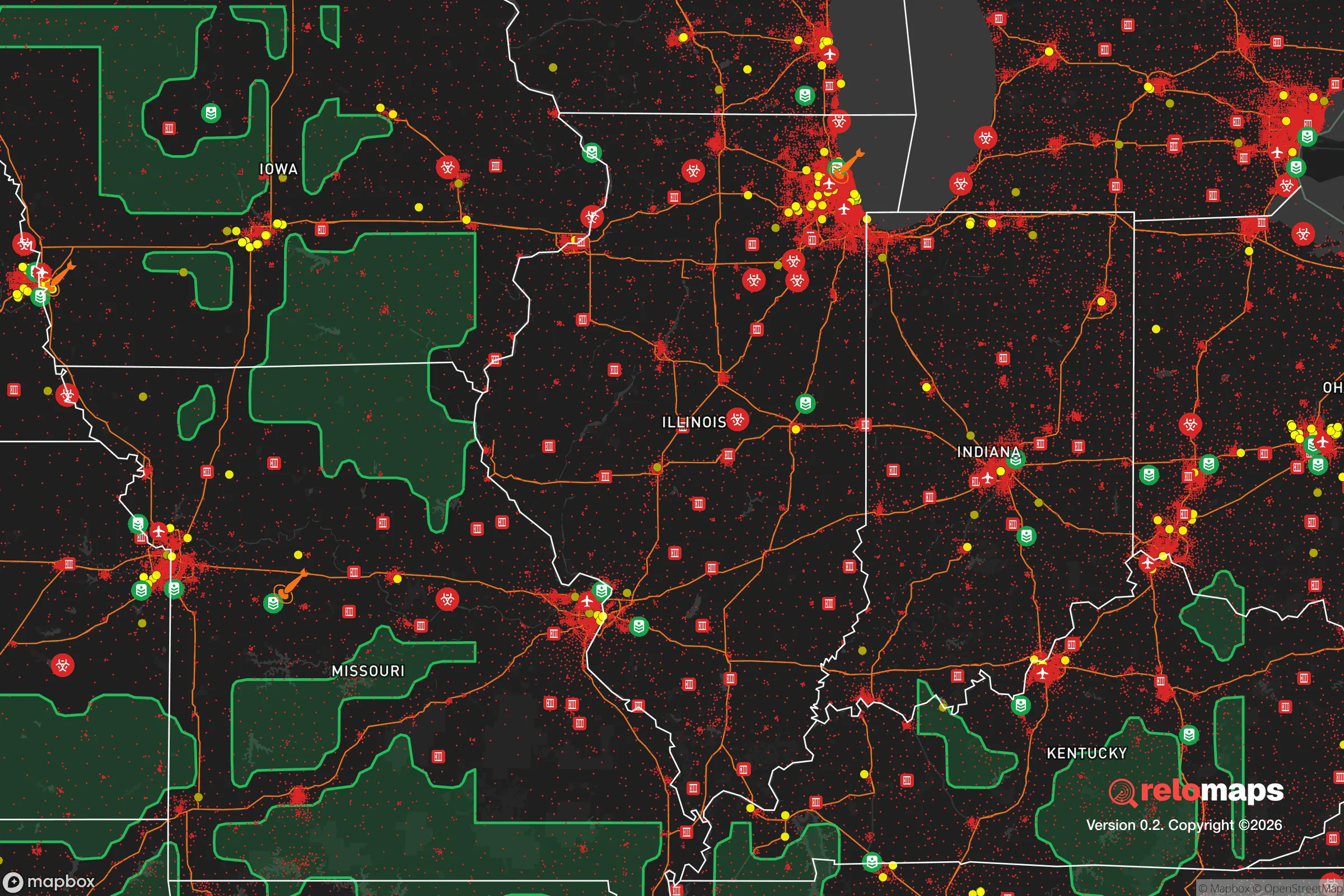


Important Note: For informational purposes only. This does not mean nothing bad ever happens in the green zones. Please use common sense. This is based on public data and modeled with AI. We tried to take a conservative approach but mistakes happen. We update this regularly as new information becomes available.
Solar Generator Recommendations
Backup power matters more here than in safer locations. We've picked three solar generators across budgets and capacity tiers — start with the budget unit if you only need a few essentials, or step up if you want to run a fridge and HVAC for days at a time.

Jackery Portable Power Station Explorer 300
Budget OptionPower on the Go: Weighing only 11 lbs, it's convenient to set up and store with book-sized foldable solar panels

BLUETTI Portable Power Station AC180
Designed for both indoor and outdoor scenarios, AC180 is highly capable as it has a robost capacity and continuous output power.

EF ECOFLOW DELTA Pro Ultra Power Station
Upgraded PickEcoFlow DELTA Pro Ultra is a whole-home energy system designed to grow with your family. Integrated with the Smart Home Panel 2, it scales to meet your evolving energy needs — keeping your home powered, intelligent, and secure through every stage of life.
We earn a commission, at no additional cost to you.
Strategic Assessment Analysis
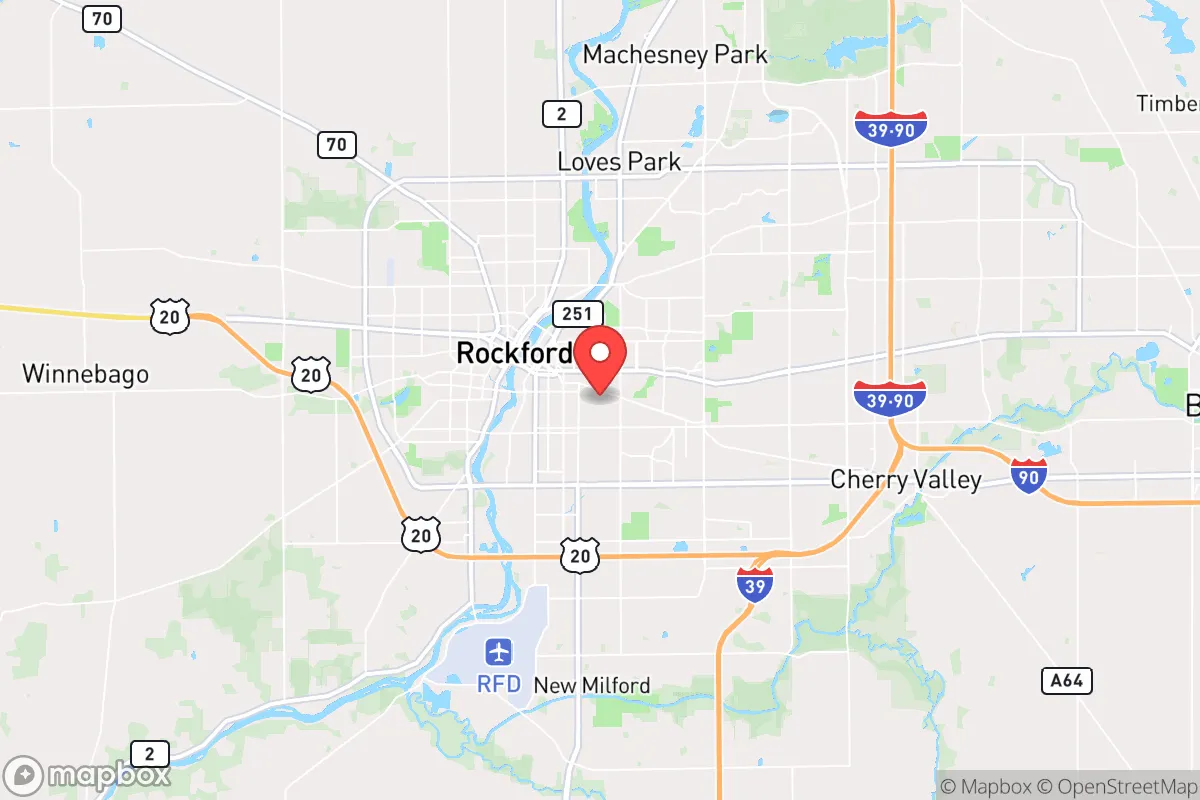
Rockford, Illinois, sits in a precarious but potentially advantageous position for the strategic relocator. Its location along the Rock River, roughly 90 miles northwest of Chicago and 70 miles south of Madison, Wisconsin, places it within a zone that is close enough to major urban centers to access their logistics and infrastructure, yet far enough to avoid the immediate blast radius or civil chaos of a major metropolitan collapse. The city’s historical industrial base—once a titan of machine tools and aerospace—has left behind a stock of heavy industrial buildings, rail corridors, and a skilled labor pool that can be repurposed for local manufacturing and repair in a post-disruption scenario. However, this same proximity to Chicago, a primary target for any large-scale attack or civil unrest event, means Rockford would likely see a surge of refugees and secondary effects like supply chain disruption and resource competition. The key question for a conservative prepper is whether the area’s inherent resilience—its water, food, and energy assets—outweighs its exposure to fallout from the Windy City.
Geographic position and natural advantages for long-term survival
Rockford’s geography offers a mix of defensive and logistical benefits. The Rock River, which runs through the city, provides a reliable surface water source for filtration and irrigation, a critical asset when municipal systems fail. The surrounding region is part of the Driftless Area, a rugged, hilly terrain that escaped the flattening of the last ice age, offering natural cover, varied topography, and less predictable lines of sight for any hostile movement. This is not flat corn country; it’s rolling hills, wooded bluffs, and limestone outcroppings that can be used for concealed retreats or defensive positions. The city itself sits at the intersection of I-90 (the Jane Addams Memorial Tollway) and I-39, major north-south and east-west corridors, which is a double-edged sword: excellent for moving supplies in a stable period, but a funnel for refugees and looters during a crisis. The presence of the Chicago Rockford International Airport (RFD) is a strategic plus—it’s a major cargo hub (fed by UPS and Amazon) and a backup landing site for military aircraft, meaning it could be a point of resupply or evacuation, but also a target. For a relocator, the natural advantages are real: abundant water, defensible terrain, and a location that is not a primary target (unlike Chicago, O’Hare, or the nuclear plants near Byron and LaSalle). The key is to secure a property outside the immediate urban grid, ideally on the west side of the river or in the wooded hills to the southwest, where you can leverage the terrain for privacy and security.
Risks, exposures, and proximity to fallout-relevant landmarks
The most significant risk for Rockford is its proximity to multiple high-value targets. The Byron Nuclear Generating Station, located just 20 miles southwest of the city, is a single-unit boiling water reactor that, if targeted or compromised, could produce a catastrophic radioactive release. The LaSalle County Nuclear Station is about 60 miles south. A detonation or meltdown at either would render large swaths of northern Illinois uninhabitable for decades, and Rockford lies directly in the prevailing wind path from both. Additionally, the city is within the fallout plume zone for a ground burst on Chicago’s downtown core or O’Hare International Airport. A single 300-kiloton airburst over the Loop would produce lethal fallout extending northeast, but a ground burst—more likely in a terrorist or state-actor scenario aimed at destroying infrastructure—could push contamination northwest toward Rockford depending on wind direction. The city’s industrial past also left behind environmental liabilities: the former Rockford Ordnance Plant (now a Superfund site) and numerous brownfields along the river could complicate post-disaster water and soil safety. For the prepper, the calculus is clear: Rockford is not a safe haven from nuclear or radiological events. It is a secondary zone that could become uninhabitable within hours of a major strike on Chicago or the nuclear plants. The only mitigation is to have a bug-out plan to the Driftless Area of Wisconsin or the Upper Peninsula, and to maintain a well-stocked shelter with at least two weeks of supplies for sheltering in place if fallout is light. The city’s location also puts it on the path of any mass evacuation from Chicago, meaning roads like I-90 and US-20 will become parking lots during a crisis. Plan for self-reliance, not reliance on evacuation routes.
Practical resilience for a relocator: food, water, energy, and defensibility
Rockford’s practical resilience is a mixed bag, but with careful property selection, it can be made to work. Water is the strongest asset: the Rock River is a perennial, high-volume source, and the area’s high water table means shallow wells are viable in many rural and suburban lots. The city’s water treatment plant draws from the river, but in a grid-down scenario, you’ll need your own filtration (Berkey, Sawyer, or a sand filter) and a means to haul water if you’re not on a well. Food production is viable: the surrounding Winnebago and Boone County farmland is some of the most productive in the state, with corn, soybeans, and livestock operations. However, most of this is industrial agriculture, not small-scale permaculture. A relocator should plan to establish a kitchen garden, fruit trees, and possibly chickens or rabbits on any property of 1+ acres. The growing season is about 150 days (May to October), which is adequate for most staples. Energy is a vulnerability: Rockford’s grid is served by ComEd, which has a history of outages during storms and high demand. Solar is viable (the area gets about 4.5 peak sun hours per day), but winter cloud cover can be dense. A backup generator (propane or diesel) with a 500-gallon tank is a wise investment. Wood heat is also practical, given the abundance of timber in the Driftless Area. Defensibility varies by neighborhood: the city itself has high crime rates (violent crime is roughly 2x the national average), so urban properties are a liability. The best bets are the rural townships to the west (like Pecatonica or Durand) or the wooded hills south of the city (near Byron). These areas offer natural chokepoints, limited road access, and a community of like-minded rural conservatives. The local gun culture is strong—Illinois has restrictive laws, but Winnebago County is more permissive than Cook County—and there are multiple gun clubs and shooting ranges. Medical resilience is weak: the major hospitals (OSF Saint Anthony, SwedishAmerican) are in the urban core and would be overwhelmed in a mass casualty event. Stockpile trauma kits, antibiotics, and know basic field medicine.
The overall strategic picture for Rockford is one of calculated risk. It is not a fortress, nor is it a wasteland. It is a transitional zone—close enough to the urban core to be dangerous, far enough to offer a fighting chance. For the conservative relocator who values community, water access, and defensible terrain, the rural outskirts of Rockford (west of the river, south of the city) present a viable option, provided you accept the nuclear and refugee risks. The city’s industrial base means you can find welding, machining, and mechanical skills locally, which is invaluable for post-collapse repair and fabrication. The presence of a major airport and interstate junctions is a liability in the short term but an asset in the medium term if you can secure trade routes. The bottom line: Rockford works as a secondary relocation node, not a primary retreat. Use it as a base to build skills, store supplies, and network with other preppers, but have a plan to move deeper into the Driftless Area or the Upper Peninsula if the balloon goes up. The area’s resilience is real, but it is conditional on your ability to avoid the fallout—both literal and figurative—from Chicago’s collapse. If you can secure a property with a well, solar, and good sightlines, and you’re willing to invest in a solid bug-out plan, Rockford offers a pragmatic, if imperfect, strategic foothold in the upper Midwest.

* Values derived from national, state, county, city and local statistics and may differ in a specific area. Last updated: 2026-04-29T20:35:31.000Z
Narrative content on this page is AI-generated and may contain mistakes. Verify any details that matter before acting on them.
ReloMaps may earn a commission from affiliate links at no extra cost to you.

