Quality of Life in Rockford, IL
Above-average quality of iife. The area offers a reasonable cost of living, decent mobility, and a mix of neighborhood amenities.
What does Quality of Life tell us?
Quality of Life blends cost of living, nearby amenities, socioeconomic signals, and neighborhood character. City-level scores represent the whole municipality; individual neighborhoods can differ.
What does this tell us?
Quality of Life blends cost of living, nearby amenities, socioeconomic signals, and neighborhood character. City-level scores represent the whole municipality; individual neighborhoods can differ.
Cost of Living
34% below national average
The Real Cost of Living in Rockford, IL for 2026
| Tier | Individual | Family (4) |
|---|---|---|
| Survival | $15k | $29k |
| Comfortable | $26k | $38k |
| Luxury | $96k+ | $149k+ |
| Elite (Top 5%) | $117k+ | $182k+ |
141%
The Area Signal
A metric tracking the socioeconomic signals of the area.
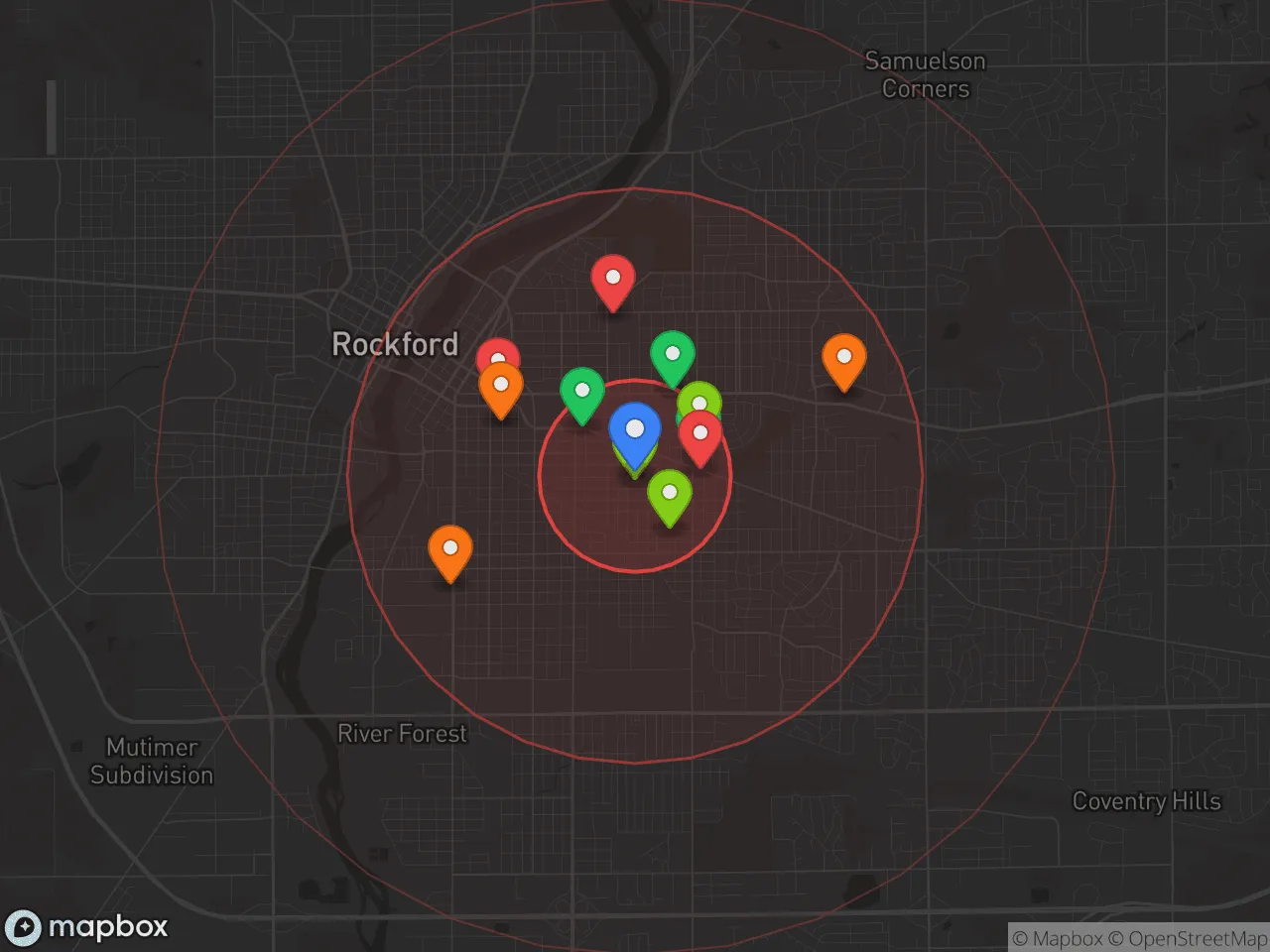
Hobbies
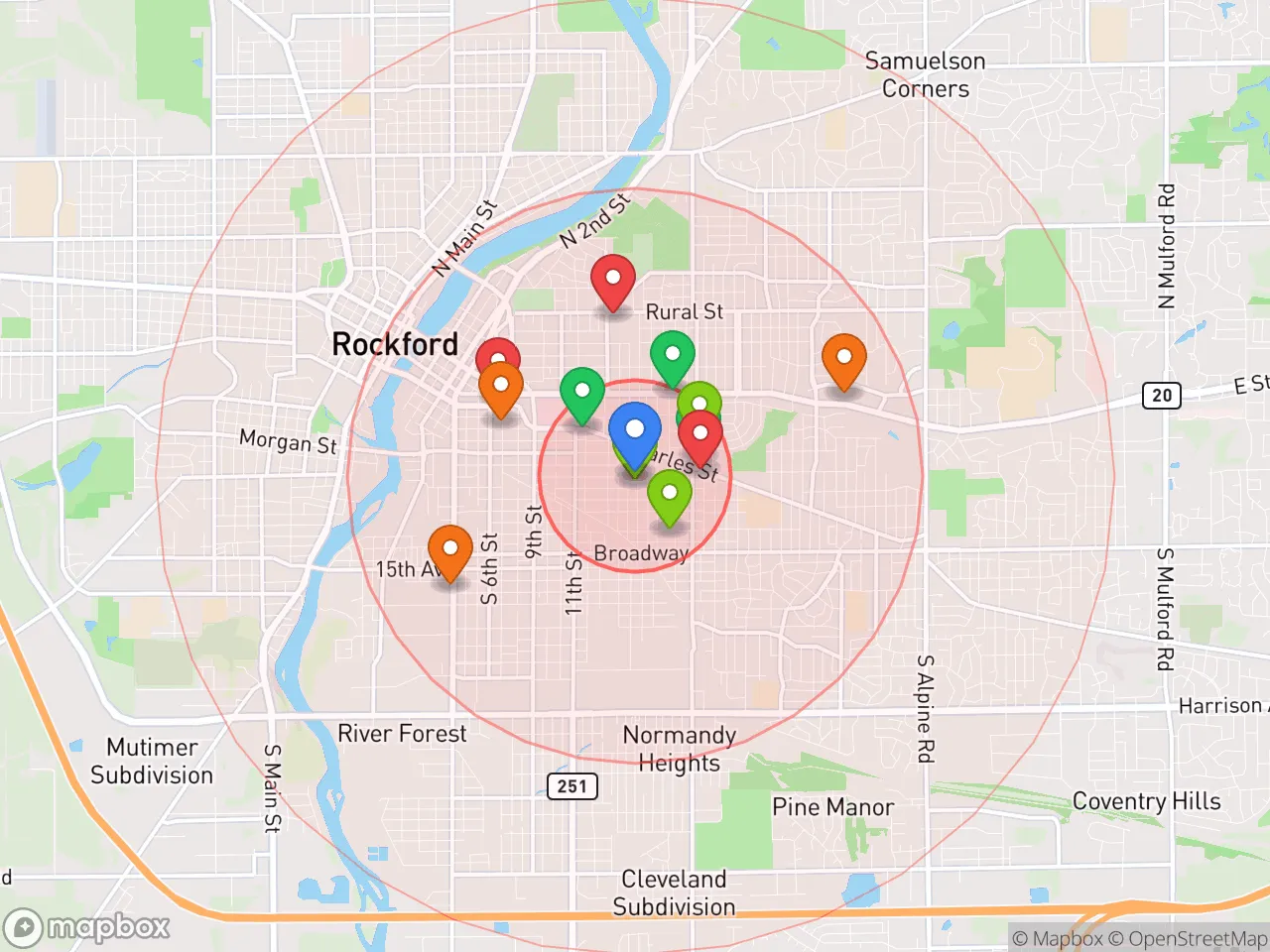
Explore the areaGroceries
6 within 10 miles
Gas
20 within 10 miles
Hospital
9 within 20 miles
Airport
ORD — O'Hare International
Post Office
USPS — Rockford, IL
Critical Amenities
Quality-of-Life Analysis
Rockford, Illinois, presents a quality-of-life profile defined by exceptional affordability and a working-to-middle-class demographic, with a cost of living index of 66 (34% below the U.S. average) that attracts families, first-time homebuyers, and retirees seeking financial breathing room. The city’s population of roughly 148,000 is predominantly blue-collar and service-oriented, with a growing contingent of remote workers drawn by the low housing costs and short commutes. While Rockford lacks the affluence of Chicago’s northern suburbs, its economic anchor remains manufacturing, healthcare, and logistics, giving it a grounded, no-frills character that prioritizes value over prestige.
Cost of living, housing affordability, and how Rockford compares to nearby areas
Rockford’s housing market is among the most affordable in the Midwest, with a median home value of $120,900 and median rent of $954 — roughly half the national median. This places the city well below nearby alternatives: Belvidere homes average $180,000, and Chicago’s metro median exceeds $330,000. The cost of living index of 66 means everyday expenses — groceries, utilities, transportation — are about one-third cheaper than the U.S. norm. A typical household earning $50,000 can afford a mortgage here with ease, whereas the same income would be stretched thin in the Chicago collar counties. The average commute of 21 minutes is notably shorter than the national average of 27 minutes, reducing transportation costs and freeing up time for family or recreation. Property taxes in Winnebago County are relatively high (around 2.5% of assessed value), but the low base home price keeps annual tax bills manageable — often under $3,000.
What daily life is like for families: amenities, schools, and community rhythm
Daily life in Rockford centers on a mix of outdoor recreation, cultural institutions, and a modest but functional school system. The Rockford Park District operates over 180 parks, including the Anderson Japanese Gardens — one of the top Japanese gardens in North America — and the Rockford Riverfront along the Rock River, which hosts summer concerts and festivals. The Rockford Public Schools district (RPS 205) serves about 28,000 students, with selective magnet programs like the Auburn High School International Baccalaureate track drawing families seeking academic rigor, though overall district performance lags state averages. Private and charter options include Keith Country Day School and Galapagos Rockford Charter School. The Burpee Museum of Natural History and Discovery Center Museum provide family-friendly educational outings. The city’s dining and nightlife scene is concentrated along East State Street and the downtown corridor, with a growing craft brewery culture (e.g., Rockford Brewing Company) and a handful of farm-to-table restaurants. The rhythm is slower than Chicago’s — most errands are within a 10-minute drive — and community events like the Rockford City Market (May–October) anchor weekend social life.
Rockford is best suited for cost-conscious families, remote workers, and retirees who prioritize financial stability over urban amenities or prestige. The low housing costs and short commute make it a practical choice for those employed in manufacturing, healthcare, or logistics — sectors that dominate the local economy — as well as for Chicago expats seeking a lower-stress, lower-cost base within a 90-minute drive of O’Hare. It is less ideal for professionals seeking high-end dining, elite public schools, or a vibrant nightlife scene; those needs are better met in the Chicago suburbs or Madison, Wisconsin. For anyone whose primary goal is stretching a dollar while maintaining access to basic services, parks, and a manageable pace, Rockford delivers a solid, if unglamorous, quality of life.

Crime in Rockford, IL
Higher crime rates than 73% of comparable U.S. locations.
Violent CrimeViolent Crime Analysis
Property CrimeProperty Crime Analysis
Crime Analysis
Rockford, Illinois, experiences a violent crime rate of 898.9 incidents per 100,000 residents and a property crime rate of 2,519.9 per 100,000, placing it among the most dangerous cities in the state for its size. These figures, drawn from the most recent FBI Uniform Crime Reporting data, indicate that the risk of becoming a victim of either violent or property crime in Rockford is significantly higher than in the average U.S. city. The city’s safety challenges are compounded by its location within a large metropolitan area and a county-level justice system that has adopted progressive prosecutorial policies, a combination that many relocation analysts flag as a serious concern for public safety.
Crime in context
Rockford’s violent crime rate is roughly 2.3 times the national average and well above the Illinois state average, which itself is elevated by Chicago’s figures. Property crime in Rockford also exceeds national benchmarks by a wide margin. When compared to other mid-sized Midwestern cities, Rockford’s numbers are closer to those of Peoria or Decatur than to safer peers like Naperville or Bloomington. The presence of a progressive district attorney’s office in Winnebago County, which has implemented policies such as reduced cash bail and diversion programs for repeat offenders, is frequently cited by local law enforcement as a contributing factor to the city’s persistently high crime rates. Critics argue that these policies prioritize offender rehabilitation over victim protection, leading to more criminals on the street and eroding deterrence.
What residents experience
For residents, the high crime rates translate into tangible daily concerns. Violent crime, including aggravated assault and robbery, is concentrated in specific neighborhoods but can occur citywide, particularly after dark. Property crime—theft, burglary, and motor vehicle theft—is more pervasive, affecting even areas with lower violent crime rates. Many residents report avoiding downtown parking lots after hours and investing in home security systems as a routine precaution. The city’s police department, while staffed and active, has acknowledged that its ability to reduce crime is hampered by a revolving-door justice system that releases repeat offenders quickly. This dynamic creates a sense of frustration among law-abiding residents who feel that the legal system does not adequately prioritize their safety.
Neighborhood-level variation is significant. The southeast and west-central parts of Rockford, including areas near the former industrial corridors, tend to have the highest crime concentrations. In contrast, neighborhoods in the far northwest and northeast, such as those near the Rock Cut State Park area or along the Perryville Road corridor, report substantially lower crime rates, often comparable to safer suburban communities. Prospective residents are strongly advised to examine block-level crime maps and consult with local real estate agents who understand these micro-trends, as the difference in safety between adjacent streets can be dramatic. The overall safety picture in Rockford is one where informed neighborhood choice is not optional—it is essential for minimizing risk.
* Values derived from national, state, county, city and local statistics and may differ in a specific area. Last updated: 2026-04-29T20:35:31.000Z
Narrative content on this page is AI-generated and may contain mistakes. Verify any details that matter before acting on them.
ReloMaps may earn a commission from affiliate links at no extra cost to you.

